
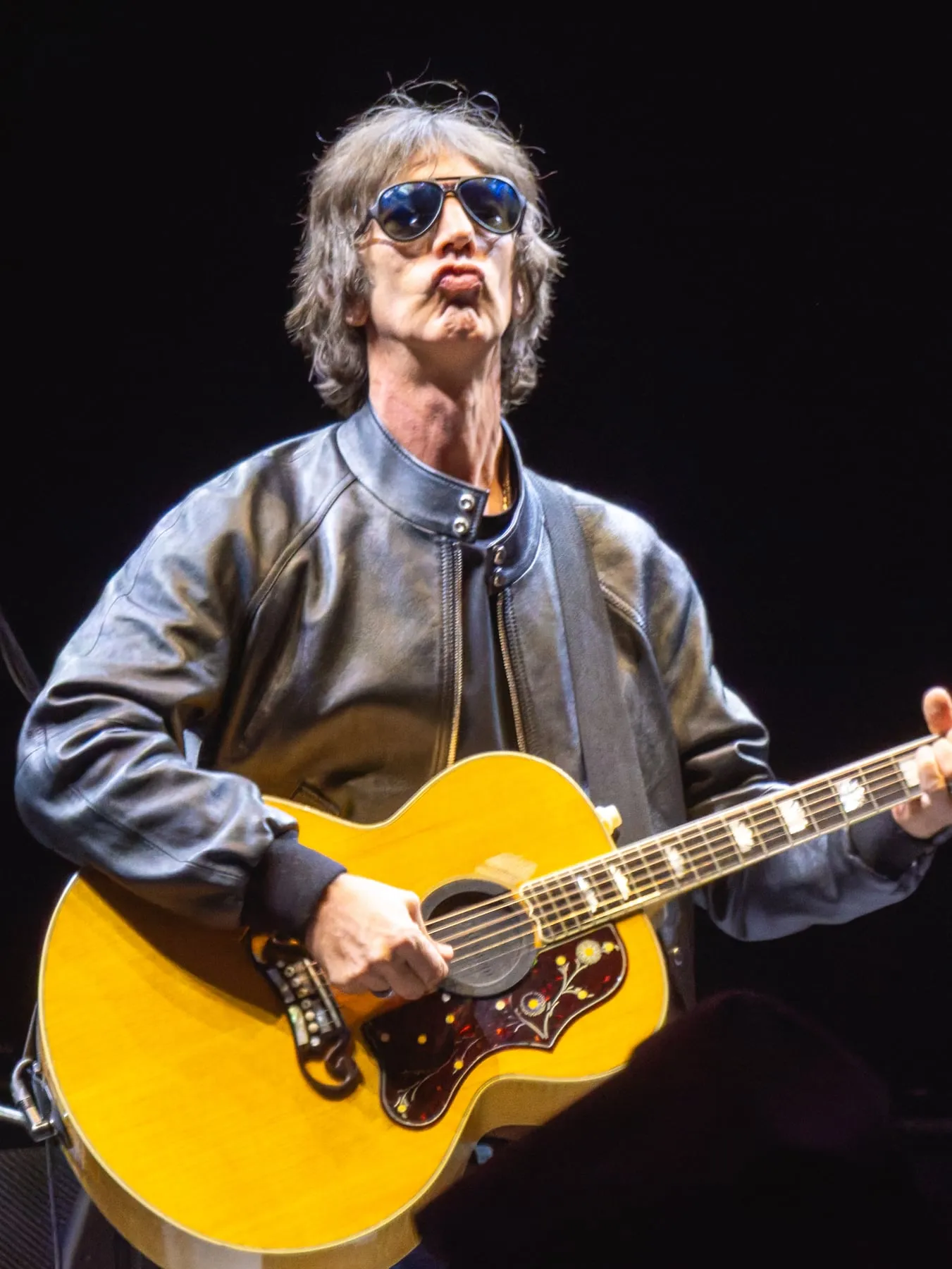
Photo by Raph_PH , licensed under CC BY 4.0 · Wikimedia Commons
Rank #161
Richard Ashcroft
From Wikipedia
Richard Paul Ashcroft is an English musician, singer, and songwriter. He formed the alternative rock band the Verve in 1990 and served as the sole songwriter, lead singer and rhythm guitarist throughout the band's lifetime. In 2000, Ashcroft embarked on a solo career, releasing six UK top-three solo albums, including Alone with Everybody, Keys to the World and These People.
Discography & Previews
Browse through and click an album to open and play 30-second previews streamed from Apple Music.

Alone With Everybody
2000 · 11 tracks

Human Conditions
2002 · 11 tracks

Keys to the World
2006 · 10 tracks

These People
2016 · 10 tracks

Natural Rebel
2018 · 12 tracks
- 1 All My Dreams ↗ 4:28
- 2 Birds Fly ↗ 3:57
- 3 Surprised by the Joy ↗ 5:38
- 4 That's How Strong ↗ 4:44
- 5 Born to Be Strangers ↗ 4:13
- 6 That's When I Feel It ↗ 4:03
- 7 We All Bleed ↗ 3:59
- 8 A Man in Motion ↗ 5:03
- 9 Streets of Amsterdam ↗ 5:20
- 10 Money Money ↗ 5:03
- 11 Rare Vibration ↗ 6:09
- 12 Guilded Halls ↗ 4:09

-
 Alone With EverybodyRichard Ashcroft200011 tracks
 -
 Human ConditionsRichard Ashcroft200211 tracks
 -
 Keys to the WorldRichard Ashcroft200610 tracks
 -
 These PeopleRichard Ashcroft201610 tracks
 -
 Natural RebelRichard Ashcroft201812 tracks
 -
 Lovin’ YouRichard Ashcroft202510 tracks
Deep Dive
Overview
Richard Paul Ashcroft stands as one of British rock’s most distinctive voices—a singer-songwriter whose tenure as the driving creative force behind The Verve defined a generation of 1990s alternative rock, and whose subsequent solo career has spanned more than two decades of independent artistic endeavor. Born in 1971, Ashcroft emerged from the post-punk and shoegaze milieu to craft music that blended dream pop textures with spacious, anthemic songwriting. His work as a solo artist, beginning in 2000, has produced six UK top-three albums while maintaining the introspective yet expansive aesthetic that first gained him prominence.
Formation Story
Richard Ashcroft grew up in the 1980s during the final decade of punk’s cultural influence and the concurrent rise of post-punk and new wave in Britain. Coming of age in the early 1990s, he arrived at rock music through the lens of alternative rock’s experimental approach to texture and production—genres like shoegaze and space rock that emphasized atmosphere alongside melody. In 1990, at age nineteen, Ashcroft formed the alternative rock band The Verve, which would become his primary focus for the next decade. Throughout The Verve’s lifetime, Ashcroft served as the band’s sole songwriter, lead singer, and rhythm guitarist, establishing himself as the primary creative voice and public face of the group. His early experience as the driving creative force behind a band proved formative; even as The Verve eventually dissolved, the songwriting discipline and sonic ambition Ashcroft developed during those years would shape his later solo work.
Breakthrough Moment
Ashcroft’s breakthrough came not as a solo artist but as the frontman of The Verve, a position that gave him the platform and recognition necessary to launch an independent solo career. The band’s output throughout the 1990s established Ashcroft’s credentials as a songwriter and performer capable of crafting both introspective ballads and expansive rock statements. When The Verve ceased operations, Ashcroft possessed both a substantial fanbase and the artistic credibility to sustain a solo project. In 2000, he released his debut solo album Alone With Everybody, which immediately demonstrated that his songwriting prowess translated seamlessly from a band context to a solo setting. The album’s commercial and critical success—achieving a top-three position on the UK charts—confirmed that Ashcroft could sustain a major recording career independent of The Verve’s framework.
Peak Era
Ashcroft’s solo peak spans the early 2000s, encompassing the releases of Alone With Everybody (2000) and Human Conditions (2002), followed by the broader success of Keys to the World (2006). During this period, Ashcroft refined a solo aesthetic that retained the dream pop and alternative rock sensibilities of his previous work while allowing for greater personal expression and emotional directness. These albums established him as a solo artist of substance rather than as a legacy act trading on past glories. The mid-2000s saw Ashcroft consolidate his position within British rock as a significant independent voice, releasing music through various labels while maintaining creative autonomy. His ability to sustain chart success across multiple albums proved that his appeal extended beyond nostalgia for The Verve, grounding his solo career in contemporary musical relevance.
Musical Style
Richard Ashcroft’s musical style fuses dream pop’s ethereal production textures with the melodic strength and emotional clarity of classic singer-songwriter tradition. His work encompasses shoegaze’s textural density and space rock’s expansive sonic architecture, yet grounds these techniques in direct, memorable songwriting that privileges vocal melody and lyrical narrative. As a solo artist, Ashcroft’s voice—distinctively British, ranging from whisper-soft intimacy to soaring full-bodied power—became the primary focal point of his arrangements. The production approach across his solo albums emphasizes space and clarity, allowing individual instruments and vocal phrases room to breathe while maintaining the layered, atmospheric quality that characterized his earlier work. His songwriting habit favors introspection balanced against moments of transcendent emotional release; verses often build toward expansive choruses that attempt to articulate deep personal sentiment through scale and sonic intensity. Over his solo career, Ashcroft’s music has incorporated elements of neo-psychedelia and Britpop’s guitar-driven sensibility, creating a body of work that feels both rooted in 1990s British rock tradition and progressively evolved across successive albums.
Major Albums
Alone With Everybody (2000)
Ashcroft’s solo debut announced an artist fully formed as an independent creative force, combining intimate vocal performances with lush, layered arrangements. The album’s immediate chart success established that his songwriting and performance could thrive outside The Verve’s context.
Human Conditions (2002)
The follow-up deepened Ashcroft’s exploration of solo songwriting, consolidating the sonic and emotional approach established on his debut while demonstrating growing confidence in his ability to sustain a major-label solo career.
Keys to the World (2006)
Released four years after Human Conditions, this album represented Ashcroft’s most developed solo statement, balancing the dream pop textures and alternative rock intensity that defined his career with increased emotional maturity and compositional sophistication.
These People (2016)
After a decade-long gap since his previous solo album, Ashcroft returned with These People, marking a notable career milestone as his sixth consecutive UK top-three solo album and demonstrating sustained commercial and artistic relevance into his mid-forties.
Natural Rebel (2018)
Released two years after These People, this album continued Ashcroft’s trajectory as an active recording artist, maintaining his presence in contemporary rock music while building on the stylistic foundations established across his previous solo work.
Signature Songs
- “Bitter Sweet Symphony” — The Verve’s most recognizable track, a soaring alternative rock anthem that showcases Ashcroft’s gift for building emotional intensity through layered instrumental arrangement and powerful vocal delivery.
- “The Drugs Don’t Work” — A haunting ballad that demonstrates Ashcroft’s ability to convey profound emotional vulnerability through stripped-down instrumentation and intimate vocal performance.
- “Alone with Everybody” — The title track from his debut solo album, establishing the introspective yet sonically expansive approach that would define his solo career.
- “A Song for the Lovers” — A neo-psychedelic exploration of romantic devotion that highlights Ashcroft’s skill at combining melodic accessibility with textural complexity.
- “Keys to the World” — The title track from his 2006 album, demonstrating Ashcroft’s maturation as a solo songwriter and his continued ability to craft anthemic, emotionally direct rock songs.
Influence on Rock
Richard Ashcroft’s primary influence on rock music emerged through The Verve, a band that synthesized 1990s British alternative rock’s competing impulses toward experimental texture and direct emotional expression. The Verve’s approach—combining dream pop’s atmospheric production with alternative rock’s melodic accessibility—influenced subsequent generations of British and European rock musicians working in the alternative and indie spheres. Ashcroft’s solo career, meanwhile, has contributed to the sustained viability of the singer-songwriter model within rock music, demonstrating that artists initially known for band-based work could achieve substantial independent success as solo practitioners. His consistent output across multiple decades has positioned him as a stabilizing presence within British rock, maintaining the genre’s connection to 1990s alternative sensibilities while adapting to contemporary musical contexts. The combination of shoegaze texture, space rock ambition, and Britpop’s guitar-driven immediacy that characterizes his work has influenced artists working across dream pop, neo-psychedelia, and alternative rock throughout the 2000s and beyond.
Legacy
Richard Ashcroft’s legacy rests on two parallel but interconnected careers: his foundational role in The Verve, one of British rock’s most significant 1990s acts, and his sustained success as a solo recording artist across more than two decades. The Verve’s music continues to resonate across rock radio and streaming platforms, ensuring that Ashcroft’s songwriting from that era maintains cultural presence. His solo career has demonstrated the durability of his creative vision independent of the band’s framework, with six consecutive UK top-three albums establishing him as one of Britain’s most commercially consistent singer-songwriters. The progression from Alone With Everybody through Lovin’ You (2025) illustrates an artist committed to sustained artistic growth rather than simple nostalgia or repetition. Ashcroft’s work across both his band and solo careers has secured his position within British rock’s pantheon as a significant voice in alternative and dream pop traditions, maintaining relevance across generations of listeners through both streaming platforms and periodic live performances.
Fun Facts
- Ashcroft served as the exclusive songwriter and creative director of The Verve throughout the band’s existence, a level of concentrated creative control unusual within a rock band format.
- His solo albums have been released through multiple major labels including Hut Records, Cooking Vinyl, Parlophone, and Virgin Records, reflecting the various record industry partnerships he has negotiated across his career.
- Despite a decade-long gap between Keys to the World (2006) and These People (2016), Ashcroft returned to recording without significant loss of commercial chart position, demonstrating sustained audience loyalty.
- Lovin’ You, released in 2025, represents Ashcroft’s most recent album and confirms his continued activity as a recording artist well into his fifth decade of life.