

Photo , licensed under CC BY-SA 2.0 · Wikimedia Commons
Rank #452
Rickie Lee Jones
From Wikipedia
Rickie Lee Jones is an American singer, musician, and songwriter. Over the course of a career that spans five decades and 15 studio albums, she has recorded in various musical styles including rock, R&B, pop, soul, and jazz. A two-time Grammy Award winner, Jones was listed at No. 30 on VH1's 100 Greatest Women in Rock & Roll in 1999. AllMusic stated: "Few singer/songwriters are as individual and eclectic as Rickie Lee Jones, a vocalist with an expressive and smoky instrument, and a composer who can weave jazz, folk, and R&B into songs with a distinct pop sensibility."
Discography & Previews
Browse through and click an album to open and play 30-second previews streamed from Apple Music.

Rickie Lee Jones
1979 · 11 tracks
- 1 Chuck E.'s In Love ↗ 3:29
- 2 On Saturday Afternoons In 1963 ↗ 2:31
- 3 Night Train ↗ 3:19
- 4 Young Blood ↗ 4:08
- 5 Easy Money ↗ 3:18
- 6 The Last Chance Texaco ↗ 4:05
- 7 Danny's All-Star Joint ↗ 4:07
- 8 Coolsville ↗ 3:48
- 9 Weasel and the White Boys Cool ↗ 6:00
- 10 Company ↗ 4:52
- 11 After Hours (Twelve Bars Past Midnight) ↗ 2:14


The Magazine
1984 · 10 tracks

Flying Cowboys
1989 · 11 tracks

Pop Pop
1991 · 12 tracks
- 1 My One and Only Love ↗ 5:54
- 2 Spring Can Really Hang You Up the Most ↗ 3:56
- 3 Hi-Lili, Hi-Lo ↗ 3:38
- 4 Up from the Skies ↗ 4:30
- 5 Second Time Around ↗ 4:50
- 6 Dat Dere ↗ 4:07
- 7 I'll Be Seeing You ↗ 3:14
- 8 Bye Bye Blackbird ↗ 2:22
- 9 The Ballad of the Sad Young Men ↗ 4:22
- 10 I Won't Grow Up ↗ 3:12
- 11 Love Junkyard ↗ 4:11
- 12 Comin' Back to Me ↗ 5:35


Ghostyhead
1997 · 10 tracks
- 1 Little Yellow Town (Remastered 2022) ↗ 6:46
- 2 Road Kill (Remastered 2022) ↗ 4:13
- 3 Matters (Remastered 2022) ↗ 4:21
- 4 Firewalker (Remastered 2022) ↗ 3:59
- 5 Howard (Remastered 2022) ↗ 4:23
- 6 Ghostyhead (Remastered 2022) ↗ 5:29
- 7 Sunny Afternoon (Remastered 2022) ↗ 3:51
- 8 Scary Chinese Movie (Remastered 2022) ↗ 5:31
- 9 Cloud Of Unknowing (Remastered 2022) ↗ 7:20
- 10 Vessel Of Light (Remastered 2022) ↗ 6:29

It's Like This
2000 · 11 tracks
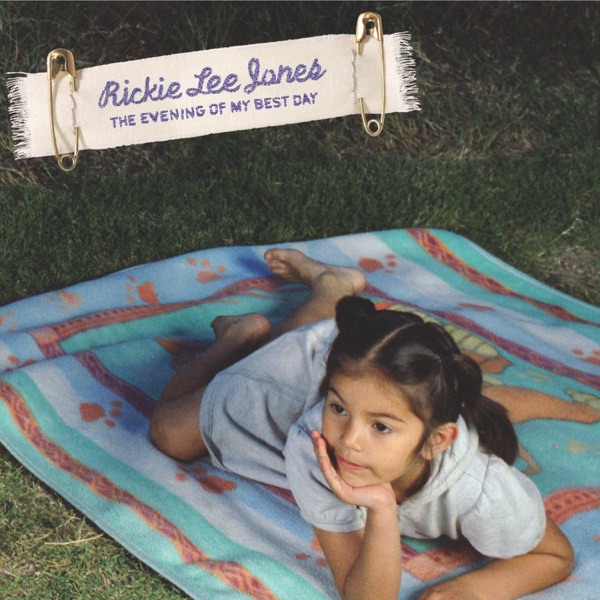
The Evening of My Best Day
2003 · 12 tracks
- 1 Ugly Man ↗ 4:21
- 2 Second Chance ↗ 4:54
- 3 Bitchenostrophy ↗ 4:38
- 4 Little Mysteries ↗ 5:02
- 5 Lap Dog ↗ 3:58
- 6 Tell Somebody (Repeal the Patriot Act) ↗ 4:04
- 7 Sailor Song ↗ 5:00
- 8 A Tree On Allenford ↗ 5:13
- 9 It Takes You There ↗ 5:18
- 10 Mink Coat At the Bus Stop ↗ 4:51
- 11 The Evening of My Best Day ↗ 4:15
- 12 A Face In the Crowd ↗ 3:44

The Sermon on Exposition Boulevard
2007 · 13 tracks
- 1 Nobody Knows My Name ↗ 3:27
- 2 Gethsemane ↗ 2:26
- 3 Falling Up ↗ 4:42
- 4 Lamp of the Body ↗ 2:59
- 5 It Hurts ↗ 3:47
- 6 Where I Like It Best ↗ 5:47
- 7 Tried to Be a Man ↗ 3:46
- 8 Circle in the Sand ↗ 3:29
- 9 Donkey Ride ↗ 2:53
- 10 Seventh Day ↗ 3:58
- 11 Elvis Cadillac ↗ 3:59
- 12 Road to Emmaus ↗ 4:19
- 13 I Was There ↗ 8:22


The Devil You Know
2012 · 10 tracks

The Other Side of Desire
2015 · 11 tracks
- 1 Jimmy Choos ↗ 3:57
- 2 Valtz de mon pere (Lovers' Waltz) ↗ 4:35
- 3 J'ai connais pas ↗ 3:29
- 4 Blinded By the Hunt ↗ 3:25
- 5 Infinity ↗ 5:30
- 6 I Wasn't Here ↗ 4:07
- 7 Christmas In New Orleans ↗ 4:49
- 8 Haunted ↗ 5:22
- 9 Feet On the Ground ↗ 6:06
- 10 Juliette ↗ 1:27
- 11 Finale (A Spider In the Circus of the Falling Star) ↗ 3:04


Pieces of Treasure
2023 · 10 tracks
-
 Rickie Lee JonesRickie Lee Jones197911 tracks
 -
 PiratesRickie Lee Jones19818 tracks
 -
 The MagazineRickie Lee Jones198410 tracks
 -
 Flying CowboysRickie Lee Jones198911 tracks
 -
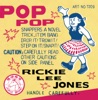 Pop PopRickie Lee Jones199112 tracks
 -
 Traffic From ParadiseRickie Lee Jones199310 tracks
 -
 GhostyheadRickie Lee Jones199710 tracks
 -
 It's Like ThisRickie Lee Jones200011 tracks
 -
 The Evening of My Best DayRickie Lee Jones200312 tracks
 -
 The Sermon on Exposition BoulevardRickie Lee Jones200713 tracks
 -
 Balm in GileadRickie Lee Jones200910 tracks
 -
 The Devil You KnowRickie Lee Jones201210 tracks
 -
 The Other Side of DesireRickie Lee Jones201511 tracks
 -
 KicksRickie Lee Jones201910 tracks
 -
 Pieces of TreasureRickie Lee Jones202310 tracks
Deep Dive
Overview
Rickie Lee Jones is an American singer, musician, and songwriter whose five-decade career has explored the borders between rock, R&B, pop, soul, and jazz. Born in 1954, Jones emerged as a distinctive voice in the late 1970s, distinguished by her expressive, smoky vocal instrument and her compositional ability to weave disparate influences into a singular aesthetic. Her work as both a performer and writer has earned her recognition as one of rock’s most individual and eclectic talents, including a 1999 ranking at No. 30 on VH1’s 100 Greatest Women in Rock & Roll and two Grammy Awards across her catalog.
Jones represents a particular strand of American singer-songwriter tradition: one that resists easy categorization and embraces jazz, folk, and R&B sensibilities within a pop-rock framework. Over 15 studio albums beginning in 1979, she has sustained a career rooted in artistic restlessness rather than repetition, making her a figure of lasting influence within singer-songwriter circles and among musicians who value lyrical and melodic sophistication.
Formation Story
Rickie Lee Jones was born in 1954 into an American cultural moment when rock and roll was consolidating its hold on youth audiences and soul music was reshaping popular song. Growing up during the 1960s, she absorbed the era’s musical pluralism: the storytelling sensibility of folk music, the harmonic complexity and rhythmic freedom of jazz, and the emotional directness of rock and soul. These influences would prove foundational to her mature voice. Her path to recording was not the conventional one of a backing musician or garage-band member; instead, Jones developed her craft as a songwriter and vocalist through performance and artistic experimentation, eventually signing to Warner Bros. Records and preparing her debut album as the 1970s turned into the 1980s.
Breakthrough Moment
Rickie Lee Jones’s debut album, Rickie Lee Jones, arrived in 1979 and established her as a fully formed artist with a distinctive point of view. The album demonstrated her range across multiple idioms and her refusal to be confined to a single genre or sound. This debut signaled the arrival of a voice that could inhabit rock, soul, and jazz without sacrificing pop accessibility or lyrical depth. The album’s reception and the artistic statement it made positioned her not as a novelty or a trend-riding act but as a serious and ambitious songwriter with the vocal instrument and production sophistication to realize her vision.
Peak Era
The early 1980s represented the apex of Jones’s creative profile and commercial visibility. Pirates, released in 1981, followed the success of her debut and consolidated her reputation as an artist of range and intelligence. The Magazine, which arrived in 1984, continued her exploration of jazz-inflected songwriting within a rock and pop context. During this period, Jones was at the height of her artistic confidence, releasing albums that reflected her curiosity about form and her comfort moving between styles. These years established her as a fixture within the singer-songwriter and album-rock communities, respected by both critics and fellow musicians for her refusal to compromise her artistic vision for commercial expediency.
Musical Style
Rickie Lee Jones’s sound is defined by the interplay between her vocal instrument and her compositional approach. Her voice—described as expressive and smoky—carries a jazz inflection even when deployed in rock or pop contexts; she phrase across the bar line, uses space strategically, and colors individual words with emotional shading. This vocal character reflects her deep engagement with jazz singing tradition, placing her in the lineage of singers who learned jazz phrasing and approach rhythm with flexibility.
Composition-wise, Jones weaves jazz harmony, folk-song structure, and R&B rhythmic sensibility into pop forms. Her songs often feature sophisticated chord changes and unexpected melodic turns; her lyrics balance narrative specificity with emotional universality. This eclecticism resists easy summarization but reflects a coherent artistic identity: Jones is a songwriter who hears pop songs as vehicles for jazz harmonies and jazz influence as compatible with rock sincerity. The production choices across her albums—from the stripped-down arrangements that foreground her voice to the fuller, more textured settings of later work—have consistently served this fundamental vision of singer-songwriting as a serious artistic enterprise.
Major Albums
Rickie Lee Jones (1979)
Her debut established the core elements of her aesthetic: jazz-inflected melody, sophisticated arrangement, and a vocal approach that privileges emotional truth over technical display.
Pirates (1981)
This follow-up deepened her exploration of genre-blending, cementing her reputation as an artist unafraid of artistic risk and formal innovation.
The Magazine (1984)
Jones continued her trajectory of combining rock, soul, and jazz influences, demonstrating her ability to evolve her sound while maintaining compositional and vocal consistency.
Flying Cowboys (1989)
After the mid-1980s, Jones shifted her approach, returning with this album that reflected her continued artistic evolution and her commitment to refusing easy categorization.
The Devil You Know (2012)
Released nearly three decades into her career, this album demonstrated Jones’s ongoing creative vitality and her ability to refresh her sound while honoring her foundational influences.
Signature Songs
- **“Rickie Lee Jones