

Photo by User:Carstor , licensed under CC BY 4.0 · Wikimedia Commons
Rank #222
Steve Earle
From Wikipedia
Stephen Fain Earle is an American country, rock, and folk singer-songwriter. He began his career as a songwriter in Nashville.
Discography & Previews
Browse through and click an album to open and play 30-second previews streamed from Apple Music.

Guitar Town
1986 · 10 tracks

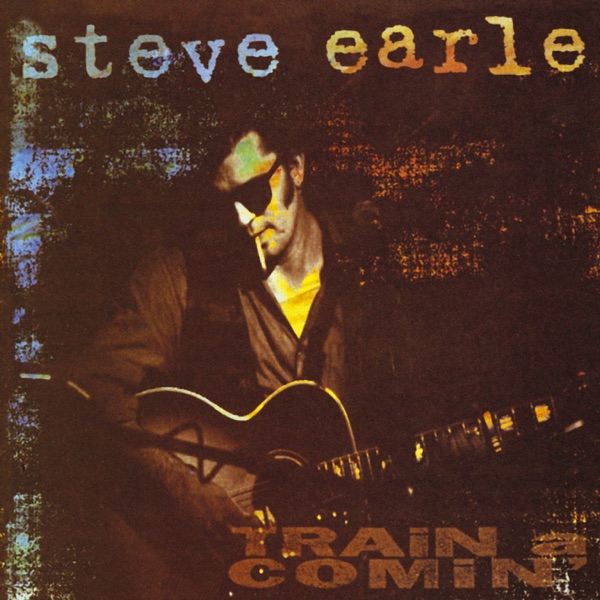
Train a Comin’
1995 · 13 tracks
- 1 Mystery Train, Pt. 2 ↗ 2:33
- 2 Hometown Blues ↗ 2:42
- 3 Sometimes She Forgets ↗ 3:02
- 4 Mercenary Song ↗ 2:40
- 5 Goodbye ↗ 4:57
- 6 Tom Ames' Prayer ↗ 3:03
- 7 Nothin' Without You ↗ 3:02
- 8 Angel Is the Devil ↗ 2:12
- 9 I'm Looking Through You ↗ 2:28
- 10 Nothern Winds ↗ 1:41
- 11 Ben McCulloch ↗ 4:10
- 12 Rivers of Babylon ↗ 3:04
- 13 Tecumseh Valley ↗ 4:29
I Feel Alright
1996 · 12 tracks
- 1 Feel Alright ↗ 2:56
- 2 Hard-Core Troubadour ↗ 2:41
- 3 More Than I Can Do ↗ 2:37
- 4 Hurtin' Me, Hurtin' You ↗ 3:21
- 5 Now She's Gone ↗ 2:48
- 6 Poor Boy ↗ 2:55
- 7 Valentine's Day ↗ 3:00
- 8 The Unrepentant ↗ 4:31
- 9 Cckmp ↗ 4:32
- 10 Billy and Bonnie ↗ 3:39
- 11 South Nashville Blues ↗ 2:28
- 12 You're Still Standin' There ↗ 3:24
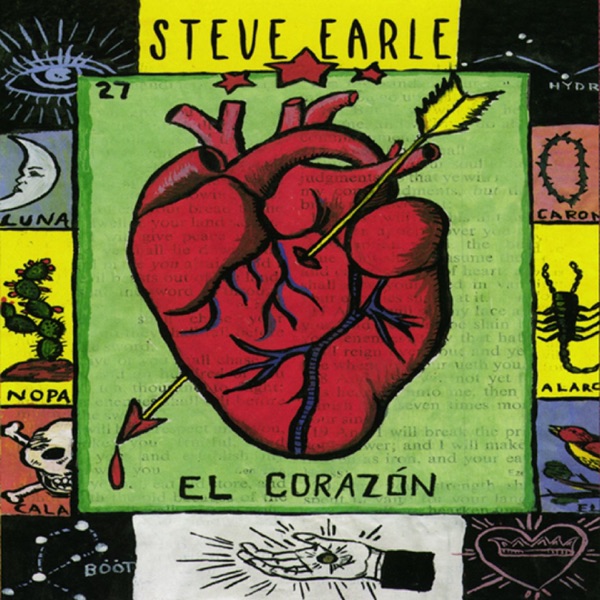
El corazón
1997 · 12 tracks
- 1 Christmas In Washington ↗ 4:59
- 2 Taneytown ↗ 5:13
- 3 If You Fall ↗ 4:10
- 4 I Still Carry You Around (With the Del McCoury Band) ↗ 2:45
- 5 Telephone Road (With the Fairfield Four) ↗ 3:43
- 6 Somewhere Out There ↗ 3:46
- 7 You Know the Rest ↗ 2:12
- 8 N.Y.C. (With the Supersuckers) ↗ 3:37
- 9 Poison Lovers ↗ 3:48
- 10 The Other Side of Town ↗ 4:17
- 11 Here I Am ↗ 2:38
- 12 Ft. Worth Blues ↗ 4:03

The Mountain
1999 · 14 tracks
- 1 Texas Eagle ↗ 3:28
- 2 Yours Forever Blue ↗ 2:30
- 3 Carrie Brown ↗ 4:18
- 4 I'm Still In Love With You ↗ 4:05
- 5 The Graveyard Shift ↗ 2:37
- 6 Harlan Man ↗ 3:20
- 7 The Mountain ↗ 4:43
- 8 Outlaw's Honeymoon ↗ 2:02
- 9 Connemara Breakdown ↗ 2:18
- 10 Leroy's Dustbowl Blues ↗ 3:04
- 11 Dixieland ↗ 2:56
- 12 Paddy On the Beat ↗ 2:00
- 13 Long, Lonesome Highway Blues ↗ 2:59
- 14 Pilgrim ↗ 5:28
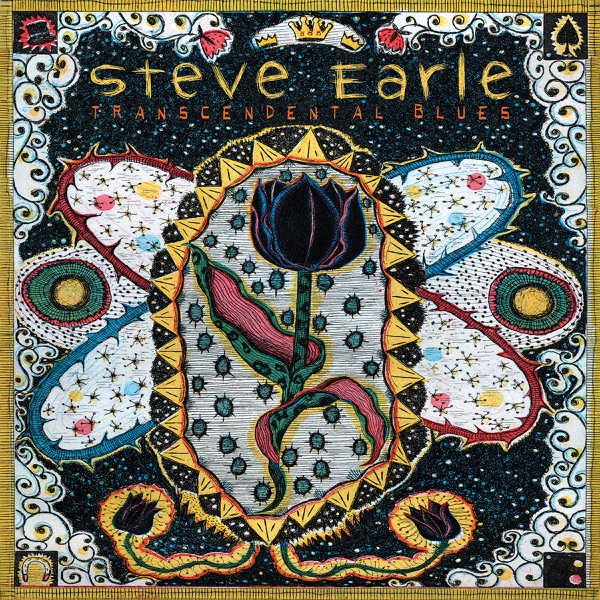
Transcendental Blues
2000 · 15 tracks
- 1 Transcendental Blues ↗ 4:13
- 2 Everyone's In Love with You ↗ 3:30
- 3 Another Town ↗ 2:22
- 4 I Can't Wait ↗ 3:16
- 5 The Boy Who Never Cried ↗ 3:46
- 6 Steve's Last Ramble ↗ 3:38
- 7 The Galway Girl ↗ 3:05
- 8 Lonelier Than This ↗ 3:12
- 9 Wherever I Go ↗ 1:58
- 10 When I Fall ↗ 4:35
- 11 I Don't Want to Lose You Yet ↗ 3:23
- 12 Halo 'Round the Moon ↗ 2:13
- 13 Until the Day I Die ↗ 3:23
- 14 All of My Life ↗ 3:28
- 15 Over Yonder (Jonathan's Song) ↗ 3:56

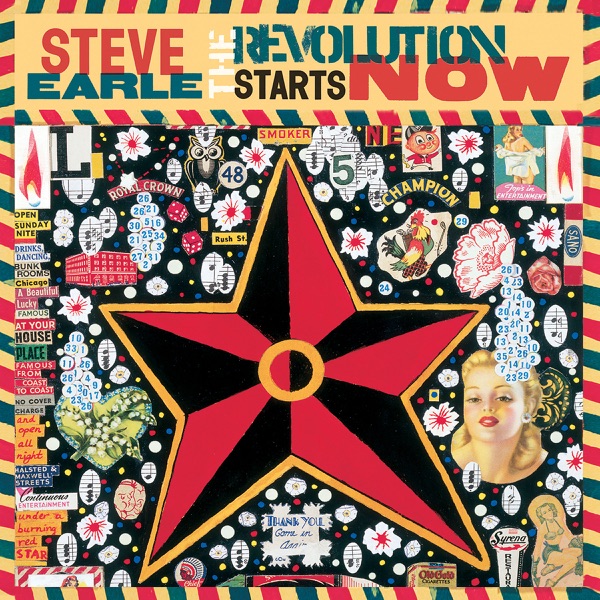
The Revolution Starts Now
2004 · 11 tracks

Washington Square Serenade
2007 · 12 tracks
- 1 Tennessee Blues ↗ 2:39
- 2 Down Here Below ↗ 4:03
- 3 Satellite Radio ↗ 4:09
- 4 City of Immigrants (With Forro in the Dark) ↗ 4:19
- 5 Sparkle and Shine ↗ 3:12
- 6 Come Home to Me ↗ 3:47
- 7 Jericho Road ↗ 3:36
- 8 Oxycontin Blues ↗ 2:55
- 9 Red Is the Color ↗ 4:20
- 10 Steve's Hammer (For Pete) ↗ 3:16
- 11 Days Aren't Long Enough ↗ 3:02
- 12 Way Down in the Hole ↗ 2:56

Townes
2009 · 15 tracks
- 1 Pancho and Lefty ↗ 4:02
- 2 White Freight Liner Blues ↗ 3:28
- 3 Colorado Girl ↗ 3:35
- 4 Where I Lead Me ↗ 3:30
- 5 Lungs ↗ 2:19
- 6 No Place to Fall ↗ 2:53
- 7 Loretta ↗ 3:14
- 8 Brand New Companion ↗ 5:12
- 9 Rake ↗ 3:23
- 10 Delta Momma Blues ↗ 5:14
- 11 Marie ↗ 4:53
- 12 Don't Take It Too Bad ↗ 3:12
- 13 Mr. Mudd and Mr. Gold ↗ 2:18
- 14 (Quicksilver Daydreams of) Maria ↗ 3:20
- 15 To Live Is to Fly ↗ 3:40

I’ll Never Get Out of This World Alive
2011 · 11 tracks

Ghosts of West Virginia
2020 · 10 tracks
- 1 Heaven Ain’t Goin’ Nowhere ↗ 1:40
- 2 Union, God and Country ↗ 2:23
- 3 Devil Put the Coal In the Ground ↗ 2:54
- 4 John Henry Was a Steel Drivin’ Man ↗ 3:29
- 5 Time Is Never On Our Side ↗ 2:55
- 6 It’s About Blood ↗ 4:33
- 7 If I Could See Your Face Again ↗ 2:57
- 8 Black Lung ↗ 3:19
- 9 Fastest Man Alive ↗ 2:51
- 10 The Mine ↗ 2:48
-
 Guitar TownSteve Earle198610 tracks
 -
 Copperhead RoadSteve Earle198810 tracks
 -
 Train a Comin’Steve Earle199513 tracks
 -
 I Feel AlrightSteve Earle199612 tracks
 -
 El corazónSteve Earle199712 tracks
 -
 The MountainSteve Earle199914 tracks
 -
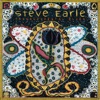 Transcendental BluesSteve Earle200015 tracks
 -
 JerusalemSteve Earle200211 tracks
 -
 The Revolution Starts NowSteve Earle200411 tracks
 -
 Washington Square SerenadeSteve Earle200712 tracks
 -
 TownesSteve Earle200915 tracks
 -
 I’ll Never Get Out of This World AliveSteve Earle201111 tracks
 -
 Ghosts of West VirginiaSteve Earle202010 tracks
Deep Dive
Overview
Steve Earle is an American country, rock, and folk singer-songwriter born in 1955 who emerged from Nashville as a songwriter before establishing himself as a recording artist across multiple genres. Working primarily in country rock, Americana, alternative country, and blues, Earle has maintained an active recording career spanning nearly four decades. His trajectory from Nashville tunesmith to prolific recording artist reflects both his adaptability across genre boundaries and his rootedness in the traditions of American roots music.
Formation Story
Steve Earle began his professional life in Nashville as a songwriter, the traditional entry point for many musicians in that city’s music industry. Born in 1955, he came of age during an era when Nashville’s songwriting mills were still a primary pipeline for country and pop music. Rather than apprenticing exclusively as a performer, Earle first established himself through composition—the path that many successful country artists took in the 1970s and 1980s. His early years immersed him in Nashville’s working musician ecosystem, where he absorbed the traditions of country, rock, and folk that would define his later recordings.
Breakthrough Moment
Earle’s recorded career began in earnest in 1986 with Guitar Town, an album that announced his arrival as a recording artist in his own right rather than simply as a behind-the-scenes songwriter. The album established the template for much of his subsequent work: a fusion of country instrumentation with rock sensibility and folk storytelling. Two years later, he followed with Copperhead Road in 1988, which deepened his artistic vision and expanded his audience beyond traditional country listeners. The early-to-mid-1980s timing of these releases positioned him to benefit from the broader alternative country movement that was beginning to take shape, even as he remained grounded in authentic country and Americana traditions.
Peak Era
The period from 1994 through the early 2000s marked Earle’s most prolific and critically engaged stretch as a recording artist. Albums such as Uncut Gems (1994), Train a Comin’ (1995), I Feel Alright (1996), El corazón (1997), The Mountain (1999), and Transcendental Blues (2000) demonstrated both compositional depth and willingness to explore varied production approaches. During this span, Earle worked with multiple record labels—including Artemis Records, MCA Records, ROIR, and Fantasy—indicating both his commercial viability and his career’s complexity. The 2002 release Jerusalem marked a significant creative moment, followed by continued activity with The Revolution Starts Now (2004), establishing him as a mature artist whose output remained consistently engaged with contemporary issues and musical innovation.
Musical Style
Earle’s sound operates at the intersection of multiple American traditions. Built on a foundation of country instrumentation—particularly acoustic and electric guitars—his work incorporates elements of rock intensity, folk narrative sensibility, and blues-inflected phrasing. His vocals, direct and conversational rather than operatic, suit his role as a storyteller as much as a singer. Across his recorded output, his songwriting addresses both personal and social themes, reflecting the influence of folk music’s tradition of topical songwriting while maintaining country music’s focus on emotional specificity and narrative detail. The evolution visible across his discography—from the lean rock-country fusion of Guitar Town through the more experimental production choices evident in later albums—shows an artist continually testing the boundaries of Americana while remaining faithful to its core impulses.
Major Albums
Guitar Town (1986)
Earle’s debut album established his identity as a country-rock songwriter-performer, combining traditional country instrumentation with contemporary rock sensibility and introducing the narrative-driven songwriting that would define his career.
Copperhead Road (1988)
Following his debut, this album deepened his artistic reach and solidified his reputation beyond traditional country audiences, cementing his status as a significant voice in emerging alternative country.
Transcendental Blues (2000)
Released at the turn of the millennium, this album represented a career high-water mark in terms of critical recognition, showcasing mature songwriting and refined production across a set of blues-inflected country-rock compositions.
Jerusalem (2002)
A significant creative statement that demonstrated Earle’s willingness to engage with contemporary social and political themes through the lens of country music tradition.
I’ll Never Get Out of This World Alive (2011)
This later-period album showed continued artistic vitality and thematic ambition, confirming Earle’s sustained relevance as a recording artist well into his fifth decade of professional work.
Signature Songs
- “Guitar Town” — The title track from his 1986 debut, introducing his distinctive blend of country and rock sensibilities.
- “Copperhead Road” — The signature song from his second album, showcasing his narrative gift and rock-country fusion.
- “The Revolution Starts Now” — A title track that exemplifies his engagement with social and political themes.
Influence on Rock
Steve Earle’s career spans the emergence and maturation of alternative country and Americana as viable recording genres. He represents a continuity between Nashville’s songwriting tradition and the alternative country movement of the 1990s and beyond, demonstrating that authentic country songwriting and rock music energy were not mutually exclusive. His prolific output across multiple record labels, combined with his consistent artistic ambition, helped legitimize Americana and alternative country as serious recording categories during an era when mainstream country radio was narrowing its format. Musicians working in the crossover space between traditional country forms and contemporary rock production have followed paths made more viable by Earle’s sustained presence as a recording artist.
Legacy
Steve Earle’s career, now spanning nearly four decades from his 1986 debut through his 2020 album Ghosts of West Virginia, demonstrates the durability of the singer-songwriter model in rock and country music. His consistent recording and touring presence, supported by a deep catalog spanning multiple labels and production styles, has established him as a foundational figure in contemporary Americana. The breadth of his musical interests—evident in his work across country rock, alternative country, blues, and folk traditions—reflects an approach to artistic expression that privileges integrity and exploration over commercial calculation. His continued active status into the present day affirms the enduring value of rootedness in American musical traditions combined with contemporary artistic ambition.
Fun Facts
- Earle’s career encompassed recording for a remarkable range of independent and major labels, from MCA and Artemis Records to smaller operations like ROIR and Fantasy, reflecting both his commercial footprint and his artistic independence.
- Among his later recording projects, he paid tribute to fellow singer-songwriter Townes Van Zandt with both Townes (2009) and Townes: The Basics (2014), demonstrating his commitment to honoring influences and traditions within the American roots music canon.
- A 2016 collaborative album, Colvin & Earle, paired him with fellow Americana artist Shawn Colvin, exemplifying the collegial relationships within the contemporary singer-songwriter community.