
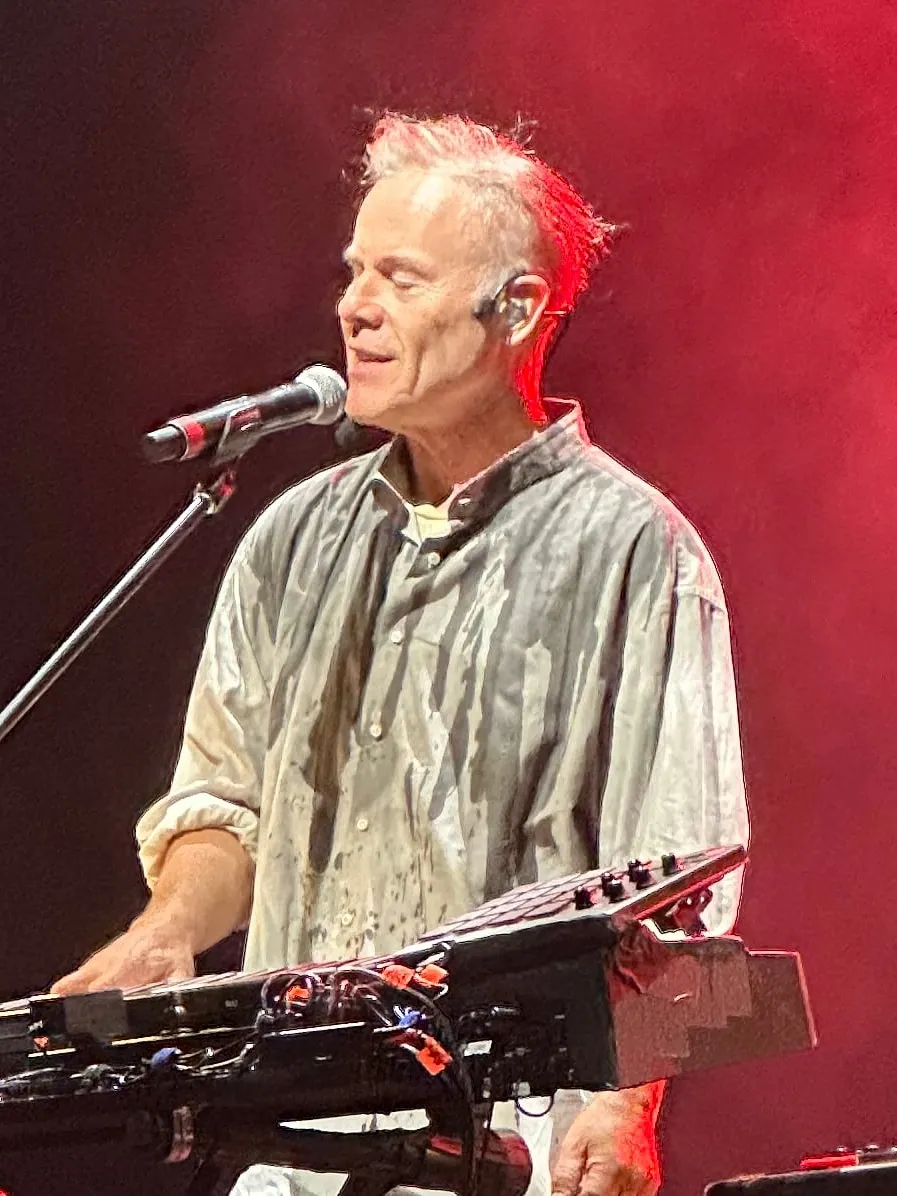
Photo by Dillan Payne , licensed under CC BY-SA 2.0 · Wikimedia Commons
Rank #339
Thomas Dolby
From Wikipedia
Thomas Morgan Robertson, known by the stage name Thomas Dolby, is an English musician, record producer, composer, entrepreneur and teacher.
Discography & Previews
Browse through and click an album to open and play 30-second previews streamed from Apple Music.

The Golden Age of Wireless
1982 · 10 tracks


Astronauts & Heretics
1992 · 9 tracks
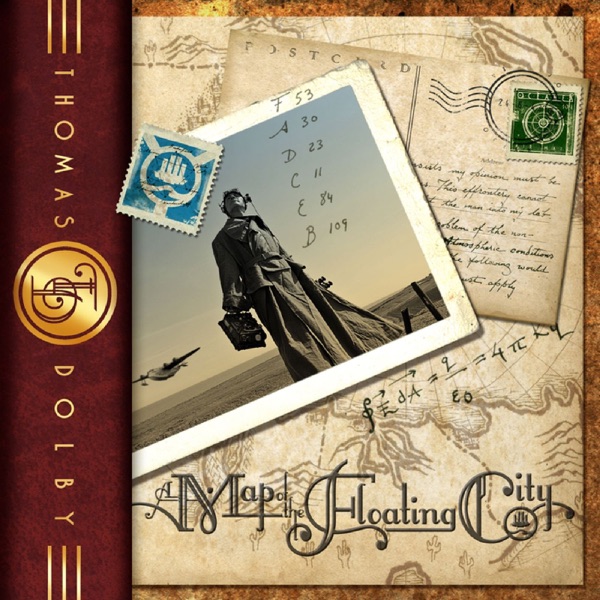
A Map of the Floating City
2011 · 11 tracks
- 1 Nothing New Under the Sun ↗ 4:35
- 2 Spice Train ↗ 5:08
- 3 Evil Twin Brother (feat. Regina Spektor) ↗ 5:25
- 4 A Jealous Thing Called Love ↗ 4:27
- 5 Road to Reno ↗ 4:00
- 6 The Toad Lickers (feat. Imogen Heap) ↗ 4:24
- 7 17 Hills (feat. Mark Knopfler & Natalie MacMaster) ↗ 7:42
- 8 Love Is a Loaded Pistol ↗ 2:57
- 9 Oceanea (feat. Eddi Reader) ↗ 4:28
- 10 Simone ↗ 5:56
- 11 To the Lifeboats ↗ 3:36
-
 The Golden Age of WirelessThomas Dolby198210 tracks
 -
 The Flat EarthThomas Dolby19847 tracks
 -
 Aliens Ate My BuickThomas Dolby19888 tracks
 -
 Astronauts & HereticsThomas Dolby19929 tracks
 -
 A Map of the Floating CityThomas Dolby201111 tracks
Deep Dive
Overview
Thomas Dolby is an English musician, producer, composer, and entrepreneur who emerged as a distinctive voice in new wave and electronic pop during the early 1980s. Born Thomas Morgan Robertson in 1958, he built a career spanning performance, production, and teaching—establishing himself as both a creative force in his own right and an influential figure behind the scenes in contemporary music. His work synthesized the technological possibilities of digital instruments with the songwriting sensibility of pop, creating a sound that was both experimental and accessible.
Formation Story
Thomas Dolby was born in England in 1958 and came of age during the rise of electronic instruments and studio technology. He emerged from a generation that viewed synthesizers and drum machines not as novelties but as legitimate tools for contemporary composition. Unlike many of his new wave contemporaries who inherited a rock band template, Dolby approached music-making through production and arrangement from the start, building his sound around electronic textures and studio craft. His entry into rock came through a deep engagement with the technical and compositional possibilities of the synthesizer era.
Breakthrough Moment
Thomas Dolby’s breakthrough arrived with his debut album The Golden Age of Wireless in 1982, released on Capitol Records. The album introduced audiences to his distinctive blend of synth-pop sophistication and clever songcraft, establishing him as a fresh voice in new wave. The record’s production and arrangement showcased Dolby’s meticulous approach to electronic sound-design and his ability to balance experimental textures with memorable melodies. The album’s success marked him as more than a studio curiosity, proving that intellectually ambitious electronic pop could find a mass audience.
Peak Era
Dolby’s most creatively fertile and commercially successful period stretched through the mid-1980s, encompassing The Flat Earth (1984) and Aliens Ate My Buick (1988). During these years, he refined his production aesthetic, deepening both the sonic sophistication and the pop sensibility of his work. The Flat Earth consolidated the artistic vision established on his debut, while Aliens Ate My Buick demonstrated an artist in continued evolution, expanding his sonic palette and thematic range. This era established Dolby as a key figure in 1980s electronic pop, respected by both critics and peers for his technical mastery and compositional intelligence.
Musical Style
Thomas Dolby’s sound is built on dense, layered synthesizer arrangements and electronic instrumentation, anchored by precise rhythm programming and studio production techniques refined through his work as a record producer. His compositions typically feature intricate arrangements with multiple synthesizer lines, clean digital production, and a pop sensibility that grounds even his most experimental impulses. Vocally, Dolby delivers his lyrics with clarity and often a wry intelligence, treating words as another element of the overall sonic design. His approach drew from the emerging synthesizer tradition of electronic music while maintaining the song structure and melodic invention of pop, creating a space where technical sophistication and mainstream accessibility coexist. The influence of new wave—its use of electronic instruments, its embrace of studio as an instrument in itself, and its intellectual stance toward pop form—runs through his entire output.
Major Albums
The Golden Age of Wireless (1982)
Dolby’s debut introduced his distinctive synthesis of synth-pop sophistication and clever arrangements, establishing the production aesthetic and compositional approach that would define his career.
The Flat Earth (1984)
This second album consolidated Dolby’s artistic vision, demonstrating his continued refinement of electronic pop through sophisticated studio production and melodic songcraft.
Aliens Ate My Buick (1988)
Released in the album’s middle period, this record expanded Dolby’s sonic range and thematic concerns, showing an artist in continued creative evolution within the electronic pop framework.
Astronauts & Heretics (1992)
This album represented Dolby’s work in the 1990s, marking another chapter in his ongoing studio practice and demonstrating his sustained engagement with electronic composition.
A Map of the Floating City (2011)
Returning to the studio after a significant gap, Dolby’s 2011 album demonstrated his continued creative vitality and relevance within electronic music, providing evidence of his sustained practice across decades.
Signature Songs
- “Blinded by Science” — One of Dolby’s most recognizable tracks, showcasing his ability to create infectious synth-pop hooks with lyrical intelligence.
- “She Blinded Me with Science” — Among his best-known compositions, illustrating his knack for combining studio sophistication with mainstream pop accessibility.
- “Hyperactive!” — A signature display of Dolby’s rhythmic precision and energetic synthesizer arrangements from his peak era.
Influence on Rock
Thomas Dolby’s work was influential in establishing the viability of intellectually ambitious electronic pop within the mainstream. His approach to synthesizer-based composition and his meticulous studio methodology helped legitimize electronic music as a serious alternative to guitar-based rock, opening doors for subsequent generations of electronic and electronic pop musicians. Dolby’s dual role as performer and producer—shifting between his own releases and behind-the-scenes work—demonstrated that the most interesting music of the electronic age often came from those who understood both composition and production technology at the deepest level. His career model influenced how subsequent artists approached electronic music-making, prioritizing studio craft and technical mastery.
Legacy
Thomas Dolby’s legacy encompasses both his recorded work and his broader influence on electronic music production and education. Spanning from 1982 through 2011 and continuing into the present day, his career demonstrates remarkable longevity in a field often considered ephemeral. His early 1980s albums remain touchstones for new wave and synth-pop enthusiasts, while his work as a producer and his later engagement with education and entrepreneurship expanded his influence beyond recording artists. The body of studio albums he has released—from The Golden Age of Wireless to A Map of the Floating City—stands as a sustained artistic practice that bridges decades of electronic music evolution. His official online presence maintains his connection to audiences and continues to document his ongoing work and historical significance.
Fun Facts
- Thomas Dolby adopted his stage name early in his career, adopting the surname from a character in P. G. Wodehouse’s fiction, creating an instantly memorable moniker that became synonymous with 1980s synth-pop.
- Beyond his solo work, Dolby has maintained a significant career as a record producer and studio consultant, working with other artists and shaping the sound of electronic pop from behind the mixing console.
- His creative output expanded beyond music into entrepreneurship and teaching, demonstrating that his engagement with technology and composition extended into multiple professional domains.