

Photo by Rick Marshall , licensed under CC BY 2.0 · Wikimedia Commons
Rank #303
Vanilla Ice
From Wikipedia
Robert Matthew Van Winkle, known professionally as Vanilla Ice, is an American rapper, singer, actor, and television host. Born in Dallas and raised in Miami, he was the first solo white rapper to achieve commercial success, following the 1990 release of his best-known hit "Ice Ice Baby". He is credited with breaking down racial barriers in rap and hip-hop for future white rappers, most notably Eminem.
Discography & Previews
Browse through and click an album to open and play 30-second previews streamed from Apple Music.

To the Extreme
1990 · 15 tracks
- 1 Ice Ice Baby ↗ 4:31
- 2 Yo Vanilla ↗ 0:05
- 3 Stop That Train ↗ 4:29
- 4 Hooked ↗ 4:53
- 5 Ice Is Workin' It ↗ 4:37
- 6 (Life Is A) Fantasy ↗ 4:48
- 7 Play That Funky Music ↗ 4:46
- 8 Dancin' ↗ 5:01
- 9 Go Ill ↗ 4:58
- 10 It's a Party ↗ 4:40
- 11 Juice to Get Loose Boy ↗ 0:08
- 12 Ice Cold (I Like It - Sampled) ↗ 4:06
- 13 Rosta Man ↗ 4:37
- 14 I Love You ↗ 5:06
- 15 Havin' a Roni ↗ 1:10

Mind Blowin
1994 · 17 tracks
- 1 Live Intro (Live/1993) ↗ 0:52
- 2 Fame ↗ 4:14
- 3 Get 'Em Now ↗ 0:09
- 4 The Wrath ↗ 4:19
- 5 Roll 'Em Up ↗ 4:29
- 6 Hit 'Em Hard ↗ 3:09
- 7 Smooth Interlude ↗ 0:31
- 8 Now & Forever ↗ 3:39
- 9 Ice Man Party ↗ 3:33
- 10 Oh My Gosh ↗ 3:24
- 11 Minutes of Power ↗ 3:49
- 12 I Go Down ↗ 3:26
- 13 Bullet On the Chart ↗ 0:28
- 14 Phunky Rhymes ↗ 3:46
- 15 Blowin' My Mind ↗ 3:17
- 16 Son of a Gun ↗ 0:08
- 17 Get Loose ↗ 3:40

Hard to Swallow
1998 · 13 tracks
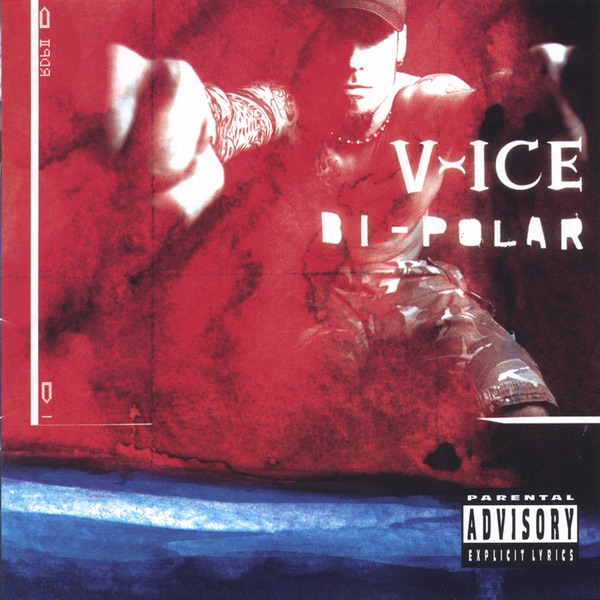
Bi-Polar
2001 · 24 tracks
- 1 Introduction ↗ 0:11
- 2 Nothing Is Real ↗ 4:27
- 3 Molton ↗ 3:14
- 4 Mudd Munster ↗ 3:24
- 5 Exhale ↗ 2:56
- 6 Hate ↗ 5:24
- 7 Primal Side ↗ 5:23
- 8 I Know ↗ 4:44
- 9 Hip Hop Intro ↗ 0:10
- 10 Hip Hop Rules ↗ 4:33
- 11 O.K.S. ↗ 3:40
- 12 Dirty South ↗ 3:43
- 13 Hot Sex ↗ 4:51
- 14 Unbreakable ↗ 3:09
- 15 Detonator ↗ 3:39
- 16 Elvis Killed Kennedy ↗ 3:41
- 17 Insane Killas ↗ 5:02
- 18 Tha Weed Song ↗ 5:15
- 19 Get Your As Up ↗ 2:53
- 20 Crash and Burn ↗ 0:48
- 21 Vampiro ↗ 0:14
- 22 MC & Slasher ↗ 0:10
- 23 Anthropology ↗ 0:16
- 24 White Trash ↗ 0:27

Platinum Underground
2005 · 25 tracks
- 1 Survivor ↗ 2:55
- 2 Ninja Rap 2 ↗ 3:06
- 3 Mecca and Ice ↗ 4:23
- 4 Trailer Park Mullet Wars ↗ 3:15
- 5 OKS ↗ 3:40
- 6 Dunn Datt ↗ 4:06
- 7 Step Up or Shut Up ↗ 3:03
- 8 Say Goodbye ↗ 3:44
- 9 Hustlin' ↗ 3:12
- 10 Ice Ice Baby (Rerecorded Version) ↗ 4:10
- 11 Bounce ↗ 3:48
- 12 Tell Me Why ↗ 5:34
- 13 Rollin' in My ↗ 3:20
- 14 Detonator ↗ 3:38
- 15 Persevere ↗ 3:56
- 16 Tank ↗ 0:25
- 17 Flyin Hawaiian ↗ 0:59
- 18 UFC ↗ 0:20
- 19 Joe ↗ 0:09
- 20 Scotty Mac ↗ 0:26
- 21 Aussie Steve ↗ 0:20
- 22 Clint ↗ 0:21
- 23 Penthouse ↗ 3:17
- 24 Tammy Faye ↗ 0:26
- 25 My Kids ↗ 1:33

Vanilla Ice Is Back! Hip Hop Classics
2008 · 13 tracks
- 1 Ice Ice Baby ↗ 4:14
- 2 You Dropped a Bomb On Me ↗ 4:45
- 3 Fight the Power ↗ 4:32
- 4 Jump Around ↗ 3:15
- 5 Baby Got Back ↗ 4:21
- 6 You Gots to Chill ↗ 3:41
- 7 I Got It Made ↗ 3:42
- 8 Buffalo Soldier ↗ 3:45
- 9 Treat ’Em Right ↗ 4:45
- 10 Insane In the Brain ↗ 3:47
- 11 Ice Ice Baby (Rock Hero Mix) ↗ 4:10
- 12 Ice Ice Baby (Club Crasher Mix) ↗ 4:28
- 13 Ice Ice Baby (New Romantic Mix) ↗ 4:54
-
 To the ExtremeVanilla Ice199015 tracks
 -
 Mind BlowinVanilla Ice199417 tracks
 -
 Hard to SwallowVanilla Ice199813 tracks
 -
 Bi-PolarVanilla Ice200124 tracks
 -
 Platinum UndergroundVanilla Ice200525 tracks
 -
 Vanilla Ice Is Back! Hip Hop ClassicsVanilla Ice200813 tracks
Deep Dive
Overview
Vanilla Ice, born Robert Matthew Van Winkle, stands as a watershed figure in late-twentieth-century hip-hop and rap rock. Rising to mainstream prominence with his 1990 debut single “Ice Ice Baby,” he became the first solo white rapper to achieve substantial commercial success, a milestone that fundamentally altered the demographic landscape of rap music. His rapid ascent and cultural impact—despite mixed critical reception—opened avenues for subsequent white artists in genres historically dominated by Black performers, most notably Eminem. Vanilla Ice’s career trajectory spans from teenage sensation to multifaceted entertainer, encompassing recording, acting, hosting, and a decades-long presence in entertainment.
Formation Story
Robert Matthew Van Winkle was born in Dallas in 1967 before his family relocated to Miami during his childhood. Miami’s vibrant hip-hop and breakdancing culture during the 1980s provided his formative artistic environment. The city’s diverse music scene, shaped by Caribbean diaspora communities and emerging rap traditions, exposed young Van Winkle to the idiom at a foundational moment. He adopted the stage name Vanilla Ice and began crafting a style that blended rap delivery with rock and metal influences, positioning himself at an intersection of genres that mainstream radio had not yet systematized. This combination—rappers rapping over rock and metal production—would later define the rap rock and nu metal explosions of the 1990s and early 2000s.
Breakthrough Moment
Vanilla Ice’s breakthrough came with explosive force in 1990. His debut album To the Extreme, released that year, contained the single “Ice Ice Baby,” a track that sampled Queen and David Bowie’s “Under Pressure” and set hip-hop radio and MTV rotation ablaze. The song’s infectious hook, accessible production, and novelty factor of a young white rapper with a distinctive stage persona drove the album to massive sales and airplay. To the Extreme became one of the best-selling albums of 1990, catapulting Van Winkle from regional Miami act to international celebrity almost overnight. The same year saw the release of Hooked, a follow-up that capitalized on the momentum but lacked the singular viral impact of its predecessor. By the early 1990s, Vanilla Ice had become a household name and the most commercially successful solo rapper of the moment, despite significant skepticism from hip-hop purists and critics.
Peak Era
The period from 1990 through the mid-1990s represented Vanilla Ice’s commercial and cultural zenith. Following his dual 1990 releases, he released Mind Blowin in 1994, an effort to evolve his sound and reclaim credibility in an increasingly competitive hip-hop landscape. However, the novelty and cultural moment that had defined his initial rise had begun to wane by then. The mid-1990s saw the emergence of West Coast gangsta rap, East Coast boom-bap traditionalism, and other dominant strains of hip-hop that diverged from the radio-friendly, rock-influenced style Vanilla Ice had pioneered. Though no longer at the center of mainstream attention, he remained a working recording artist, releasing Hard to Swallow in 1998 as he attempted to maintain relevance in a shifting industry.
Musical Style
Vanilla Ice’s sonic identity fused rap vocals and hip-hop rhythmic sensibilities with rock and metal instrumentation and production values. His delivery was conversational rather than technically intricate, with a nasal tone that became immediately recognizable. Unlike the emerging West Coast gangsta rap dominated by G-funk or the East Coast’s sample-heavy beats, Vanilla Ice favored cleaner, more rock-oriented production that incorporated metal riffs, synthesizers, and pop-song structures. This approach aligned him with the broader genre of rap rock—the fusion of rap vocals with rock instrumentation—which gained substantial commercial traction throughout the 1990s and exploded into nu metal in the early 2000s. His work demonstrated that rappers could access mainstream audiences by deploying rock’s sonic vocabulary, a lesson that shaped the trajectory of rock music in subsequent decades. Over his lengthy career, as documented in releases spanning Bi-Polar (2001), Hot Sex (2003), Platinum Underground (2005), Vanilla Ice Is Back! Hip Hop Classics (2008), and W.T.F. (2011), he returned periodically to recording, though with diminishing commercial visibility.
Major Albums
To the Extreme (1990)
Vanilla Ice’s debut album and the vehicle for “Ice Ice Baby,” one of the most commercially successful rap singles of the early 1990s. The album’s accessibility and crossover appeal drove it to multi-platinum status and established rap rock as a viable commercial formula.
Hooked (1990)
Released in the same year as To the Extreme, this follow-up album attempted to extend Vanilla Ice’s commercial dominance but lacked the breakthrough impact and cultural momentum of its predecessor.
Mind Blowin (1994)
A mid-career effort released four years into his recording tenure, representing an attempt to evolve his style and address criticisms about musical depth and authenticity from hip-hop tastemakers.
Hard to Swallow (1998)
This album marked Vanilla Ice’s continued presence as a working recording artist in the late 1990s, a period when his mainstream commercial visibility had significantly declined.
Signature Songs
- “Ice Ice Baby” (1990) — The defining single that launched Vanilla Ice to international stardom, built on a sample of Queen and David Bowie’s “Under Pressure” and featuring an instantly recognizable hook.
Influence on Rock
Vanilla Ice’s career proved definitively that rap vocals could be grafted onto rock and metal instrumentation to reach mainstream audiences on an unprecedented scale. His success validated the rap rock formula and demonstrated commercial viability in crossing genre boundaries at a moment when such fusions were still novel to radio and MTV programmers. While his artistic credibility within hip-hop remained contested, his commercial and cultural impact opened doors for future white rappers and established the template for rap rock’s rise in the 1990s and the nu metal explosion of the late 1990s and early 2000s. Acts including Limp Bizkit, Kid Rock, and eventually Eminem built upon the groundwork Vanilla Ice had laid, each benefiting from the demographic shift in rock and rap that his presence had precipitated. He is explicitly credited in historical accounts of hip-hop’s racial integration as breaking barriers that had previously confined commercial rap success to Black performers.
Legacy
Vanilla Ice remains a fixture in popular culture and music history, though his legacy is ambivalent. He holds the distinction of being the first solo white rapper to achieve mainstream commercial dominance, a historical milestone that transcends questions of critical esteem. His 1990 peak continues to be referenced in discussions of 1990s pop culture, hip-hop history, and the mainstreaming of rap music. While his recordings have not enjoyed the critical reappraisal accorded to some 1990s figures, his influence on the commercial viability of rap rock and his role in opening rap and hip-hop to broader demographic participation remain historically significant. Over subsequent decades, Vanilla Ice has maintained a public presence through acting, television hosting, and periodic recording projects, demonstrating longevity in entertainment even as his status as a recording artist receded from mainstream attention. Streaming platforms and digital music services have kept his catalog accessible to new generations, ensuring that “Ice Ice Baby” remains among the most recognizable rap recordings of the early 1990s.
Fun Facts
- Born in Dallas but raised in Miami, Vanilla Ice emerged from a city whose diverse Caribbean and Latin music traditions shaped his musical sensibilities alongside American hip-hop.
- His breakthrough in 1990 made him one of the fastest-rising musicians of that year, achieving platinum status with To the Extreme at a pace that rivaled major pop acts.
- Vanilla Ice is credited with credibly demonstrating that rap music could cross racial lines and still achieve mass-market commercial success before Eminem’s emergence in the late 1990s transformed that principle.