
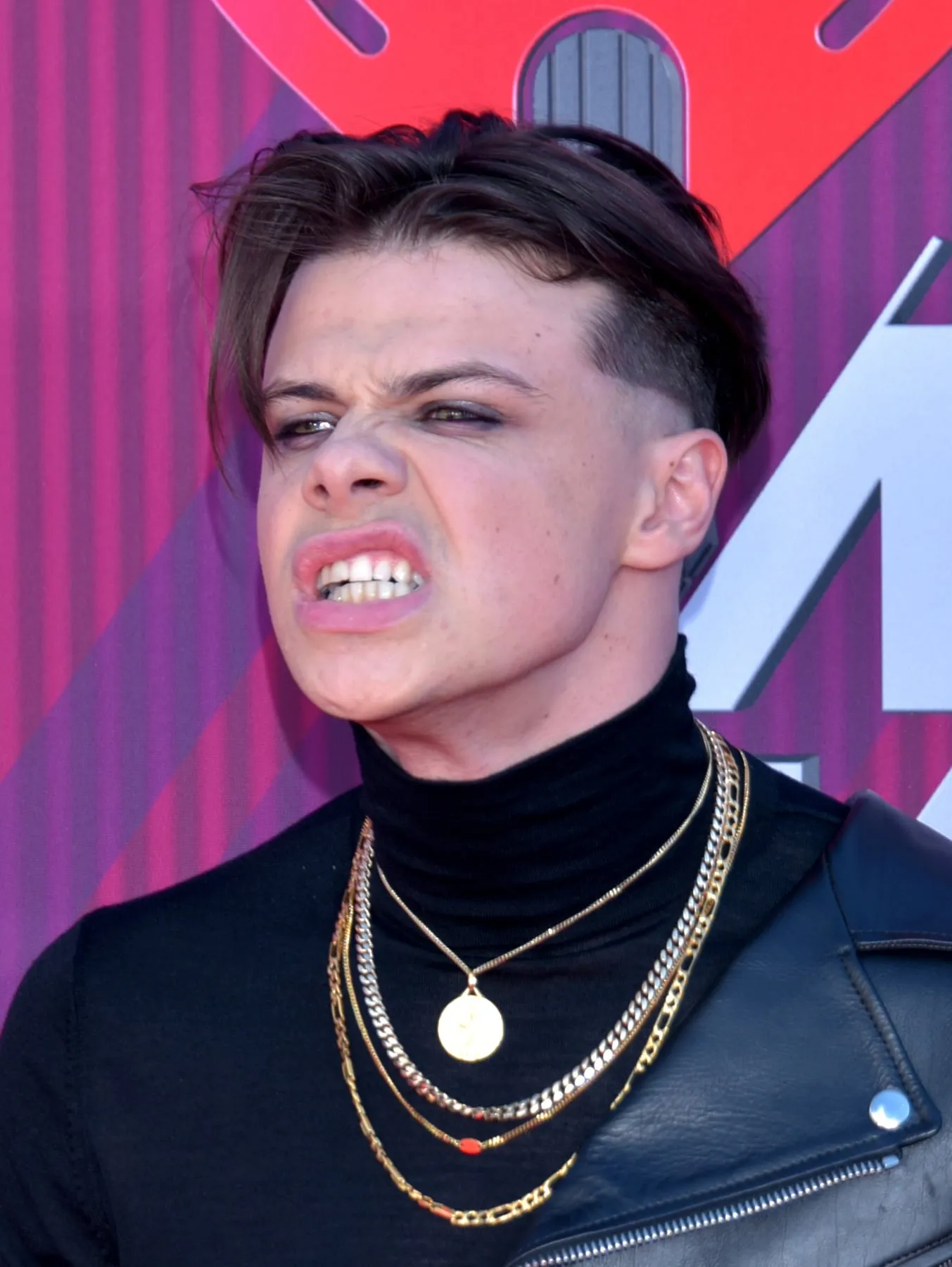
Photo by Toglenn , licensed under CC BY-SA 4.0 · Wikimedia Commons
Rank #74
Yungblud
From Wikipedia
Dominic Richard Harrison, known professionally as Yungblud, is an English musician and actor. In 2018, he released his debut EP Yungblud, followed by his first full-length album 21st Century Liability. In 2019, he released his second EP, The Underrated Youth, and the following year, he released his second studio album, Weird!, which peaked at the top of the UK Albums Chart and reached number 75 on the US Billboard 200. His third album, titled Yungblud like his first EP, was released in 2022 and reached number 1 on the UK Album Charts, as well as number 45 on the Billboard 200 and number 7 on the U.S. Top Rock Albums chart.
Discography & Previews
Browse through and click an album to open and play 30-second previews streamed from Apple Music.

21st Century Liability
2018 · 12 tracks
- 1 Eulogy ↗ 0:31
- 2 Die for the Hype ↗ 3:09
- 3 Doctor Doctor ↗ 3:11
- 4 Medication ↗ 3:12
- 5 Machine Gun (F**k the NRA) ↗ 3:13
- 6 Psychotic Kids ↗ 2:47
- 7 Anarchist ↗ 2:48
- 8 I Love You, Will You Marry Me ↗ 2:58
- 9 Polygraph Eyes ↗ 3:44
- 10 Kill Somebody ↗ 3:08
- 11 California ↗ 3:52
- 12 21st Century Liability ↗ 3:09
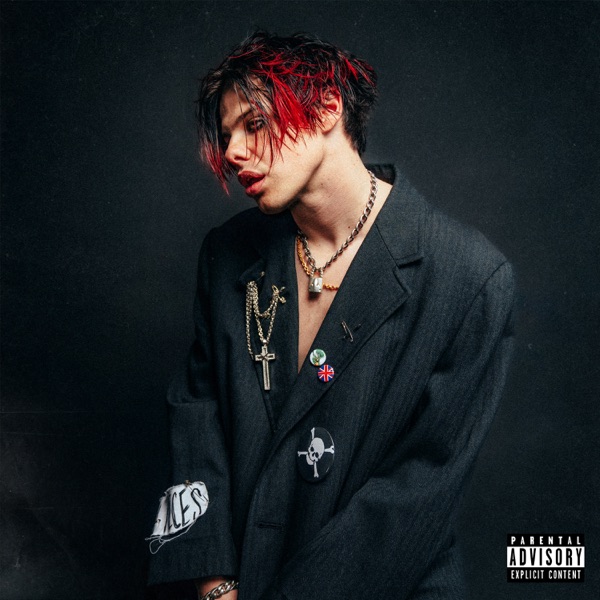
YUNGBLUD
2022 · 12 tracks

-
 21st Century LiabilityYungblud201812 tracks
 -
 YUNGBLUDYungblud202212 tracks
 -
 IdolsYungblud202512 tracks
Deep Dive
Overview
Yungblud, the stage name of Dominic Richard Harrison, emerged in the late 2010s as one of the UK’s most visible and sonically restless young rock musicians. Born in 1997, Harrison straddles rap rock, emo, pop-punk, and alternative rock—a hybrid aesthetic that reflected the fragmented musical landscape of his formative years. His work is characterized by an unpolished urgency, introspective lyricism, and willingness to shift between screamed vocals, sung melodies, and spoken-word delivery across a single album. By his early twenties, he had already scored multiple UK chart successes and established himself as a voice for a digitally native generation navigating anxiety, identity, and disconnection.
Formation Story
Dominic Richard Harrison grew up in England during the 1990s and early 2000s, a period when rock music’s commercial dominance had begun to fracture. Rather than emerging from a fixed punk or metal scene, Harrison’s formation as an artist was rooted in the broader alternative and underground rock ecosystem—the internet-enabled subcultures that allowed young listeners to consume emo, nu-metal, and rap-rock simultaneously without geographic constraint. He gravitated toward rock as his primary idiom while absorbing influences from hip-hop production, DIY punk ethics, and the theatrical vulnerability of 2000s emo bands. His path to professional music-making was accelerated by social media presence and a willingness to share raw, unfiltered recordings that resonated with a generation suspicious of industry polish. This background—neither classically trained nor rooted in a legendary local scene, but shaped by streaming-era discovery and online community—positioned him as emblematic of how rock music’s gatekeepers and geographies had shifted by the late 2010s.
Breakthrough Moment
Yungblud’s professional breakthrough came swiftly after he began releasing music in 2018. His debut EP, Yungblud, introduced his signature blend of rap-rock energy and vulnerable songwriting, but it was his first full-length album, 21st Century Liability (2018), that established him as more than a one-off internet sensation. The album’s title captured the zeitgeist of young adult malaise in the digital age, and its mixture of guitar-driven rock and hip-hop-inflected rhythms found traction on streaming platforms and with rock radio. However, his true mainstream inflection point came with weird! (2020), which not only showcased his growing artistic confidence but also achieved chart success that transcended the alternative underground—the album peaked at number one on the UK Albums Chart, a striking achievement for a young artist working in a genre often perceived as commercially marginal. This success established that there remained significant appetite for guitar-based rock music that incorporated rap, emo, and pop-punk elements, and that Harrison had tapped into something culturally resonant about alienation and identity among younger listeners.
Peak Era
The period spanning 2020 to 2022 represented Yungblud’s most commercially successful and artistically confident phase. weird! not only topped the UK chart but also cracked the US Billboard 200 at number 75, demonstrating that his appeal had begun to cross the Atlantic. The album’s success was followed by continued momentum and touring, solidifying his status as a festival mainstay and concert draw. His third studio album, simply titled YUNGBLUD (2022), reinforced this trajectory: it reached number one on the UK Album Charts once again, climbed to number 45 on the Billboard 200, and secured the number 7 position on the U.S. Top Rock Albums chart. This period marked his establishment not as a novelty or trend, but as a sustained commercial force within rock music. The back-to-back UK chart toppers demonstrated that his core fanbase remained loyal while his reach continued to expand internationally.
Musical Style
Yungblud’s sound is rooted in a collision of aesthetic traditions that had historically occupied separate lanes within rock. His foundation is rap-rock, drawing on the template of nu-metal and hip-hop-inflected alternative rock, with rhythmic drive often coming from programmed or heavily processed drums layered beneath guitar work that ranges from melodic to abrasive. Vocally, he employs a wide palette: sung verses in a mid-range register, screamed or shouted choruses for emotional punctuation, and occasional spoken-word or rap-cadenced passages. The emo and pop-punk influences emerge in his songwriting—introspective, confession-driven lyrics focused on mental health, social alienation, and identity questions—while his production choices often favor a somewhat rough-hewn, anti-slick aesthetic that echoes DIY punk ethics. Melodically, his work is memorable and accessible; hooks are prominent, but they are delivered with enough distortion, reverb, or vocal strain that they never feel smooth or overproduced. The interplay between rock and hip-hop elements is fluid rather than compartmentalized: a single song might feature rap-style verses over trap-inflected drums, then shift into a sung chorus with live-sounding guitars. This hybrid approach reflects the actual listening habits of his generation, who grew up with genre boundaries increasingly irrelevant in streaming contexts.
Major Albums
21st Century Liability (2018)
Harrison’s debut full-length introduced the core elements of his artistic identity: rap-rock production, confessional emo-adjacent lyricism, and a willingness to let vulnerability and angst drive the songwriting. The album’s title signaled thematic preoccupations with mental health and social alienation that would remain central to his work.
weird! (2020)
The second album represented a leap in production sophistication and songwriting clarity while maintaining the raw emotional core. Its number-one UK chart position confirmed that his audience had grown significantly, and its sonic palette expanded to include more varied instrumental arrangements without sacrificing the signature rap-rock foundation.
YUNGBLUD (2022)
Titling his third album after his stage name rather than a conceptual phrase suggested artistic confidence and a consolidation of identity. The album again topped the UK charts and demonstrated sustained commercial momentum, while solidifying his presence on the US rock charts and establishing him as a fixture of contemporary alternative rock radio.
Idols (2025)
His fourth studio album, released in 2025, marks an ongoing evolution in a career that has now spanned over half a decade at the professional level.
Signature Songs
- “Parents” — An early fan favorite that exemplifies his confessional approach to songwriting and his vocal range from sung to screamed.
- “Lemonade” — Demonstrates his ability to craft melodic hooks over driving, hip-hop-influenced rhythmic production.
- “Fleabag” — A showcase of his vulnerability and his willingness to foreground introspective lyrics alongside guitar-driven arrangements.
- “Weird!” — The title track from his breakthrough album, crystallizing his aesthetic and thematic preoccupations for a wider audience.
Influence on Rock
Yungblud’s emergence and commercial success in the late 2010s and early 2020s signaled a broader shift within rock music toward genre fluidity and the integration of hip-hop production techniques and aesthetic approaches into traditionally guitar-centric frameworks. He helped demonstrate that an audience existed for music that openly blended rap-rock, emo, and pop-punk—genres that had been partially dormant or commercially diminished in the mainstream rock landscape since the early 2010s. His success encouraged other young artists to experiment more openly with genre-blending without fear of being perceived as inauthentic. Additionally, his prominence as a young British artist achieving simultaneous success in the UK and US rock markets reaffirmed that rock music, despite decades of predictions of its decline, continued to produce commercially viable and culturally resonant figures. His work also reinforced the importance of social media presence and online community-building as pathways for rock musicians in the streaming era, in contrast to the traditional industry gatekeeping mechanisms that had dominated previous decades.
Legacy
Yungblud’s legacy is still being written, given that his career spans only from 2018 to the present. However, his sustained commercial success—particularly the back-to-back UK chart toppers in 2020 and 2022—has established him as a significant figure within contemporary rock music rather than a fleeting trend. His ability to appeal to both streaming audiences and traditional rock radio, and to crack the US market from a UK base, positions him within a lineage of British rock artists who found transatlantic success in their twenties. Streaming platforms continue to drive significant play counts for his catalog, and his touring activity suggests he maintains a devoted fanbase. The breadth of his genre incorporation—rap, rock, emo, pop-punk—reflects broader changes in how younger listeners consume and categorize music, and his commercial success validates that approach as culturally and commercially viable.
Fun Facts
- Yungblud has also worked as an actor, demonstrating that his multimedia presence extends beyond music into visual media and performance.
- His stage name and subsequent album titles (weird!, YUNGBLUD) reflect a calculated playfulness with capitalization and punctuation that mirrors the aesthetic choices of his generation’s internet culture.
- The decade of life experience between his 1997 birth and his 2018 professional debut means his formative years coincided with the rise of streaming services, which fundamentally shaped how he discovered music and how he initially reached audiences.