
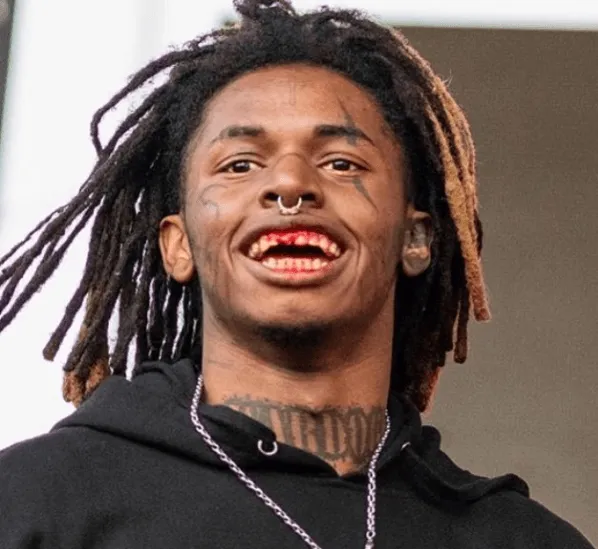
Photo by Antelius6 , licensed under CC BY-SA 4.0 · Wikimedia Commons
Rank #493
ZillaKami
From Wikipedia
Junius Donald Rogers, professionally known as ZillaKami, is an American singer, rapper, songwriter, and notable contributor to the trap metal sub-genre. He is a member of the hip-hop duo City Morgue, consisting of rapper SosMula, and was also a former songwriter for rapper 6ix9ine.
Discography & Previews
Browse through and click an album to open and play 30-second previews streamed from Apple Music.

DOG BOY
2021 · 15 tracks
- 1 Chewing Gum! ↗ 2:02
- 2 CHAINS ↗ 2:53
- 3 Lemon Juice ↗ 1:56
- 4 Not Worth It ↗ 1:47
- 5 Hello ↗ 2:28
- 6 Bleach (feat. Denzel Curry) ↗ 2:30
- 7 631 MAKES ME ↗ 1:08
- 8 IHY ↗ 2:08
- 9 BADASS ↗ 3:06
- 10 Tactical Nuke Interlude ↗ 0:47
- 11 Nissan Only ↗ 1:48
- 12 Black Cats ↗ 1:39
- 13 dedgrl ↗ 1:57
- 14 FROSTY ↗ 2:50
- 15 Space Cowboy ↗ 2:24
-
 DOG BOYZillaKami202115 tracks
Deep Dive
Overview
ZillaKami—the stage name of Junius Donald Rogers—stands as a defining figure in the emergence of trap metal, a subgenre that fuses the aggression of hardcore punk and nu metal with the rhythmic and lyrical frameworks of hip-hop and trap. Operating primarily through the hip-hop duo City Morgue alongside rapper SosMula, ZillaKami has carved out a singular artistic identity that resists easy categorization, blending screamed vocals, distorted guitars, and trap-influenced production into a sonically violent and urgent whole. His work extends beyond City Morgue into solo recordings and songwriting collaborations, establishing him as one of the primary architects of a sound that appeals equally to punk, metal, and hip-hop audiences.
Formation Story
ZillaKami entered the music industry during the late 1990s and early 2000s, a period when nu metal was at peak commercial saturation and underground punk and hardcore scenes were fragmenting into increasingly specific microgenres. Coming of age amid these overlapping influences—the distorted guitar work of late-90s metal bands, the vocal aggression of hardcore punk, and the emerging trap production techniques that would dominate hip-hop in the 2010s—Rogers began developing a sonic philosophy that would eventually coalesce into trap metal. His earliest creative work positioned him at the intersection of these worlds, drawing from the raw energy of punk, the heaviness of metal, and the contemporary urgency of trap and hip-hop production.
Breakthrough Moment
ZillaKami’s breakthrough came through his partnership with SosMula and the formation of City Morgue, the hip-hop duo that would serve as the primary vehicle for his artistic vision. The project’s hybrid approach—combining rap vocals with screamed singing, trap beats with distorted guitar and bass—immediately captured attention within underground music communities and gradually mainstream alternative and hip-hop platforms. City Morgue’s identity became inseparable from ZillaKami’s sonic innovations, establishing him as a creative force capable of bridging audiences that had traditionally remained separate. His collaborations and songwriting work, including contributions to other artists’ projects, further extended his reach and cemented his role as a key figure in the trap metal movement.
Peak Era
ZillaKami’s solo recording phase crystallized in the early 2020s with the release of DOG BOY in 2021, followed by AUDIO CREEP in 2023. These albums marked a maturation of his trap metal vision, showcasing increasingly sophisticated production choices and refined songwriting while maintaining the visceral energy and genre-blending approach that defined his earlier work. During this period, ZillaKami operated simultaneously as a solo artist and as the creative backbone of City Morgue, with each project informing and enhancing the other. The albums from this era demonstrated his ability to sustain commercial and critical momentum while remaining committed to the uncompromising sonic aesthetic that had attracted his fanbase.
Musical Style
ZillaKami’s sound is built on the deliberate collision of seemingly incompatible elements. His vocal approach ranges from rapid-fire rapping to visceral screaming, often within the same track, creating a tonal palette that recalls both hardcore punk vocalists and aggressive rap delivery. Musically, his production philosophy incorporates distorted guitars and bass lines that could sit comfortably in a nu metal or hardcore punk context, layered atop trap-influenced hi-hat patterns, kick drums, and 808 bass synthesizers derived from contemporary hip-hop production. This hybridization is not decorative; it is foundational to his songwriting, with each element serving the emotional intensity and rhythmic drive of the compositions. The result is a sound that feels simultaneously heavy and contemporary, aggressive and rhythmically sophisticated, appealing to listeners across rock, metal, and hip-hop constituencies. Lyrically, ZillaKami combines the confessional and narrative impulses of rap with the directness and cathartic aggression typical of punk and hardcore traditions.
Major Albums
DOG BOY (2021)
ZillaKami’s first solo full-length album, establishing the sonic parameters of his solo work while demonstrating his ability to sustain an album-length vision centered on trap metal aesthetics and aggressive vocal delivery.
AUDIO CREEP (2023)
The follow-up solo album, refining and expanding upon the trap metal formula with continued emphasis on production sophistication and genre-fluid songwriting.
Signature Songs
- ZillaKami’s trap metal vocals and screamed delivery became signature elements that distinguish his work across both solo and City Morgue recordings.
- His collaborations on tracks with SosMula showcase the complementary dynamic between rap delivery and screamed vocal intensity that defines the duo’s approach.
- His songwriting contributions across multiple projects demonstrate his ability to craft compelling hooks and structural choices within the trap metal framework.
Influence on Rock
ZillaKami represents a crucial bridge between contemporary hip-hop and rock music at a moment when those genres had become largely stratified. By demonstrating that trap production and hip-hop lyrical approaches could coexist authentically with hardcore punk aggression and metal heaviness, he has provided a template that subsequent artists have built upon. City Morgue and ZillaKami’s solo work have influenced a generation of musicians exploring genre boundaries, proving that audiences exist for music that refuses traditional categorization. His work has contributed to the broader acceptance of trap metal as a legitimate subgenre with its own aesthetics, fanbase, and creative lineage.
Legacy
ZillaKami’s long-term significance lies in his role as a primary architect of trap metal during the genre’s crystallization in the 2010s and early 2020s. His continued active recording and touring, spanning both solo releases and City Morgue projects, ensures an ongoing presence in the streaming era and contemporary rock discourse. The accessibility of his work across multiple genres—finding audiences in hardcore punk communities, nu metal revival circles, and hip-hop platforms simultaneously—demonstrates the universal appeal of his particular sonic fusion. As streaming platforms have made genre boundaries increasingly fluid, ZillaKami’s refusal to select a single identity has positioned his work as increasingly relevant rather than temporally bound.
Fun Facts
- ZillaKami’s birth name, Junius Donald Rogers, is rarely used in contemporary music journalism, with his professional stage name having become his primary artistic identity.
- His songwriting contributions to projects outside of his own recordings demonstrate a versatility that extends beyond his public-facing solo and City Morgue work.
- The City Morgue partnership with SosMula has remained creatively consistent and commercially successful since its inception, making it one of the most enduring collaborations in trap metal.
- ZillaKami’s official web presence through the City Morgue website reflects the duo’s integrated creative and commercial identity, with his solo work and group work presented as complementary expressions of the same artistic vision.