
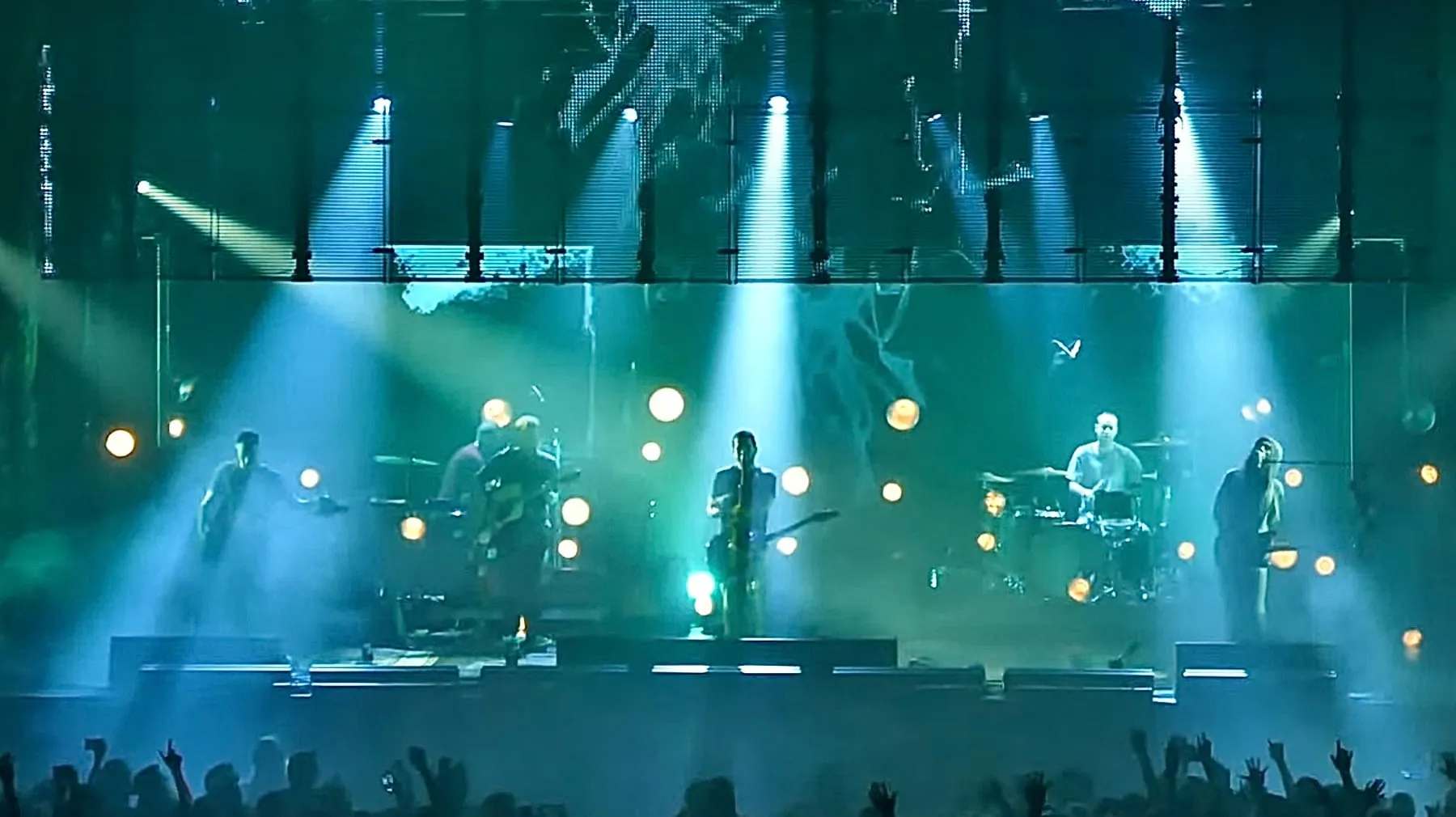
Photo by Will Bonniker , licensed under CC BY 4.0 · Wikimedia Commons
Rank #224
Brand New
From Wikipedia
Brand New is an American rock band formed in 2000 from Long Island, New York. Consisting of lead vocalist and rhythm guitarist Jesse Lacey, lead guitarist Vincent Accardi, bassist Garrett Tierney and drummer Brian Lane, the band earned critical recognition as one of the most influential emo bands, and was acclaimed for their musical development and artistic innovation compared to other groups in the scene from which they originated.
Members
- Jesse Lacey
Discography & Previews
Browse through and click an album to open and play 30-second previews streamed from Apple Music.

Your Favorite Weapon
2001 · 12 tracks
- 1 The Shower Scene ↗ 2:26
- 2 Jude Law and a Semester Abroad ↗ 3:42
- 3 Sudden Death In Carolina ↗ 3:02
- 4 Mix Tape ↗ 3:59
- 5 Failure By Design ↗ 3:16
- 6 Last Chance To Lose Your Keys ↗ 3:31
- 7 Logan To Government Center ↗ 3:06
- 8 The No Seatbelt Song ↗ 4:32
- 9 Seventy Times 7 ↗ 3:34
- 10 Secondary ↗ 3:08
- 11 Magazines ↗ 2:53
- 12 Soco Amaretto Lime ↗ 4:48

Deja Entendu
2003 · 11 tracks
- 1 Tautou ↗ 1:42
- 2 Sic Transit Gloria ... Glory Fades ↗ 3:06
- 3 I Will Play My Game Beneath The Spin Light ↗ 3:57
- 4 Okay I Believe You, But My Tommy Gun Don't ↗ 5:35
- 5 The Quiet Things That No One Ever Knows ↗ 4:02
- 6 The Boy Who Blocked His Own Shot ↗ 4:39
- 7 Jaws Theme Swimming ↗ 4:34
- 8 Me vs. Maradona vs. Elvis ↗ 5:19
- 9 Guernica ↗ 3:23
- 10 Good to Know That If I Ever Need Attention All I Have to Do Is Die ↗ 7:01
- 11 Play Crack The Sky ↗ 5:28

The Devil and God Are Raging Inside Me
2006 · 12 tracks


-
 Your Favorite WeaponBrand New200112 tracks
 -
 Deja EntenduBrand New200311 tracks
 -
 The Devil and God Are Raging Inside MeBrand New200612 tracks
 -
 DaisyBrand New200913 tracks
 -
 Science FictionBrand New201712 tracks
Deep Dive
Overview
Brand New is an American rock band formed in 2000 in Levittown, Long Island, New York, that emerged as one of the most influential acts within the emo genre while simultaneously pushing beyond its conventional boundaries into more ambitious indie and alternative rock territories. Fronted by lead vocalist and rhythm guitarist Jesse Lacey alongside lead guitarist Vincent Accardi, bassist Garrett Tierney, and drummer Brian Lane, the band earned critical recognition not for adhering to emo’s formulas but for systematically dismantling and reimagining them across their studio discography. Their arc traced a deliberate path from pop-tinged post-hardcore to increasingly experimental and literary approaches to rock songwriting, establishing them as architects of a more intellectually rigorous alternative music landscape.
Formation Story
Brand New coalesced on Long Island in 2000, a region that would become synonymous with their identity even as they transcended their local scene. The band’s initial lineup of Lacey, Accardi, Tierney, and Lane formed during an era when Long Island’s underground music scene was beginning to generate wider attention. Emerging from the post-hardcore and emo contexts of the early 2000s, Brand New began as a group rooted in the emotional intensity and technical musicianship that defined those genres, but from their inception they carried an ambition that suggested they were unlikely to remain confined within those parameters for long.
Breakthrough Moment
Brand New’s debut album, Your Favorite Weapon (2001), announced their arrival with a sound that blended melodic emo sensibilities with post-hardcore urgency. The album caught the attention of both underground and mainstream listeners, establishing the band as rising figures within the emo landscape. However, it was their second album, Deja Entendu (2003), that crystallized their approach and expanded their audience significantly. Deja Entendu demonstrated a marked maturation in songwriting and production, featuring more intricate arrangements and lyrical depth that set a new standard for what emo music could accomplish. The album’s critical and commercial success positioned Brand New not merely as participants in the emo scene but as innovators capable of reshaping its possibilities.
Peak Era
The band’s peak creative and commercial period extended from the mid-2000s through the early 2010s, anchored by two major releases: The Devil and God Are Raging Inside Me (2006) and Daisy (2009). The Devil and God represented a watershed moment, deepening the literary and philosophical dimensions of Lacey’s songwriting while the band’s instrumental approach became increasingly sophisticated and experimental. Daisy pushed further into abstract territory, with jagged guitar work, fragmented song structures, and an overall aesthetic that prioritized artistic risk over accessibility. These albums cemented Brand New’s reputation for continuous evolution and established them as one of the decade’s most artistically uncompromising rock bands.
Musical Style
Brand New’s sound evolved systematically across their catalog, moving from the melodic post-hardcore and emo-inflected approach of their early work toward increasingly experimental and dissonant territory. Their early albums emphasized Lacey’s expressive vocal delivery over layered guitar arrangements, combining the emotional directness of emo with the technical precision of post-hardcore. By the mid-to-late 2000s, the band’s production choices became more unconventional, embracing noise textures, unconventional song structures, and atmospherics that suggested influence from indie rock, post-rock, and experimental music traditions. Lyrically, Lacey’s writing progressed from personal and romantic themes toward more abstract, literary, and philosophical subject matter. Throughout their career, the band maintained a commitment to instrumental and compositional complexity that distinguished them from many of their contemporaries in the emo and alternative rock spaces.
Major Albums
Your Favorite Weapon (2001)
Brand New’s debut introduced their core sound: melodic emo structures enriched by post-hardcore instrumentation and Lacey’s emotionally resonant vocals, establishing the foundation for their subsequent development.
Deja Entendu (2003)
The album that expanded the band’s reach and critical reputation, Deja Entendu showcased heightened songwriting sophistication and production refinement while maintaining the melodic sensibility that had drawn initial audiences.
The Devil and God Are Raging Inside Me (2006)
A turning point in the band’s artistic trajectory, this album deepened lyrical and thematic complexity while the instrumentation became more layered and textured, signaling their movement toward more experimental approaches.
Daisy (2009)
Brand New’s most challenging and uncompromising work, Daisy fragmented conventional song structures, incorporated dissonant guitar work, and embraced noise and atmosphere in ways that tested listener patience while establishing the band’s absolute creative independence.
Science Fiction (2017)
Released after an eight-year gap, Science Fiction reintegrated some melodic sensibilities while maintaining the experimental frameworks developed in the preceding era, demonstrating the band’s continued engagement with artistic evolution.
Signature Songs
- Soco Amaretto Make Me Happy — An early standout that showcased Lacey’s vocal expressiveness and the band’s knack for crafting memorable hooks within emotionally direct songwriting.
- The Quiet Things — A Deja Entendu highlight demonstrating the album’s leap in compositional sophistication and Lacey’s ability to convey vulnerability through restrained delivery.
- Sowing Season — Among the band’s most beloved tracks, illustrating their capacity to balance melodic accessibility with technical instrumentation and emotional depth.
- Guernica — A Daisy centerpiece exemplifying the album’s more fragmented and experimental approach to structure and arrangement.
Influence on Rock
Brand New’s significance within rock music history centers on their expansion of emo’s artistic and intellectual possibilities during a period when the genre was commercially ascendant but artistically formulaic. By demonstrating that emo conventions could serve as a launching point for increasingly experimental and unconventional approaches, they influenced a generation of alternative and indie rock musicians to view their foundational genres not as destinations but as starting points for further exploration. Their emphasis on continuous artistic reinvention across each album release influenced numerous bands working within alternative and indie rock spaces to prioritize creative risk and evolution over consistency or commercial predictability. The trajectory from Your Favorite Weapon through Daisy provided a template for how bands could maintain artistic relevance and critical respect by refusing to calcify around early success.
Legacy
Brand New’s legacy extends beyond their contemporaneous influence into the ongoing reassessment of 2000s rock and emo history. The band’s commitment to artistic autonomy—evident in their willingness to challenge audiences with increasingly demanding and unconventional work—established them as among the era’s most principled alternative rock acts. Their eight-year gap between Daisy and Science Fiction, followed by continued activity, demonstrated their capacity to retreat from and re-engage with public visibility on their own terms. The band’s extensive catalog has sustained cultural presence through streaming platforms and continued underground and critical appreciation, with their albums serving as reference points for subsequent generations of alternative, indie rock, and post-emo musicians exploring literary and experimental possibilities within rock music frameworks. Their influence persists in contemporary discussions of how emo and alternative rock might evolve beyond their commercial peaks.
Fun Facts
- Brand New’s origin in Levittown, Long Island, situated them within a regional music community that generated several influential acts during the 2000s alternative and emo waves.
- The band maintained an official website at fightoffyourdemons.com, reflecting their engagement with direct fan communication and independence from conventional industry intermediaries.
- The eight-year gap between Daisy (2009) and Science Fiction (2017) represented an extended period of creative reflection and distance from the public eye before the band’s return to recording and touring.
- The band’s artistic arc—moving from relatively accessible pop-influenced emo toward increasingly dissonant and experimental work—made them a reference point for discussions about authenticity and artistic evolution within alternative rock communities.