
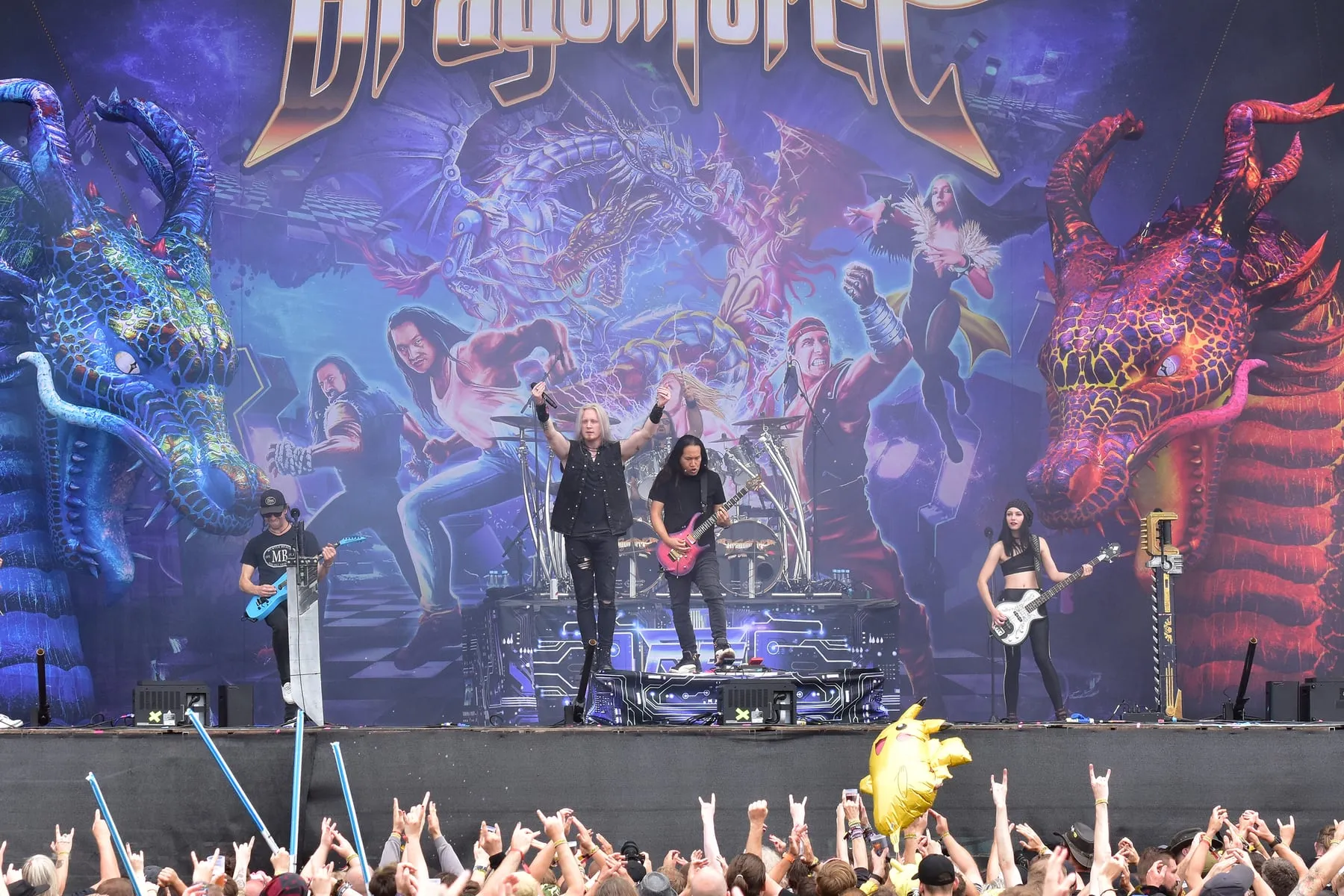
Photo by Frank Schwichtenberg , licensed under CC BY-SA 4.0 · Wikimedia Commons
Rank #379
DragonForce
From Wikipedia
DragonForce are a British power metal band from London, formed in 1999. They are known for their long and fast guitar solos, fantasy-themed lyrics and retro video game-influenced sound. The band themselves refer to their music as "extreme power metal".
Members
- Adrian Lambert
- Alicia Vigil
- Alissa White-Gluz
- Dave Mackintosh
- Didier Almouzni
- Frédéric Leclercq
- Gee Anzalone
- Herman Li
- Marc Hudson
- Sam Totman
- Vadim Pruzhanov
- ZP Theart
Discography & Previews
Browse through and click an album to open and play 30-second previews streamed from Apple Music.

Valley of the Damned
2003 · 10 tracks
- 1 Invocation of the Apocalyptic Evil (Remastered) ↗ 0:15
- 2 Valley of the Damned (Remastered 2009) ↗ 7:12
- 3 Black Fire (Remastered 2009) ↗ 5:47
- 4 Black Winter Night (Remastered) ↗ 6:30
- 5 Starfire (Remastered) ↗ 5:54
- 6 Disciples of Babylon (Remastered) ↗ 7:17
- 7 Revelations (Remastered) ↗ 6:52
- 8 Evening Star (Remastered) ↗ 6:40
- 9 Heart of a Dragon (Remastered 2009) ↗ 5:24
- 10 When Dragons Rule (Remastered) ↗ 5:50


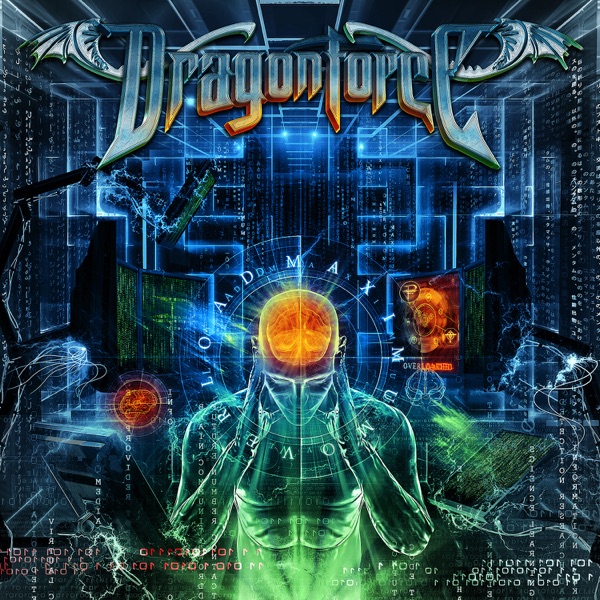

Reaching Into Infinity
2017 · 13 tracks
- 1 Reaching Into Infinity ↗ 1:26
- 2 Ashes of the Dawn ↗ 4:34
- 3 Judgement Day ↗ 6:14
- 4 Astral Empire ↗ 5:25
- 5 Curse of Darkness ↗ 5:35
- 6 Silence ↗ 4:51
- 7 Midnight Madness ↗ 6:21
- 8 War! ↗ 5:19
- 9 Land of Shattered Dreams ↗ 5:00
- 10 The Edge of the World ↗ 11:04
- 11 Our Final Stand ↗ 5:04
- 12 Hatred and Revenge (Bonus Track) ↗ 5:26
- 13 Evil Dead (Bonus Track) ↗ 3:22

Extreme Power Metal
2019 · 10 tracks

Warp Speed Warriors
2024 · 12 tracks
- 1 Astro Warrior Anthem ↗ 6:50
- 2 Power of the Triforce ↗ 3:53
- 3 Kingdom of Steel ↗ 4:46
- 4 Burning Heart ↗ 5:56
- 5 Space Marine Corp ↗ 6:17
- 6 Prelude to Darkness ↗ 0:52
- 7 The Killer Queen ↗ 5:49
- 8 Doomsday Party ↗ 5:15
- 9 Pixel Prison ↗ 6:42
- 10 Wildest Dreams (DragonForce's Version) ↗ 2:51
- 11 Doomsday Party (feat. Elize Ryd) ↗ 5:16
- 12 Power of the Triforce (Instrumental) ↗ 3:53
-
 Valley of the DamnedDragonForce200310 tracks
 -
 Sonic FirestormDragonForce20048 tracks
 -
 Inhuman RampageDragonForce20058 tracks
 -
 Ultra BeatdownDragonForce20088 tracks
 -
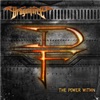 The Power WithinDragonForce201210 tracks
 -
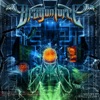 Maximum OverloadDragonForce201410 tracks
 -
 Reaching Into InfinityDragonForce201713 tracks
 -
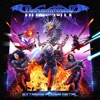 Extreme Power MetalDragonForce201910 tracks
 -
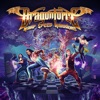 Warp Speed WarriorsDragonForce202412 tracks
Deep Dive
Overview
DragonForce are a British power metal band from London, formed in 1999. Over more than two decades, they have become synonymous with virtuosic guitar work, high-octane arrangements, and a aesthetic rooted equally in fantasy narrative and 1980s video game aesthetics. The band describes their music as “extreme power metal,” a designation that captures both their stylistic loyalty to power metal’s European tradition and their willingness to push tempos, technical difficulty, and sonic intensity beyond conventional genre boundaries.
Formation Story
DragonForce emerged from London in 1999, a moment when power metal—long a staple of mainland European progressive and symphonic rock—was beginning to gain wider recognition among English-speaking audiences. The band’s founding core of guitarist Herman Li and guitarist Sam Totman established the group’s dual-guitar identity and songwriting foundation from the outset. Along with vocalist ZP Theart, they assembled a rhythm section and began performing in London venues, drawing from the speed metal and power metal traditions that had flourished in bands across Europe and Japan. The band’s early lineup crystallized around the core members’ shared vision of combining technically demanding guitar work with accessibility and thematic cohesion. From their inception, DragonForce positioned themselves at the intersection of accessibility and technical mastery, appealing to listeners who valued both musicianship and memorable song composition.
Breakthrough Moment
DragonForce’s breakthrough came with their debut album Valley of the Damned in 2003. The record announced a band fully formed in its aesthetic vision: rapid-fire guitar riffing, polyrhythmic drumming, and fantasy-themed lyrics delivered with conviction. A rapid sequence of releases followed—Sonic Firestorm in 2004 and Inhuman Rampage in 2005—each expanding the band’s reputation within the global metal community. Inhuman Rampage in particular solidified their standing, generating growing interest among international audiences and establishing them as leading representatives of modern power metal outside Europe’s established strongholds.
Peak Era
DragonForce’s peak era extended through the late 2000s and early 2010s, anchored by Ultra Beatdown (2008), The Power Within (2012), and Maximum Overload (2014). These albums represented the band at their most confident, with Herman Li and Sam Totman’s guitar interplay reaching new levels of intricacy and the band’s overall production becoming more polished without sacrificing intensity. During this period, they maintained steady touring and grew their fanbase through both traditional metal channels and internet culture, where their technical prowess resonated with listeners across genres. The band’s ability to sustain output across a decade-long span demonstrated their compositional durability and their appeal to a devoted, technically literate audience.
Musical Style
DragonForce’s sound is defined by hyperfast guitar solos, intricate dual-guitar harmonies, and a production aesthetic that emphasizes clarity and precision. Both Herman Li and Sam Totman employ shredding techniques rooted in classical music phrasing and rock tradition; their solos often feature rapid chromatic runs, sweep-picked arpeggios, and melodic motifs that interweave between the two players. The rhythm section—anchored by drummer Dave Mackintosh and successive bass players including Frédéric Leclercq—maintains strict, syncopated grooves that propel the music forward without sacrificing groove. Vocalist ZP Theart and later Marc Hudson deliver the band’s lyrics, which draw heavily on fantasy and video game narratives, in a style that sits between melodic power metal vocals and emphatic declamation. The band’s instrumentation typically includes synthesizers operated by Vadim Pruzhanov, which supply melodic counterpoint, orchestral color, and textural depth. This combination—dual lead guitars, thunderous rhythm section, keyboard orchestration, and fantasy-inflected lyrics—constitutes the core identity of their “extreme power metal” designation, which emphasizes speed, technical complexity, and dramatic presentation.
Major Albums
Valley of the Damned (2003)
DragonForce’s debut announced their complete aesthetic: rapid-fire guitar solos, fantasy-themed lyrics, and a retro video game-influenced production. The album established the template that would define all subsequent work.
Sonic Firestorm (2004)
The follow-up refined the band’s songwriting and deepened their technical approach. Sonic Firestorm demonstrated that the debut was not a one-off statement but the foundation of a sustained artistic vision.
Inhuman Rampage (2005)
This third album represented a watershed moment for the band, earning substantial international recognition and solidifying their place in modern power metal. The record balanced technical showcases with strong melodic writing across a full-length arc.
Ultra Beatdown (2008)
DragonForce’s fourth full-length, Ultra Beatdown arrived after three consecutive annual releases. The album showed the band refining their approach rather than reinventing, with Herman Li and Sam Totman’s guitar interplay reaching peak intricacy.
The Power Within (2012)
After a four-year gap following Ultra Beatdown, The Power Within represented the band’s largest production scope and most ambitious arrangement work to date. The album marked the entrance of new vocalist Marc Hudson, who brought a different vocal character to the band’s formula.
Reaching Into Infinity (2017)
Released after a three-year hiatus, Reaching Into Infinity demonstrated the band’s continued commitment to the extreme power metal sound. The album incorporated fresh production techniques while maintaining fidelity to the core aesthetic.
Signature Songs
- “Through the Fire and Flames” — The band’s flagship composition, exemplifying their combination of technical guitar showcase and melodic accessibility.
- “Operation Ground and Pound” — A showcase for the rhythm section’s precision and the guitarists’ rapid-fire technique.
- “My Anger Don’t Change” — A demonstration of the band’s ability to craft memorable hooks within a high-speed technical framework.
- “The Last Dragonborn” — Fantasy narrative merged with synthesizer-driven melodic passages and dual-guitar harmony.
- “Fury of the Storm” — Encapsulates the band’s production philosophy and their emphasis on clarity and percussive articulation within fast tempos.
Influence on Rock
DragonForce’s influence has extended beyond power metal specifically into the broader technical rock and metal communities. Their demonstration that extreme technical difficulty and melodic accessibility could coexist in mainstream metal listening informed subsequent generations of progressive and technical metal musicians. The band’s international profile—particularly their success outside the traditional European power metal strongholds—helped establish power metal as a viable subgenre within English-speaking rock markets. Their commitment to dual-guitar interplay and to synthesis between keyboard orchestration and metal tradition established an aesthetic template that influenced bands working in the intersection of power metal, progressive metal, and symphonic metal.
Legacy
DragonForce’s legacy rests on their sustained output across more than two decades and their establishment of power metal as a credible tradition within international rock. From their 1999 formation through 2024’s Warp Speed Warriors, the band has maintained both stylistic consistency and periodic evolution. The longevity of their core members—Herman Li and Sam Totman have remained constant presences throughout—has afforded the band continuity and institutional knowledge. Their records continue to circulate widely through streaming platforms and among devoted metal audiences, while their live performances maintain strong attendance. The band’s influence can be heard in successive generations of power metal and progressive metal musicians who have adopted elements of their technical approach, production philosophy, and approach to synthesizing video game and fantasy narrative with contemporary metal idioms.
Fun Facts
- DragonForce have maintained their founding dual-guitar foundation of Herman Li and Sam Totman across the band’s entire 25-year history, an unusually stable songwriting and performance partnership in modern rock.
- The band’s emphasis on video game-influenced aesthetics and narratives predated the mainstream cultural resurgence of gaming in the 2010s, establishing them as early practitioners of gaming culture integration in rock music.
- Roadrunner Records served as the primary label partner throughout the band’s recorded history, providing sustained support for an album release pace that often exceeded that of peer bands in the power metal tradition.
- The band’s lineup has featured numerous bass players and vocalists over time, with Frédéric Leclercq and Marc Hudson representing some of the most sustained tenure in these roles.