
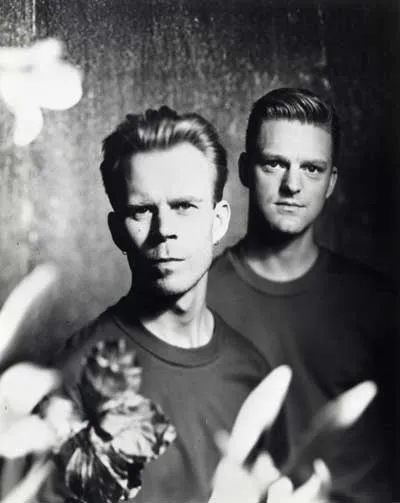
Photo by David Scheinmann , licensed under CC BY-SA 3.0 · Wikimedia Commons
Rank #447
Erasure
From Wikipedia
Erasure are an English synth-pop duo formed in London in 1985, consisting of lead vocalist and songwriter Andy Bell and songwriter, producer and keyboardist Vince Clarke, the latter previously a co-founder of the band Depeche Mode and synth-pop duo Yazoo. From their fourth single, "Sometimes" (1986), Erasure established themselves on the UK Singles Chart, becoming one of the most successful acts of the mid-1980s to the mid-1990s. From 1986 to 2007, the pair achieved 24 consecutive top 40 entries in the UK singles chart. By 2009, 34 of their 37 chart-eligible singles and EPs had made the UK top 40, including 17 climbing into the top 10. At the 1989 Brit Awards, Erasure won the Brit Award for Best British Group.
Members
- Andy Bell
- Vince Clarke
Discography & Previews
Browse through and click an album to open and play 30-second previews streamed from Apple Music.
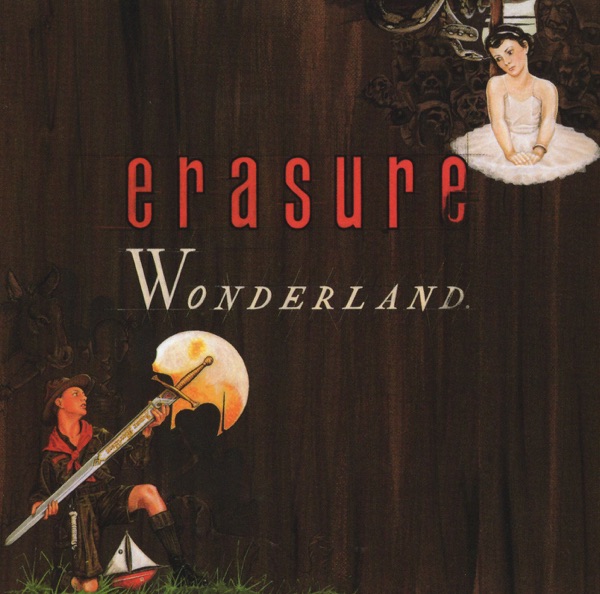
Wonderland
1986 · 12 tracks
- 1 Who Needs Love Like That ↗ 3:18
- 2 Reunion ↗ 3:24
- 3 Cry So Easy ↗ 3:36
- 4 Senseless ↗ 3:26
- 5 Heavenly Action ↗ 3:27
- 6 Say What ↗ 3:57
- 7 Love Is a Loser ↗ 3:02
- 8 March On Down the Line ↗ 3:44
- 9 My Heart... So Blue ↗ 4:30
- 10 Oh L'Amour ↗ 3:36
- 11 Who Needs Love Like That (The Love That Mix Version) ↗ 6:09
- 12 Oh L'Amour (The Funky Sisters Remix) ↗ 7:06
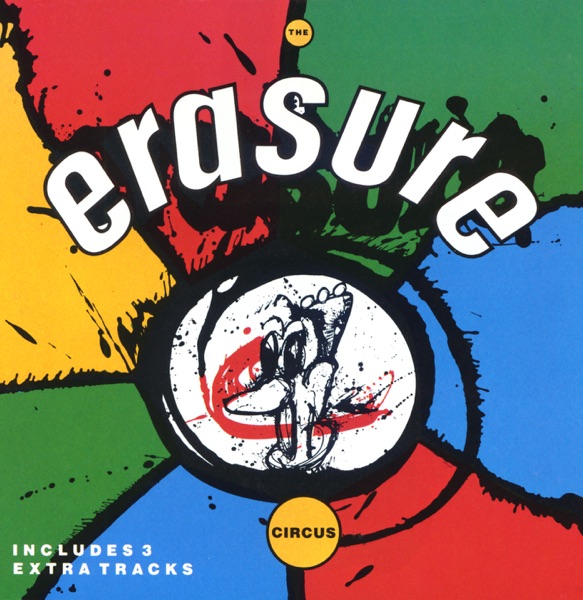
The Circus
1987 · 13 tracks
- 1 It Doesn't Have to Be ↗ 3:56
- 2 Hideaway ↗ 3:49
- 3 Don't Dance ↗ 3:39
- 4 If I Could ↗ 3:53
- 5 Sexuality ↗ 3:54
- 6 Victim of Love ↗ 3:42
- 7 Leave Me to Bleed ↗ 3:23
- 8 Sometimes ↗ 3:40
- 9 The Circus ↗ 5:31
- 10 Spiralling ↗ 3:10
- 11 In the Hall of the Mountain King ↗ 2:59
- 12 Sometimes (Extended Mix) ↗ 5:25
- 13 It Doesn't Have to Be (The Boop Oopa Doo Mix) ↗ 3:45
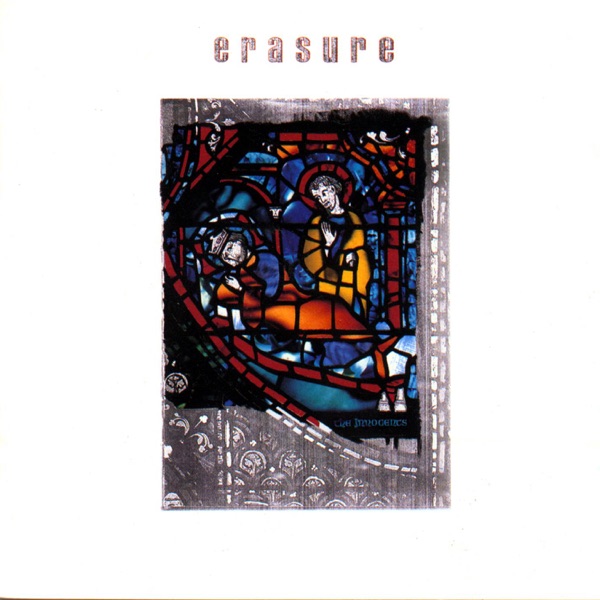
The Innocents
1988 · 13 tracks
- 1 A Little Respect ↗ 3:33
- 2 Ship of Fools ↗ 4:02
- 3 Phantom Bride ↗ 3:32
- 4 Chains of Love ↗ 3:35
- 5 Hallowed Ground ↗ 4:06
- 6 Sixty-Five Thousand ↗ 3:24
- 7 Heart of Stone ↗ 3:21
- 8 Yahoo! ↗ 3:48
- 9 Imagination ↗ 3:28
- 10 Witch In the Ditch ↗ 3:45
- 11 Weight of the World ↗ 3:40
- 12 When I Needed You (Melancholic Mix) ↗ 4:25
- 13 River Deep, Mountain High ↗ 7:02
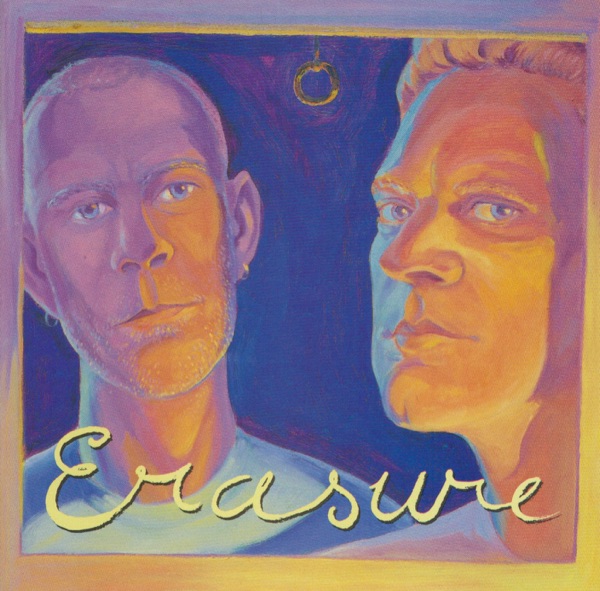
Erasure
1995 · 11 tracks
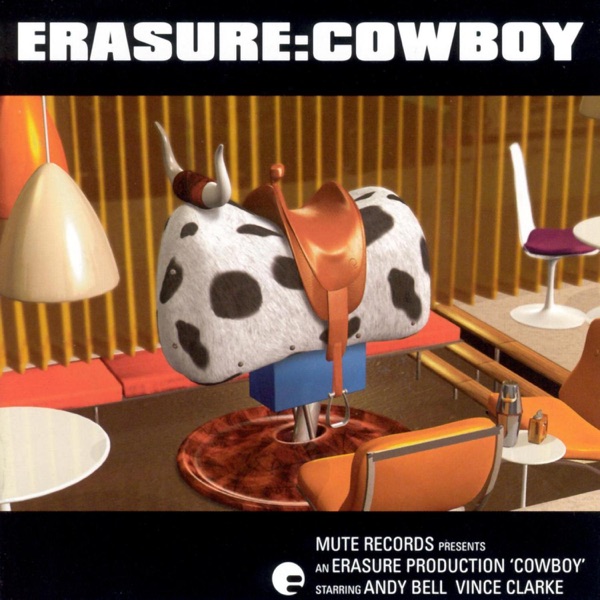
Cowboy
1997 · 28 tracks
- 1 Rain ↗ 4:11
- 2 Worlds On Fire ↗ 3:37
- 3 Reach Out ↗ 3:47
- 4 In My Arms ↗ 3:36
- 5 Don't Say Your Love Is Killing Me ↗ 3:47
- 6 Precious ↗ 3:32
- 7 Treasure ↗ 3:05
- 8 Boy ↗ 3:42
- 9 How Can I Say ↗ 3:17
- 10 Save Me Darling ↗ 4:01
- 11 Love Affair ↗ 3:37
- 12 Rain (Al Stone Mix) ↗ 4:09
- 13 Rapture (Extended Version) ↗ 6:32
- 14 In the Name of the Heart ↗ 3:50
- 15 First Contact (Vocal Mix) ↗ 6:04
- 16 Reach Out (Alternative Lyrics) ↗ 3:47
- 17 In My Arms (Acoustic Version) ↗ 3:06
- 18 Magic Moments (Alternative Mix) ↗ 2:42
- 19 My Love ↗ 2:30
- 20 Earth ↗ 2:59
- 21 Worlds on Fire (Demo Version) ↗ 3:23
- 22 In My Arms (Love To Infinity Stratomaster Mix) [US Edit] ↗ 4:18
- 23 Don't Say Your Love Is Killing Me (TELEX Remix) ↗ 3:27
- 24 Rain (Blancmange Remix) ↗ 5:18
- 25 Don't Say Your Love Is Killing Me (Jon Pleased Wimmin Flashback Vox) ↗ 6:44
- 26 In My Arms (Crumbling Down Extended Instrumental Remix) ↗ 8:26
- 27 Rain (Stealing Sheep Remix) ↗ 4:41
- 28 Heart of Glass (Live in Oxford) ↗ 4:57
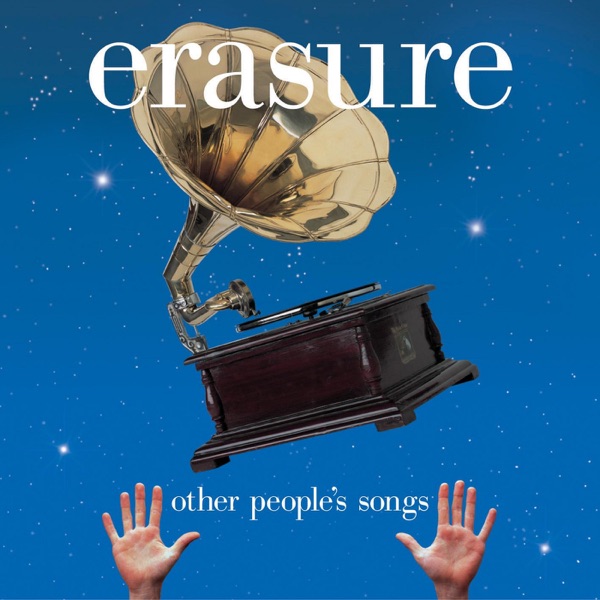
Other People’s Songs
2003 · 12 tracks
- 1 Solsbury Hill ↗ 4:20
- 2 Everybody's Got to Learn Sometime ↗ 3:21
- 3 Make Me Smile (Come Up and See Me) ↗ 3:58
- 4 Everyday ↗ 2:01
- 5 When Will I See You Again ↗ 3:00
- 6 Walking In the Rain ↗ 2:49
- 7 True Love Ways ↗ 3:09
- 8 Ebb Tide ↗ 3:08
- 9 Can't Help Falling In Love ↗ 3:30
- 10 You've Lost That Lovin' Feelin' ↗ 4:01
- 11 Goodnight ↗ 4:10
- 12 Video Killed the Radio Star ↗ 3:52
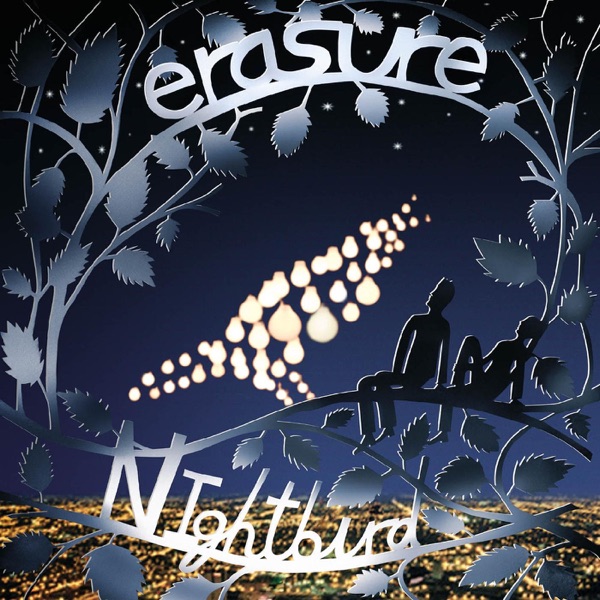
Nightbird
2005 · 11 tracks
- 1 No Doubt ↗ 3:59
- 2 Here I Go Impossible Again ↗ 3:42
- 3 Let's Take One More Rocket to the Moon ↗ 4:45
- 4 Breathe ↗ 3:49
- 5 I'll Be There ↗ 3:21
- 6 Because Our Love Is Real ↗ 3:40
- 7 Don't Say You Love Me ↗ 4:01
- 8 All This Time Still Falling Out of Love ↗ 4:16
- 9 I Broke It All in Two ↗ 3:40
- 10 Sweet Surrender ↗ 3:59
- 11 I Bet You're Mad At Me ↗ 4:02

Union Street
2006 · 11 tracks
- 1 Boy ↗ 3:49
- 2 Piano Song ↗ 3:18
- 3 Stay with Me (Acoustic Union Street) ↗ 4:55
- 4 Spiralling (Acoustic Union Street) ↗ 2:27
- 5 Home (Acoustic Union Street) ↗ 4:13
- 6 Tenderest Moments ↗ 5:15
- 7 Alien (Acoustic Union Street) ↗ 3:44
- 8 Blues Away ↗ 4:00
- 9 How Many Times? (Acoustic Union Street) ↗ 3:31
- 10 Love Affair ↗ 3:56
- 11 Rock Me Gently (Acoustic Union Street) ↗ 4:26
Light at the End of the World
2007 · 13 tracks
- 1 Sunday Girl ↗ 4:35
- 2 I Could Fall in Love With You ↗ 4:16
- 3 Sucker for Love ↗ 3:59
- 4 Storm in a Teacup ↗ 4:04
- 5 Fly Away ↗ 3:22
- 6 Golden Heart ↗ 3:13
- 7 How My Eyes Adore You ↗ 3:21
- 8 Darlene ↗ 3:38
- 9 When a Lover Leaves You ↗ 3:52
- 10 Glass Angel ↗ 5:02
- 11 Be My Baby ↗ 3:30
- 12 I Don't Know Why ↗ 4:03
- 13 I Could Fall in Love with You (Jeremy Wheatley Radio Mix) ↗ 4:03
Tomorrow’s World
2011 · 10 tracks
- 1 Be With You ↗ 3:35
- 2 Fill Us With Fire ↗ 3:16
- 3 What Will I Say When You're Gone? ↗ 3:43
- 4 You've Got to Save Me Right Now ↗ 2:53
- 5 A Whole Lotta Love Run Riot ↗ 3:46
- 6 When I Start to (Break It All Down) ↗ 3:45
- 7 I Lose Myself ↗ 3:15
- 8 Then I Go Twisting ↗ 3:52
- 9 Just When I Thought It Was Ending ↗ 3:40
- 10 Shot to the Heart ↗ 3:18
Snow Globe
2013 · 13 tracks
- 1 Bells of Love (Isabelle's of Love) ↗ 4:00
- 2 Gaudete ↗ 2:44
- 3 Make It Wonderful ↗ 3:35
- 4 Sleep Quietly ↗ 2:53
- 5 Silent Night ↗ 3:53
- 6 Loving Man ↗ 3:23
- 7 The Christmas Song ↗ 2:27
- 8 Bleak Midwinter ↗ 4:28
- 9 Blood On the Snow ↗ 3:44
- 10 There'll Be No Tomorrow ↗ 3:39
- 11 Midnight Clear ↗ 3:32
- 12 White Christmas ↗ 3:30
- 13 Silver Bells ↗ 3:05
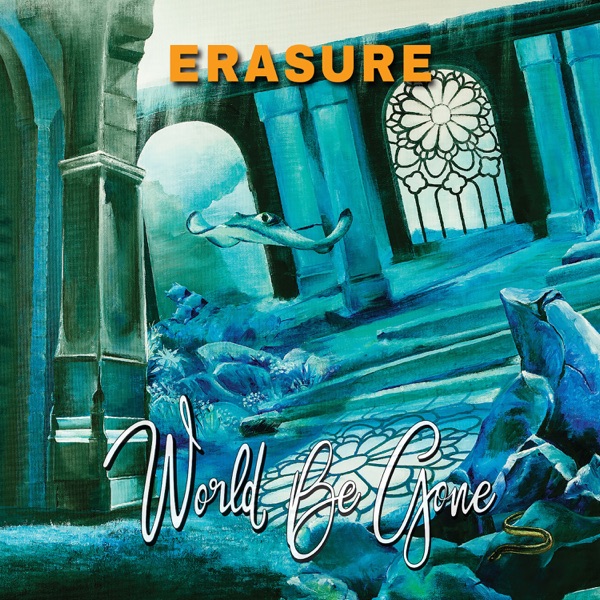
World Be Gone
2017 · 7 tracks

World Beyond
2018 · 10 tracks
- 1 Oh What a World (feat. Echo Collective) ↗ 4:29
- 2 Be Careful What You Wish For! (feat. Echo Collective) ↗ 3:27
- 3 World Be Gone (feat. Echo Collective) ↗ 4:00
- 4 A Bitter Parting (feat. Echo Collective) ↗ 3:10
- 5 Still It's Not Over (feat. Echo Collective) ↗ 4:02
- 6 Take Me Out of Myself (feat. Echo Collective) ↗ 4:55
- 7 Sweet Summer Loving (feat. Echo Collective) ↗ 3:55
- 8 Love You To the Sky (feat. Echo Collective) ↗ 4:26
- 9 Lousy Sum of Nothing (feat. Echo Collective) ↗ 4:12
- 10 Just a Little Love (feat. Echo Collective) ↗ 3:36
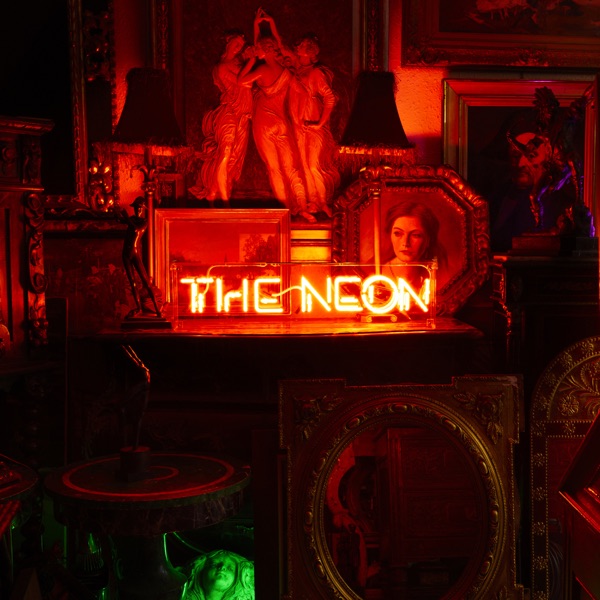
The Neon
2020 · 10 tracks
-
 WonderlandErasure198612 tracks
 -
 The CircusErasure198713 tracks
 -
 The InnocentsErasure198813 tracks
 -
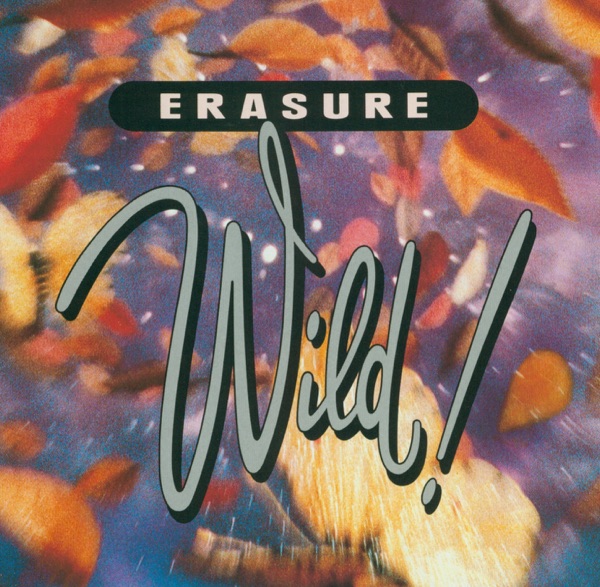
 Wild!Erasure198911 tracks
 -
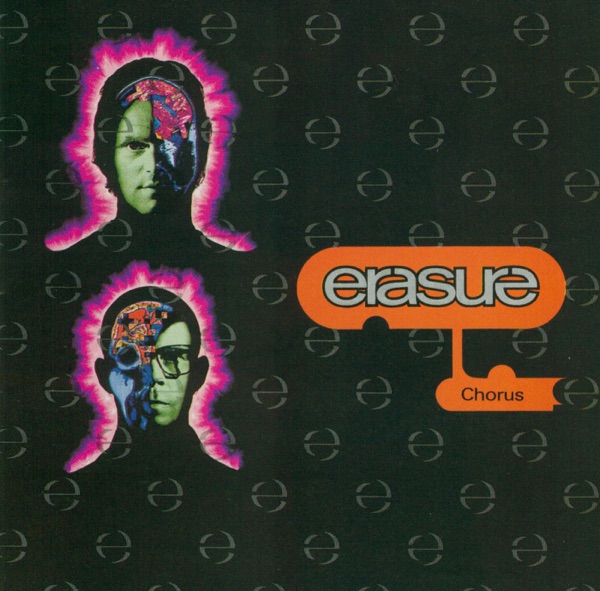
 ChorusErasure199110 tracks
 -
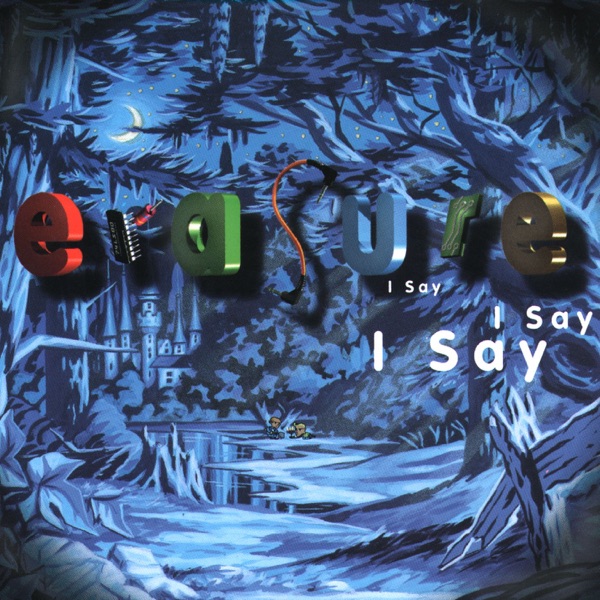
 I Say I Say I SayErasure199410 tracks
 -
 ErasureErasure199511 tracks
 -
 CowboyErasure199728 tracks
 -
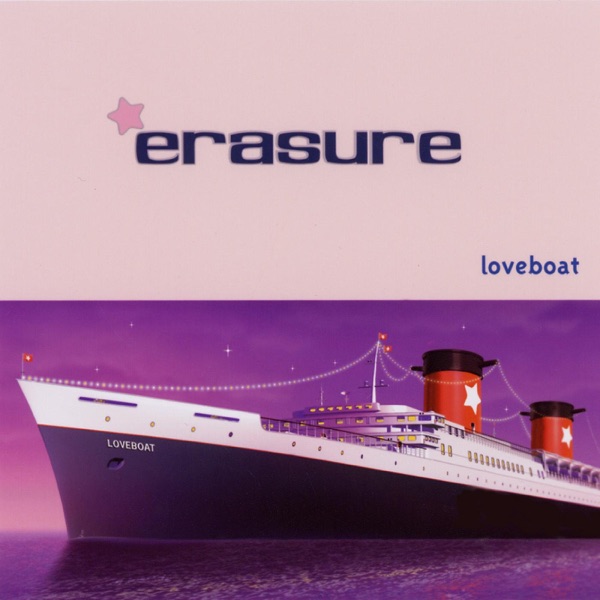
 LoveboatErasure200011 tracks
 -
 Other People’s SongsErasure200312 tracks
 -
 NightbirdErasure200511 tracks
 -
 Union StreetErasure200611 tracks
 -
 Light at the End of the WorldErasure200713 tracks
 -
 Tomorrow’s WorldErasure201110 tracks
 -
 Snow GlobeErasure201313 tracks
 -
 The Violet FlameErasure201410 tracks
 -
 World Be GoneErasure20177 tracks
 -
 World BeyondErasure201810 tracks
 -
 The NeonErasure202010 tracks
 -
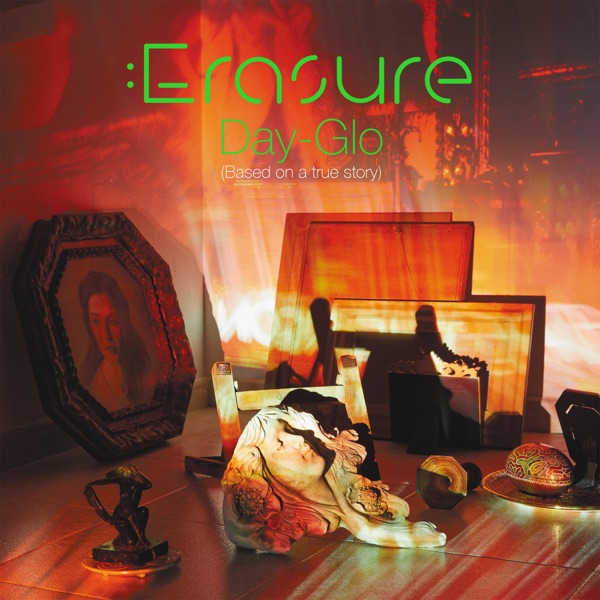
 Day‐Glo (Based on a True Story)Erasure202210 tracks
Deep Dive
Overview
Erasure are an English synth-pop duo formed in London in 1985, consisting of lead vocalist and songwriter Andy Bell and keyboardist and producer Vince Clarke. The pair built one of the most commercially consistent careers in British pop music, establishing themselves through the mid-1980s and maintaining chart relevance across four decades. From their fourth single onward, Erasure dominated the UK Singles Chart with a combination of electronic craftsmanship, melodic pop sensibility, and an aesthetic that bridged club culture and mainstream radio.
Formation Story
Vince Clarke arrived in Erasure with an already substantial track record. He had been a co-founder of Depeche Mode in the early 1980s and later formed the synth-pop duo Yazoo with Alison Moyet, through which he refined his production approach and songwriting. When Clarke and Andy Bell united in 1985, they immediately established themselves as Mute Records artists and quickly developed a working method that would define their output: Clarke handled production, keyboard arrangements, and co-songwriting, while Bell provided lead vocals and contributed to the songwriting partnership. The London setting placed them squarely within the city’s ongoing electronic music infrastructure, though they charted a more direct pop course than many of their avant-garde contemporaries.
Breakthrough Moment
Erasure’s initial releases did not immediately break through. Their debut album, Wonderland (1986), showed promise but failed to establish them as chart forces. The turning point arrived with their fourth single, “Sometimes” (1986), which penetrated the UK Singles Chart and proved the commercial viability of their synth-pop formula. This success established a pattern: The Circus (1987) and The Innocents (1988) consolidated their position, with the latter marking the beginning of their run of consecutive chart entries that would eventually span from 1986 to 2007—a streak of 24 consecutive top 40 hits in the UK.
Peak Era
The years from 1987 through the early 1990s represented Erasure’s highest commercial peak. The Circus and The Innocents established them as reliable hit-makers, while Wild! (1989)—released the same year Erasure won the Brit Award for Best British Group—solidified their status as one of the decade’s most successful acts. The 1991 album Chorus demonstrated sustained momentum, and by 1994’s I Say I Say I Say, Erasure had become a fixture of both UK radio and the broader European market. Between 1986 and 2007, the duo achieved 24 consecutive top 40 singles chart entries, a feat underscored by the statistic that by 2009, 34 of their 37 chart-eligible singles and EPs had reached the UK top 40, with 17 climbing into the top 10.
Musical Style
Erasure’s sound is rooted in synth-pop and new wave, built on Clarke’s characteristically precise electronic arrangements and Bell’s warm, expressive vocal delivery. The duo’s production aesthetic owes to the synth-pop traditions established in the late 1970s and early 1980s, but Erasure tilted toward accessibility and immediate melodic appeal over experimental abstraction. Clarke’s use of synthesizers and drum machines created clean, often bright sonic backdrops, while Bell’s vocals—capable of vulnerability and surprising emotional depth—provided the human anchor that made electronic arrangements feel immediate rather than cold. Over their career, the production evolved with technology and shifting pop sensibilities, but the core methodology remained: electronic frameworks supporting memorable pop melodies and professionally crafted song structures.
Major Albums
The Innocents (1988)
This album solidified Erasure’s commercial breakthrough and marked the apex of their late-1980s period, featuring some of their most enduring singles and demonstrating the maturity of their songwriting partnership.
Chorus (1991)
Released as the 1990s dawned, Chorus showed the duo adapting to the decade’s production trends while maintaining their core melodic identity, reinforcing their status as chart regulars.
I Say I Say I Say (1994)
Capturing the band at the height of their early-1990s commercial run, this album exemplified their ability to deliver hook-laden synth-pop without sacrificing production sophistication.
Erasure (1995)
A self-titled entry that served as a reset point, this album allowed the duo to reassert creative control and direction as the mid-1990s shift in pop taste began.
Nightbird (2005)
Issued in Erasure’s third decade, this album demonstrated their continued relevance and willingness to evolve their production approach within the bounds of their established aesthetic.
Signature Songs
- “Sometimes” (1986) — The breakthrough single that introduced Erasure to the UK charts and established their synth-pop formula.
- “A Little Respect” — One of their most recognizable compositions, becoming a staple of 1980s pop radio.
- “Chains of Love” — A signature example of their ability to blend electronic production with emotional vocal delivery.
- “Love to Hate You” — A mid-period track exemplifying their consistent knack for crafting radio-friendly hooks.
- “Stop!” — A high-energy single that showcased their dance-floor sensibility.
Influence on Rock
While Erasure are primarily situated within synth-pop and electronic pop rather than rock proper, their sustained commercial success and prolific output influenced the broader pop landscape of the 1980s and 1990s. They demonstrated that electronic pop could achieve both critical respect and mass-market appeal without compromising production quality or melodic integrity. Their presence on the UK charts across two decades reinforced synth-pop’s viability as a genre capable of generating consistent hit records, influencing how subsequent electronic acts approached songwriting and production. The visibility of Clarke’s work—following his foundation-laying role in Depeche Mode—underscored the centrality of the synthesizer and the producer-songwriter to modern pop music.
Legacy
Erasure’s legacy rests on longevity, consistency, and the refinement of synth-pop as a commercially viable mainstream idiom. Their 24-consecutive-top-40-entries streak remains a marker of sustained commercial success in the UK market, achieved across formats and trends spanning more than two decades. The pair continued recording through the 2010s and 2020s, with albums including Tomorrow’s World (2011), Snow Globe (2013), World Be Gone (2017), and The Neon (2020), demonstrating an ongoing commitment to output. Their presence in the pop canon is secured by the sheer quantity and consistency of their charting singles, the 1989 Brit Award, and the cultural staying power of their most successful recordings. For listeners who came of age in the 1980s and 1990s, Erasure functioned as the reliable soundtrack to British pop radio, a status that has translated into sustained streaming presence and continued touring activity.
Fun Facts
- Vince Clarke’s prior work in Depeche Mode and Yazoo established him as one of synth-pop’s key architects before he joined forces with Andy Bell.
- The band maintained their streak of 24 consecutive UK top 40 singles chart entries from 1986 to 2007, one of the longest unbroken runs in British chart history.
- Erasure released albums across the 2010s and 2020s, including Day‐Glo (Based on a True Story) in 2022, proving their relevance and creative output extended well beyond their initial commercial peak.
- The duo has been based out of London since their formation, maintaining their position within the UK’s electronic music infrastructure for nearly four decades.