
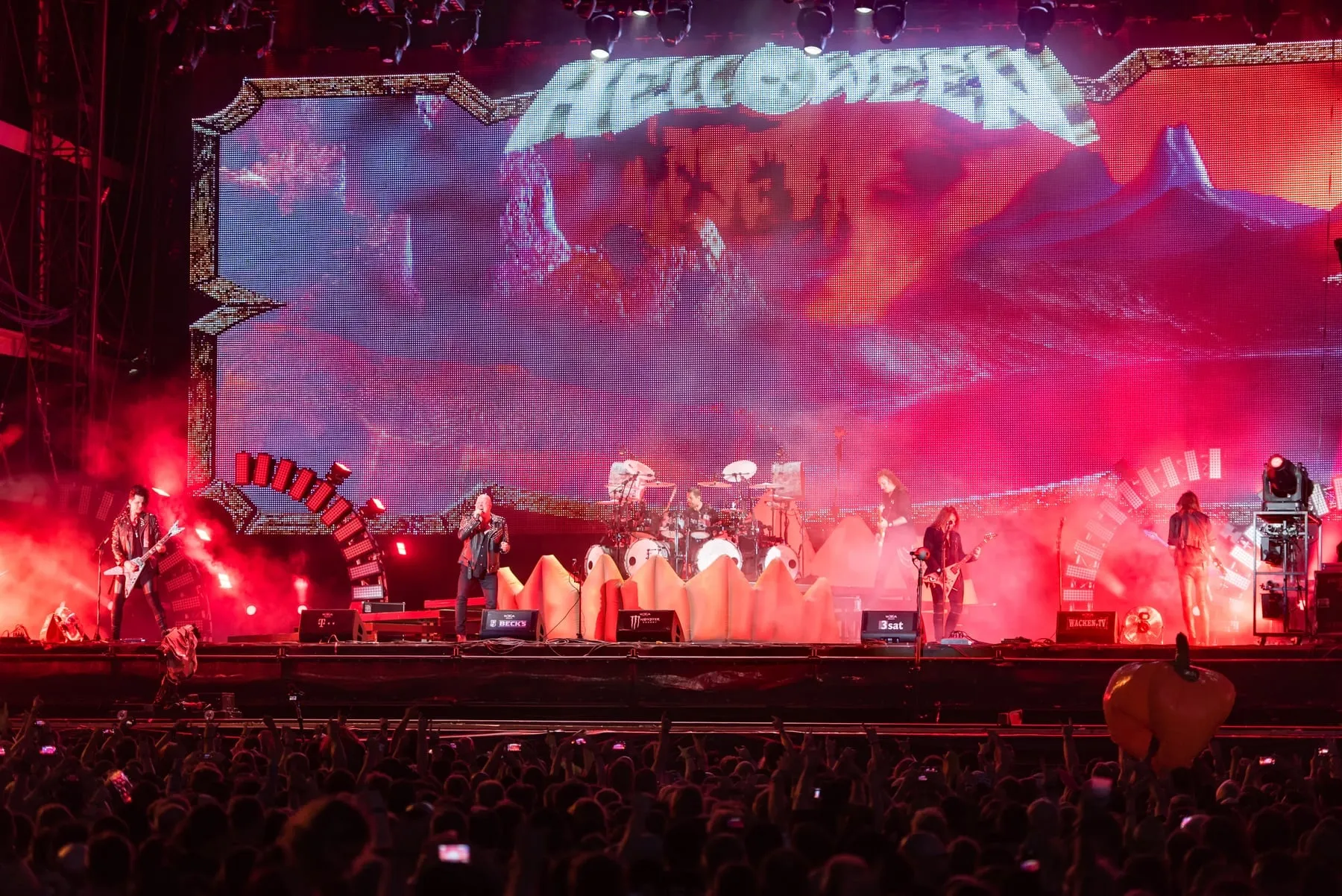
Photo by Frank Schwichtenberg , licensed under CC BY-SA 4.0 · Wikimedia Commons
Rank #135
Helloween
From Wikipedia
Helloween is a German power metal band founded in 1984 in Hamburg by members of bands Iron Fist, Gentry, Second Hell and Powerfool. The band has at times been called one of the most influential European heavy metal bands of the 1980s. Its first lineup consisted of singer and guitarist Kai Hansen, bassist Markus Grosskopf, guitarist Michael Weikath and drummer Ingo Schwichtenberg. By the time Hansen left Helloween in 1989 to form Gamma Ray, the band had evolved into a five-piece, with Michael Kiske taking over as lead vocalist. Schwichtenberg and Kiske both parted ways with Helloween in 1993; Schwichtenberg died two years later as the result of suicide. Between then and 2016, there had been numerous line-up changes, leaving Grosskopf and Weikath as the only remaining original members. As a septet, their current lineup features all of the surviving members of the Keeper of the Seven Keys lineup, in addition to the remaining members from the Keeper of the Seven Keys: The Legacy-era.
Members
- Ingo Schwichtenberg (1984–1993)
- Roland Grapow (1989–2001)
- Andi Deris (1994–present)
- Uli Kusch (1994–2001)
- Mark Cross (2001–2003)
- Sascha Gerstner (2002–present)
- Stefan Schwarzmann (2003–2005)
- Daniel Löble (2005–present)
- Kai Hansen
- Markus Grosskopf
- Michael Kiske
- Michael Weikath
Discography & Previews
Browse through and click an album to open and play 30-second previews streamed from Apple Music.

Walls of Jericho
1985 · 11 tracks
- 1 Walls of Jericho / Ride the Sky (2024 Remaster) ↗ 6:45
- 2 Reptile (2024 Remaster) ↗ 3:46
- 3 Guardians (2024 Remaster) ↗ 4:21
- 4 Phantoms of Death (2024 Remaster) ↗ 6:35
- 5 Metal Invaders (2024 Remaster) ↗ 4:12
- 6 Gorgar (2024 Remaster) ↗ 3:57
- 7 Heavy Metal (Is the Law) [2024 Remaster] ↗ 4:01
- 8 How Many Tears (2024 Remaster) ↗ 7:16
- 9 Judas (2024 Remaster) ↗ 4:41
- 10 Ride the Sky (Live) [2024 Remaster] ↗ 7:17
- 11 Guardians (Live) [2024 Remaster] ↗ 4:27

Pink Bubbles Go Ape
1991 · 11 tracks
- 1 Pink Bubbles Go Ape (2024 Remaster) ↗ 0:36
- 2 Kids of the Century (2024 Remaster) ↗ 3:52
- 3 Back on the Streets (2024 Remaster) ↗ 3:23
- 4 Number One (2024 Remaster) ↗ 5:13
- 5 Heavy Metal Hamsters (2024 Remaster) ↗ 3:28
- 6 Goin' Home (2024 Remaster) ↗ 3:51
- 7 Someone's Crying (2024 Remaster) ↗ 4:18
- 8 Mankind (2024 Remaster) ↗ 6:18
- 9 I'm Doin' Fine, Crazy Man (2024 Remaster) ↗ 3:40
- 10 The Chance (2024 Remaster) ↗ 3:48
- 11 Your Turn (2024 Remaster) ↗ 5:42
Chameleon
1993 · 12 tracks
- 1 First Time (2024 Remaster) ↗ 5:29
- 2 When the Sinner (2024 Remaster) ↗ 6:54
- 3 I Don't Wanna Cry No More (2024 Remaster) ↗ 5:12
- 4 Crazy Cat (2024 Remaster) ↗ 3:30
- 5 Giants (2024 Remaster) ↗ 6:33
- 6 Windmill (2024 Remaster) ↗ 5:14
- 7 Revolution Now (2024 Remaster) ↗ 8:04
- 8 In the Night (2024 Remaster) ↗ 5:35
- 9 Music (2024 Remaster) ↗ 7:01
- 10 Step Out of Hell (2024 Remaster) ↗ 4:21
- 11 I Believe (2024 Remaster) ↗ 9:11
- 12 Longing (2024 Remaster) ↗ 4:15

Master of the Rings
1994 · 11 tracks

The Time of the Oath
1996 · 12 tracks
- 1 We Burn ↗ 3:06
- 2 Steel Tormentor ↗ 5:40
- 3 Wake Up the Mountain ↗ 5:02
- 4 Power ↗ 3:29
- 5 Forever and One (Neverland) ↗ 3:55
- 6 Before the War ↗ 4:34
- 7 A Million to One ↗ 5:11
- 8 Anything My Mama Don't Like ↗ 3:47
- 9 Kings Will Be Kings ↗ 5:09
- 10 Mission Motherland ↗ 9:01
- 11 If I Knew ↗ 5:30
- 12 The Time of the Oath ↗ 6:59

Better Than Raw
1998 · 15 tracks
- 1 Deliberately Limited Preliminary Prelude in Z ↗ 1:47
- 2 Push ↗ 4:46
- 3 Falling Higher ↗ 4:47
- 4 Hey Lord! ↗ 4:07
- 5 Don't Spit On My Mind ↗ 4:24
- 6 Revelation ↗ 8:22
- 7 Time ↗ 5:43
- 8 I Can ↗ 4:39
- 9 A Handful of Pain ↗ 4:48
- 10 Lavdate Dominvm ↗ 5:11
- 11 Midnight Sun ↗ 6:21
- 12 Back On the Ground ↗ 4:40
- 13 A Game We Shouldn't Play ↗ 3:38
- 14 Perfect Gentleman (Bootleg Live Version) ↗ 3:27
- 15 Moshi Moshi - Shiki No Uta ↗ 6:54

Metal Jukebox
1999 · 11 tracks

The Dark Ride
2000 · 15 tracks
- 1 Beyond the Portal ↗ 0:45
- 2 Mr. Torture ↗ 3:28
- 3 All over the Nation ↗ 4:55
- 4 Escalation 666 ↗ 4:25
- 5 Mirror, Mirror ↗ 3:44
- 6 If I Could Fly ↗ 4:09
- 7 Salvation ↗ 5:43
- 8 The Departed ↗ 4:37
- 9 I Live for Your Pain ↗ 4:00
- 10 We Damn the Night ↗ 4:06
- 11 Immortal ↗ 4:05
- 12 The Dark Ride ↗ 8:48
- 13 The Madness of the Crowds ↗ 4:14
- 14 Deliver Us from Temptation ↗ 4:54
- 15 If I Could Fly (Single Edit) ↗ 3:30

Rabbit Don’t Come Easy
2003 · 15 tracks
- 1 Just a Little Sign ↗ 4:26
- 2 Open Your Life ↗ 4:30
- 3 The Tune ↗ 5:37
- 4 Never Be a Star ↗ 4:12
- 5 Liar ↗ 4:57
- 6 Sun 4 the World ↗ 3:57
- 7 Don't Stop Being Crazy ↗ 4:22
- 8 Do You Feel Good ↗ 4:24
- 9 Hell Was Made in Heaven ↗ 5:34
- 10 Back Against the Wall ↗ 5:45
- 11 Listen to the Flies ↗ 4:54
- 12 Nothing to Say ↗ 8:27
- 13 Far Away ↗ 4:18
- 14 Fast as a Shark (Bonus Track) ↗ 3:45
- 15 Sheer Heart Attack (Bonus Track) ↗ 3:31

Keeper of the Seven Keys: The Legacy
2005 · 13 tracks
- 1 The King for a 1000 Years ↗ 13:55
- 2 The Invisible Man ↗ 7:17
- 3 Born on Judgment Day ↗ 6:15
- 4 Pleasure Drone ↗ 4:11
- 5 Mrs. God ↗ 2:57
- 6 Silent Rain ↗ 4:22
- 7 Occasion Avenue ↗ 11:06
- 8 Light the Universe (feat. Candice Night) ↗ 5:01
- 9 Do You Know What You're Fighting For ↗ 4:46
- 10 Come Alive ↗ 3:21
- 11 The Shade in the Shadow ↗ 3:25
- 12 Get It Up ↗ 4:15
- 13 My Life for One More Day ↗ 6:51

Gambling With the Devil
2007 · 14 tracks
- 1 Crack the Riddle ↗ 0:57
- 2 Kill It ↗ 4:14
- 3 The Saints ↗ 7:06
- 4 As Long as I Fall ↗ 3:42
- 5 Paint a New World ↗ 4:27
- 6 Final Fortune ↗ 4:47
- 7 The Bells of the 7 Hells ↗ 5:22
- 8 Fallen to Pieces ↗ 5:53
- 9 I.M.E. ↗ 3:46
- 10 Can Do It ↗ 4:30
- 11 Dreambound ↗ 5:57
- 12 Heaven Tells No Lies ↗ 6:57
- 13 Find My Freedom ↗ 6:29
- 14 See the Night ↗ 6:04
7 Sinners
2010 · 13 tracks
- 1 Where the Sinners Go ↗ 3:36
- 2 Are You Metal? ↗ 3:35
- 3 Who Is Mr. Madman? ↗ 5:44
- 4 Raise the Noise ↗ 5:07
- 5 World of Fantasy ↗ 5:16
- 6 Long Live the King ↗ 4:13
- 7 The Smile of the Sun ↗ 4:37
- 8 You Stupid Mankind ↗ 4:04
- 9 If a Mountain Could Talk ↗ 6:44
- 10 The Sage, The Fool, The Sinner ↗ 4:00
- 11 My Sacrifice ↗ 4:59
- 12 Not Yet Today ↗ 1:12
- 13 Far in the Future ↗ 7:43

Straight Out of Hell
2013 · 13 tracks
- 1 Nabataea ↗ 7:02
- 2 World of War ↗ 4:56
- 3 Live Now! ↗ 3:11
- 4 Far From the Stars ↗ 4:42
- 5 Burning Sun ↗ 5:33
- 6 Waiting for the Thunder ↗ 3:53
- 7 Hold Me In Your Arms ↗ 5:10
- 8 Wanna Be God ↗ 2:02
- 9 Straight Out of Hell ↗ 4:34
- 10 A*****e ↗ 4:10
- 11 Years ↗ 4:22
- 12 Make Fire Catch the Fly ↗ 4:23
- 13 Church Breaks Down ↗ 6:07
My God‐Given Right
2015 · 14 tracks
- 1 Heroes (Track Commentary Version) ↗ 0:27
- 2 Battle's Won (Track Commentary Version) ↗ 0:31
- 3 My God-Given Right (Track Commentary Version) ↗ 0:30
- 4 Stay Crazy (Track Commentary Version) ↗ 0:27
- 5 Lost in America (Track Commentary Version) ↗ 0:24
- 6 Russian Roulé (Track Commentary Version) ↗ 0:27
- 7 The Swing of a Fallen World (Track Commentary Version) ↗ 0:27
- 8 Like Everybody Else (Track Commentary Version) ↗ 0:32
- 9 Creatures in Heaven (Track Commentary Version) ↗ 0:30
- 10 If God Loves Rock 'N' Roll (Track Commentary Version) ↗ 0:29
- 11 Living on the Edge (Track Commentary Version) ↗ 0:32
- 12 Claws (Track Commentary Version) ↗ 0:29
- 13 You, Still of War (Track Commentary Version) ↗ 0:31
- 14 Wicked Game (Track Commentary Version) ↗ 0:30

Helloween
2021 · 14 tracks
- 1 Out for the Glory ↗ 7:19
- 2 Fear of the Fallen ↗ 5:39
- 3 Best Time ↗ 3:36
- 4 Mass Pollution ↗ 4:15
- 5 Angels ↗ 4:42
- 6 Rise Without Chains ↗ 4:56
- 7 Indestructible ↗ 4:43
- 8 Robot King ↗ 7:08
- 9 Cyanide ↗ 3:29
- 10 Down in the Dumps ↗ 6:01
- 11 Orbit ↗ 1:05
- 12 Skyfall ↗ 12:11
- 13 Golden Times ↗ 4:48
- 14 Save My Hide ↗ 3:11

Giants & Monsters
2025 · 10 tracks
-
 Walls of JerichoHelloween198511 tracks
 -
 Pink Bubbles Go ApeHelloween199111 tracks
 -
 ChameleonHelloween199312 tracks
 -
 Master of the RingsHelloween199411 tracks
 -
 The Time of the OathHelloween199612 tracks
 -
 Better Than RawHelloween199815 tracks
 -
 Metal JukeboxHelloween199911 tracks
 -
 The Dark RideHelloween200015 tracks
 -
 Rabbit Don’t Come EasyHelloween200315 tracks
 -
 Keeper of the Seven Keys: The LegacyHelloween200513 tracks
 -
 Gambling With the DevilHelloween200714 tracks
 -
 7 SinnersHelloween201013 tracks
 -
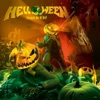 Straight Out of HellHelloween201313 tracks
 -
 My God‐Given RightHelloween201514 tracks
 -
 HelloweenHelloween202114 tracks
 -
 Giants & MonstersHelloween202510 tracks
Deep Dive
Overview
Helloween is a German power metal band formed in 1984 in Hamburg that stands as one of the most influential European heavy metal acts of the 1980s. Assembled from members of earlier bands including Iron Fist, Gentry, Second Hell, and Powerfool, Helloween crystallized the European power metal sound—a fusion of speed metal aggression, classical composition, operatic vocals, and intricate guitar interplay—that would define the genre’s template for decades. The band’s mid-1980s run and their two-part Keeper of the Seven Keys albums remain foundational texts in power metal’s canon.
Formation Story
Helloween emerged from Hamburg’s bustling heavy metal underground in 1984, drawing its founding four-piece from dissolved regional acts. Kai Hansen, a guitarist and vocalist with prior experience in Second Hell, joined forces with bassist Markus Grosskopf, guitarist Michael Weikath, and drummer Ingo Schwichtenberg to form the new project. This lineup possessed both technical proficiency and ambition: the members’ previous bands had established a local presence, but Helloween represented a consolidation of talent and a deliberate step toward something larger. The band’s name and early identity reflected the emerging appetite in European metal circles for a heavier, more complex sound than mainstream rock radio served at the time.
Breakthrough Moment
Helloween’s breakthrough came with their debut Walls of Jericho in 1985, an album that announced their arrival with electrifying speed, dual lead guitars, and Hansen’s distinctive vocal range. The record confirmed the band’s technical prowess but represented only the opening statement. True breakthrough arrived with Keeper of the Seven Keys, Part I in 1987, which refined the formula with greater melodic sophistication and demonstrated that European power metal could achieve both complexity and accessibility. A year later, Keeper of the Seven Keys, Part II in 1988 solidified their continental dominance and cemented the two-part cycle as the genre’s definitive statement during the era. These back-to-back releases established Helloween as the architects of a new metal language.
Peak Era
The period from 1987 to 1989 marked Helloween’s creative and commercial peak. During this stretch, the band expanded from a four-piece to a five-piece configuration and developed a near-perfect balance between raw power and compositional sophistication. Kai Hansen’s departure in 1989 to form Gamma Ray represented a seismic shift; however, the arrival of Michael Kiske as lead vocalist—while bringing a different tonal character—did not interrupt the band’s momentum. Kiske’s operatic range and the band’s continued elaboration of their sound through Pink Bubbles Go Ape (1991) and Chameleon (1993) sustained their relevance, though the loss of drummer Ingo Schwichtenberg and Kiske himself in 1993 marked the end of that particular configuration and signaled the close of Helloween’s first major chapter.
Musical Style
Helloween’s sound is rooted in the marriage of speed metal velocity with European classical composition and progressive rock ambition. The band’s signature approach features rapid, interlocking dual lead guitars performing harmonized runs and intricate solos, locked to powerful but precise rhythmic foundations. Vocally, Hansen and later Kiske brought operatic range and emotional delivery unusual for metal at the time, leaning into melody and narrative clarity rather than aggression alone. The band’s songs often exceed four minutes, incorporating multiple movements, key changes, and tempo variations that reward close listening. Early on, the influence of traditional heavy metal (Iron Maiden, Judas Priest) mingles with the precision of 1980s speed metal (Sodom, Kreator), while classical and folk elements—often explicit in arrangements and occasional acoustic passages—distinguish Helloween from thrash’s raw simplicity. This hybrid proved generative: power metal as a genre largely traces its instrumentation, pacing, and emotional register to the template Helloween established.
Major Albums
Walls of Jericho (1985)
The debut showcased Helloween’s raw technical capability and hunger, introducing the dual-lead-guitar interplay and Hansen’s soaring vocals that would become their signature. Walls of Jericho was the band’s announcement of intent.
Keeper of the Seven Keys, Part I (1987)
A watershed: the album perfected the power metal formula with disciplined songwriting, ambitious arrangements, and production clarity that balanced all instruments. It remains the genre’s most cited foundational work.
Keeper of the Seven Keys, Part II (1988)
The sequel deepened exploration of the framework established by Part I, sustaining quality and adding thematic and stylistic breadth. Together, the two-part Keeper cycle set the template for European power metal.
Chameleon (1993)
Under Michael Kiske’s vocal leadership, Helloween’s third era reached its artistic peak on Chameleon, an album that expanded harmonic sophistication and incorporated diverse influences while maintaining the band’s core identity.
The Dark Ride (2000)
After a period of lineup flux, The Dark Ride represented a return to form, with Andi Deris at the helm and a renewed focus on the melodic, technical essence that defined the band’s legacy.
Keeper of the Seven Keys: The Legacy (2005)
A deliberate reconnection with the band’s foundational era, reuniting surviving members of the original Keeper lineups and restating the power metal vision that had inspired a generation.
Signature Songs
- “Eagle” (1987) — A showcase for Hansen’s vocal command and the band’s ability to blend melody with technical firepower.
- “I Want Out” (1988) — An arena-scaled power metal anthem that demonstrated the genre’s potential for mainstream impact.
- “Future World” (1987) — A dual-lead guitar showcase that established the instrumental template European power metal bands would pursue for decades.
- “Keeper of the Seven Keys” (1987) — The thematic centerpiece of the band’s early work, building multiple movements into a progressive composition.
- “Halloween” (1985) — The title track that announced the band’s name and concept with immediate recognition and heavy riffing.
Influence on Rock
Helloween’s influence on rock and metal music cannot be overstated. They codified the European power metal sound—a distinct branch of heavy metal that diverged sharply from American thrash and proved equally vital. Their template of precision dual lead guitars, operatic vocals, classical compositional structure, and fantasy or mystical lyrical themes became the blueprint followed by bands across Europe and eventually worldwide. The dual-guitar approach influenced everyone from Stratovarius to Iced Earth to contemporary power metal acts. More broadly, Helloween’s commercial viability (despite their regional German origin) demonstrated to the metal industry that European heavy music could achieve significant audiences without American radio support, reshaping the geographic center of metal innovation during the late 1980s and 1990s. Their insistence on musicianship and complexity over shock value or rawness elevated technical standards across the broader metal community.
Legacy
Helloween remains active, having released new material as recently as 2021 (a self-titled album) and 2025 (Giants & Monsters), testament to their enduring vitality and the loyalty of their fanbase. The band’s two surviving original members, Markus Grosskopf and Michael Weikath, continue in the project alongside Andi Deris (vocalist since 1994) and other long-serving musicians. The Keeper of the Seven Keys albums have never gone out of print and continue to introduce new listeners to the power metal genre. The band’s presence in streaming catalogs and their periodic reunion tours—including appearances reuniting members from multiple eras—confirm Helloween’s position as the foundational text of European power metal. While they have not achieved mainstream rock radio penetration comparable to some of their American contemporaries, Helloween’s influence within metal communities and their role in establishing an entire regional metal tradition remains undiminished. Their story is inseparable from the history of 1980s European heavy metal and the global power metal movement that followed.
Fun Facts
- Ingo Schwichtenberg, the original drummer, tragically died in 1995 as a result of suicide, two years after his departure from the band—a sobering episode in heavy metal history.
- The band’s two-part Keeper of the Seven Keys albums were so definitive that they spawned a spiritual successor, Keeper of the Seven Keys: The Legacy, released in 2005 to reunite surviving members of both original Keeper eras.
- Kai Hansen’s departure from Helloween in 1989 directly led to the formation of Gamma Ray, another influential German metal band that would pursue a separate but stylistically related trajectory.
- Helloween’s longevity in the revolving door of metal lineups is notable: between 1993 and 2016, numerous members cycled in and out, but Grosskopf and Weikath remained constants, anchoring the band’s identity across four decades.