
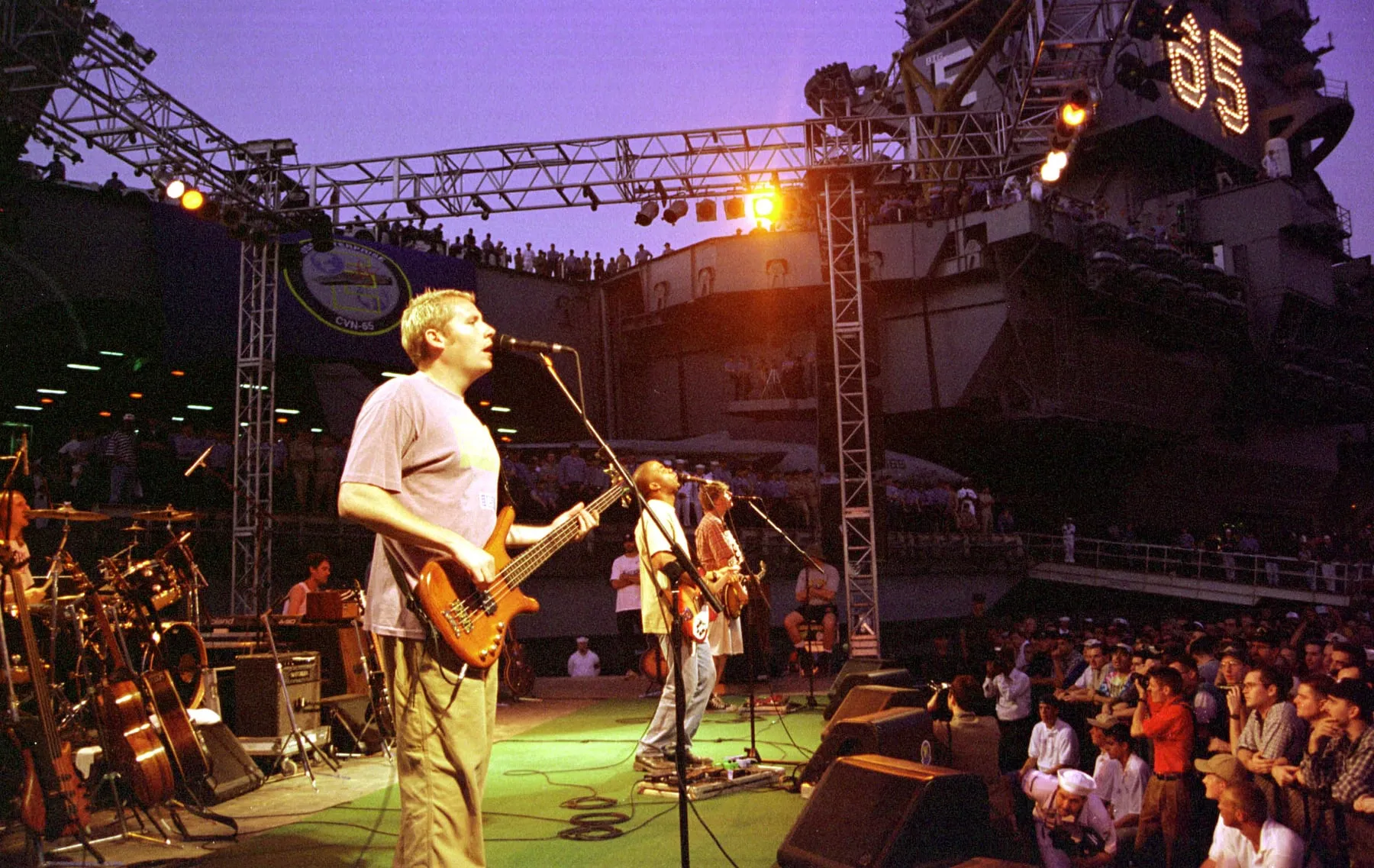
Photo by William G. Lewis , licensed under Public domain · Wikimedia Commons
Rank #372
Hootie & the Blowfish
From Wikipedia
Hootie & the Blowfish is an American rock band formed in Columbia, South Carolina, in 1986. The band's lineup for most of its existence has been the quartet of Darius Rucker, Mark Bryan, Dean Felber, and Jim Sonefeld. The band went on hiatus in 2008 until they announced plans for a full reunion tour in 2019 and released their first new studio album in fourteen years, Imperfect Circle.
Members
- Darius Rucker
Discography & Previews
Browse through and click an album to open and play 30-second previews streamed from Apple Music.

Cracked Rear View
1994 · 12 tracks

Fairweather Johnson
1996 · 14 tracks
- 1 Be the One ↗ 3:27
- 2 Sad Caper ↗ 2:49
- 3 Tuckers Town ↗ 4:02
- 4 She Crawls Away ↗ 4:09
- 5 So Strange ↗ 4:04
- 6 Old Man & Me ↗ 4:28
- 7 Earth Stopped Cold At Dawn ↗ 3:29
- 8 Fairweather Johnson ↗ 0:51
- 9 Honeyscrew ↗ 3:37
- 10 Let It Breathe ↗ 3:53
- 11 Silly Little Pop Song ↗ 2:57
- 12 Fool ↗ 3:05
- 13 Tootie ↗ 3:05
- 14 When I'm Lonely ↗ 5:34

Musical Chairs
1998 · 13 tracks
- 1 I Will Wait ↗ 4:18
- 2 Wishing ↗ 2:49
- 3 Las Vegas Nights ↗ 4:06
- 4 Only Lonely ↗ 4:39
- 5 Answer Man ↗ 3:22
- 6 Michelle Post ↗ 2:20
- 7 Bluesy Revolution ↗ 4:46
- 8 Home Again ↗ 4:07
- 9 One By One ↗ 3:51
- 10 Desert Mountain Showdown ↗ 2:45
- 11 Whats Going On Here ↗ 4:36
- 12 What Do You Want from Me Now ↗ 3:41
- 13 Closet Full of Fears ↗ 3:18
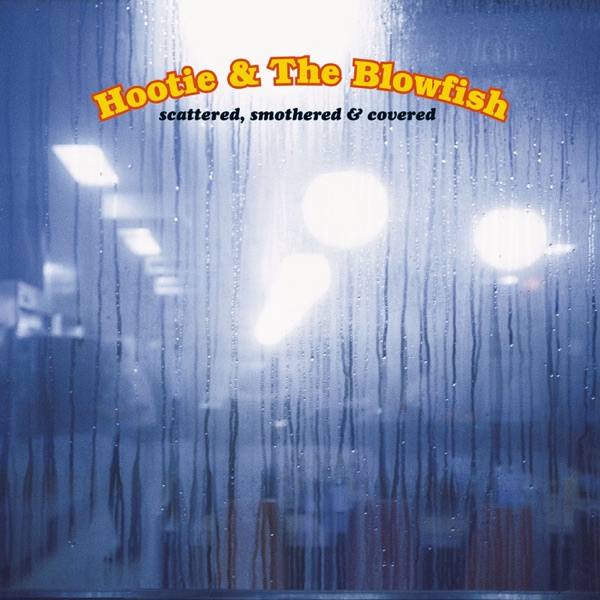
Scattered, Smothered & Covered
2000 · 15 tracks
- 1 Fine Line ↗ 3:32
- 2 I Go Blind ↗ 3:15
- 3 Almost Home ↗ 3:52
- 4 Hey Hey What Can I Do? ↗ 3:56
- 5 Renaissance Eyes ↗ 5:05
- 6 Before the Heartache Rolls In ↗ 4:25
- 7 Araby ↗ 2:50
- 8 I'm Over You ↗ 4:19
- 9 Gravity of the Situation ↗ 4:36
- 10 I Hope That I Don't Fall In Love With You ↗ 2:59
- 11 Dream Baby ↗ 2:58
- 12 Driver 8 ↗ 4:27
- 13 Let Me Be Your Man ↗ 3:04
- 14 Please, Please, Please Let Me Get What I Want ↗ 1:51
- 15 Use Me ↗ 4:57

Hootie & the Blowfish
2003 · 12 tracks
- 1 Deeper Side ↗ 3:39
- 2 Little Brother ↗ 3:10
- 3 Innocence ↗ 3:27
- 4 Space ↗ 2:18
- 5 I'll Come Runnin' (Don's Plea Version) ↗ 3:48
- 6 Tears Fall Down ↗ 3:06
- 7 The Rain Song ↗ 3:52
- 8 Show Me Your Heart ↗ 4:02
- 9 When She's Gone ↗ 4:07
- 10 Little Darlin' ↗ 3:18
- 11 Woody ↗ 3:14
- 12 Go and Tell Him (Soup Song) [+ Hidden Track "Alright"] ↗ 9:41

Looking for Lucky
2005 · 12 tracks

Imperfect Circle
2019 · 13 tracks
- 1 New Year's Day ↗ 3:32
- 2 Miss California ↗ 3:11
- 3 Wildfire Love (feat. Lucie Silvas) ↗ 3:33
- 4 Hold On ↗ 3:21
- 5 Turn It Up ↗ 3:21
- 6 Not Tonight ↗ 3:20
- 7 We Are One ↗ 2:03
- 8 Everybody But You ↗ 3:30
- 9 Lonely on a Saturday Night ↗ 3:10
- 10 Why ↗ 3:18
- 11 Rollin' ↗ 3:17
- 12 Half a Day Ahead ↗ 3:23
- 13 Change ↗ 3:27
-
 Cracked Rear ViewHootie & the Blowfish199412 tracks
 -
 Fairweather JohnsonHootie & the Blowfish199614 tracks
 -
 Musical ChairsHootie & the Blowfish199813 tracks
 -
 Scattered, Smothered & CoveredHootie & the Blowfish200015 tracks
 -
 Hootie & the BlowfishHootie & the Blowfish200312 tracks
 -
 Looking for LuckyHootie & the Blowfish200512 tracks
 -
 Imperfect CircleHootie & the Blowfish201913 tracks
Deep Dive
Overview
Hootie & the Blowfish is an American rock band that emerged from Columbia, South Carolina, in 1986 and became one of the defining commercial forces of 1990s alternative rock. The quartet of Darius Rucker, Mark Bryan, Dean Felber, and Jim Sonefeld achieved massive mainstream success with their 1994 debut album Cracked Rear View, which proved that melodic, guitar-driven rock could dominate both rock radio and the broader pop marketplace. The band occupied a distinctive middle ground between grunge-era authenticity and pop accessibility, offering emotionally grounded songwriting and hook-laden production that appealed across demographic lines.
Formation Story
The band coalesced in Columbia during the mid-1980s, with the four members eventually settling into a stable lineup that would define the act throughout its most prolific period. Columbia’s position in the American Southeast—away from the traditional rock centers of New York, Los Angeles, and Seattle—gave the band a particular character: rooted in regional identity yet unmoored from any dominant local scene. They spent their formative years developing a live presence and refining their songwriting through regional gigging before breaking into wider recognition.
Breakthrough Moment
Cracked Rear View arrived in 1994 as a debut of staggering commercial proportions. The album became a mass-market phenomenon that transcended typical alternative-rock demographics, sitting atop the Billboard 200 for extended periods and establishing the band as genuine crossover stars. The album’s success was rooted in its melodic accessibility and emotional directness—it offered introspective lyrics and mid-tempo grooves that felt both sincere and radio-friendly. This breakthrough marked a pivotal moment in 1990s rock, demonstrating that alternative rock had matured from a marginal genre into mainstream commercial territory.
Peak Era
The band’s dominant period extended through the late 1990s, anchored by the release of Fairweather Johnson in 1996 and Musical Chairs in 1998. During these years, Hootie & the Blowfish maintained commercial momentum while exploring different production and songwriting approaches. Scattered, Smothered & Covered, released in 2000, continued the band’s track record of album releases, though the era of their greatest cultural prominence was beginning to recede as the decade turned and musical tastes shifted. The band remained active through the early 2000s with releases including a self-titled album in 2003 and Looking for Lucky in 2005, before entering a prolonged hiatus in 2008.
Musical Style
Hootie & the Blowfish built their sound on a foundation of straightforward rock musicianship: clean guitar lines, steady drums, and Rucker’s distinctive baritone vocals that became instantly recognizable across radio formats. The band’s approach drew from roots rock and contemporary alternative rock sensibilities, melding guitar-driven arrangements with pop-influenced songwriting and production. Their music typically featured mid-tempo tempos, melodic hooks, and lyrics that balanced personal reflection with broader emotional resonance. Rather than pursuing the distortion-heavy aesthetics that defined much of grunge and hard rock, the band favored clarity and accessibility—a choice that aligned them more closely with the melodic and mainstream-friendly wing of 1990s rock.
Major Albums
Cracked Rear View (1994)
The debut album that became a cultural phenomenon, combining radio-friendly hooks with introspective songwriting and establishing the band as leading figures in 1990s mainstream rock.
Fairweather Johnson (1996)
The follow-up demonstrated that the band’s commercial success was not a one-album anomaly, with continued emphasis on melodic rock and emotionally accessible songwriting.
Musical Chairs (1998)
Released near the peak of 1990s alternative-rock dominance, this album solidified the band’s status as enduring fixtures of mainstream rock radio.
Scattered, Smothered & Covered (2000)
A album that carried the band’s commercial and artistic momentum into the new decade while the broader landscape of rock radio was beginning to shift.
Hootie & the Blowfish (2003)
A self-titled release that maintained the band’s recording presence during the 2000s, continuing their tradition of melodic rock songwriting.
Signature Songs
- “Hold My Hand” — A defining single that captured the band’s ability to balance emotional sincerity with commercial appeal.
- “Only Wanna Be with You” — One of their most recognizable tracks, exemplifying their approach to accessible, hook-laden rock.
- “Let Her Cry” — A mid-tempo showcase for Rucker’s vocals and the band’s gift for melodic restraint.
Influence on Rock
Hootie & the Blowfish’s major contribution to 1990s rock lay in demonstrating the viability of a middle path—accessible, melodic, guitar-driven rock that could achieve mainstream commercial success without compromising emotional authenticity or relying on irony and detachment. They helped establish that alternative rock, far from being a marginal genre, could serve as the dominant popular music format. The band’s sustained commercial presence throughout the 1990s proved that thoughtful, emotionally grounded songwriting could coexist with massive radio play and cultural penetration. Their approach influenced subsequent generations of pop-rock and alternative-rock acts that sought mainstream success through clarity and emotional directness rather than experimentation or abrasiveness.
Legacy
After a hiatus beginning in 2008, Hootie & the Blowfish announced plans for a full reunion tour in 2019 and released their first new studio album in fourteen years, Imperfect Circle, marking their return to recording and touring. The band’s core lineup remained intact, allowing for a genuine reunion rather than a revisionist or tribute endeavor. Their 1994 breakthrough continues to define a particular moment in 1990s popular culture—one in which rock music dominated mainstream commercial radio and alternative rock had become genuinely mainstream. Cracked Rear View remains a cultural artifact of significant reach and longevity, representing the commercial possibilities that existed for melodic rock in the 1990s.
Fun Facts
- The band is part of a specific 1990s phenomenon where regionally-based rock acts achieved massive national and international success without the backing of New York or Los Angeles centers of influence.
- The quartet of Rucker, Bryan, Felber, and Sonefeld remained remarkably stable as a lineup, with no major membership changes across the band’s decades-long career.
- Cracked Rear View achieved its breakthrough status through a combination of radio penetration, MTV rotation, and word-of-mouth momentum rather than a calculated marketing campaign, reflecting organic commercial success.