
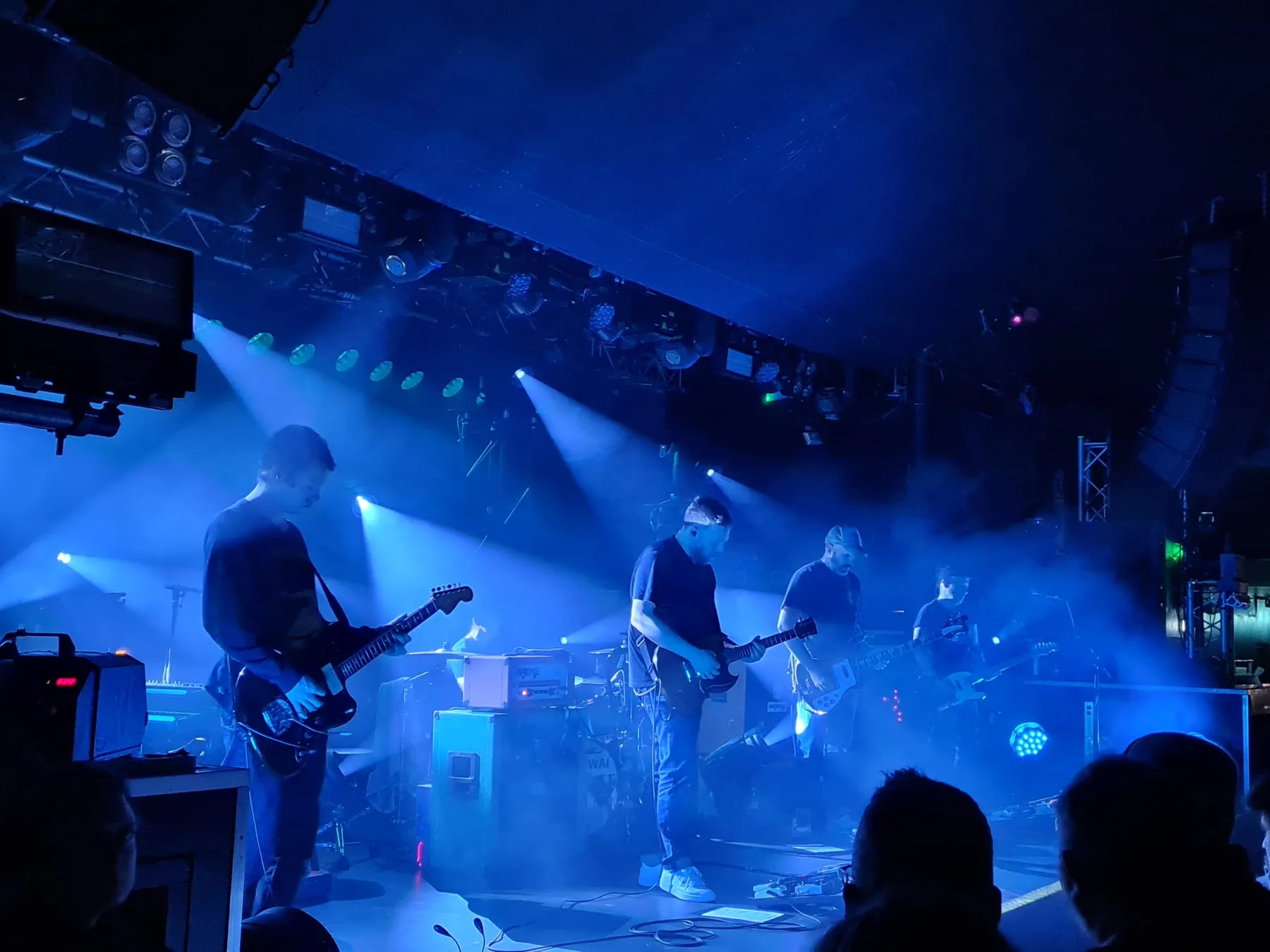
Photo by w:user:Black Kite , licensed under CC BY-SA 4.0 · Wikimedia Commons
Rank #116
Mogwai
Glasgow instrumentalists central to post-rock's quiet-loud canon.
From Wikipedia
Mogwai are a Scottish post-rock band, formed in 1995 in Glasgow. The band consists of Stuart Braithwaite, Barry Burns, Dominic Aitchison, and Martin Bulloch (drums). Mogwai typically compose lengthy guitar-based instrumental pieces that feature dynamic contrast, melodic bass guitar lines, and heavy use of distortion and effects.
Members
- Stuart Braithwaite
Discography & Previews
Browse through and click an album to open and play 30-second previews streamed from Apple Music.

Young Team
1997 · 10 tracks

Come On Die Young
1999 · 12 tracks
- 1 Punk Rock: ↗ 2:09
- 2 Cody ↗ 6:33
- 3 Helps Both Ways ↗ 4:53
- 4 Year 2000 Non-Compliant Cardia ↗ 3:26
- 5 Kappa ↗ 4:53
- 6 Waltz for Aidan ↗ 3:44
- 7 May Nothing But Happiness Come Through Your Door ↗ 8:30
- 8 Oh! How the Dogs Stack Up ↗ 2:04
- 9 Ex-Cowboy ↗ 9:09
- 10 Chocky ↗ 9:23
- 11 Christmas Steps ↗ 10:39
- 12 Punk Rock/ Puff Daddy/ Antichrist ↗ 2:14
Happy Songs for Happy People
2003 · 9 tracks

The Hawk Is Howling
2008 · 11 tracks
- 1 I'm Jim Morrison, I'm Dead ↗ 6:44
- 2 Bat Cat ↗ 5:25
- 3 Danphe and the Brain ↗ 5:18
- 4 Local Authority ↗ 4:15
- 5 The Sun Smells Too Loud ↗ 6:58
- 6 Kings Meadow ↗ 4:42
- 7 I Love You, I'm Going to Blow Up Your School ↗ 7:33
- 8 Scotland's Shame ↗ 8:00
- 9 Thank You Space Expert ↗ 7:53
- 10 The Precipice ↗ 6:42
- 11 Dracula Family ↗ 6:01

Hardcore Will Never Die, but You Will
2011 · 11 tracks

Every Country’s Sun
2017 · 11 tracks

As the Love Continues
2021 · 11 tracks
- 1 To the Bin My Friend, Tonight We Vacate Earth ↗ 5:09
- 2 Here We, Here We, Here We Go Forever ↗ 4:45
- 3 Dry Fantasy ↗ 5:10
- 4 Ritchie Sacramento ↗ 4:12
- 5 Drive the Nail ↗ 7:14
- 6 F**k Off Money ↗ 5:53
- 7 Ceiling Granny ↗ 3:58
- 8 Midnight Flit ↗ 6:09
- 9 Pat Stains ↗ 6:55
- 10 Supposedly, We Were Nightmares ↗ 4:36
- 11 It's What I Want to Do, Mum ↗ 7:23

The Bad Fire
2025 · 10 tracks
-
 Young TeamMogwai199710 tracks
 -
 Come On Die YoungMogwai199912 tracks
 -
 Rock ActionMogwai20018 tracks
 -
 Happy Songs for Happy PeopleMogwai20039 tracks
 -
 Mr. BeastMogwai200610 tracks
 -
 The Hawk Is HowlingMogwai200811 tracks
 -
 Hardcore Will Never Die, but You WillMogwai201111 tracks
 -
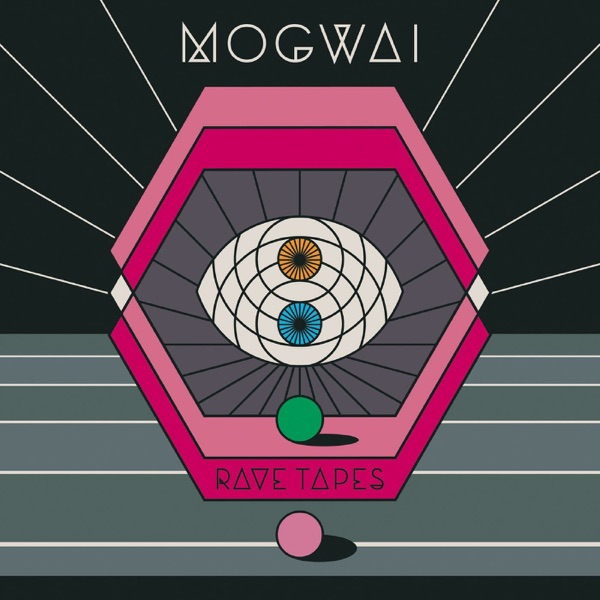
 Rave TapesMogwai201410 tracks
 -
 Every Country’s SunMogwai201711 tracks
 -
 As the Love ContinuesMogwai202111 tracks
 -
 The Bad FireMogwai202510 tracks
Deep Dive
Overview
Mogwai are a Scottish post-rock band formed in Glasgow in 1995, central to the genre’s development and its quiet-loud aesthetic that defined alternative rock in the 2000s. The band—Stuart Braithwaite, Barry Burns, Dominic Aitchison, and Martin Bulloch on drums—composes lengthy, guitar-based instrumental pieces built on dynamic contrast, melodic bass lines, and deliberate use of distortion and effects. Rather than rely on vocals to carry emotional weight, Mogwai construct narrative arcs through instrumental texture and dynamic shift, making them exemplars of post-rock’s core innovation.
Formation Story
Mogwai emerged from Glasgow in 1995, a city with a strong independent music culture sustained by labels and venues that supported experimental rock. The band coalesced around the songwriting and guitar work of Stuart Braithwaite, with Barry Burns, Dominic Aitchison, and Martin Bulloch completing the core lineup. Their early identity was shaped by the post-punk and ambient influences circulating in British independent music, combined with a deliberate rejection of conventional song structures and lead vocals in favor of instrumental density and spatial production.
Breakthrough Moment
Mogwai’s debut album, Young Team (1997), announced their arrival as serious instrumental innovators. Released on Chemikal Underground, the album established their signature method: extended compositions that began quietly, layered additional instruments and textures, and built toward crescendos of distorted guitar and driven rhythms. The critical reception was strong within independent rock circles, but their true breakthrough came with the follow-up, Come On Die Young (1999), which broadened their audience while deepening their technical sophistication. These early releases positioned Mogwai as the British counterpoint to post-rock acts emerging internationally, grounding the sound in Scottish indie rock’s guitar-centric tradition.
Peak Era
Mogwai’s most creatively and commercially successful period spanned the early-to-mid 2000s, beginning with Rock Action (2001) and continuing through Happy Songs for Happy People (2003) and Mr. Beast (2006). During these years, the band refined their dynamic formula into a globally recognized vocabulary of post-rock composition: sparse acoustic or clean-toned openings that accumulated layers—strings, synths, rhythm section push—until reaching a release point marked by distorted guitars and propulsive drums. Rock Action demonstrated their ability to work across both subdued, almost ambient passages and explosive instrumental climaxes within a single coherent album. Happy Songs for Happy People, despite its cheerful title, reinforced their mastery of tension and release, becoming perhaps their most frequently encountered touchstone. This era established Mogwai as standard-bearers for post-rock at a moment when the genre had achieved significant critical and cultural foothold.
Musical Style
Mogwai’s sound is defined by instrumental dialogue between bass, drums, and layers of guitar—clean, overdriven, and effects-laden—alongside strings and synthesizers that function as textural elements rather than decorative additions. The drums provide metronomic or dynamic foundation depending on arrangement; the bass, played by Dominic Aitchison, often carries melodic responsibility traditionally held by vocals. Stuart Braithwaite’s guitar playing emphasizes tone and dynamics over technical display, using effects units not as ornamentation but as compositional tools. The band typically builds tracks from minimal seeds—a single guitar line, a sparse drum pattern—adding and subtracting elements to generate emotional weight through accretion and subtraction. This approach draws from post-punk’s structural economy, ambient music’s spatial thinking, and indie rock’s guitar focus, synthesizing them into a distinct post-rock vocabulary that prizes patience and architectural clarity over immediate gratification.
Major Albums
Young Team (1997)
Mogwai’s debut set the template for their career: lengthy instrumental tracks marked by dramatic dynamic shifts, clean-toned guitars meeting thick distortion, and rhythm sections that move from minimal to muscular. The album’s influence on subsequent post-rock bands was substantial.
Come On Die Young (1999)
Their second album deepened the instrumental language, introducing more complex arrangements and a greater range of textural effects while maintaining the core quiet-to-loud progression that defines their work.
Rock Action (2001)
Released on Rock Action Records, this album demonstrated the band’s ability to sustain focus across an entire LP while varying their approach—some pieces sparse and ambient-inflected, others hitting harder with driven bass and distorted crescendos.
Happy Songs for Happy People (2003)
A landmark in post-rock’s mainstream acceptance, this album balanced accessibility with uncompromising instrumental composition, becoming their most widely heard work and a genre-defining statement.
Mr. Beast (2006)
Mogwai continued to expand their sonic palette while maintaining their fundamental commitment to dynamic contrast and instrumental storytelling, reinforcing their position as post-rock practitioners of lasting significance.
Signature Songs
- Mogwai Fear Satan — An extended instrumental piece that builds from whispered guitar and minimal drums into a heavily distorted crescendo, exemplifying the band’s dramatic dynamic range.
- Take Me Somewhere Nice — A composition centered on melodic guitar and restrained arrangement that showcases Mogwai’s ability to generate emotional resonance without vocal melody.
- New Paths to Helicon Home — A track emphasizing layered textures and gradual accumulation, demonstrating the band’s patient approach to instrumental composition.
- Ratts of the Capital — Combines clean guitar tones with subtle rhythmic complexity, representative of their earlier work’s intricate instrumental interplay.
Influence on Rock
Mogwai became central to post-rock’s identity during the 2000s, helping establish the genre’s aesthetic of instrumental composition, dynamic contrast, and guitar-centric drama as a viable alternative to vocal-led rock. Their influence extended beyond post-rock proper into indie rock and alternative music broadly, with countless bands adopting or adapting their quiet-loud formula and their commitment to extended instrumental narrative. The band demonstrated that instrumental music could sustain both critical attention and listener engagement at album length, legitimizing post-rock as more than a transient movement. Their work informed the later trajectory of Scottish and British indie rock, which increasingly incorporated post-rock’s dynamics and production sophistication into its own language.
Legacy
Mogwai have remained active since their formation, releasing albums through their later career including The Hawk Is Howling (2008), Hardcore Will Never Die, but You Will (2011), Rave Tapes (2014), Every Country’s Sun (2017), As the Love Continues (2021), and The Bad Fire (2025). Their three-decade career testifies to the durability of their fundamental approach and the continued relevance of post-rock as a vehicle for serious instrumental composition. The band’s association with multiple labels—Chemikal Underground, Rock Action Records, Matador Records, Sub Pop, and others—reflects their movement from Scottish independent context into genuinely international standing. Mogwai’s sustained output and touring presence have kept them central to post-rock discourse, with successive generations of listeners and musicians encountering their work as foundational to the genre’s language and ambitions.
Fun Facts
- Mogwai formed during the mid-1990s Glasgow indie rock surge, a period that also produced other significant Scottish acts, placing them within a specific regional context of experimental guitar music.
- The band’s name was inspired by a Cantonese word for “demon” or “ghost,” reflecting a deliberate aesthetic choice toward the slightly unsettling and atmospheric.
- Their long instrumental pieces frequently exceed six or seven minutes, requiring patient listening and structural sophistication from both composers and audience—a deliberate positioning against radio-friendly song lengths.