
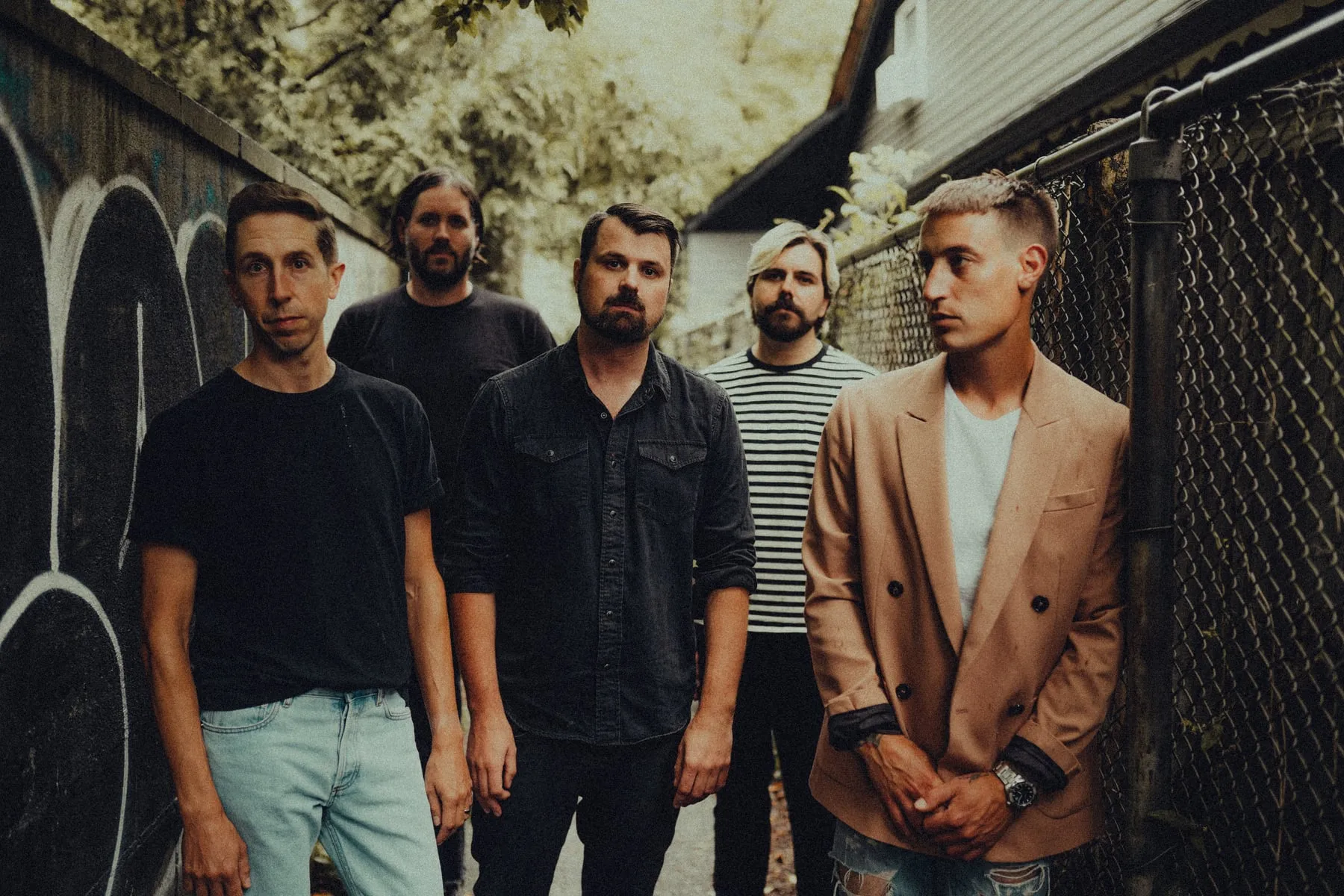
Photo by Wyatt Clough , licensed under CC BY 4.0 · Wikimedia Commons
Rank #471
Silverstein
From Wikipedia
Silverstein is a Canadian rock band from Burlington, Ontario, formed in 2000. Their band name is a reference to the famous children's author Shel Silverstein, whom the band had admired and whose work they had read as children. They have released a total of eleven studio albums, seven EPs, a compilation album and a live DVD/CD.
Members
- Shane Told
Discography & Previews
Browse through and click an album to open and play 30-second previews streamed from Apple Music.

When Broken Is Easily Fixed
2003 · 12 tracks
- 1 Smashed Into Pieces ↗ 3:43
- 2 Red Light Pledge ↗ 3:49
- 3 Giving Up ↗ 4:13
- 4 November ↗ 4:16
- 5 Last Days Of Summer ↗ 4:29
- 6 Bleeds No More ↗ 3:17
- 7 Hear Me Out ↗ 3:49
- 8 The Weak And The Wounded ↗ 3:15
- 9 Wish I Could Forget You ↗ 3:27
- 10 When Broken Is Easily Fixed ↗ 4:21
- 11 Friends In Fall River (Bonus Track) ↗ 3:19
- 12 Forever And A Day (Bonus Track) ↗ 4:28

Discovering the Waterfront
2005 · 12 tracks
- 1 Your Sword Versus My Dagger ↗ 2:59
- 2 Smile In Your Sleep ↗ 3:14
- 3 Ides Of March ↗ 3:27
- 4 Fist Wrapped In Blood ↗ 2:57
- 5 Discovering The Waterfront ↗ 4:45
- 6 Defend You ↗ 3:28
- 7 My Heroine ↗ 3:28
- 8 Always And Never ↗ 3:50
- 9 Already Dead ↗ 3:17
- 10 Three Hours Back ↗ 3:35
- 11 Call It Karma ↗ 4:14
- 12 Rodeo Clown ↗ 2:11

Arrivals & Departures
2007 · 26 tracks
- 1 Sound Of The Sun (2022 Remix / Remaster) ↗ 3:18
- 1 Sound Of The Sun ↗ 3:20
- 2 Bodies And Words (2022 Remix / Remaster) ↗ 3:13
- 2 Bodies And Words ↗ 3:13
- 3 If You Could See Into My Soul (2022 Remix / Remaster) ↗ 4:00
- 3 If You Could See Into My Soul ↗ 3:59
- 4 Worlds Apart (2022 Remix / Remaster) ↗ 4:02
- 4 Worlds Apart ↗ 4:07
- 5 My Disaster (2022 Remix / Remaster) ↗ 3:46
- 5 My Disaster ↗ 3:49
- 6 Still Dreaming (2022 Remix / Remaster) ↗ 3:51
- 6 Still Dreaming ↗ 3:56
- 7 The Sand Will Turn To Glass (2022 Remix / Remaster) ↗ 2:51
- 7 The Sand Will Turn To Glass ↗ 2:52
- 8 Here Today, Gone Tomorrow (2022 Remix / Remaster) ↗ 3:31
- 8 Here Today, Gone Tomorrow ↗ 3:34
- 9 Vanity And Greed (2022 Remix / Remaster) ↗ 3:56
- 9 Vanity And Greed ↗ 3:59
- 10 Love With Caution (2022 Remix / Remaster) ↗ 3:24
- 10 Love With Caution ↗ 3:28
- 11 True Romance (2022 Remix / Remaster) ↗ 5:49
- 11 True Romance ↗ 5:50
- 12 Rain Will Fall (2022 Remix / Remaster) ↗ 3:24
- 12 Rain Will Fall (Bonus Track) ↗ 3:27
- 13 Falling Down (2022 Remix / Remaster) ↗ 3:15
- 13 Falling Down (Bonus Track) ↗ 3:15

A Shipwreck in the Sand
2009 · 19 tracks
- 1 A Great Fire ↗ 3:58
- 2 Vices (feat. Liam Cormier) ↗ 3:17
- 3 Broken Stars ↗ 3:41
- 4 American Dream ↗ 3:08
- 5 Their Lips Sink Ships ↗ 0:59
- 6 I Knew I Couldn't Trust You ↗ 3:29
- 7 Born Dead (feat. Scott Wade) ↗ 2:51
- 8 A Shipwreck In The Sand ↗ 4:35
- 9 I Am The Arsonist ↗ 3:08
- 10 You're All I Have ↗ 3:33
- 11 We Are Not The World ↗ 3:20
- 12 A Hero Loses Everyday ↗ 3:08
- 13 The Tide Raises Every Ship ↗ 0:44
- 14 The End (feat. Lights) ↗ 7:24
- 15 Help (The Beatles Cover) ↗ 2:13
- 16 Go Your Own Way (Fleetwood Mac Cover) ↗ 2:27
- 17 Three Miles Down (Saves The Day Cover) ↗ 1:41
- 18 Total Bummer (NOFX Cover) ↗ 2:14
- 19 Broken Stars (Demo Version) ↗ 3:38
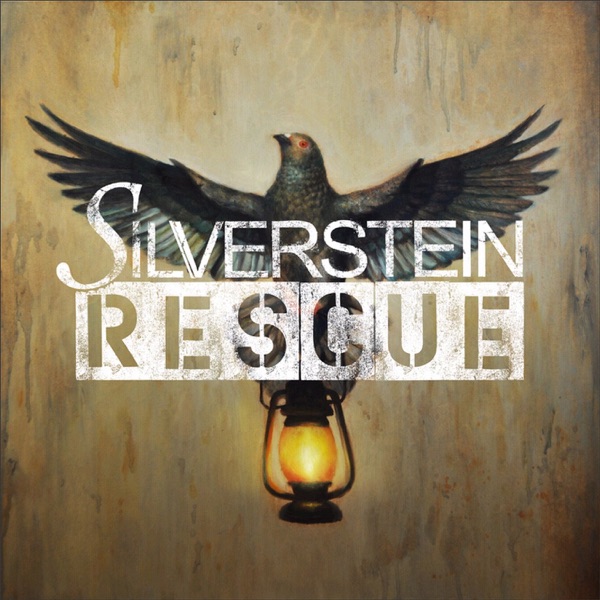
Rescue
2011 · 19 tracks
- 1 Medication ↗ 4:30
- 2 Sacrifice ↗ 2:35
- 3 Forget Your Heart ↗ 3:43
- 4 Intervention ↗ 3:05
- 5 Good Luck With Your Lives ↗ 3:23
- 6 Texas Mickey ↗ 2:40
- 7 The Artist ↗ 3:04
- 8 Burning Hearts ↗ 3:02
- 9 Darling Harbour ↗ 2:51
- 10 Live to Kill ↗ 2:34
- 11 Replace You ↗ 3:23
- 12 In Memory of... ↗ 4:46
- 13 Burning Hearts (Acoustic Version) ↗ 3:27
- 14 Texas Mickey (Demo Version) ↗ 3:03
- 15 Intervention (Demo Version) ↗ 3:12
- 16 In Memory of...(Demo Version) ↗ 4:39
- 17 Dancing On My Grave (B-Side) ↗ 3:16
- 18 Replace You (Acoustic Version) [B-Side] ↗ 3:43
- 19 Forget Your Heart (Piano Version) [B-Side] ↗ 3:35
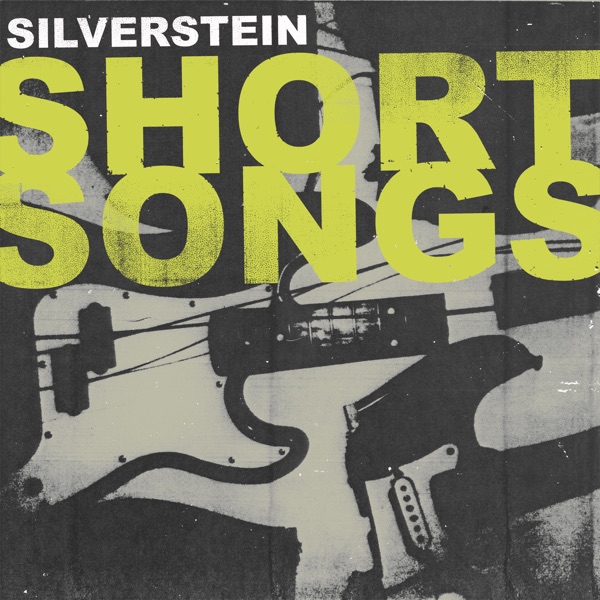
Short Songs
2012 · 22 tracks
- 1 Sick As Your Secrets ↗ 1:09
- 2 Sin & Redemption ↗ 1:10
- 3 Sos ↗ 1:37
- 4 Brookfield ↗ 1:30
- 5 La Marseillaise ↗ 0:49
- 6 World On Fire ↗ 1:25
- 7 Sleep Around ↗ 1:20
- 8 My Miserable Life ↗ 0:28
- 9 Truth & Temptation ↗ 0:45
- 10 One Last Dance ↗ 1:26
- 11 See Ya Bill ↗ 0:07
- 12 Short Songs ↗ 0:24
- 13 236 E. Broadway ↗ 1:21
- 14 Good Intentions ↗ 0:27
- 15 Destination: Blood! ↗ 1:09
- 16 Coffee Mug ↗ 0:33
- 17 X On Our Knees X ↗ 0:24
- 18 Scenes from Parisian Life ↗ 1:22
- 19 It's My Job to Keep Punk Rock Elite ↗ 1:25
- 20 Quit Your Job ↗ 0:23
- 21 The Ballad of Wilhelm Fink ↗ 0:33
- 22 You Gotta Stay Positive ↗ 0:05
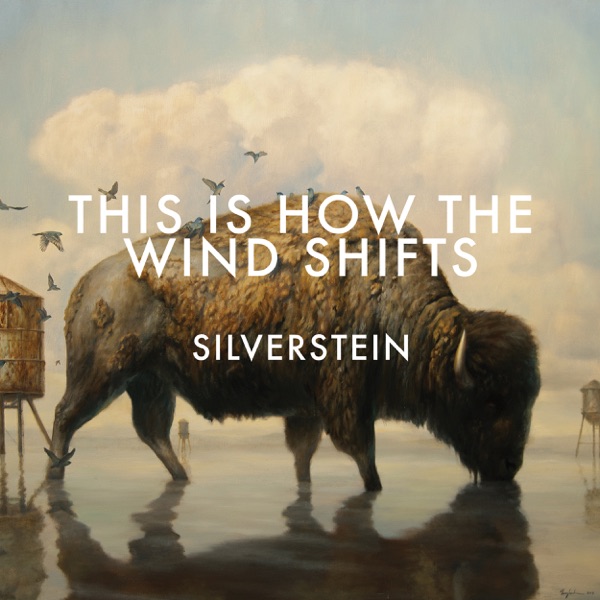
This Is How the Wind Shifts
2013 · 21 tracks
- 1 Stand Amid the Roar ↗ 3:05
- 2 On Brave Mountains We Conquer ↗ 2:36
- 3 Massachusetts ↗ 2:57
- 4 This is How ↗ 1:23
- 5 A Better Place ↗ 3:08
- 6 Hide Your Secrets ↗ 3:58
- 7 Arrivals ↗ 1:16
- 8 In a Place of Solace ↗ 3:11
- 9 In Silent Seas We Drown ↗ 3:30
- 10 California ↗ 3:46
- 11 The Wind Shifts ↗ 1:21
- 12 To Live and To Lose ↗ 3:59
- 13 With Second Chances ↗ 3:43
- 14 Departures ↗ 2:27
- 15 I Will Illuminate ↗ 3:45
- 16 Kill the Lights ↗ 3:52
- 17 Massachusetts (Acoustic) ↗ 3:35
- 18 One Last Dance (Acoustic) ↗ 1:36
- 19 Departures (Acoustic) ↗ 2:22
- 20 Arrivals (Voice Note) ↗ 1:12
- 21 This Is How the Wind Shifts ↗ 1:21

I Am Alive in Everything I Touch
2015 · 12 tracks
- 1 Toronto (Abridged) ↗ 0:46
- 2 A Midwestern State of Emergency ↗ 3:35
- 3 Face of the Earth ↗ 3:03
- 4 Heaven, Hell and Purgatory ↗ 2:57
- 5 Buried at Sea ↗ 3:06
- 6 Late On 6th ↗ 5:06
- 7 Milestone ↗ 3:29
- 8 The Continual Condition ↗ 3:30
- 9 Desert Nights ↗ 3:02
- 10 In the Dark ↗ 3:27
- 11 Je me Souviens ↗ 3:28
- 12 Toronto (Unabridged) ↗ 5:01


A Beautiful Place to Drown
2020 · 12 tracks
- 1 Bad Habits (feat. Intervals) ↗ 2:53
- 2 Burn It Down (feat. Caleb Shomo) ↗ 3:10
- 3 Where Are You ↗ 2:54
- 4 Infinite (feat. Aaron Gillespie) ↗ 2:44
- 5 Shape Shift ↗ 3:29
- 6 All on Me ↗ 3:08
- 7 Madness (feat. Princess Nokia) ↗ 3:38
- 8 Say Yes! ↗ 2:39
- 9 Stop ↗ 3:25
- 10 September 14th ↗ 3:14
- 11 Coming Down ↗ 2:52
- 12 Take What You Give (feat. Simple Plan) ↗ 3:00

Misery Made Me
2022 · 11 tracks
- 1 Our Song ↗ 3:11
- 2 Die Alone (feat. Andrew Neufeld) ↗ 2:47
- 3 Ultraviolet ↗ 2:54
- 4 Cold Blood (feat. Trevor Daniel) ↗ 2:52
- 5 It's Over ↗ 3:24
- 6 The Altar / Mary ↗ 3:59
- 7 Slow Motion (feat. Mike Hranica) ↗ 3:09
- 8 Don't Wait Up ↗ 3:28
- 9 Bankrupt ↗ 3:22
- 10 Live Like This (feat. nothing,nowhere.) ↗ 3:57
- 11 Misery ↗ 4:08


-
 When Broken Is Easily FixedSilverstein200312 tracks
 -
 Discovering the WaterfrontSilverstein200512 tracks
 -
 Arrivals & DeparturesSilverstein200726 tracks
 -
 A Shipwreck in the SandSilverstein200919 tracks
 -
 RescueSilverstein201119 tracks
 -
 Short SongsSilverstein201222 tracks
 -
 This Is How the Wind ShiftsSilverstein201321 tracks
 -
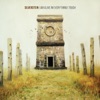 I Am Alive in Everything I TouchSilverstein201512 tracks
 -
 Dead ReflectionSilverstein201712 tracks
 -
 A Beautiful Place to DrownSilverstein202012 tracks
 -
 Misery Made MeSilverstein202211 tracks
 -
 Pink MoonSilverstein20258 tracks
 -
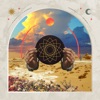 AntibloomSilverstein20258 tracks
Deep Dive
Overview
Silverstein is a Canadian rock band from Burlington, Ontario, formed in 2000. Operating at the intersection of post-hardcore, emo, and melodic hardcore, the band has sustained a prolific career spanning over two decades, releasing eleven studio albums and establishing themselves as consistent fixtures in the North American rock landscape. Their music combines screamed and sung vocals, intricate guitar work, and emotionally direct songwriting, positioning them within a lineage of early 2000s alternative rock that prioritized visceral energy alongside melodic accessibility.
Formation Story
Silverstein emerged from Burlington, Ontario in 2000, taking their name from the celebrated children’s author Shel Silverstein, whose work the founding members had read and admired during their youth. The band’s origins lay in the fertile post-hardcore and emo scenes that were consolidating in the early 2000s, drawing from the screamo and melodic hardcore traditions that had developed through the 1990s. Shane Told, the band’s central figure and primary voice, became the consistent anchor around which Silverstein built its identity, leading the project through multiple lineup iterations while maintaining a coherent artistic vision.
Breakthrough Moment
Silverstein’s initial breakthrough came with the release of When Broken Is Easily Fixed in 2003, their debut studio album on Victory Records. The album established the band’s core sound and earned them attention within the post-hardcore underground, setting the stage for broader recognition. Their second album, Discovering the Waterfront (2005), solidified their position as rising figures in the melodic hardcore scene, expanding their fanbase beyond regional circuits and helping establish them as one of the notable Canadian exports in the genre during a period when post-hardcore was experiencing significant growth in North America.
Peak Era
Silverstein’s most sustained period of creative momentum extended through the late 2000s and early 2010s. Arrivals & Departures (2007) and A Shipwreck in the Sand (2009) represented the band at a high point of compositional sophistication and emotional directness, while Rescue (2011) continued their trajectory as reliable practitioners of post-hardcore songcraft. This period established Silverstein as a band capable of consistent output without sacrificing musical substance, maintaining strong connections to their core fanbase while remaining relevant to younger listeners discovering post-hardcore and emo during the 2010s revival.
Musical Style
Silverstein’s sound fuses the aggression and technical precision of post-hardcore with the melodic sensibilities and emotional vulnerability associated with emo and melodic hardcore. The band’s approach typically features dual vocal approaches—Told’s ability to shift between sung and screamed delivery creates dynamic contrasts within songs, allowing them to move from introspective verse passages to cathartic choruses. Lyrically, the band gravitates toward themes of struggle, resilience, and introspection, with songwriting that privileges emotional honesty over abstraction. Their instrumentation emphasizes layered guitar work, driving rhythm sections, and production choices that balance clarity with the raw intensity characteristic of post-hardcore aesthetics.
Major Albums
When Broken Is Easily Fixed (2003)
Silverstein’s debut established their foundational sound, introducing the post-hardcore intensity and melodic sensibility that would define their subsequent output and earning them initial credibility within the hardcore and alternative rock communities.
Discovering the Waterfront (2005)
This sophomore effort expanded on their debut’s promise, demonstrating increased compositional maturity and helping the band develop a stronger foothold in the broader post-hardcore scene beyond their Canadian origins.
Arrivals & Departures (2007)
Among their most accomplished works, this album showcased Silverstein operating at peak creative form, balancing technical proficiency with emotionally resonant songwriting and standout moments of both aggression and vulnerability.
A Shipwreck in the Sand (2009)
Continuing their run of strong releases, this album maintained the band’s commitment to post-hardcore substance and melodic engagement, reinforcing their status as consistent craftspeople within the genre.
I Am Alive in Everything I Touch (2015)
After more than a decade of activity, this album demonstrated the band’s ability to refresh their sound while remaining true to core aesthetic principles, showing that Silverstein could evolve without losing their essential identity.
Signature Songs
- Smile in Your Sleep — A defining moment from their early catalog, showcasing the band’s ability to pair aggressive instrumentation with emotionally vulnerable vocal performances.
- My Heroine — One of their most recognizable tracks, combining post-hardcore intensity with accessible melodic hooks that helped extend their reach beyond core post-hardcore audiences.
- Massachusetts — A showcase for Told’s vocal range and the band’s skill at building emotional momentum through dynamic song structure.
Influence on Rock
While operating within established post-hardcore and emo frameworks rather than fundamentally reimagining them, Silverstein helped sustain and normalize these genres during a period of industry-wide shift away from alternative rock investment. The band’s consistent longevity—maintaining a stable presence across two decades—demonstrated that post-hardcore and melodic hardcore could support long-term artist careers without mainstream crossover. Their output provided a template for bands navigating the balance between artistic evolution and fan expectation, particularly relevant as the post-hardcore and emo genres experienced cyclical revivals in the 2010s and 2020s.
Legacy
Silverstein’s legacy lies in their role as steady practitioners of post-hardcore and melodic hardcore during a period when these genres faced shifting commercial viability. From 2003 through the early 2020s, the band maintained active touring, recording, and fan engagement, becoming a reliable reference point for the post-hardcore tradition. Their continued recording activity—releasing A Beautiful Place to Drown in 2020, Misery Made Me in 2022, and both Pink Moon and Antibloom in 2025—demonstrates sustained creative engagement and the enduring appeal of their core aesthetic. The band’s Canadian origins also positioned them as an important international voice in a scene historically dominated by American and British acts, contributing to a more geographically distributed post-hardcore landscape.
Fun Facts
- The band’s name references children’s author Shel Silverstein, whose work held personal significance for the founding members during their formative years.
- Silverstein has released eleven studio albums across more than two decades while maintaining a core continuity of artistic vision and output consistency unusual within the post-hardcore genre.
- The band’s 2025 release schedule included two studio albums, demonstrating renewed creative productivity in their third decade of activity.