
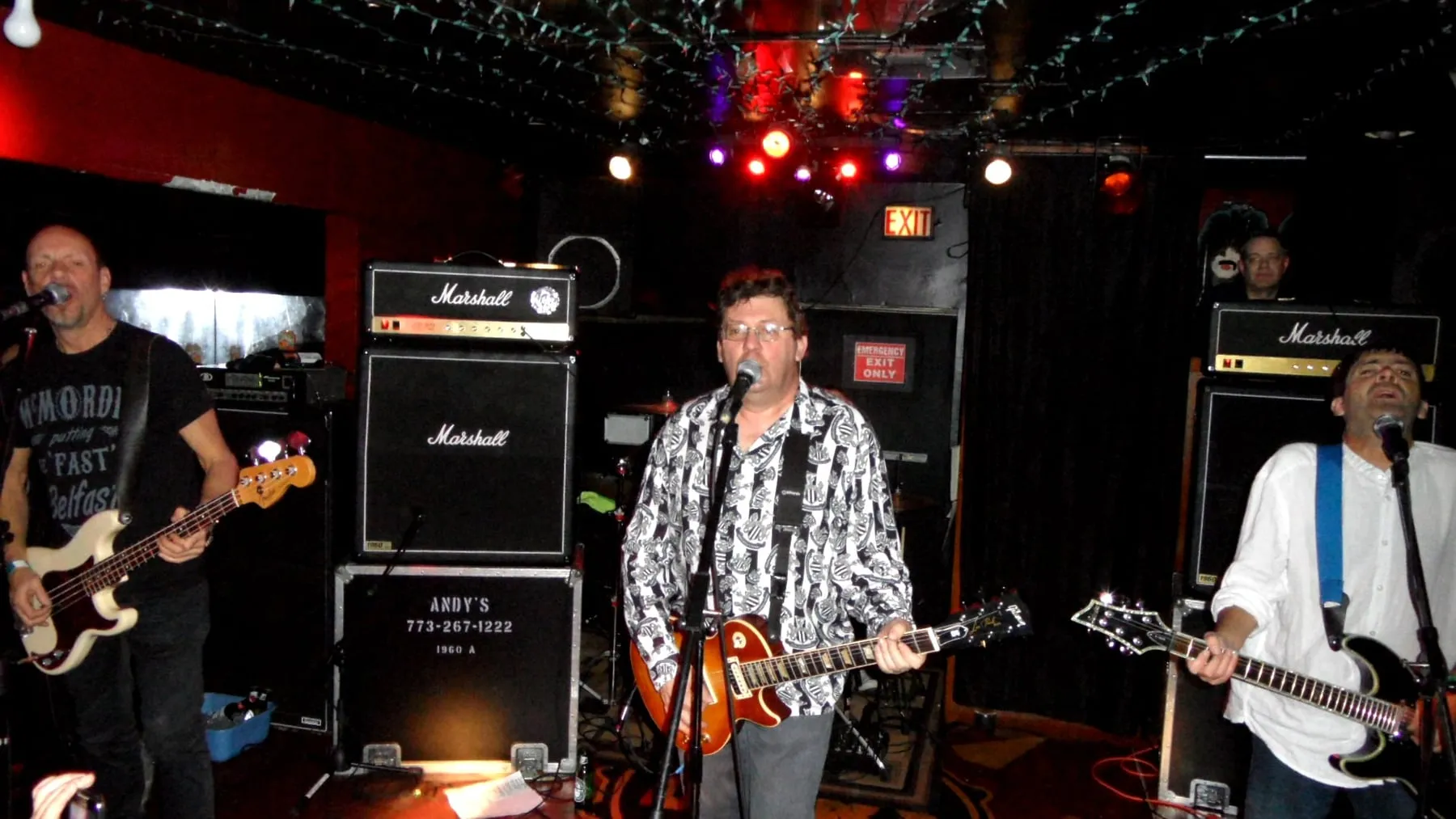
Photo by Robman94 , licensed under CC BY-SA 3.0 · Wikimedia Commons
Rank #216
Stiff Little Fingers
Belfast punks whose 'Inflammable Material' chronicled the Troubles.
From Wikipedia
Stiff Little Fingers is an Irish punk rock band from Belfast. They formed in 1977 at the height of the Troubles, which informed much of their songwriting. They started out as a schoolboy band called Highway Star, doing rock covers, until they discovered punk. They were the first punk band in Belfast to release a record – the "Suspect Device" single came out on their own independent label, Rigid Digits. Their album Inflammable Material, released in partnership with Rough Trade, became the first independent LP to enter the UK top 20.
Members
- Jake Burns
Discography & Previews
Browse through and click an album to open and play 30-second previews streamed from Apple Music.

Inflammable Material
1979 · 16 tracks
- 1 Suspect Device ↗ 2:36
- 2 State of Emergency ↗ 2:28
- 3 Here We Are Nowhere ↗ 0:59
- 4 Wasted Life (Edit) ↗ 3:10
- 5 No More of That ↗ 2:04
- 6 Barbed Wire Love ↗ 3:32
- 7 White Noise ↗ 1:58
- 8 Breakout ↗ 3:03
- 9 Law and Order ↗ 3:14
- 10 Rough Trade ↗ 2:39
- 11 Johnny Was ↗ 8:10
- 12 Alternative Ulster ↗ 2:44
- 13 Closed Groove ↗ 4:21
- 14 Suspect Device (Single Version) ↗ 2:44
- 15 78 R.P.M. ↗ 2:37
- 16 Jake Burns Interview Part One ↗ 17:41

Nobody’s Heroes
1980 · 14 tracks
- 1 Gotta Gettaway ↗ 3:35
- 2 Wait and See ↗ 4:26
- 3 Fly the Flag ↗ 3:45
- 4 At the Edge ↗ 2:57
- 5 Nobody's Hero ↗ 4:10
- 6 Bloody Dub ↗ 3:49
- 7 Doesn't Make It Alright ↗ 5:48
- 8 I Don't Like You ↗ 2:41
- 9 No Change ↗ 1:57
- 10 Tin Soldiers ↗ 4:47
- 11 Bloody Sunday ↗ 3:25
- 12 Straw Dogs ↗ 3:31
- 13 You Can't Say Crap On the Radio ↗ 2:51
- 14 Jake Burns Interview Part Two ↗ 15:09

Go for It
1981 · 14 tracks
- 1 Roots Radicals Rockers and Reggae ↗ 3:55
- 2 Just Fade Away (Remastered) ↗ 3:05
- 3 Go For It (Remastered) ↗ 3:16
- 4 The Only One ↗ 4:17
- 5 Hits and Misses ↗ 3:47
- 6 Kicking Up a Racket ↗ 2:44
- 7 Safe As Houses (Remastered) ↗ 5:28
- 8 Gate 49 ↗ 2:23
- 9 Silver Lining (Remastered) ↗ 3:04
- 10 Piccadilly Circus (Remastered) ↗ 4:43
- 11 Mr Fire Coal Man (Remastered) ↗ 4:55
- 12 Doesn't Make It All Right (Live) [Remastered] ↗ 3:29
- 13 Back To Front (Remastered) ↗ 3:00
- 14 Alan Parker Interviews Jake Burns About "Go For It" ↗ 25:20

Now Then…
1982 · 17 tracks
- 1 Falling Down (1999 Remastered Version) ↗ 3:20
- 2 Won't Be Told ↗ 3:26
- 3 Love of the Common People (1999 Remastered Version) ↗ 2:39
- 4 The Price of Admission (2002 Remastered Version) ↗ 3:22
- 5 Touch and Go (2002 Remastered Version) ↗ 3:22
- 6 Stands To Reason (2002 Remastered Version) ↗ 3:07
- 7 Bits of Kids (2002 Remastered Version) ↗ 3:41
- 8 Welcome To the Whole Week ↗ 3:46
- 9 Big City Nights ↗ 3:56
- 10 Talkback (2002 Remastered Version) ↗ 2:49
- 11 Is That What You Fought the War For (1999 Remastered Version) ↗ 3:57
- 12 Good For Nothing (2002 Remastered Version) ↗ 2:45
- 13 Listen (2002 Remastered Version) ↗ 4:14
- 14 Sad Eyed People (2002 Remastered Version) ↗ 3:56
- 15 That's When Your Blood Bumps (2002 Remastered Version) ↗ 3:45
- 16 Two Guitar Clash (2002 Remastered Version) ↗ 4:32
- 17 Alan Parker Interviews Jake Burns about "Now Then" ↗ 19:40

Get a Life
1994 · 13 tracks
- 1 Get a Life ↗ 5:53
- 2 Can't Believe in You ↗ 4:59
- 3 The Road to Kingdom Come ↗ 3:26
- 4 Walk Away ↗ 5:16
- 5 No Laughing Matter ↗ 2:52
- 6 Harp ↗ 3:49
- 7 Forensic Evidence ↗ 3:40
- 8 Baby Blue (What Have They Been Telling You) ↗ 4:00
- 9 I Want You ↗ 4:04
- 10 The Night That the Wall Came Down ↗ 3:52
- 11 Cold ↗ 4:09
- 12 When the Stars Fall from the Sky ↗ 3:50
- 13 What If I Want More? ↗ 1:33

Tinderbox
1997 · 14 tracks
- 1 You Never Hear the One That Hits You ↗ 2:53
- 2 (I Could Be) Happy Yesterday ↗ 4:06
- 3 Tinderbox ↗ 3:57
- 4 Dead of Night ↗ 5:21
- 5 The Message ↗ 3:07
- 6 My Ever Changing Moral Stance ↗ 2:49
- 7 Hurricane ↗ 4:25
- 8 You Can Move Mountains ↗ 4:16
- 9 A River Flowing ↗ 3:26
- 10 You Don't Believe in Me ↗ 3:24
- 11 In Your Hand ↗ 4:00
- 12 Dust in My Eye ↗ 2:43
- 13 Roaring Boys (Part One) ↗ 4:27
- 14 Roaring Boys (Part Two) ↗ 6:06
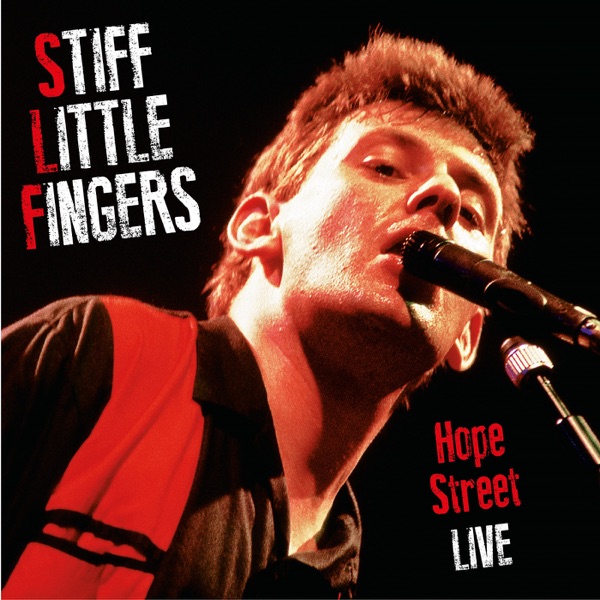
Hope Street
1999 · 11 tracks
- 1 Hope Street (Live) ↗ 3:31
- 2 Straw Dogs (Live) ↗ 2:57
- 3 Wasted Life (Live) ↗ 2:49
- 4 At the Edge (Live) ↗ 3:02
- 5 Barbed Wire Love (Live) ↗ 4:07
- 6 Doesn't Make It Alright (Live) ↗ 5:25
- 7 Roots, Radicals, Rockers & Reggae (Live) ↗ 3:53
- 8 Fly the Flag (Live) ↗ 3:52
- 9 Johnny Was (Live) ↗ 7:41
- 10 Suspect Device (Live) ↗ 2:42
- 11 Alternative Ulster (Live) ↗ 3:29

No Going Back
2014 · 26 tracks
- 1 Liar's Club ↗ 3:43
- 2 My Dark Places ↗ 4:08
- 3 Full Steam Backwards ↗ 4:20
- 4 I Just Care About Me ↗ 3:16
- 5 Don't Mind Me ↗ 3:11
- 6 Guilty as Sin ↗ 3:51
- 7 One Man Island ↗ 3:46
- 8 Throwing It All Away ↗ 3:26
- 9 Good Luck with That ↗ 2:48
- 10 Trail of Tears ↗ 4:37
- 11 Since Yesterday Was Here ↗ 4:08
- 12 When We Were Young ↗ 4:25
- 13 Liar's Club (Demo) ↗ 3:07
- 14 My Dark Places (Demo ↗ 4:04
- 15 Full Steam Backwards (Demo) ↗ 4:09
- 16 I Just Care About Me (Demo) ↗ 3:19
- 17 Don't Mind Me (Demo) ↗ 3:11
- 18 Guilty as Sin (Demo) ↗ 2:17
- 19 One Man Island (Demo) ↗ 3:48
- 20 Throwing It All Away (Demo) ↗ 3:09
- 21 Good Luck with That (Demo) ↗ 2:48
- 22 Trail of Tears (Demo) ↗ 4:03
- 23 Since Yesterday Was Here (Demo) ↗ 3:42
- 24 When We Were Young (Demo) ↗ 3:26
- 25 My Dark Places (Acoustic Version) ↗ 4:02
- 26 When We Were Young (Live at Oxford O2 Academy November 8th, 2013) ↗ 3:25
-
 Inflammable MaterialStiff Little Fingers197916 tracks
 -
 Nobody’s HeroesStiff Little Fingers198014 tracks
 -
 Go for ItStiff Little Fingers198114 tracks
 -
 Now Then…Stiff Little Fingers198217 tracks
 -
 Get a LifeStiff Little Fingers199413 tracks
 -
 TinderboxStiff Little Fingers199714 tracks
 -
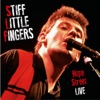 Hope StreetStiff Little Fingers199911 tracks
 -
 No Going BackStiff Little Fingers201426 tracks
Deep Dive
Overview
Stiff Little Fingers emerged from Belfast in 1977 as one of the first punk bands to arise from Northern Ireland, arriving at a moment when the city was fractured by sectarian violence and political turmoil. They translated the raw energy of punk rock into songs that directly addressed the conflict surrounding them, making their music as much a document of the Troubles as it was a musical statement. Their debut album, Inflammable Material, became a landmark achievement—the first independent label release to penetrate the UK top 20—establishing both the band’s uncompromising voice and the viability of independent record distribution.
Formation Story
Stiff Little Fingers began not as punks but as a schoolboy cover band called Highway Star, playing rock standards in their native Belfast. The formation of the band coincided with punk’s explosive emergence in the mid-1970s, and the members quickly abandoned their rock repertoire in favor of the faster, angrier aesthetic that was transforming popular music. The band formed officially in 1977, at a time when Belfast’s music scene remained largely isolated from the punk movements crystallizing in London and other major British cities. Their identity as Belfast musicians proved both isolating and essential to their artistic direction; removed from the epicenter of UK punk, Stiff Little Fingers developed a voice shaped more directly by their immediate surroundings—the Troubles, sectarian division, economic hardship, and the everyday reality of living in a conflict zone.
Breakthrough Moment
Stiff Little Fingers achieved their breakthrough through the independent route. The band released the single “Suspect Device” on their own independent label, Rigid Digits, making them the first punk band from Belfast to release a record. This bold move positioned them outside the machinery of major record labels at a moment when punk’s initial DIY ethos was already being absorbed into the mainstream. The true watershed came with the release of Inflammable Material in 1979, issued in partnership with Rough Trade, the London independent label that had become synonymous with post-punk and independent rock. The album’s ascent to the UK top 20—a rare achievement for an independent release at the time—transformed Stiff Little Fingers from a regional Belfast act into an internationally recognized band and validated the independent label model as a viable path for serious rock music.
Peak Era
The period from 1979 through the early 1980s marked Stiff Little Fingers’ most significant creative and commercial run. Inflammable Material established their thematic and musical template, followed by Nobody’s Heroes in 1980, Go for It in 1981, and Now Then… in 1982. During these four years, the band refined their approach to punk—sharpening the songwriting, tightening the production, and deepening their lyrical engagement with the political and social landscape of Northern Ireland. The albums accumulated steadily, building a catalog that reflected the band’s continued commitment to addressing the realities of life during the Troubles while maintaining punk’s essential directness and aggression. By the mid-1980s, however, the initial momentum began to slow, and the band’s presence in the broader rock conversation diminished.
Musical Style
Stiff Little Fingers’ sound combined the speed and percussive urgency of punk rock with the structural sophistication and darker emotional palette that would come to define post-punk. Their approach was grounded in the three-chord simplicity and energy of punk fundamentals—direct, fast, loud—but layered with the kind of thematic specificity and political consciousness that elevated punk from a style into a meaningful artistic statement. What distinguished them from their English punk contemporaries was the absence of irony or detachment; their songs engaged directly with documented political violence, economic collapse, and cultural division in Northern Ireland. The vocals delivered lyrics with clarity and conviction rather than the sneer or camp that characterized some punk performance. As the band evolved through their early albums, elements of post-punk’s experimental production and compositional complexity began to appear, though Stiff Little Fingers never abandoned the punk foundation that defined them.
Major Albums
Inflammable Material (1979)
Their debut album remains their most essential work and a landmark in independent rock history. Released through Rough Trade, Inflammable Material documented the sectarian conflict and political turbulence of Belfast through punk rock’s raw language, delivering songs that spoke directly to the lived reality of the city’s residents while achieving crossover commercial recognition.
Nobody’s Heroes (1980)
Following the success of their debut, Nobody’s Heroes expanded on the thematic territory of Inflammable Material while refining the band’s production and songwriting craft. The album maintained the urgent political engagement of its predecessor while showing increased musical maturity.
Go for It (1981)
Go for It represented the band’s third major statement in three years, sustaining the momentum of the early 1980s and continuing their exploration of punk as a vehicle for social and political commentary.
Now Then… (1982)
The fourth album in four years, Now Then… capped the band’s initial creative surge and reflected their evolution as songwriters and musicians during punk’s transition into post-punk and alternative rock.
Signature Songs
- “Suspect Device” — The single that marked Stiff Little Fingers’ arrival as Belfast’s first punk band with a released record, establishing their lyrical commitment to documenting the Troubles.
- “Wasted Life” — A track addressing the economic and social devastation affecting Northern Ireland during the late 1970s and early 1980s.
- “Alternative Ulster” — Among the band’s most recognizable compositions, directly engaging with sectarian division and the search for political alternatives.
Influence on Rock
Stiff Little Fingers’ significance extends beyond their commercial achievements to their demonstration that punk rock could serve as a legitimate vehicle for documenting political conflict and social crisis. By refusing the detachment or irony that some punk musicians adopted, they established a template for politically engaged rock music that would influence subsequent generations of artists addressing contemporary politics through punk and post-punk aesthetics. Their success on an independent label helped validate independent record distribution at a moment when that model remained precarious, demonstrating that serious rock music could reach significant audiences without major label support. The band’s emergence from Belfast also helped establish punk as an international phenomenon rather than a primarily London-centered movement, proving that punk’s raw language could be adapted and deployed by musicians from geographically and culturally distinct contexts.
Legacy
Stiff Little Fingers’ legacy rests primarily on the achievement of Inflammable Material and the body of work they produced during the early 1980s. The band continued to record and perform, releasing new studio albums throughout the 1990s and 2000s, including Flags & Emblems (1991), Get a Life (1994), Tinderbox (1997), Hope Street (1999), Guitar & Drum (2004), and No Going Back (2014). While their commercial profile diminished significantly after the early 1980s, the band maintained an active presence and continued to develop their music. Their status as pioneers of independent punk rock and as Belfast’s most important musical ambassadors during the Troubles has only strengthened with time, positioning them as essential figures in both punk history and the cultural documentation of Northern Ireland during one of its most turbulent periods.
Fun Facts
- Stiff Little Fingers started as Highway Star, a schoolboy cover band, before discovering punk rock and transforming their entire musical identity.
- “Suspect Device” was released on their own independent label, Rigid Digits, making them the first punk band in Belfast to release a record.
- Inflammable Material was the first independent label album to enter the UK top 20, a significant validation of the independent record model in 1979.
- The band’s name references the spray-paint marking system used in Belfast during the Troubles to denote sectarian territorial boundaries.