
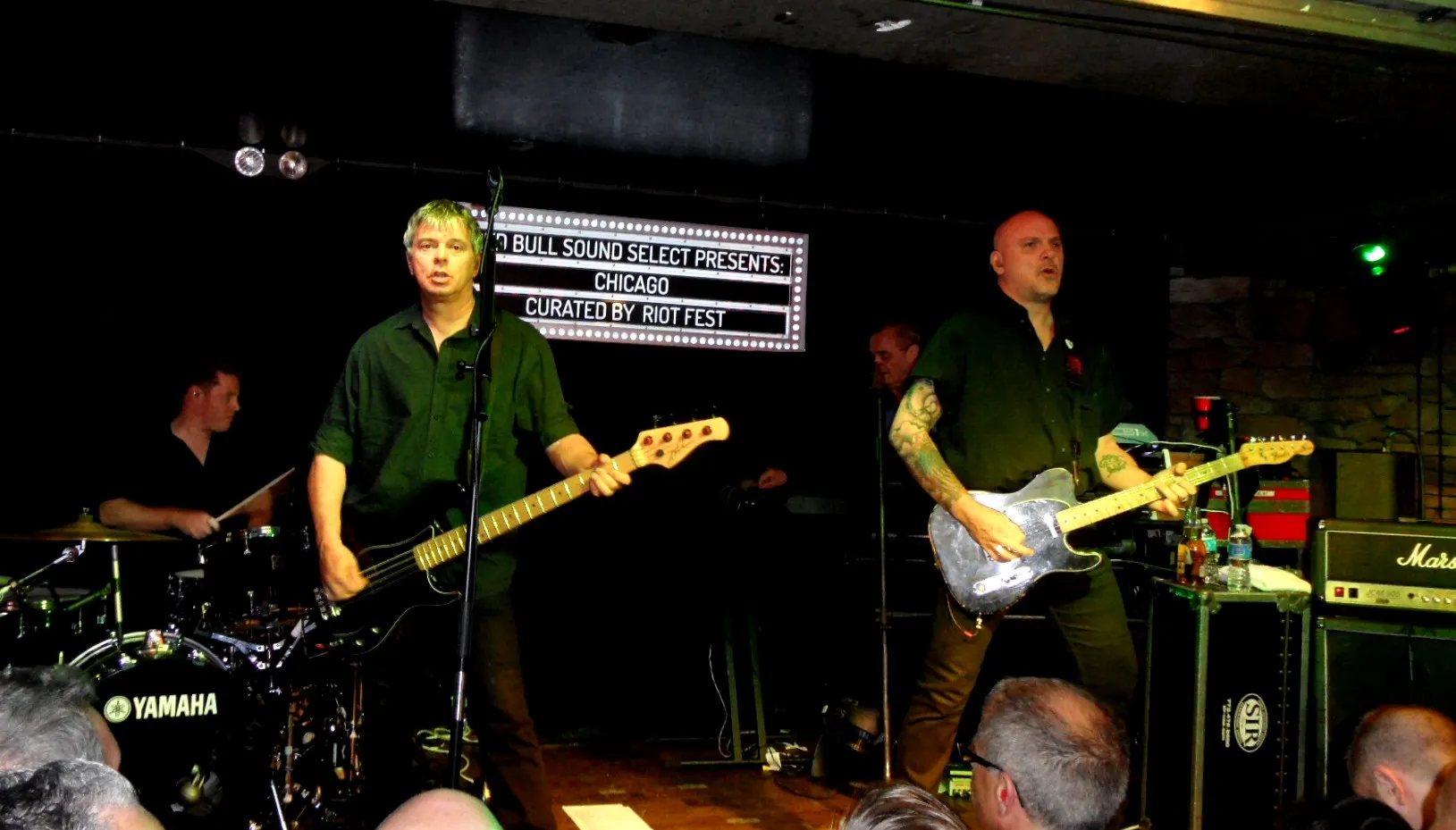
Photo by Robman94 , licensed under CC BY-SA 3.0 · Wikimedia Commons
Rank #217
The Stranglers
London band whose keyboard-led punk became polished New Wave.
From Wikipedia
The Stranglers are an English rock band formed in 1974. Scoring 23 UK top 40 singles and 20 UK top 40 albums to date in a career spanning five decades, the Stranglers are one of the longest-surviving bands to have originated in the UK punk scene.
Discography & Previews
Browse through and click an album to open and play 30-second previews streamed from Apple Music.

Rattus Norvegicus
1977 · 12 tracks
- 1 Sometimes (1996 Remastered Version) ↗ 4:55
- 2 Goodbye Toulouse (1996 Remastered Version) ↗ 3:17
- 3 London Lady (1996 Remastered Version) ↗ 2:33
- 4 Princess of the Streets (1996 Remastered Version) ↗ 4:38
- 5 Hanging Around (1996 Remastered Version) ↗ 4:27
- 6 Peaches (1996 Remaster) ↗ 4:08
- 7 (Get a) Grip [On Yourself] [1996 Remastered Version] ↗ 4:02
- 8 Ugly (1996 Remastered Version) ↗ 4:08
- 9 Down In the Sewer (Medley) [1996 Remastered Version] ↗ 7:58
- 10 Choosey Susie (1996 Remastered Version) ↗ 3:14
- 11 Go Buddy Go (1996 Remastered Version) ↗ 3:58
- 12 Peasant In the Big S****y (Live) [1996 Remastered Version] ↗ 3:42
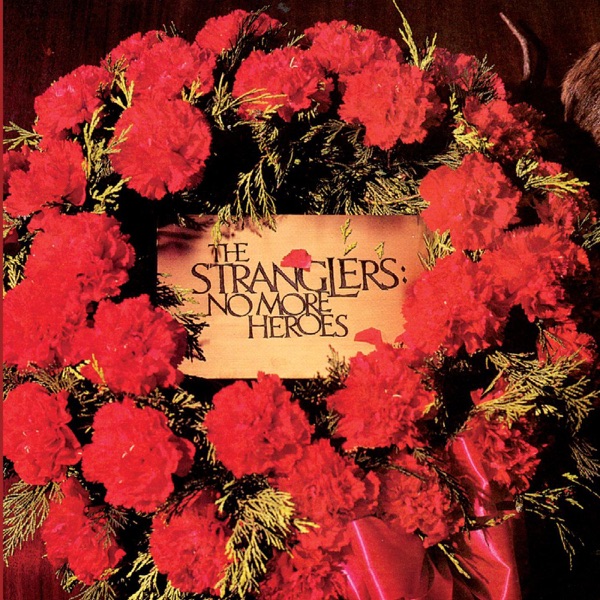
No More Heroes
1977 · 14 tracks
- 1 I Feel Like a Wog (1996 Remastered Version) ↗ 3:16
- 2 Bitching (1996 Remastered Version) ↗ 4:25
- 3 Dead Ringer (1996 Remastered Version) ↗ 2:46
- 4 Dagenham Dave (1996 Remastered Version) ↗ 3:17
- 5 Bring On the Nubiles (1996 Remastered Version) ↗ 2:16
- 6 Something Better Change (1996 Remastered Version) ↗ 3:35
- 7 No More Heroes (1996 Remastered Version) ↗ 3:29
- 8 Peasant In the Big S****y (1996 Remastered Version) ↗ 3:27
- 9 Burning Up Time (1996 Remastered Version) ↗ 2:25
- 10 English Towns (1996 Remastered Version) ↗ 2:12
- 11 School Mam (1996 Remastered Version) ↗ 7:10
- 12 Straighten Out (1996 Remastered Version) ↗ 2:47
- 13 5 Minutes (1996 Remastered Version) ↗ 3:17
- 14 Rok It To the Moon (1996 Remastered Version) ↗ 2:46

Black and White
1978 · 18 tracks
- 1 Tank ↗ 2:58
- 2 Nice n' Sleazy ↗ 3:13
- 3 Outside Tokyo ↗ 2:09
- 4 Hey! (Rise of the Robots) ↗ 2:16
- 5 Sweden (All Quiet On the Eastern Front) ↗ 2:50
- 6 Toiler On the Sea ↗ 5:25
- 7 Curfew ↗ 3:15
- 8 Threatened ↗ 3:34
- 9 In the Shadows ↗ 4:35
- 10 Do You Wanna? ↗ 2:28
- 11 Death and Night and Blood (Yukio) ↗ 2:50
- 12 Enough Time ↗ 4:19
- 13 Mean to Me ↗ 1:56
- 14 Walk On By ↗ 6:22
- 15 Shut Up ↗ 1:07
- 16 Sverige ↗ 2:50
- 17 Old Codger ↗ 2:49
- 18 T**s ↗ 5:26

The Raven
1979 · 15 tracks
- 1 Longships ↗ 1:11
- 2 The Raven ↗ 5:14
- 3 Dead Loss Angeles ↗ 2:24
- 4 Ice ↗ 3:25
- 5 Baroque Bordello ↗ 3:50
- 6 Nuclear Device (The Wizard of Aus) ↗ 3:32
- 7 Shah Shah a Go Go ↗ 4:50
- 8 Don't Bring Harry ↗ 4:10
- 9 Duchess ↗ 2:30
- 10 Meninblack ↗ 4:48
- 11 Genetix ↗ 5:17
- 12 Bear Cage ↗ 2:50
- 13 Fools Rush Out ↗ 2:10
- 14 N'Emmenes Pas Harry ↗ 4:15
- 15 Yellowcake UF6 ↗ 2:56
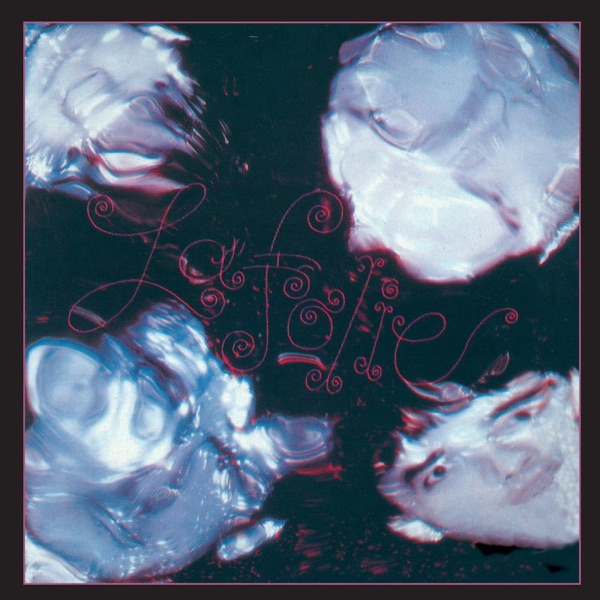
La Folie
1981 · 17 tracks
- 1 Non Stop ↗ 2:29
- 2 Everybody Loves You When You're Dead ↗ 2:43
- 3 Tramp ↗ 3:04
- 4 Let Me Introduce You To the Family ↗ 3:10
- 5 Ain't Nothin' to It ↗ 3:58
- 6 The Man They Love To Hate ↗ 4:22
- 7 Pin Up ↗ 2:49
- 8 It Only Takes Two to Tango ↗ 3:42
- 9 Golden Brown ↗ 3:27
- 10 How to Find True Love and Happiness in the Present Day ↗ 3:07
- 11 La folie ↗ 6:11
- 12 Cruel Garden ↗ 2:19
- 13 Cocktail Nubiles ↗ 7:08
- 14 Vietnamerica ↗ 4:12
- 15 Love 30 ↗ 4:00
- 16 You Hold the Key To My Love In Your Hands ↗ 2:40
- 17 Strange Little Girl ↗ 2:41

Aural Sculpture
1984 · 19 tracks
- 1 Ice Queen ↗ 4:02
- 2 Skin Deep ↗ 3:53
- 3 Let Me Down Easy ↗ 4:11
- 4 No Mercy ↗ 3:38
- 5 North Winds Blowing ↗ 4:03
- 6 Uptown ↗ 2:57
- 7 Punch & Judy ↗ 3:47
- 8 Spain ↗ 4:13
- 9 Laughing ↗ 4:12
- 10 Souls ↗ 2:41
- 11 Mad Hatter ↗ 4:00
- 12 Here & There ↗ 4:21
- 13 In One Door ↗ 2:54
- 14 Head On the Line ↗ 3:08
- 15 Achilles Heel ↗ 2:55
- 16 Hot Club (Riot Mix) ↗ 3:04
- 17 Place de Victoires (Instrumental) ↗ 4:10
- 18 Vladimir and the Beast, Pt. 3 ↗ 3:53
- 19 Vladimir Goes to Havana ↗ 5:28
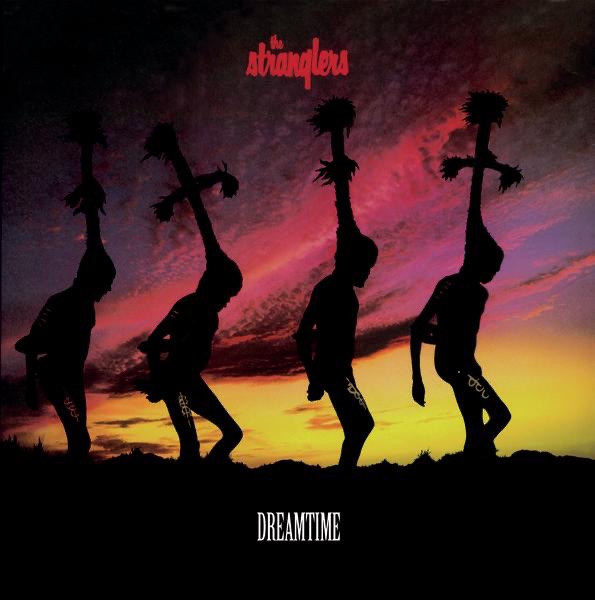
Dreamtime
1986 · 16 tracks
- 1 Always the Sun ↗ 4:52
- 2 Dreamtime ↗ 3:43
- 3 Was It You? (Live Version) ↗ 3:38
- 4 You'll Always Reap What You Sow ↗ 5:15
- 5 Ghost Train ↗ 5:02
- 6 Nice In Nice (7" Edit) ↗ 3:53
- 7 Big In America ↗ 3:18
- 8 Shakin' Like a Leaf (7" Edit) ↗ 2:35
- 9 Mayan Skies ↗ 3:57
- 10 Too Precious ↗ 6:45
- 11 Since You Went Away ↗ 2:50
- 12 Norman Normal ↗ 4:32
- 13 Dry Day ↗ 5:00
- 14 Hit Man ↗ 4:20
- 15 Was It You? (7" Version) ↗ 2:57
- 16 Burnham Beeches ↗ 3:50

10
1990 · 18 tracks
- 1 Sweet Smell of Success ↗ 3:22
- 2 Someone Like You ↗ 2:54
- 3 96 Tears ↗ 3:14
- 4 In This Place ↗ 3:35
- 5 Let's Celebrate ↗ 4:12
- 6 Man of the Earth ↗ 3:22
- 7 Too Many Teardrops ↗ 3:46
- 8 Where I Live ↗ 3:32
- 9 Out of My Mind ↗ 4:09
- 10 Never to Look Back ↗ 4:17
- 11 Instead of This (Bonus Track) ↗ 3:57
- 12 Poisonality (Bonus Track) ↗ 3:40
- 13 Motorbike (Bonus Track) ↗ 3:38
- 14 Something (Bonus Track) ↗ 4:09
- 15 You (Bonus Track) ↗ 3:05
- 16 ¡Viva Vlad! (Bonus Track) ↗ 3:09
- 17 All Day and All of the Night (Bonus Track) ↗ 2:25
- 18 Always the Sun (Sunny-Side Up Mix) [Bonus Track] ↗ 4:03


Dark Matters
2021 · 11 tracks
-
 Rattus NorvegicusThe Stranglers197712 tracks
 -
 No More HeroesThe Stranglers197714 tracks
 -
 Black and WhiteThe Stranglers197818 tracks
 -
 The RavenThe Stranglers197915 tracks
 -
 La FolieThe Stranglers198117 tracks
 -
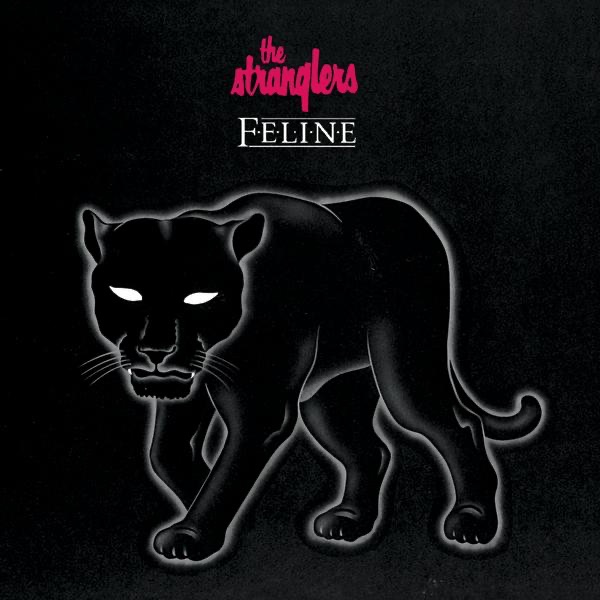
 FelineThe Stranglers19829 tracks
 -
 Aural SculptureThe Stranglers198419 tracks
 -
 DreamtimeThe Stranglers198616 tracks
 -
 10The Stranglers199018 tracks
 -
 About TimeThe Stranglers199511 tracks
 -
 Written in RedThe Stranglers199711 tracks
 -
 Coup de GraceThe Stranglers199810 tracks
 -
 GiantsThe Stranglers201210 tracks
 -
 Dark MattersThe Stranglers202111 tracks
Deep Dive
Overview
The Stranglers are an English rock band formed in Guildford in 1974 who bridged the gap between raw punk energy and polished new wave sophistication. Over a career spanning five decades to the present day, they have scored 23 UK top 40 singles and 20 UK top 40 albums, making them one of the longest-surviving bands to originate from the UK punk scene. Unlike their peers who either burned out quickly or abandoned their sonic roots entirely, The Stranglers evolved methodically from punk’s urgency into new wave’s architectural precision, with keyboards becoming the driving force of their sound rather than an afterthought.
Formation Story
The Stranglers emerged from Guildford in 1974, arriving at a moment when punk was beginning to coalesce as a movement but had not yet crystallized into the three-minute anthem format that would dominate 1976 and 1977. The band’s early lineup included Hugh Cornwell on guitar and vocals, Jean-Jacques Burnel on bass, Dave Greenfield on keyboards, and Jet Black on drums. Their formation predated the Sex Pistols’ mainstream breakthrough and the wave of punk bands that would flood British clubs in the mid-1970s. This timing proved crucial: The Stranglers built their foundation during punk’s gestation period, absorbing influences from Krautrock, art rock, and electronic music that would have felt foreign to bands formed in punk’s white-hot center.
Breakthrough Moment
The Stranglers’ commercial breakthrough came with the release of their first two albums in rapid succession in 1977: Rattus Norvegicus and No More Heroes. These records announced a band confident enough to use the synthesizer—an instrument viewed with suspicion by punk purists—as a central element of their sound. No More Heroes in particular achieved significant UK chart success and established the band as more than a novelty or regional anomaly. The album’s title track became their calling card, a song that married punk’s aggression with new wave’s melodic sophistication and keyboard textures that were entirely their own. The twin release of two strong albums within months demonstrated both productivity and artistic consistency, positioning them as contenders in the rapidly fragmenting post-punk landscape.
Peak Era
The Stranglers’ commercial and creative peak extended from the late 1970s through the mid-1980s. Black and White (1978) and The Raven (1979) consolidated their position as a major chart force, while the early 1980s saw them release La Folie (1981) and Feline (1982)—albums that showcased a band fully committed to exploring the marriage of punk edge and new wave refinement. By the time of Aural Sculpture (1984), The Stranglers had evolved into a highly professional recording unit capable of producing radio-friendly singles without sacrificing instrumental complexity or lyrical ambition. This period saw them accumulate the bulk of their 23 UK top 40 singles, proving that longevity in rock did not require either a return to basics or a complete departure from one’s original sound.
Musical Style
The Stranglers’ sound was fundamentally defined by Dave Greenfield’s keyboards, which were deployed with orchestral subtlety rather than disco-derived flash. Hugh Cornwell’s guitar work remained sharp and angular, never settling into the lush textures that some of their new wave contemporaries adopted; his vocals carried an educated restraint that set them apart from punk’s more visceral screaming and new wave’s occasional affectation. Jean-Jacques Burnel’s bass lines were melodic and prominent, often driving songs forward with harmonic purpose. Jet Black’s drumming provided a tightly wound rhythmic foundation. Across their catalogs, the band moved fluidly between punk’s structural economy and new wave’s architectural ambition, never fully abandoning either pole. Songs could shift from minimalist punk verses to synth-heavy choruses without jarring discontinuity, and this integration of electronic and traditional rock elements became their signature approach to songwriting and arrangement.
Major Albums
Rattus Norvegicus (1977)
The Stranglers’ debut announced a fully formed artistic vision: punk’s velocity and attitude filtered through keyboards and sophisticated song structures that suggested classical and progressive rock influences beneath the surface.
No More Heroes (1977)
Released within months of their first album, this record crystallized their approach and delivered their breakthrough single. The title track proved that keyboard-driven punk could achieve both critical credibility and chart success.
The Raven (1979)
A landmark album that showcased the band’s growing confidence in extended instrumental passages and conceptual depth, marking the point where new wave sophistication fully integrated with their punk origins.
La Folie (1981)
A studio landmark that captured the band at peak commercial form, demonstrating how thoroughly they had mastered the production and compositional techniques of early 1980s pop-rock without diluting their distinctive voice.
Aural Sculpture (1984)
By the mid-1980s, The Stranglers had refined their approach into a sleek, radio-friendly but still clearly individual sound that maintained instrumental prowess and lyrical substance.
Signature Songs
- “No More Heroes” — The title track from their 1977 album that became the band’s defining statement: punk energy married to synthesizer grandeur.
- “Golden Brown” — A later achievement that demonstrated their ability to craft sophisticated pop songs without abandoning their core identity.
- “Peaches” — A track that highlighted the band’s willingness to embrace keyboard-led arrangements and explore different lyrical territory.
- “Strange” — Showcased the interplay between Cornwell’s guitar and Greenfield’s synth work that defined their mature sound.
Influence on Rock
The Stranglers proved that punk and synthesizers were not contradictory impulses but could be synthesized into a durable commercial formula. Their integration of electronic instruments into rock songs predated the synth-pop explosion of the early 1980s and provided a template for bands seeking to evolve beyond punk’s initial three-chord strictures. While acts like Depeche Mode and Duran Duran would push synthesizers to the foreground, The Stranglers maintained guitar as an equal voice, showing that post-punk’s future lay not in abandoning rock’s instruments but in expanding the role of electronics. Their influence can be traced through subsequent new wave acts and alternative rock bands of the 1980s and 1990s who sought to balance accessibility with artistic credibility.
Legacy
The Stranglers remain one of punk’s most improbable success stories—a band that has remained together and artistically productive for five decades without achieving the mythic status of The Sex Pistols or the cultural dominance of The Clash. Their 23 UK top 40 singles and 20 UK top 40 albums constitute a commercial legacy that speaks to consistent popularity rather than revolutionary impact. In the streaming era, their catalog continues to circulate, and their later albums—including Norfolk Coast (2003), Suite XVI (2006), Giants (2012), and Dark Matters (2021)—demonstrate an active creative life well into the 21st century. The band’s longevity and refusal to become a nostalgia act have earned them respect as working musicians rather than heritage performers, a distinction that reflects both their professionalism and their continued relevance to audiences seeking keyboard-driven post-punk rock.
Fun Facts
- The Stranglers formed in Guildford before the major punk explosion of 1976, giving them a head start in developing their distinctive sound away from the immediate pressure of Soho’s punk epicenter.
- Dave Greenfield’s classical training on keyboards allowed The Stranglers to employ orchestral textures and harmonic complexity that distinguished them from guitar-dominated punk bands.
- The band’s early reliance on the synthesizer—viewed with suspicion by punk purists—proved prescient, as keyboards became central to new wave’s commercial dominance throughout the 1980s.