
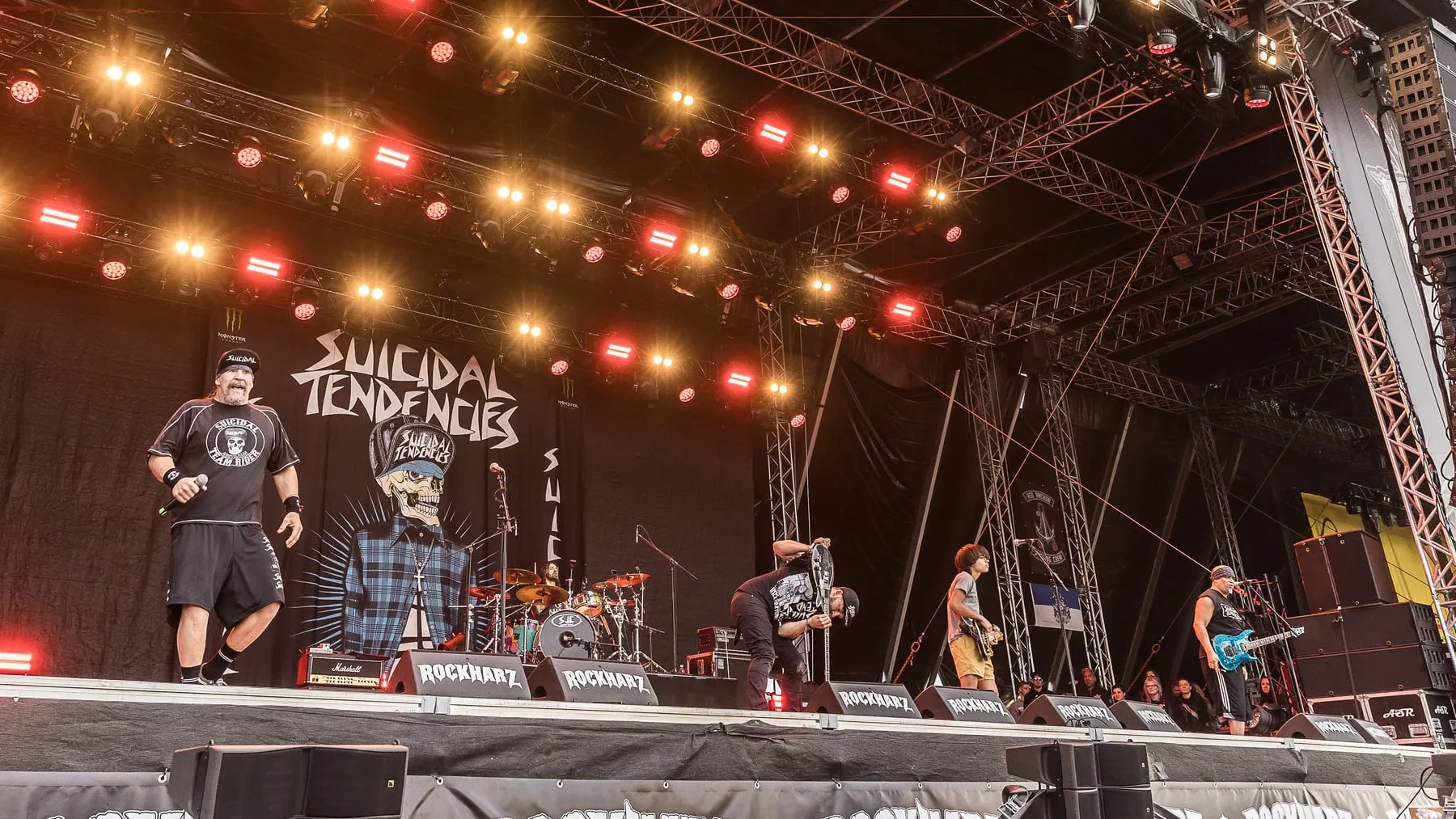
Photo by S. Bollmann , licensed under Attribution · Wikimedia Commons
Rank #332
Suicidal Tendencies
From Wikipedia
Suicidal Tendencies is an American heavy metal band, formed in 1980 in Venice, Los Angeles, California, by vocalist Mike Muir. The band has undergone various lineup changes, with Muir as the only remaining and sole constant original member. Their current lineup includes Muir, guitarists Dean Pleasants and Ben Weinman, bassist Tye Trujillo, and drummer Xavier "X" Ware. Notable musicians who have contributed to the band's studio or live activities include Rocky George, Mike Clark, Robert Trujillo, Josh Paul, Stephen "Thundercat" Bruner, Jimmy DeGrasso, Brooks Wackerman, David Hidalgo Jr., Thomas Pridgen, Ron Bruner, Dave Lombardo, Brandon Pertzborn, Greyson Nekrutman, Jay Weinberg, and Josh Freese.
Members
- Mike Muir (1980–present)
- Amery Smith (1982–1984)
- Grant Estes (1982–1983)
- Louiche Mayorga (1982–1987)
- Jon Nelson (1983–1984)
- R. J. Herrera (1984–1991)
- Rocky George (1984–1985)
- Bob Heathcote (1987–1989)
- Mike Clark (1987–2012)
- Robert Trujillo (1989–1995)
- Jimmy DeGrasso (1992–1995)
- Josh Freese (1992–1992)
- Brooks Wackerman (1997–2001)
- Dean Pleasants (1997–present)
- Josh Paul (1997–2001)
- Greg Saenz (2001–2001)
- Ronald Bruner, Jr. (2001–2004)
- Thundercat (2002–2011)
- David Hidalgo, Jr. (2005–2008)
- Thomas Pridgen (2014–present)
- Tye Trujillo
Discography & Previews
Browse through and click an album to open and play 30-second previews streamed from Apple Music.

Suicidal Tendencies
1983 · 12 tracks
- 1 Suicide's an Alternative / You'll Be Sorry ↗ 2:45
- 2 Two Sided Politics ↗ 1:04
- 3 I Shot the Devil ↗ 1:51
- 4 Subliminal ↗ 3:08
- 5 Won't Fall in Love Today ↗ 1:00
- 6 Institutionalized ↗ 3:50
- 7 Memories of Tomorrow ↗ 1:00
- 8 Possessed ↗ 2:07
- 9 I Saw Your Mommy... ↗ 4:53
- 10 Fascist Pig ↗ 1:18
- 11 I Want More ↗ 2:28
- 12 Suicidal Failure ↗ 2:53

Join the Army
1987 · 13 tracks
- 1 Suicidal Maniac ↗ 2:58
- 2 Join the Army ↗ 3:37
- 3 You Got, I Want ↗ 2:56
- 4 A Little Each Day ↗ 4:09
- 5 The Prisoner ↗ 2:54
- 6 War Inside My Head ↗ 3:51
- 7 I Feel Your Pain ↗ 3:28
- 8 Human Guinea Pig ↗ 2:06
- 9 Possessed To Skate ↗ 2:34
- 10 No Name, No Words ↗ 2:35
- 11 Cyco ↗ 2:13
- 12 Two Wrongs Don't Make a Right (But They Make Me Feel a Whole Lot Better) ↗ 2:49
- 13 Looking In Your Eyes ↗ 2:50
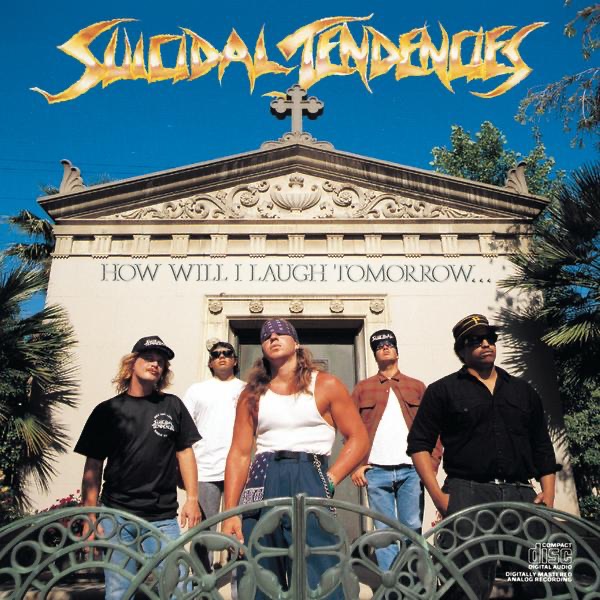
How Will I Laugh Tomorrow When I Can't Even Smile Today
1988 · 11 tracks

Controlled by Hatred / Feel Like Shit… Deja‐Vu
1989 · 9 tracks
- 1 Master of No Mercy ↗ 2:37
- 2 How Will I Laugh Tomorrow (Video Edit) ↗ 4:41
- 3 Just Another Love Song ↗ 3:15
- 4 Waking the Dead ↗ 6:54
- 5 Controlled By Hatred ↗ 5:38
- 6 Chossing My Own Way of Life ↗ 3:04
- 7 Feel Like Shit...Déjà-vu ↗ 2:53
- 8 It's Not Easy ↗ 3:58
- 9 How Will I Laugh Tomorrow (Heavy Emotion Version) ↗ 6:31
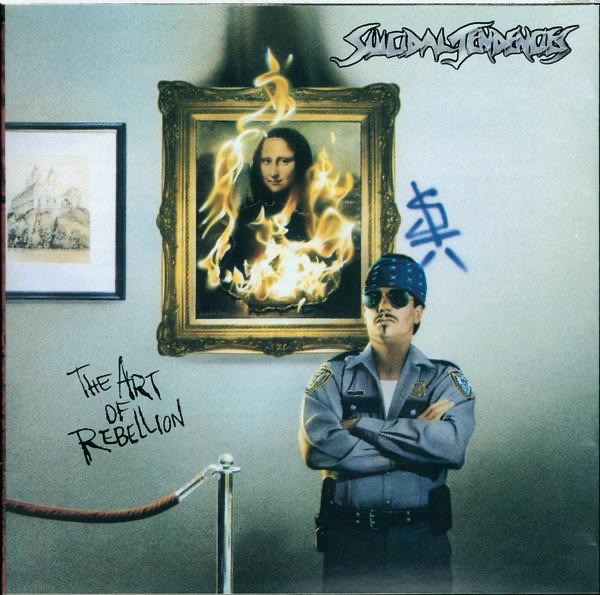
The Art of Rebellion
1992 · 12 tracks
- 1 Can't Stop ↗ 6:38
- 2 Accept My Sacrifice ↗ 3:28
- 3 Nobody Hears ↗ 5:32
- 4 Tap Into the Power ↗ 3:42
- 5 Monopoly On Sorrow ↗ 5:11
- 6 We Call This Mutha Revenge ↗ 4:49
- 7 I Wasn't Meant to Feel This/ Asleep At the Wheel ↗ 7:06
- 8 Gotta Kill Captain Stupid ↗ 4:00
- 9 I'll Hate You Better ↗ 4:16
- 10 Which Way to Free? ↗ 4:27
- 11 It's Going Down ↗ 4:27
- 12 Where's the Truth ↗ 4:14

Still Cyco After All These Years
1993 · 15 tracks
- 1 Suicide's an Alternative/ You'll Be Sorry ↗ 2:24
- 2 Two-Sided Politics ↗ 1:02
- 3 Subliminal ↗ 2:46
- 4 I Shot the Devil ↗ 1:50
- 5 Won't Fall In Love Today ↗ 0:50
- 6 Institutionalized ↗ 3:28
- 7 War Inside My Head ↗ 3:28
- 8 Don't Give Me Your Nothin' ↗ 4:02
- 9 Memories of Tomorrow ↗ 0:54
- 10 Possessed ↗ 2:00
- 11 I Saw Your Mommy ↗ 4:49
- 12 Fascist Pig ↗ 1:11
- 13 A Little Each Day ↗ 3:51
- 14 I Want More ↗ 2:07
- 15 Suicidal Failure ↗ 2:39

Freedumb
1999 · 14 tracks
- 1 Freedumb ↗ 2:52
- 2 Ain't Gonna Take It ↗ 2:09
- 3 Scream Out ↗ 2:29
- 4 Half Way Up My Head ↗ 4:01
- 5 Cyco Vision ↗ 1:49
- 6 I Ain't Like You ↗ 2:35
- 7 Naked ↗ 3:56
- 8 Hippie Killer ↗ 3:10
- 9 Built to Survive ↗ 3:07
- 10 Get Sick ↗ 2:58
- 11 We Are Family ↗ 2:54
- 12 I'll Buy Myself ↗ 1:48
- 13 Gaigan Go Home ↗ 1:58
- 14 Heaven ↗ 4:13

Free Your Soul... and Save My Mind
2000 · 15 tracks
- 1 Self Destruct ↗ 3:33
- 2 Su Casa Es Mi Casa ↗ 4:09
- 3 No More, No Less ↗ 3:26
- 4 Free Your Soul...and Save My Mind ↗ 3:52
- 5 Pop Songs ↗ 2:19
- 6 Bullenium ↗ 2:50
- 7 Animal ↗ 2:11
- 8 Straight from the Heart ↗ 4:43
- 9 Cyco Speak ↗ 3:04
- 10 Start Your Brain ↗ 3:16
- 11 Public Dissension ↗ 3:26
- 12 Children of the Bored ↗ 3:43
- 13 Got Mutation ↗ 3:04
- 14 Charlie Monroe ↗ 5:20
- 15 Home ↗ 7:31

No Mercy Fool!/The Suicidal Family
2010 · 14 tracks
- 1 Suicidal Maniac ↗ 3:10
- 2 Possessed to Skate ↗ 3:28
- 3 The Prisoner ↗ 3:10
- 4 I Feel Your Pain...And I Survive ↗ 3:41
- 5 Join the ST Army ↗ 4:22
- 6 No Name, No Words ↗ 2:33
- 7 Born to Be Cyco ↗ 2:24
- 8 Come Alive ↗ 3:43
- 9 Something Inside Me ↗ 2:59
- 10 No Mercy Fool! ↗ 3:28
- 11 We're F'n Evil ↗ 3:36
- 12 Crazy But Proud ↗ 3:14
- 13 I'm Your Nightmare ↗ 3:20
- 14 Widespread Bloodshed...Love Runs Red ↗ 4:34

13
2013 · 13 tracks
- 1 Shake It Out ↗ 3:51
- 2 Smash It! ↗ 3:46
- 3 This Ain't a Celebration ↗ 3:32
- 4 God Only Knows... Who I Am ↗ 5:29
- 5 Make Your Stand ↗ 5:54
- 6 Who's Afraid? ↗ 4:08
- 7 Show Some Love… Tear It Down ↗ 3:31
- 8 Cyco Style ↗ 4:41
- 9 Slam City ↗ 5:36
- 10 Till My Last Breath ↗ 4:40
- 11 Living the Fight ↗ 4:22
- 12 Life (Can't Live With It... Can't Live Without It) ↗ 4:36
- 13 This World ↗ 5:07

World Gone Mad
2016 · 11 tracks

Still Cyco Punk After All These Years
2018 · 11 tracks
- 1 I Love Destruction ↗ 2:57
- 2 F.U.B.A.R. ↗ 2:37
- 3 All Kinda Crazy ↗ 4:41
- 4 Sippin' From the Insanitea ↗ 4:08
- 5 It's Always Something ↗ 3:22
- 6 Lost My Brain...Once Again ↗ 3:54
- 7 Nothin' to Lose ↗ 3:03
- 8 Gonna Be Alright ↗ 4:18
- 9 Ain't Gonna Get Me ↗ 3:20
- 10 All I Ever Get ↗ 3:02
- 11 Save a Peace for Me ↗ 5:58
-
 Suicidal TendenciesSuicidal Tendencies198312 tracks
 -
 Join the ArmySuicidal Tendencies198713 tracks
 -
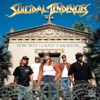 How Will I Laugh Tomorrow When I Can't Even Smile TodaySuicidal Tendencies198811 tracks
 -
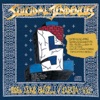 Controlled by Hatred / Feel Like Shit… Deja‐VuSuicidal Tendencies19899 tracks
 -
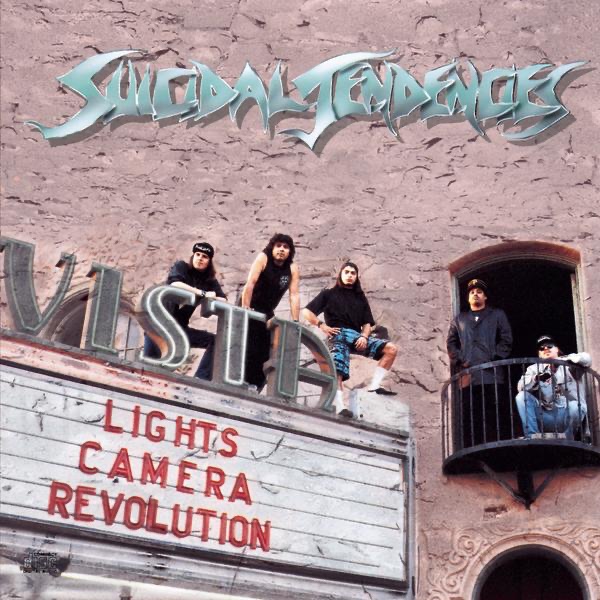
 Lights… Camera… Revolution!Suicidal Tendencies199010 tracks
 -
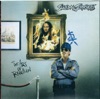 The Art of RebellionSuicidal Tendencies199212 tracks
 -
 Still Cyco After All These YearsSuicidal Tendencies199315 tracks
 -
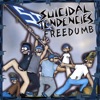 FreedumbSuicidal Tendencies199914 tracks
 -
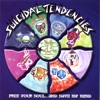 Free Your Soul... and Save My MindSuicidal Tendencies200015 tracks
 -
 No Mercy Fool!/The Suicidal FamilySuicidal Tendencies201014 tracks
 -
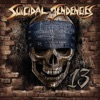 13Suicidal Tendencies201313 tracks
 -
 World Gone MadSuicidal Tendencies201611 tracks
 -
 Still Cyco Punk After All These YearsSuicidal Tendencies201811 tracks
Deep Dive
Overview
Suicidal Tendencies is an American heavy metal band that emerged from Venice, Los Angeles, in the early 1980s as architects of crossover thrash—a fusion that welded the speed and aggression of thrash metal to the rawness and street-level energy of hardcore punk. Founded in 1981 by vocalist Mike Muir, the band has remained active for over four decades, with Muir as its sole constant original member through numerous lineup fluctuations. Operating across the intersection of metal and punk, Suicidal Tendencies carved a distinct identity that transcended the traditional boundaries separating those genres, influencing generations of musicians who would follow in the crossover tradition.
Formation Story
Suicidal Tendencies coalesced in 1981 in Venice, California, a neighborhood already known for its collision of cultural and musical extremes. Mike Muir assembled an early lineup that included bassist Louiche Mayorga (1982–1987), drummer Amery Smith (1982–1984), and guitarist Grant Estes (1982–1983). This founding crew operated in a scene where punk’s DIY ethos and the emerging thrash metal movement had begun to overlap, creating space for an act that could speak to both communities. The band’s name and initial artistic posture reflected the raw, sometimes shocking direct confrontation that defined their early approach—a sonic and visual identity rooted in Venice’s counterculture rather than the polished metal establishment of the day.
Breakthrough Moment
Suicidal Tendencies released their self-titled debut in 1983 on a small independent label, establishing their core sound and gaining traction within underground metal and punk circles. The album’s success and the band’s increasingly energetic live reputation led to their second album, Join the Army (1987), which widened their audience beyond the West Coast underground. By this point, the lineup had evolved to include bassist Louiche Mayorga and drummer Mike Clark (1987–2012), alongside guitarist Rocky George (1984–1985). The band’s ability to play with genuine punk conviction while maintaining the technical prowess of metal created a bridge between audiences that few acts could claim. This dual appeal established Suicidal Tendencies as more than a novelty fusion; they were serious musicians operating in a genuinely new idiom.
Peak Era
The late 1980s and early 1990s represented Suicidal Tendencies’ commercial and creative peak. How Will I Laugh Tomorrow When I Can’t Even Smile Today (1988) and Controlled by Hatred / Feel Like Shit… Deja Vu (1989) solidified their standing as one of the decade’s definitive crossover bands. The album Lights… Camera… Revolution! (1990) maintained momentum, followed by The Art of Rebellion (1992), which saw the arrival of drummer Jimmy DeGrasso (1992–1995) and continued to showcase Muir’s visceral vocal delivery alongside increasingly sophisticated compositions. Still Cyco After All These Years (1993) demonstrated the band’s ability to refine their approach while remaining committed to the core fusion principle. Throughout this period, Suicidal Tendencies toured relentlessly, building a global following and establishing themselves as essential fixtures in the metal underground.
Musical Style
Suicidal Tendencies’ sound originated at the nexus of thrash metal’s breakneck tempo and rhythmic precision, married to hardcore punk’s three-chord aggression and confrontational delivery. Mike Muir’s vocal approach ranged from rapid, almost rap-inflected phrasing to raw, unpolished screams—a departure from traditional metal frontmen that aligned more closely with punk’s aesthetic. Guitarists across the band’s lineage employed both the palm-muted chugging typical of thrash and the open, sloppy power-chord attacks of hardcore, often within the same song. The rhythm section—particularly during Mike Clark’s tenure—anchored the music with the precision expected of metal while maintaining the loose-limbed swing of punk drumming. Over their career, Suicidal Tendencies evolved from straightforward crossover in the mid-1980s toward greater harmonic complexity and production sophistication in the 1990s, though the band’s core identity—the collision of genres and the refusal to choose between them—remained constant.
Major Albums
Suicidal Tendencies (1983)
The self-titled debut introduced Suicidal Tendencies’ uncompromising fusion of thrash and punk, establishing Mike Muir’s jagged vocal persona and the band’s street-level intensity.
Join the Army (1987)
This album expanded the band’s audience beyond the underground and featured the refined interplay between guitarist Rocky George and the rhythm section, presenting a more developed version of the crossover template.
How Will I Laugh Tomorrow When I Can’t Even Smile Today (1988)
A turning point in production and songwriting sophistication, this album demonstrated that crossover thrash could achieve mainstream metal credibility without diluting its punk roots.
Lights… Camera… Revolution! (1990)
Releasing in a moment when thrash metal commanded significant mainstream attention, this album showcased the band’s maturity and their ability to compete with more established acts while retaining their singular identity.
Still Cyco After All These Years (1993)
Capturing the band at their commercial and creative apex, this album affirmed that Suicidal Tendencies had become more than a novelty act—they were architects of a lasting subgenre.
Signature Songs
- Institutionalized — Perhaps the band’s most recognizable track, this song exemplifies Muir’s rapid-fire vocal delivery and the band’s ability to balance technical musicianship with punk-style directness.
- Possessed to Skate — A showcase of the band’s capacity to write hookier, more accessible material without abandoning their core identity.
- You Can’t Bring Me Down — Demonstrates the band’s evolution toward more polished production while maintaining their unrelenting energy.
- Send Me Your Money — Reflects the band’s commitment to confrontational subject matter and punk’s tradition of social commentary.
Influence on Rock
Suicidal Tendencies’ primary legacy lies in legitimizing and institutionalizing crossover thrash as a sustainable subgenre. Before them, thrash metal and hardcore punk existed as largely separate worlds; Suicidal Tendencies proved that genuine fusion could sustain a career and inspire imitators. Bands including Corrosion of Conformity, Powerhead, and countless others in the 1990s and 2000s mined variations on the crossover template that Suicidal Tendencies had established. Beyond direct imitators, the band’s influence extended to metal’s broader acceptance of punk aesthetics and punk’s willingness to engage with metal’s technical ambitions. Muir’s vocal approach influenced a generation of metal frontmen who sought alternatives to traditional operatic or clean singing styles. The band also demonstrated that a long-running underground or semi-mainstream act could endure for decades without major label support or mainstream radio presence—a template that shaped the economics and expectations of metal and alternative rock throughout the 1990s and beyond.
Legacy
Suicidal Tendencies has maintained a continuous recording and touring presence since their formation, releasing new albums including 13 (2013), World Gone Mad (2016), and Still Cyco Punk After All These Years (2018), which mirrors their 1993 album title and underscores the band’s refusal to abandon either pole of their identity. The band’s longevity in the face of changing industry conditions and genre trends speaks to the durability of their core idea: that thrash metal and hardcore punk were not fundamentally opposed but rather different expressions of the same primal impulse. Notable musicians who have passed through the band’s lineup—including bassist Robert Trujillo (1989–1995), who went on to join Metallica, and drummer Josh Freese (1992)—carry forward the band’s influence into adjacent musical contexts. Suicidal Tendencies remain a fixture in the touring circuit and continue to attract both longtime adherents and new listeners discovering the band through streaming platforms, cementing their status as pioneers of a subgenre they did not invent but fundamentally defined.
Fun Facts
- Mike Muir is the sole constant member since the band’s formation in 1981, surviving numerous complete lineup overhauls while maintaining creative control.
- The band’s 1993 album Still Cyco After All These Years would be echoed by the 2018 album Still Cyco Punk After All These Years, a quarter-century later, emphasizing the band’s commitment to their founding aesthetic.
- Suicidal Tendencies released Freedumb in 1999 after a six-year gap following 1994’s Suicidal for Life, demonstrating their ability to reconnect with audiences after extended absences.
- The band’s lineup has included some of metal’s most technically proficient musicians, including percussionist Thundercat (2002–2011) and drummers who would become established figures in progressive metal.
- Suicidal Tendencies’ dual-genre orientation allowed them to tour and build audiences in regions where either metal or punk dominated the local scene, giving them a geographic reach beyond traditional thrash bands of the 1980s.