
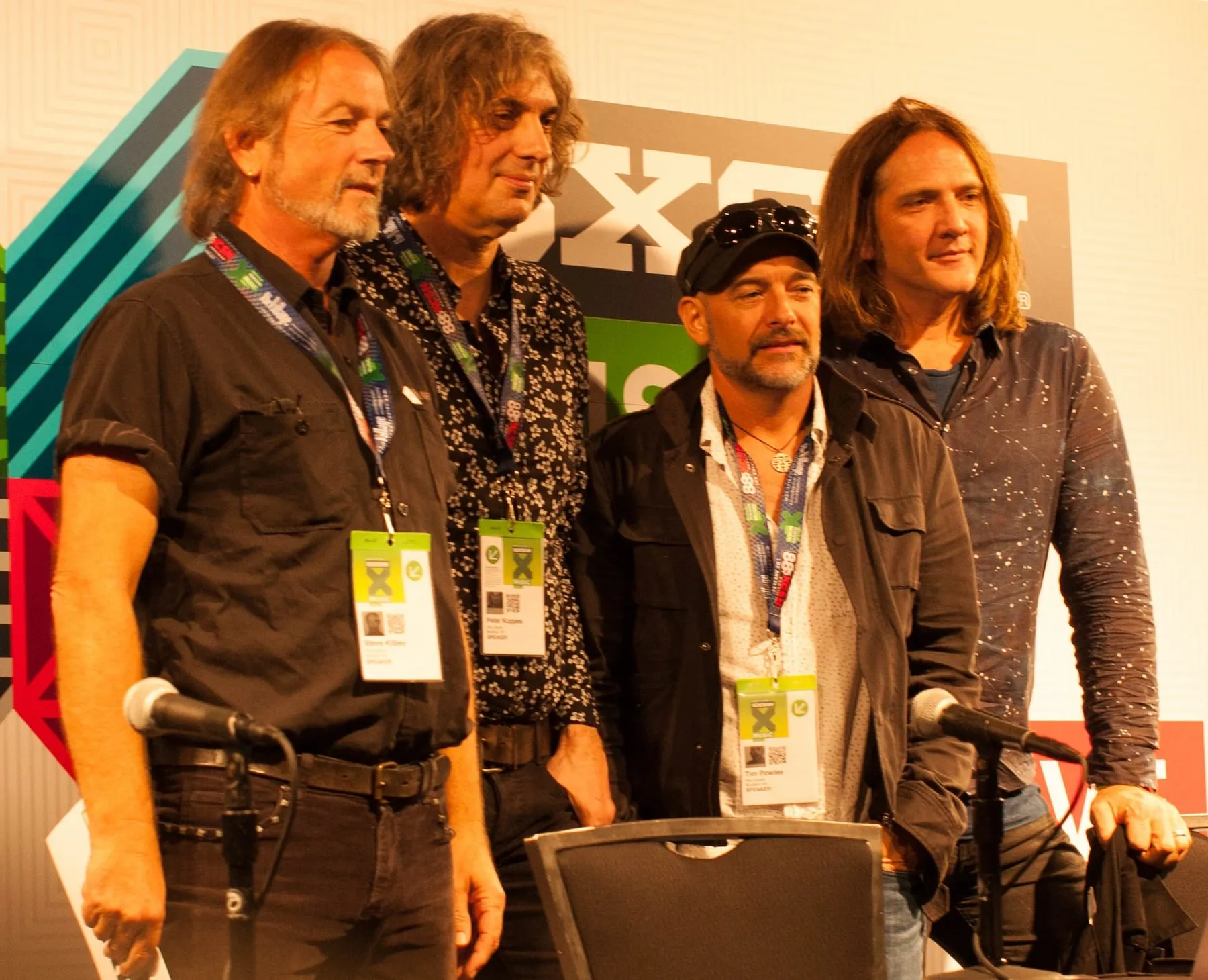
Photo by Anna Hanks , licensed under CC BY 2.0 · Wikimedia Commons
Rank #323
The Church
Sydney band whose 'Under the Milky Way' became a global indie touchstone.
From Wikipedia
The Church are an Australian rock band formed in Sydney in 1980. Initially associated with new wave, neo-psychedelia, and indie rock, their music later came to feature slower tempos and surreal soundscapes reminiscent of alternative rock, dream pop, and post-rock. Glenn A. Baker has written that "From the release of the 'She Never Said' single in November 1980, this unique Sydney-originated entity has purveyed a distinctive, ethereal, psychedelic-tinged sound which has alternatively found favour and disfavour in Australia." The Los Angeles Times has described the band's music as "dense, shimmering, exquisite guitar pop".
Members
- Steve Kilbey
Discography & Previews
Browse through and click an album to open and play 30-second previews streamed from Apple Music.

Of Skins and Heart
1981 · 11 tracks
- 1 For a Moment We're Strangers (Remastered) ↗ 3:55
- 2 Chrome Injury (Remastered) ↗ 4:03
- 3 The Unguarded Moment (Remastered) ↗ 4:14
- 4 Memories In Future Tense (Remastered) ↗ 4:46
- 5 Bel-Air (Remastered) ↗ 3:59
- 6 Is This Where You Live (Remastered) ↗ 7:40
- 7 She Never Said (Remastered) ↗ 3:17
- 8 Fighter Pilot... Korean War (Remastered) ↗ 4:29
- 9 Don't Open the Door to Strangers (Remastered) ↗ 3:28
- 10 In a Heartbeat (Remastered) ↗ 3:50
- 11 Busdriver (Remastered) ↗ 4:03

The Blurred Crusade
1982 · 12 tracks

Seance
1983 · 12 tracks
- 1 Fly (Remastered) ↗ 2:09
- 2 One Day (Remastered) ↗ 4:38
- 3 Electric (Remastered) ↗ 6:03
- 4 It's No Reason (Remastered) ↗ 5:50
- 5 Travel By Thought (Remastered) ↗ 4:35
- 6 Disappear? (Remastered) ↗ 5:47
- 7 Electric Lash (Remastered) ↗ 4:25
- 8 Now I Wonder Why (Remastered) ↗ 5:39
- 9 Dropping Names (Remastered) ↗ 2:59
- 10 It Doesn't Change (Remastered) ↗ 5:57
- 11 Someone Special (Remastered) ↗ 4:10
- 12 Autumn Soon (Remastered) ↗ 4:28

Heyday
1985 · 13 tracks
- 1 Myrrh (Remastered) ↗ 4:19
- 2 Tristesse (Remastered) ↗ 3:29
- 3 Already Yesterday (Remastered) ↗ 4:14
- 4 Columbus (Remastered) ↗ 3:51
- 5 Happy Hunting Ground (Remastered) ↗ 5:31
- 6 Tantalized (Remastered) ↗ 4:59
- 7 Disenchanted (Remastered) ↗ 3:56
- 8 Night of Light (Remastered) ↗ 4:48
- 9 Youth Worshipper (Remastered) ↗ 3:43
- 10 Roman (Remastered) ↗ 3:51
- 11 As You Will (Remastered) ↗ 4:45
- 12 The View (Remastered) ↗ 3:44
- 13 Trance Ending (Remastered) ↗ 4:49


Gold Afternoon Fix
1990 · 13 tracks

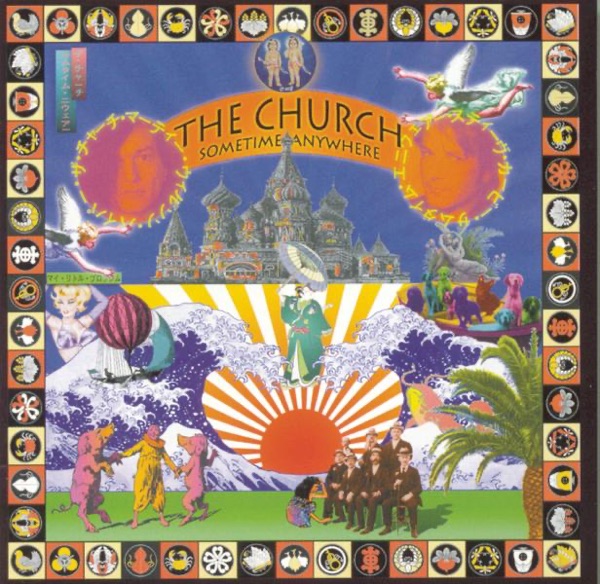
Sometime Anywhere
1994 · 13 tracks
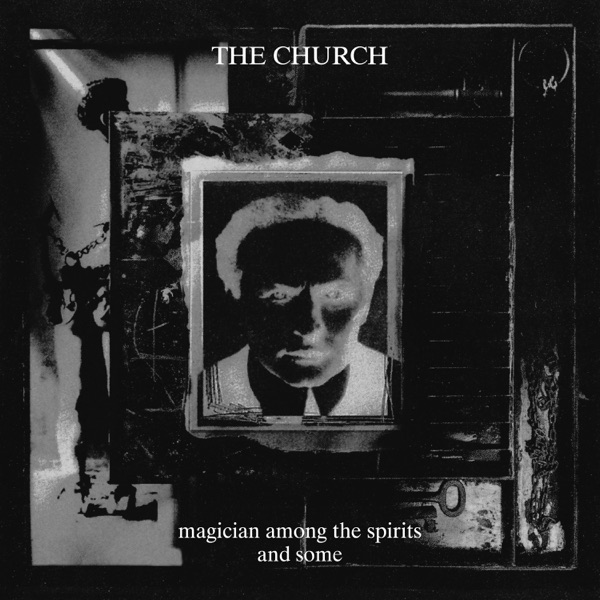
Magician Among the Spirits
1996 · 13 tracks
- 1 Welcome ↗ 5:56
- 2 Comedown ↗ 4:33
- 3 Man ↗ 5:23
- 4 Won’t Let You Sleep ↗ 5:16
- 5 Sads ↗ 4:07
- 6 Grandiose ↗ 5:19
- 7 Lady Boy ↗ 5:55
- 8 Why Don’t You Love Me ↗ 5:52
- 9 Could Be Anyone ↗ 8:44
- 10 The Further Adventures of the Time Being ↗ 5:59
- 11 Romany Caravan ↗ 4:04
- 12 Magician Among the Spirits ↗ 14:06
- 13 Afterimage ↗ 4:17


Parallel Universe
2002 · 17 tracks
- 1 Intro ↗ 0:29
- 1 1st Woman On the Moon ↗ 11:09
- 2 Seen It @ the Feelmore ↗ 4:19
- 2 Espionage ↗ 5:31
- 3 Stay All Night (Kings Mix) ↗ 3:31
- 3 Reward ↗ 7:22
- 4 Radiant 1934 Remix ↗ 6:05
- 4 There You Go ↗ 5:25
- 5 Replated_Chromium ↗ 3:04
- 5 Night Flower ↗ 1:31
- 6 Distant X Unseen ↗ 6:11
- 6 Twin Star ↗ 6:51
- 7 Let Y=X (Survival Mix) ↗ 4:45
- 8 [email protected] ↗ 11:29
- 9 Earthfriend (Version) ↗ 5:17
- 10 Down_Nostalgia and Everything A ↗ 5:11
- 11 The Deep Ache Mix ↗ 5:13

Forget Yourself
2003 · 14 tracks

El momento descuidado
2004 · 14 tracks
- 1 The Unguarded Moment (Acoustic) ↗ 3:36
- 2 0408 (Acoustic) ↗ 5:19
- 3 Almost With You (Acoustic) ↗ 4:29
- 4 November (Acoustic) ↗ 3:15
- 5 Metropolis (Acoustic) ↗ 3:21
- 6 Chromium (Acoustic) ↗ 3:44
- 7 Sealine (Acoustic) ↗ 2:39
- 8 A New Season (Acoustic) ↗ 3:44
- 9 All I Know (Acoustic) ↗ 4:19
- 10 Til The Cows Come Home (Acoustic) ↗ 3:15
- 11 Tristesse (Acoustic) ↗ 4:06
- 12 Under The Milky Way (Acoustic) ↗ 4:52
- 13 Invisible (Acoustic) ↗ 5:25
- 14 Between Mirages (Acoustic) ↗ 3:17


Uninvited, Like the Clouds
2006 · 12 tracks

El momento siguiente
2007 · 14 tracks
- 1 Wide Open Road (Acoustic) ↗ 3:43
- 2 It's No Reason (Acoustic) ↗ 5:42
- 3 Reptile (Acoustic) ↗ 5:35
- 4 Tantalized (Acoustic) ↗ 3:30
- 5 Electric Lash (Acoustic) ↗ 3:22
- 6 After Everything (Acoustic) ↗ 5:33
- 7 Song In The Afternoon (Acoustic) ↗ 3:30
- 8 Two Places At Once (Acoustic) ↗ 8:07
- 9 Appalatia (Acoustic) ↗ 3:50
- 10 Bordello (Acoustic) ↗ 4:02
- 11 Pure Chance (Acoustic) ↗ 5:56
- 12 Grind (Acoustic) ↗ 7:17
- 13 North South East West (Acoustic) ↗ 3:29
- 14 Comeuppance (Acoustic) ↗ 3:12


Man Woman Life Death Infinity
2017 · 10 tracks

The Hypnogogue
2023 · 13 tracks

Eros Zeta and the Perfumed Guitars
2023 · 16 tracks
- 1 Realm of Minor Angels ↗ 3:31
- 2 Pleasure ↗ 4:28
- 3 Amanita ↗ 3:26
- 4 2054 ↗ 5:46
- 5 Manifesto ↗ 4:36
- 6 The Immediate Future ↗ 5:48
- 7 Sublimated in Song ↗ 3:47
- 8 Song 18 ↗ 4:15
- 9 The Weather ↗ 4:48
- 10 Korea ↗ 3:49
- 11 Song from the Machine Age ↗ 5:50
- 12 Sleeping for Miles ↗ 3:31
- 13 Last Melody ↗ 2:17
- 14 A Strange Past ↗ 9:34
- 15 Music from the Ghost Hotel ↗ 3:53
- 16 A Strange Past (Radio Edit) ↗ 3:48
-
 Of Skins and HeartThe Church198111 tracks
 -
 The Blurred CrusadeThe Church198212 tracks
 -
 SeanceThe Church198312 tracks
 -
 HeydayThe Church198513 tracks
 -
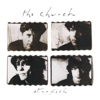 StarfishThe Church198810 tracks
 -
 Gold Afternoon FixThe Church199013 tracks
 -
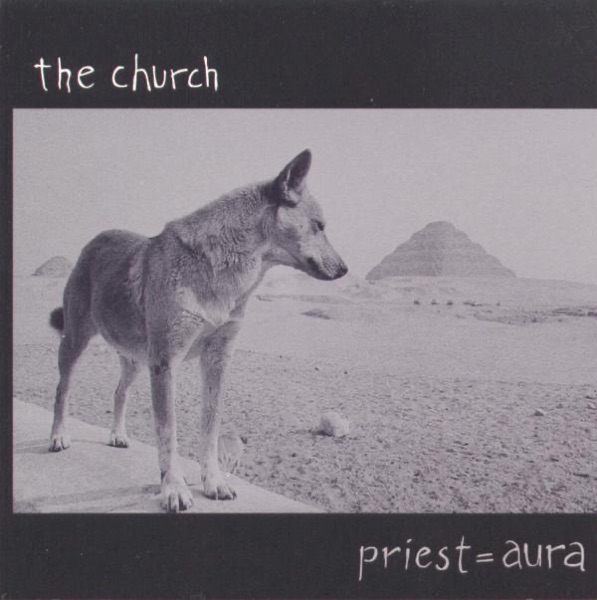
 Priest = AuraThe Church199214 tracks
 -
 Somewhere ElseThe Church19947 tracks
 -
 Sometime AnywhereThe Church199413 tracks
 -
 Magician Among the SpiritsThe Church199613 tracks
 -
 Hologram of BaalThe Church199810 tracks
 -
 A Box of BirdsThe Church199910 tracks
 -
 After Everything Now ThisThe Church200210 tracks
 -
 Parallel UniverseThe Church200217 tracks
 -
 Forget YourselfThe Church200314 tracks
 -
 El momento descuidadoThe Church200414 tracks
 -
 Back With Two BeastsThe Church200510 tracks
 -
 Uninvited, Like the CloudsThe Church200612 tracks
 -
 El momento siguienteThe Church200714 tracks
 -
 Untitled #23The Church200910 tracks
 -
 Further/DeeperThe Church201412 tracks
 -
 Man Woman Life Death InfinityThe Church201710 tracks
 -
 The HypnogogueThe Church202313 tracks
 -
 Eros Zeta and the Perfumed GuitarsThe Church202316 tracks
Deep Dive
Overview
The Church are an Australian rock band formed in Sydney in 1980, whose music has ranged across new wave, neo-psychedelia, indie rock, and alternative rock. Over more than four decades, they have built a catalog distinguished by ethereal, psychedelic-tinged soundscapes and dense, shimmering guitar arrangements. While their international profile peaked in the late 1980s with the global indie radio staple “Under the Milky Way,” their sustained output and evolution across multiple decades has positioned them as essential architects of the post-punk alternative tradition.
Formation Story
The Church emerged from Sydney’s emerging post-punk and new wave scene in 1980, a period when Australian rock was beginning to export beyond its domestic audience. Steve Kilbey formed the band as Sydney’s musical landscape was shifting from hard rock toward more experimental and introspective textures. The band’s arrival coincided with the city’s growing indie and alternative music infrastructure, placing them within a cohort of antipodean acts exploring moody, guitar-driven rock that departed from mainstream 1970s conventions. Their early association with new wave and neo-psychedelia reflected both the international post-punk zeitgeist and a distinctly Australian sensibility toward psychedelic textures and reverb-heavy production.
Breakthrough Moment
The Church’s breakthrough came with their 1988 album Starfish, which introduced their sound to a substantially wider audience. The album’s lead single, “Under the Milky Way,” became an international radio fixture, particularly in alternative and independent radio markets across North America and Europe. The track exemplified the band’s capacity to balance accessibility with sonic density—a song built on subtle guitar layering, introspective vocals, and dreamlike production that proved instantly memorable yet aurally complex. Starfish established The Church as more than a regional Australian act; it placed them within the global alternative rock canon at a moment when college radio and MTV’s alternative programming were reshaping popular music taste.
Peak Era
The period from the mid-1980s through the early 1990s marked The Church’s most concentrated creative presence. Heyday (1985) demonstrated their growing command of atmosphere and arrangement, while Starfish (1988) cemented their international standing. Gold Afternoon Fix (1990) and Priest = Aura (1992) extended their exploration of slower tempos and surreal soundscapes, moving progressively toward what would become recognized as alternative rock and dream pop territory. These four albums established a template of psychologically introspective material underpinned by pristine, sculptural production—a sound that prioritized mood and texture over conventional rock dynamics.
Musical Style
The Church’s sound is grounded in layered electric guitar work, often processed through effects that create shimmer and depth rather than distortion or aggression. Their approach owes debts to post-punk’s atmospheric impulses and new wave’s embrace of electronic textures, but the dominant characteristic is what Glenn A. Baker has called their “distinctive, ethereal, psychedelic-tinged sound.” The Los Angeles Times described their music more concretely as “dense, shimmering, exquisite guitar pop,” a phrase that captures the band’s simultaneous commitment to melodic clarity and sonic complexity. Vocally, Kilbey’s delivery tends toward the introspective and conversational, resisting the histrionics common to 1980s rock frontmen. As their catalog evolved, tempos decreased and the use of reverb and space increased, pushing them further into territories associated with dream pop and post-rock—genres that would emerge more fully in the 1990s and 2000s.
Major Albums
Of Skins and Heart (1981)
The Church’s debut established their new wave and neo-psychedelic foundations, introducing the band’s core approach to reverb-saturated guitar arrangements and introspective songwriting.
The Blurred Crusade (1982)
The follow-up deepened their post-punk credentials while expanding their instrumental palette, setting the stage for more ambitious arrangements in later work.
Starfish (1988)
The band’s commercial and critical peak, Starfish unified international accessibility with sonic sophistication, built largely around the enduring single “Under the Milky Way.”
Gold Afternoon Fix (1990)
This album moved toward slower, more contemplative material, with production that emphasized space and atmosphere over traditional rock energy.
Priest = Aura (1992)
An ambitious statement that pushed further into surreal soundscapes and abstract production values, representing the band’s full embrace of dream pop and alternative sensibilities.
Signature Songs
- “Under the Milky Way” — The defining song of their career and a staple of 1980s alternative radio, combining accessible melody with intricate guitar textures.
- “Almost Good” — A showcase for their ability to balance melodic directness with layered, shimmering production.
- “Reptile” — Demonstrates the band’s capacity for darker, more psychologically unsettling material built on guitar atmospherics.
- “Metropolis” — An example of their more expansive, architecturally complex songwriting from their peak period.
Influence on Rock
The Church’s influence on the post-1980s alternative rock landscape, particularly dream pop and the more atmospheric wings of indie rock, is substantial though often underacknowledged. Their demonstration that ethereal, reverb-heavy production and introspective lyricism could sustain a major-label career opened pathways for subsequent artists working in similar territories. The band’s commitment to psychedelic texture and melodic craftsmanship—without embracing either the brutality of post-punk or the synth-dependence of new wave synthpop—proved that alternative rock could be simultaneously accessible and uncompromising in its sonic ambitions. Their influence extends through dream pop, post-rock, and the broader alternative lineage that prioritizes atmosphere over conventional songwriting architecture.
Legacy
The Church have maintained active recording and touring throughout the 2000s, 2010s, and into the 2020s, releasing albums including Untitled #23 (2009), Further/Deeper (2014), Man Woman Life Death Infinity (2017), and The Hypnogogue (2023). Their sustained output across more than four decades distinguishes them within rock history as artists committed to evolution rather than nostalgic regression. While “Under the Milky Way” remains their most widely recognized work and continues to circulate through alternative radio, streaming platforms, and soundtrack placements, the band’s broader catalog has found renewed appreciation among listeners and critics interested in post-punk alternative traditions and the development of dream pop as a distinct aesthetic. Their Australian origins and international success placed them among the first generation of antipodean acts to establish sustained profiles in alternative rock, paving pathways for subsequent Australian bands entering the global alternative market.
Fun Facts
- The Church have released over twenty studio albums, with multiple releases in single years (notably 1994 and 2002), demonstrating an unusually prolific creative pace across their career.
- Steve Kilbey remained the consistent core of the band across all lineup changes, serving as primary songwriter and vocalist throughout their entire history from 1980 onward.
- The band’s decision to move toward progressively slower tempos and more abstract soundscapes in the 1990s represented an intentional artistic direction away from commercial accessibility, prioritizing experimentation over radio-friendly hooks.