
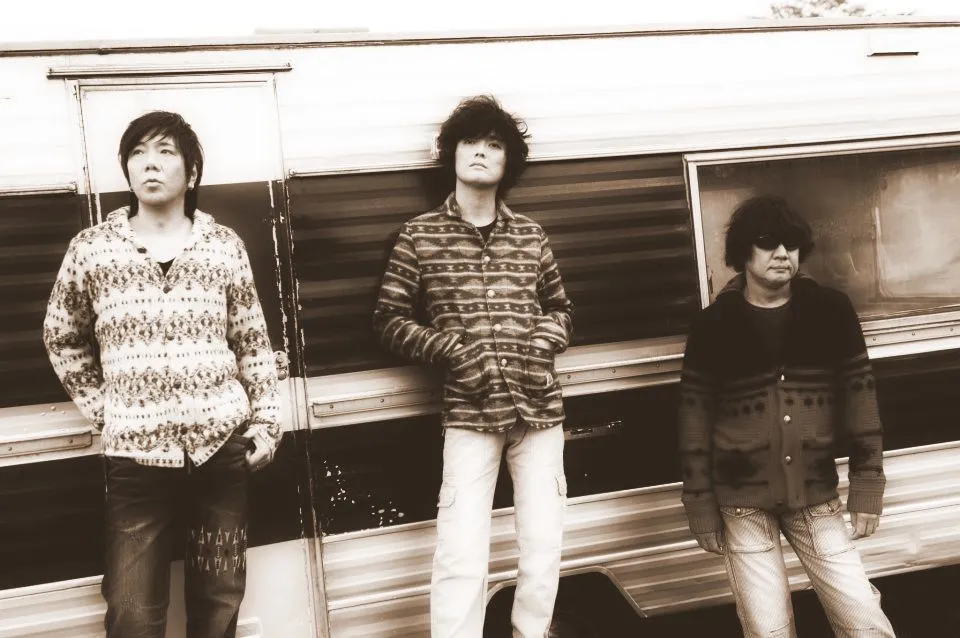
Photo by flumpdumps , licensed under CC BY-SA 3.0 · Wikimedia Commons
Rank #499
The Pillows
Tokyo indie-rock veterans whose anime-soundtrack work brought them global fans.
From Wikipedia
The Pillows were a Japanese alternative rock band formed in Hokkaido in 1989. Originally a quartet, vocalist and rhythm guitarist Sawao Yamanaka, lead guitarist Yoshiaki Manabe and drummer Shinichiro Sato continued the band as a trio for another 33 years, following the departure of bassist Kenji Ueda in 1992. They are best known in the West for providing the soundtrack for the anime series FLCL. The Pillows suddenly announced their disbandment at the end of January 2025, and Sato died from cancer in March 2026.
Members
- Kenji Ueda
- Sawao Yamanaka
- Shinichiro Sato
- Yoshiaki Manabe
Discography & Previews
Browse through and click an album to open and play 30-second previews streamed from Apple Music.

MOON GOLD
1991 · 12 tracks
- 1 Kimi ga Iru ↗ 4:03
- 2 This Is My Fashion ↗ 2:36
- 3 I Need Somebody ↗ 4:33
- 4 Dear, My' First' Step ↗ 5:00
- 5 Ame ga Futte Kita Youna Ki ga Suru ↗ 4:09
- 6 Ame ni Utaeba ↗ 4:45
- 7 Kiss Me, Baby ↗ 2:46
- 8 Asoko e Kaeritai ↗ 3:18
- 9 Hello Girl ↗ 4:15
- 10 Foreigner ↗ 3:21
- 11 Want to Sleep for・・・ ↗ 3:28
- 12 Sayounara Daisan Wakusei ↗ 5:19


LIVING FIELD
1995 · 11 tracks


LITTLE BUSTERS
1998 · 11 tracks
- 1 Hello, Welcome to Bubbletown's happy zoo (instant show) ↗ 2:22
- 2 Another Morning ↗ 4:31
- 3 ONE LIFE (album mix) ↗ 4:06
- 4 THAT HOUSE ↗ 4:23
- 5 like a love song (back to back) [album version] ↗ 3:06
- 6 Nowhere ↗ 5:08
- 7 HYBRID RAINBOW ↗ 4:02
- 8 Blues Drive Monster ↗ 3:27
- 9 PATRICIA (album version) ↗ 4:57
- 10 Black Sheep ↗ 3:28
- 11 LITTLE BUSTERS ↗ 3:44

RUNNERS HIGH
1999 · 12 tracks


Smile
2001 · 12 tracks
- 1 Good morning good news ↗ 3:31
- 2 WAITING AT THE BUSSTOP ↗ 2:16
- 3 All the way to the edge of this world ↗ 3:53
- 4 Monster C.C ↗ 4:19
- 5 Skim heaven ↗ 3:53
- 6 WINNING COME BACK! ↗ 1:20
- 7 Vain dog (in rain drop) ↗ 3:38
- 8 FUN FUN FUN OK! ↗ 3:39
- 9 THUNDER WHALES PICNIC ↗ 2:59
- 10 Everyday Songs ↗ 4:28
- 11 Smile ↗ 6:19
- 12 Calvero ↗ 5:28
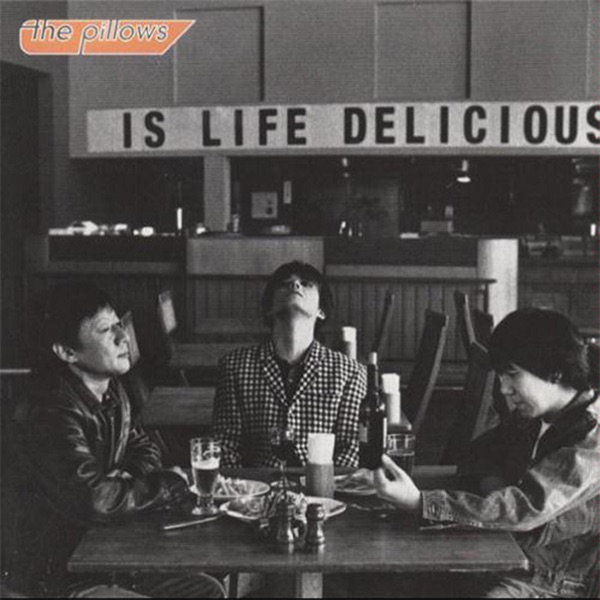
Thank you, my twilight
2002 · 11 tracks
- 1 RAIN BRAIN ↗ 3:48
- 2 Biscuit Hammer ↗ 2:47
- 3 BABYLON VERSES OF ANGEL ↗ 3:28
- 4 My Beautiful Sun (Irene) ↗ 3:51
- 5 Come on, ghost ↗ 3:01
- 6 ROBOTMAN ↗ 4:34
- 7 Ritalin 202 ↗ 2:58
- 8 white summer and green bicycle, red hair with black guitar. (original egoistic version) ↗ 5:52
- 9 Winona ↗ 3:35
- 10 Thank you, my twilight ↗ 4:40
- 11 Rookie Jet ↗ 2:10

GOOD DREAMS
2004 · 11 tracks

MY FOOT
2006 · 11 tracks

Wake up! Wake up! Wake up!
2007 · 11 tracks

PIED PIPER
2008 · 11 tracks
- 1 PIED PIPER ↗ 3:16
- 2 New Animal ↗ 3:46
- 3 No Surrender ↗ 3:10
- 4 Last Holiday ↗ 3:15
- 5 Tokyo Zombie (The knock came at dead of night) ↗ 2:18
- 6 Across the metropolis ↗ 3:31
- 7 Purple Apple ↗ 3:21
- 8 Tokyo Bambi ↗ 4:41
- 9 Ladybird girl ↗ 3:54
- 10 That's a wonderful world (song for Hermit) ↗ 3:23
- 11 POISON ROCK'N'ROLL ↗ 2:50



STROLL AND ROLL
2016 · 10 tracks


-
 MOON GOLDThe Pillows199112 tracks
 -
 KOOL SPICEThe Pillows19947 tracks
 -
 LIVING FIELDThe Pillows199511 tracks
 -
 Please Mr.LostmanThe Pillows199710 tracks
 -
 LITTLE BUSTERSThe Pillows199811 tracks
 -
 RUNNERS HIGHThe Pillows199912 tracks
 -
 HAPPY BIVOUACThe Pillows199911 tracks
 -
 SmileThe Pillows200112 tracks
 -
 Thank you, my twilightThe Pillows200211 tracks
 -
 GOOD DREAMSThe Pillows200411 tracks
 -
 MY FOOTThe Pillows200611 tracks
 -
 Wake up! Wake up! Wake up!The Pillows200711 tracks
 -
 PIED PIPERThe Pillows200811 tracks
 -
 OOPARTSThe Pillows200910 tracks
 -
 HORN AGAINThe Pillows201110 tracks
 -
 STROLL AND ROLLThe Pillows201610 tracks
 -
 NOOK IN THE BRAINThe Pillows201710 tracks
 -
 REBROADCASTThe Pillows201810 tracks
Deep Dive
Overview
The Pillows were a Japanese alternative rock band formed in Hokkaido in 1989, operating across three and a half decades as one of Japan’s most prolific and consistent indie-rock ensembles. Though largely unknown to Western audiences for their first decade, the band achieved global recognition through their work on the cult anime series FLCL, which introduced their guitar-driven sound to international listeners and cemented their status as architects of Japanese alternative rock. Their career trajectory—from regional Hokkaido act to studio veterans with eighteen studio albums—traces a path through the evolution of Japanese indie and pop-rock sensibilities from the 1990s onward.
Formation Story
The Pillows emerged from Hokkaido in 1989 as a quartet led by vocalist and rhythm guitarist Sawao Yamanaka, with lead guitarist Yoshiaki Manabe and drummer Shinichiro Sato as core members alongside bassist Kenji Ueda. The band’s initial lineup reflected the early 1990s Japanese alternative-rock underground, a scene increasingly influenced by Western indie and post-punk movements. Ueda’s departure in 1992, just three years after the band’s inception, marked a pivotal transition: the group subsequently continued as a trio, a configuration that would define the band’s sound and creative identity for the remainder of its existence. This shift from quartet to trio occurred early in the band’s recorded history, aligning with the release of their second album, White Incarnation, in 1992.
Breakthrough Moment
For nearly a decade, The Pillows remained primarily a Japanese phenomenon, releasing five studio albums between 1991 and 1998 without achieving widespread international exposure. The turning point arrived in the early 2000s, when their soundtrack work for the anime series FLCL introduced their energetic, hook-laden alternative rock to a global fanbase. The visibility provided by this high-profile anime partnership fundamentally altered the band’s international profile, bringing Western listeners to their back catalogue and establishing them as distinctive voices in Japanese rock. This crossover moment validated their decades of touring and recording while opening a second act of discovery for audiences beyond Japan.
Peak Era
The period from 2001 to 2009 marked The Pillows’ most creatively focused and commercially visible years in the West. During this span, they released albums including Smile (2001), Thank you, my twilight (2002), and OOPARTS (2009), demonstrating an ability to balance accessibility with compositional sophistication. The band maintained a consistent touring schedule and continued to generate new material at a steady pace, releasing albums in 2006 (MY FOOT), 2007 (Wake up! Wake up! Wake up!), and 2008 (PIED PIPER). This sustained productivity reflected a band operating at the height of its collaborative unity and studio confidence, even as the broader rock landscape shifted around them.
Musical Style
The Pillows’ sound drew from alternative rock lineages that merged Western indie sensibilities with Japanese pop-rock accessibility. Their music was characterized by driving rhythm sections, interlocking lead and rhythm guitar work, and Yamanaka’s distinctive vocal delivery—typically melodic and propulsive, rarely subdued. Manabe’s lead guitar work often emphasized hooks and atmosphere over technical display, creating arrangements where melody remained paramount even at moderate-to-high energy levels. The band classified themselves across alternative rock, symphonic rock, and pop-rock registers, with their recorded output suggesting an ongoing negotiation between these genres. Their production values and song structures evolved over time, beginning in the lo-fi indie aesthetic of early 1990s Japanese underground rock and gradually incorporating more polished, contemporary production techniques by the 2000s. The core aesthetic remained consistent: guitar-centric rock with emphatic melodies, substantial energy, and an absence of the irony or deconstruction that characterized some Western alternative traditions.
Major Albums
MOON GOLD (1991)
The Pillows’ debut introduced their core sound—energetic indie rock with driving guitars and hook-laden melodies—and established the band’s foundation during the Japanese underground rock surge of the early 1990s.
LITTLE BUSTERS (1998)
This album appeared late in the pre-FLCL era and showcased a band refining its formula through seven years of continuous work, demonstrating growing studio confidence and songwriting maturity.
Smile (2001)
Released in the early years of their FLCL visibility, this album captured the band’s sound at a moment of renewed international attention, blending the accessible hooks that had drawn new audiences with the alternative-rock textures their core fanbase expected.
OOPARTS (2009)
One of the later works in their peak creative window, this album represented the trio operating with full command of their established sound while continuing to explore production and arrangement possibilities.
STROLL AND ROLL (2016)
Appearing in the band’s final decade, this release demonstrated their ongoing ability to generate new material and maintain their place in Japanese independent rock despite diminishing commercial momentum in the broader rock market.
Signature Songs
- “Little Busters” — The title track from their 1998 album, exemplifying the band’s gift for anthemic, high-energy alternative rock with infectious melodies.
- FLCL soundtrack contributions — The band’s work across the anime series became their most globally recognized music, introducing millions to their kinetic guitar-pop sensibility.
- Tracks from Smile (2001) — Material from this early-2000s album captured them at a moment of international breakthrough, balancing their indie-rock roots with broader accessibility.
Influence on Rock
The Pillows’ sustained presence across three decades of Japanese alternative rock meant they occupied a generational bridge role: old enough to have emerged from the 1990s indie underground, young enough to adapt to 21st-century production and touring realities. Their anime-soundtrack work—particularly FLCL—introduced global audiences to a strain of Japanese rock that existed outside the dominant J-rock and visual-kei paradigms. Western listeners discovering the band through anime fandom often encountered alternative rock that preserved melody and accessibility while maintaining sonic energy, a combination that contrasted sharply with the irony and deconstruction of contemporary Western indie rock. The band’s longevity in a market where rock music gradually ceded commercial dominance to J-pop and electronic music demonstrated the persistence of guitar-centric rock within Japanese popular culture.
Legacy
The Pillows’ announcement of disbandment in January 2025, after 36 years of continuous operation, marked the end of a significant chapter in Japanese alternative rock. Their catalog of eighteen studio albums remains available through streaming platforms and physical formats, accessible to the generations of listeners who discovered them through FLCL and to the dedicated fanbase that followed them through their quieter years. The band’s ability to sustain themselves for more than three decades without mainstream chart success or major-label promotion speaks to the durability of their independent-rock model and the loyalty of their audience. Their contribution to anime soundtracks elevated the profile of Japanese rock music internationally and demonstrated the symbiotic relationship between rock music and animation in Japanese popular culture. Shinichiro Sato’s death from cancer in March 2026 underscored the finality of the group’s dissolution.
Fun Facts
- The band operated as a three-piece for 33 years after bassist Kenji Ueda’s departure in 1992, making them one of the longest-tenured stable trios in alternative rock history.
- The Pillows recorded eighteen studio albums across their 36-year existence, averaging roughly one album every two years, a productivity rate that exceeded many Western alternative-rock peers.
- Their work on the FLCL soundtrack, initially a niche anime project, became their most globally recognized output, introducing them to audiences who might otherwise never have encountered Japanese indie rock.
- The band released albums on Avex Trax, one of Japan’s major independent labels, providing them with consistent infrastructure for distribution and promotion throughout their career.
- Their final studio album, REBROADCAST (2018), arrived seven years before their disbandment, indicating a period of reduced commercial activity in their final years.