
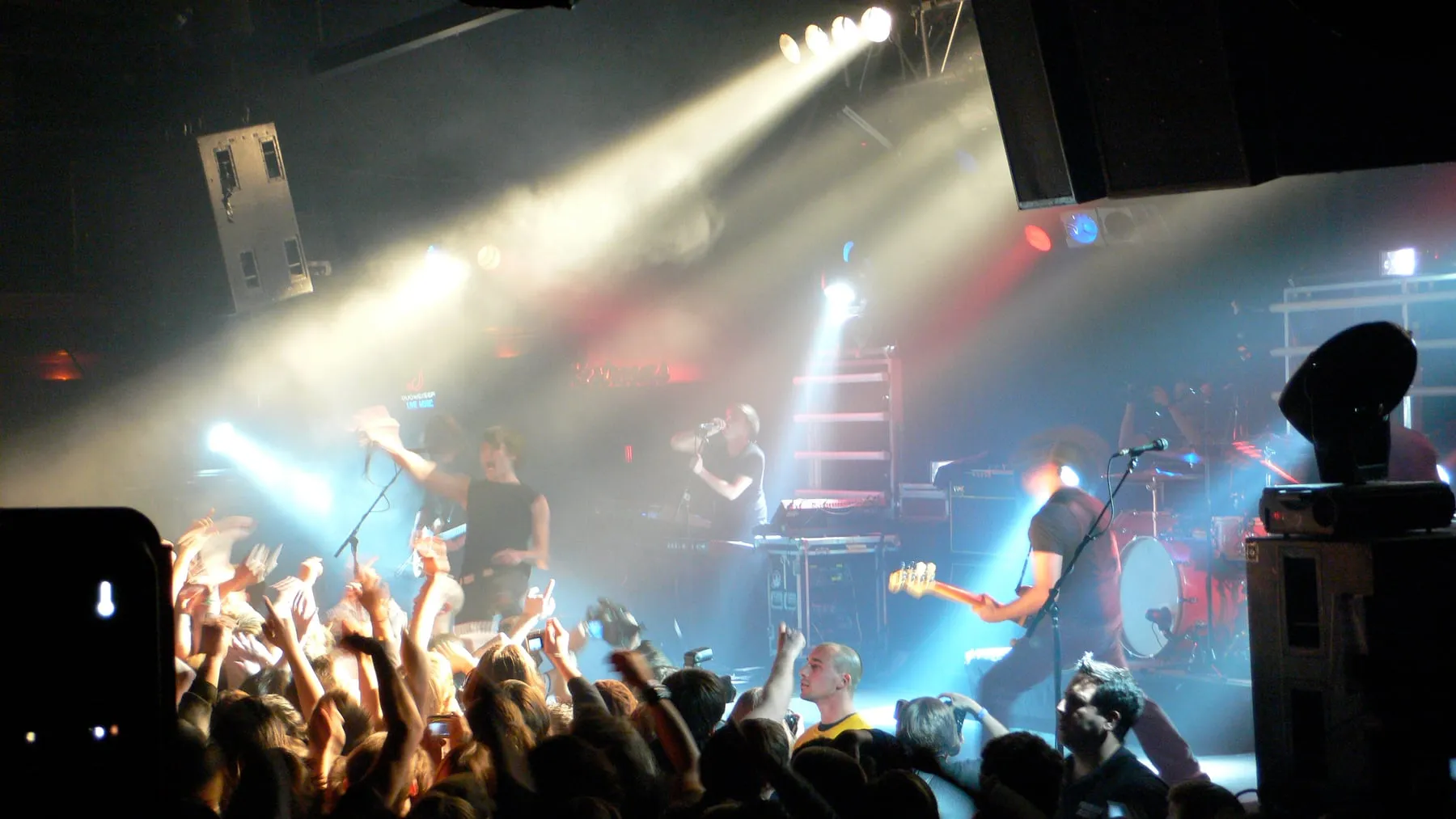
Photo by Nelson Pavlosky , licensed under CC BY-SA 2.0 · Wikimedia Commons
Rank #164
Thursday
New Jersey post-hardcore band whose 'Full Collapse' is an emo cornerstone.
From Wikipedia
Thursday is an American rock band formed in New Brunswick, New Jersey, in 1998. The band consists of Geoff Rickly, Tom Keeley, Steve Pedulla, Tim Payne (bass), and Tucker Rule (drums).
Members
- Bill Henderson
Discography & Previews
Browse through and click an album to open and play 30-second previews streamed from Apple Music.

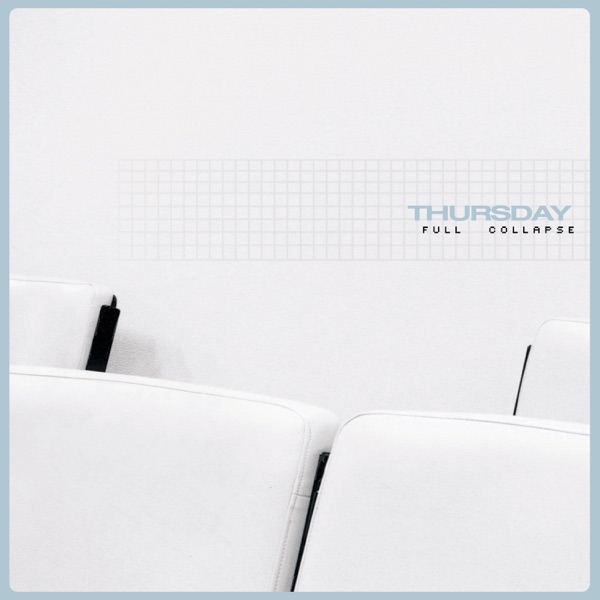
Full Collapse
2001 · 12 tracks
- 1 A0001 ↗ 0:36
- 2 Understanding In A Car Crash ↗ 4:25
- 3 Concealer ↗ 2:19
- 4 Autobiography Of A Nation ↗ 3:56
- 5 A Hole In The World ↗ 3:28
- 6 Cross Out The Eyes ↗ 4:08
- 7 Paris In Flames ↗ 4:33
- 8 I Am The Killer ↗ 3:35
- 9 Standing On The Edge Of Summer ↗ 3:42
- 10 Wind Up ↗ 4:23
- 11 How Long Is The Night? ↗ 5:45
- 12 I1100 ↗ 1:40

War All the Time
2003 · 11 tracks
- 1 For the Workforce, Drowning ↗ 3:16
- 2 Between Rupture and Rapture ↗ 3:04
- 3 Division St. ↗ 4:15
- 4 Signals Over the Air ↗ 4:10
- 5 Marches and Maneuvers ↗ 4:28
- 6 Asleep in the Chapel ↗ 3:46
- 7 This Song Brought to You By a Falling Bomb ↗ 2:16
- 8 Steps Ascending ↗ 4:26
- 9 War All the Time ↗ 4:32
- 10 M. Shepard ↗ 3:36
- 11 Tomorrow I'll Be You ↗ 4:08

A City by the Light Divided
2006 · 12 tracks
- 1 The Other Side of the Crash/Over and Out (Of Control) ↗ 4:41
- 2 Counting 5-4-3-2-1 ↗ 3:19
- 3 Sugar In the Sacrament ↗ 5:10
- 4 At This Velocity ↗ 2:56
- 5 We Will Overcome ↗ 3:40
- 6 Arc-Lamps, Signal Flares, A Shower of White (The Light) ↗ 2:32
- 7 Running From the Rain ↗ 4:00
- 8 Telegraph Avenue Kiss ↗ 3:36
- 9 The Lovesong Writer ↗ 5:18
- 10 Into the Blinding Light ↗ 3:45
- 11 Autumn Leaves Revisited ↗ 6:54
- 12 Even the Sand Is Made of Seashells ↗ 4:10

Common Existence
2009 · 11 tracks
- 1 Resuscitation of a Dead Man (feat. Tim McIlrath) ↗ 3:23
- 2 Last Call ↗ 4:04
- 3 As He Climbed the Dark Mountain ↗ 3:02
- 4 Friends in the Armed Forces ↗ 4:11
- 5 Beyond the Visible Spectrum ↗ 3:59
- 6 Time's Arrow ↗ 4:13
- 7 Unintended Long Term Effects ↗ 2:18
- 8 Circuits of Fever ↗ 5:08
- 9 Subway Funeral ↗ 4:18
- 10 Love Has Led Us Astray ↗ 4:39
- 11 You Were the Cancer ↗ 5:49

No Devolución
2011 · 12 tracks
- 1 Fast to the End ↗ 3:21
- 2 No Answers ↗ 4:53
- 3 A Darker Forest ↗ 3:40
- 4 Sparks Against the Sun ↗ 4:45
- 5 Open Quotes ↗ 3:02
- 6 Past and Future Ruins ↗ 4:16
- 7 Magnets Caught in a Metal Heart ↗ 3:41
- 8 Empty Glass ↗ 4:59
- 9 A Gun in the First Act ↗ 5:02
- 10 Millimeter ↗ 2:48
- 11 Turnpike Divides ↗ 4:54
- 12 Stay True ↗ 7:52
-
 WaitingThursday19999 tracks
 -
 Full CollapseThursday200112 tracks
 -
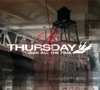 War All the TimeThursday200311 tracks
 -
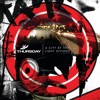 A City by the Light DividedThursday200612 tracks
 -
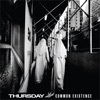 Common ExistenceThursday200911 tracks
 -
 No DevoluciónThursday201112 tracks
Deep Dive
Overview
Thursday is an American rock band formed in New Brunswick, New Jersey, in the late 1990s, rising to prominence as one of the definitive post-hardcore acts of the 2000s emo wave. Emerging from the same regional underground that produced Starsailor and Poison the Well, Thursday combined angular guitar riffs, layered production, and introspective lyricism to create a sound that felt simultaneously cathartic and intellectually restless. Their 2001 album Full Collapse stands as a cornerstone of emo, introducing listeners to Geoff Rickly’s distinctive vocal delivery and a band capable of building from whispered verses into crushing, feedback-laden crescendos.
Formation Story
Thursday coalesced in New Brunswick in 1997 and released their first studio album, Waiting, in 1999. The early lineup featured Geoff Rickly on vocals, Tom Keeley on guitar, Steve Pedulla on guitar, Tim Payne on bass, and Tucker Rule on drums—a configuration that would remain central to the band’s identity throughout their most prolific period. New Brunswick, a college town situated between New York City and Philadelphia, proved fertile ground for post-hardcore experimentalism; the band emerged as part of a regional underground circuit that valued technical musicianship and emotional intensity over mainstream accessibility. Waiting introduced Thursday’s sonic template: dense arrangements, synth layers, and Rickly’s androgynous vocal character, though the record remained largely known within hardcore-adjacent circles.
Breakthrough Moment
The release of Full Collapse in 2001 transformed Thursday from a regional prospect into a nationally recognized force. The album’s nine tracks presented a fully realized vision of post-hardcore that balanced beauty and brutality across songs built on tremolo-picked guitar lines, atmospheric keyboards, and Rickly’s emotionally unguarded vocals. Full Collapse reached college radio, MTV2, and mainstream alternative outlets in ways Waiting had not, establishing Thursday as essential listening for listeners gravitating toward harder-edged alternatives to the garage rock revival and pop-punk then dominating rock radio. The band’s subsequent touring cemented their reputation; their live sets became notorious for intensity and emotional catharsis, drawing devoted audiences across the United States.
Peak Era
Thursday’s creative and commercial peak spanned 2003 to 2006, marked by the albums War All the Time (2003) and A City by the Light Divided (2006). War All the Time deepened the band’s post-hardcore approach, employing orchestral arrangements and more elaborate production than Full Collapse, while maintaining the raw vocal and instrumental intensity their fanbase had embraced. A City by the Light Divided represented an artistic pinnacle, showcasing the band at their most sonically adventurous and lyrically ambitious. During this period, Thursday headlined major rock festivals, toured internationally, and influenced a generation of post-hardcore and emo acts. Their output across these four years—three landmark studio albums in five years—established them as prolific artists capable of evolution without abandoning the core intensity that defined their appeal.
Musical Style
Thursday’s sound synthesized post-hardcore and emo into a hybrid characterized by layered guitars, prominent keyboards, and Rickly’s emotionally exposed vocal performance. Keeley and Pedulla’s guitar interplay drew on angular, atonal hardcore riffs while incorporating clean-toned textures and feedback, creating arrangements that shifted between intimacy and explosive dynamics within single songs. The production values across their albums became increasingly sophisticated, with synth work and orchestral elements serving to heighten rather than soften the music’s emotional stakes. Rickly’s vocals, neither traditionally clean nor purely screamed, occupied a middle ground that allowed him to express vulnerability and urgency simultaneously. Thematically, Thursday engaged with war, spirituality, loss, and existential questioning, setting them apart from pop-punk’s romantic preoccupations and aligning them more closely with introspective post-hardcore tradition.
Major Albums
Full Collapse (2001)
The band’s breakthrough defining post-hardcore as a viable mainstream subgenre, combining layered production with raw emotional intensity and establishing Thursday’s reputation for unguarded vulnerability.
War All the Time (2003)
An artistic expansion incorporating orchestral arrangements and more elaborate songwriting structures, demonstrating the band’s ambitions beyond the post-hardcore template while maintaining crushing heaviness.
A City by the Light Divided (2006)
Thursday’s most sonically adventurous record, showcasing mature songwriting and production sophistication without sacrificing the intensity central to their identity.
Common Existence (2009)
A continuation of their established approach with refined musicianship, though arriving as the post-hardcore and emo landscape they helped shape was fragmenting into divergent regional styles.
Signature Songs
- Understanding in a Car Crash — A signature track from Full Collapse that exemplifies Thursday’s blend of whispered verses and crushing instrumental passages.
- Signals Over the Air — War All the Time’s exploration of layered arrangements and introspective lyrics, becoming a staple of their live performances.
- Autumn’s Twilight — A demonstration of Thursday’s ability to build emotional intensity through patient, methodical song construction.
- How Long Is the Night — An exemplary instance of Rickly’s vocal range and the band’s orchestral ambitions.
Influence on Rock
Thursday’s impact on post-hardcore and emo extended beyond their album sales or tour attendance, shaping the sonic and emotional vocabulary that underground and alternative rock bands would employ in the subsequent decade. Bands emerging in their wake adopted their layered guitar approach, emphasis on atmospheric production, and commitment to emotional transparency without sacrificing instrumental sophistication. Thursday demonstrated that post-hardcore could engage mainstream audiences without compromising technical complexity or thematic depth, influencing acts across metal, indie rock, and alternative contexts. Their success on the touring circuit and in building devoted fan communities also established models for artist-fan engagement that later bands would emulate, particularly regarding direct-to-fan communication and independent release strategies.
Legacy
Thursday remained active through 2017, releasing No Devolución in 2011 before entering a period of reduced visibility relative to their 2000s prominence. The band’s albums, particularly Full Collapse, retain canonical status within emo and post-hardcore discourse, frequently cited as essential listening within the genre’s narrative history. Their influence persists across streaming platforms and in the ongoing influence on post-hardcore revival movements, with younger bands consistently citing Thursday as a crucial reference point. The band members’ individual projects and occasional reunion performances maintain connection with their audience, while their original discography continues to discover new listeners through playlists, social media exposure, and the enduring appeal of emo as a cultural touchstone.
Fun Facts
- Thursday formed during the tail end of the 1990s underground hardcore scene, emerging just as the post-hardcore aesthetic was gaining regional momentum in the Northeast.
- The band signed to Eyeball Records before reaching Epitaph Records, following a path typical of post-hardcore acts who built national profiles through independent and mid-level label infrastructure.
- Full Collapse arrived during a moment when post-hardcore and emo were rapidly converging, with Thursday helping to define the intersections between these previously more distinct underground genres.