
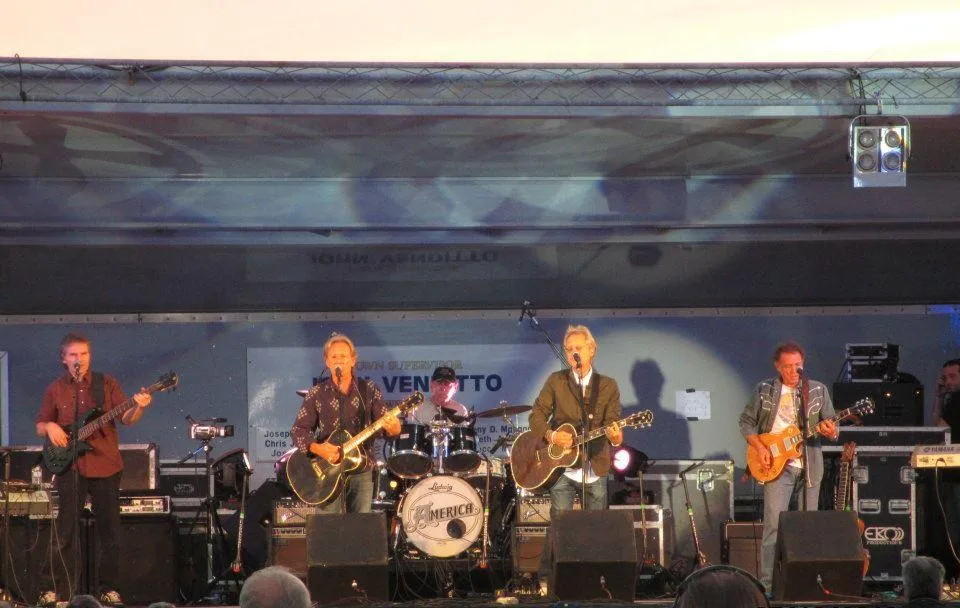
Photo by Mick man34 , licensed under CC BY-SA 3.0 · Wikimedia Commons
Rank #118
America
From Wikipedia
America is a British-American rock band formed in 1970 by Dewey Bunnell, Dan Peek, and Gerry Beckley. The trio met as sons of US Air Force personnel stationed in London, where they began performing live. Achieving significant popularity in the 1970s, the trio was famous for its close vocal harmonies and light acoustic folk rock sound. The band released a string of hit albums and singles, many of which found airplay on pop and soft rock stations.
Members
- Dan Peek
- Dewey Bunnell
- Gerry Beckley
Discography & Previews
Browse through and click an album to open and play 30-second previews streamed from Apple Music.


Hideaway
1976 · 13 tracks
- 1 Lovely Night ↗ 2:34
- 2 Amber Cascades ↗ 2:52
- 3 Don't Let It Get You Down ↗ 2:59
- 4 Can't You See ↗ 2:23
- 5 Watership Down ↗ 5:00
- 6 She's Beside You ↗ 3:00
- 7 Hideaway, Pt. I ↗ 1:33
- 8 She's a Liar ↗ 3:31
- 9 Letter ↗ 3:08
- 10 Today's the Day ↗ 3:16
- 11 Jet Boy Blue ↗ 3:25
- 12 Who Loves You ↗ 4:31
- 13 Hideaway, Pt. II ↗ 2:01


Alibi
1980 · 11 tracks


Perspective
1984 · 11 tracks
- 1 We Got All Night ↗ 3:27
- 2 See How the Love Goes ↗ 3:17
- 3 (Can't Fall Asleep to a) Lullaby ↗ 3:47
- 4 Special Girl ↗ 3:47
- 5 5th Avenue ↗ 3:48
- 6 (It's Like You) Never Left At All ↗ 3:25
- 7 Stereo ↗ 3:22
- 8 Lady With a Bluebird ↗ 3:08
- 9 Cinderella ↗ 3:58
- 10 Unconditional Love ↗ 3:08
- 11 Fallin' Off the World ↗ 3:31

Hourglass
1994 · 12 tracks
- 1 Young Moon ↗ 4:27
- 2 Hope ↗ 5:21
- 3 Sleeper Train ↗ 4:20
- 4 MIRROR TO MIRROR ↗ 4:08
- 5 Garden of Peace ↗ 4:21
- 6 Call of the Wild ↗ 3:17
- 7 WHOLE WIDE WORLD ↗ 3:25
- 8 Close to the Wind ↗ 5:33
- 9 Greenhouse ↗ 2:35
- 10 Ports-of-Call ↗ 4:11
- 11 Everyone I Meet is from California ↗ 2:51
- 12 You Can Do Magic ↗ 3:45

Holiday Harmony
2002 · 13 tracks
- 1 Winter Wonderland ↗ 3:16
- 2 Let It Snow ↗ 2:47
- 3 White Christmas ↗ 3:55
- 4 A Christmas To Remember ↗ 3:56
- 5 Have Yourself A Merry Little Christmas ↗ 3:44
- 6 Sleigh Ride ↗ 4:03
- 7 Silver Bells ↗ 4:54
- 8 Christmas In California ↗ 3:24
- 9 It's Beginning To Look A Lot Like Christmas ↗ 2:39
- 10 Winter Holidays ↗ 3:43
- 11 Frosty The Snowman ↗ 2:31
- 12 Silent Night ↗ 4:38
- 13 The First Noel ↗ 2:29
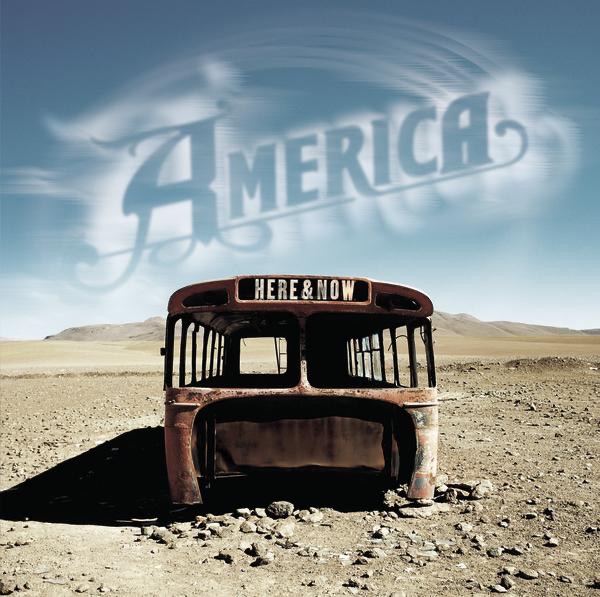
Here & Now
2006 · 24 tracks
- 1 Chasing the Rainbow ↗ 3:18
- 1 Ventura Highway ↗ 3:45
- 2 Indian Summer ↗ 3:25
- 2 Don't Cross the River ↗ 2:25
- 3 One Chance ↗ 4:27
- 3 Daisy Jane ↗ 3:02
- 4 Golden ↗ 4:17
- 4 I Need You ↗ 2:33
- 5 Always Love ↗ 3:24
- 5 Tin Man ↗ 3:46
- 6 Ride On ↗ 4:01
- 6 Muskrat Love ↗ 3:07
- 7 Love & Leaving ↗ 3:39
- 7 Woman Tonight ↗ 2:29
- 8 Look At Me Now ↗ 4:05
- 8 Only In Your Heart ↗ 3:04
- 9 This Time ↗ 3:58
- 9 Lonely People ↗ 2:20
- 10 Work to Do ↗ 2:53
- 10 Sandman ↗ 6:24
- 11 All I Think About Is You ↗ 2:20
- 11 Sister Golden Hair ↗ 3:25
- 12 Walk In the Woods ↗ 4:12
- 12 A Horse With No Name ↗ 4:18
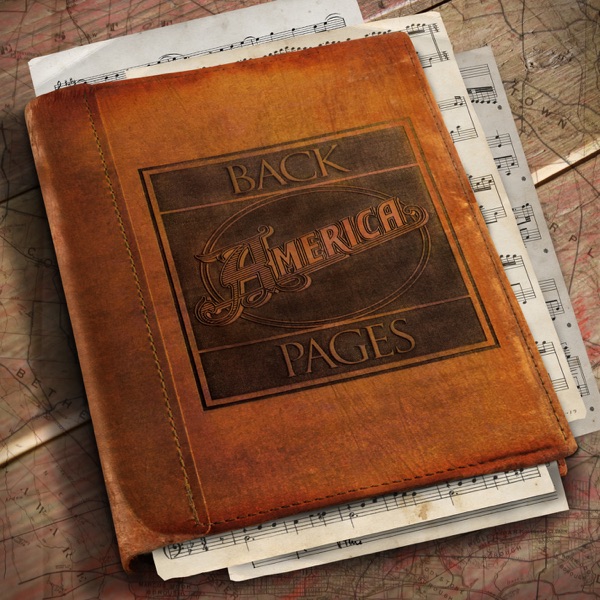
Back Pages
2011 · 12 tracks
- 1 America ↗ 3:40
- 2 A Road Song ↗ 3:15
- 3 Woodstock ↗ 3:53
- 4 Caroline No ↗ 3:23
- 5 Someday We'll Know ↗ 3:38
- 6 Sailing to Philadelphia ↗ 4:57
- 7 Crying In My Sleep ↗ 4:41
- 8 Time of the Season ↗ 3:40
- 9 Something In the Way She Moves ↗ 4:21
- 10 On the Way Home ↗ 2:38
- 11 Til I Hear from You ↗ 3:45
- 12 My Back Pages ↗ 4:24

-
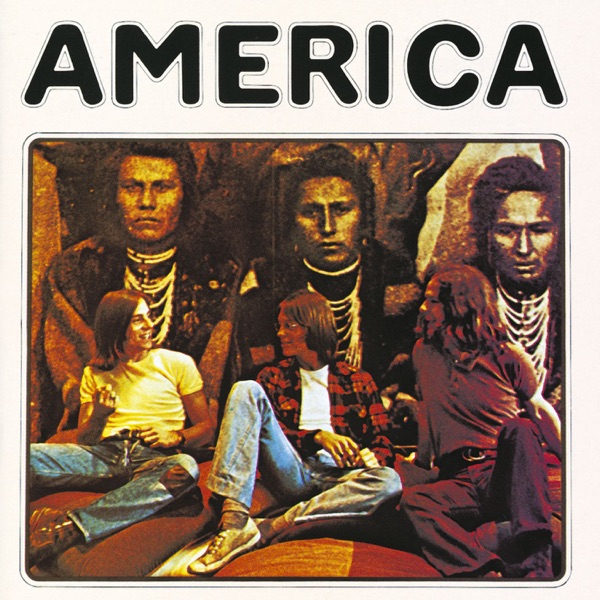
 AmericaAmerica197112 tracks
 -
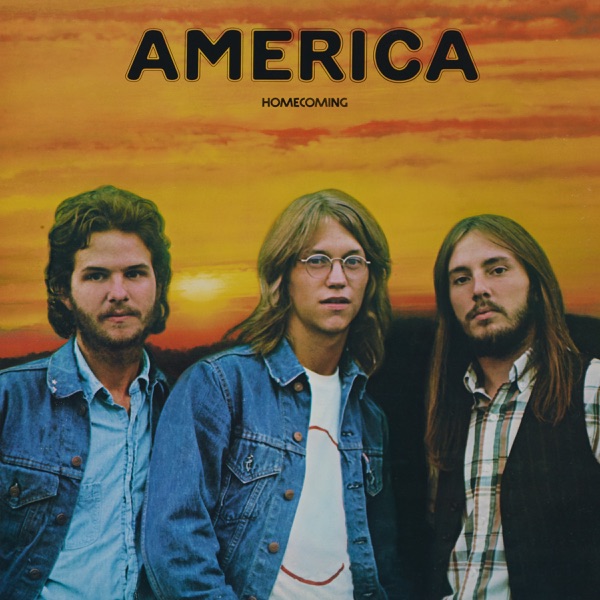
 HomecomingAmerica197210 tracks
 -
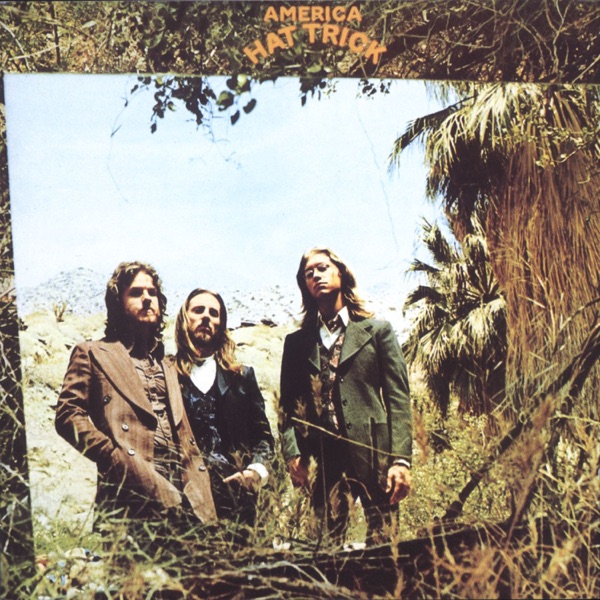
 Hat TrickAmerica197311 tracks
 -
 HolidayAmerica197412 tracks
 -
 HeartsAmerica197512 tracks
 -
 HideawayAmerica197613 tracks
 -
 HarborAmerica197712 tracks
 -
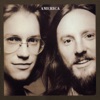 Silent LetterAmerica197911 tracks
 -
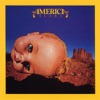 AlibiAmerica198011 tracks
 -
 View From the GroundAmerica198210 tracks
 -
 Your MoveAmerica198311 tracks
 -
 PerspectiveAmerica198411 tracks
 -
 HourglassAmerica199412 tracks
 -
 Holiday HarmonyAmerica200213 tracks
 -
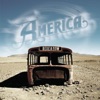 Here & NowAmerica200624 tracks
 -
 Back PagesAmerica201112 tracks
 -
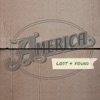 Lost + FoundAmerica201510 tracks
Deep Dive
Overview
America is a British-American rock band formed in 1970 in London by three sons of US Air Force personnel: Dewey Bunnell, Dan Peek, and Gerry Beckley. Rising to prominence during the early-to-mid 1970s, the trio became synonymous with accessible folk rock and soft pop, their signature close vocal harmonies and light acoustic arrangements finding broad appeal across both pop and soft rock radio. The band’s commercial peak coincided with a decade-long run of album releases that established them among the era’s most consistent purveyors of melodic, harmony-driven rock.
Formation Story
America’s origins lay in the expatriate community of London during the late 1960s, where the three founding members—all teenage sons of United States Air Force officers stationed in the United Kingdom—discovered a shared musical chemistry. The trio began performing together in London, drawing on the prevailing folk-influenced rock idiom of the era. Bunnell, Peek, and Beckley quickly developed an intuitive vocal blend that would become their trademark. By 1970, they committed to the project as a formal band and took the name America, rooting themselves in London’s musical scene while remaining tied to their American heritage.
Breakthrough Moment
America’s debut, self-titled album arrived in 1971 and established the band’s commercial and critical foothold almost immediately. The record’s combination of intricate three-part harmonies and stripped-down acoustic arrangements resonated with listeners seeking escape from the heaviness of contemporary rock. A string of successful albums followed in rapid succession—Homecoming (1972), Hat Trick (1973), Holiday (1974), and Hearts (1975)—each reinforcing the band’s position as reliable hit-makers on the pop and soft rock charts. This early productivity and consistent commercial success marked America as one of the defining acts of early-1970s popular rock.
Peak Era
The mid-to-late 1970s represented America’s creative and commercial apex. Between 1975 and 1977, the band released Hearts, Hideaway, and Harbor, a trio of albums that showcased their mature songwriting and the enduring power of their three-voice approach. The band maintained a rigorous recording schedule during this period, demonstrating both ambition and confidence in their core formula. Their ability to populate both FM rock and AM pop radio playlists gave America unusual crossover reach for a folk-rock act, positioning them as more commercially flexible than many of their singer-songwriter contemporaries.
Musical Style
America’s sound rested fundamentally on the blend of three closely miked voices in tight harmonic counterpoint, a technique that distinguished them from both the singer-songwriter tradition and the harder rock of their era. Instrumentally, the band favored acoustic guitars as their primary textural foundation, supported by gentle electric arrangements that emphasized melodic clarity over rhythmic or tonal aggression. Their songwriting leaned toward accessible, often romantic themes delivered with craftsmanship rather than experimentation. The production aesthetic throughout their 1970s output was clean and polished, emphasizing the vocals and the interplay between acoustic and understated electric instruments. This approach positioned them squarely within the folk-rock and soft rock categories that dominated adult contemporary radio.
Major Albums
America (1971)
The debut album introduced the band’s signature vocal harmonies and acoustic-based arrangements, establishing the template that would define their commercial appeal and immediate commercial success.
Homecoming (1972)
The follow-up consolidated the band’s popularity and demonstrated their ability to sustain momentum with a second record built on the same melodic and harmonic foundations.
Hearts (1975)
By their fifth album, America refined their approach with increased confidence in both songwriting and arrangement, representing a creative peak during their most commercially fertile years.
Hideaway (1976)
This album continued the band’s streak of consistent releases and showcased their evolving production sophistication during the mid-1970s.
Harbor (1977)
America’s final album of their initial surge, Harbor represented the last chapter of their unbroken run of successive releases that defined the era.
Signature Songs
- A steady stream of radio-friendly singles and album cuts that emphasized vocal harmonies and acoustic arrangements across their 1970s catalog.
- The band’s output during the early and mid-1970s became synonymous with soft rock radio staples, though specific track-level prominence is not established in available discographic detail.
Influence on Rock
America’s impact on rock music lies primarily in their demonstration that close vocal harmony and acoustic instrumentation could sustain commercial viability and longevity in the 1970s rock landscape. They provided a model for harmony-driven folk rock that was neither theatrical nor experimental, occupying a middle ground between the singer-songwriter tradition and pop-oriented rock. Their British-American identity and their emergence from London also underscored the ongoing transatlantic flow of musical influence during an era when American musicians continued to gravitate toward British performance venues and cultural scenes. The band’s success helped establish soft rock and melodic folk rock as legitimate commercial categories alongside harder rock genres.
Legacy
America remained active throughout subsequent decades, releasing new material periodically—including Hourglass (1994), Human Nature (1998), Holiday Harmony (2002), Here & Now (2006), Back Pages (2011), and Lost + Found (2015)—though without recapturing the cultural dominance of their 1970s peak. The band’s streaming presence and continued touring activity into the 21st century maintained their visibility within the classic rock and soft rock canon. Their 1970s albums remain touchstones for the era’s more accessible folk-rock productions and serve as reference points for anyone exploring the decade’s harmonic sophistication and polished production aesthetics. The original trio’s longevity as a performing unit underscored the durability of their foundational chemistry.
Fun Facts
- All three founding members were born into US military families and met in London, a circumstance that shaped both their musical partnership and the band’s international identity from inception.
- The band maintained an remarkably productive schedule during the 1970s, releasing seven studio albums between 1971 and 1977—an output that matched or exceeded many of their contemporaries despite the increasing complexity of studio recording.
- America continued recording and touring well into the 2010s, maintaining the original three-member lineup across multiple decades and restoring the band to active recording status after significant gaps in their discography during the 1980s.