
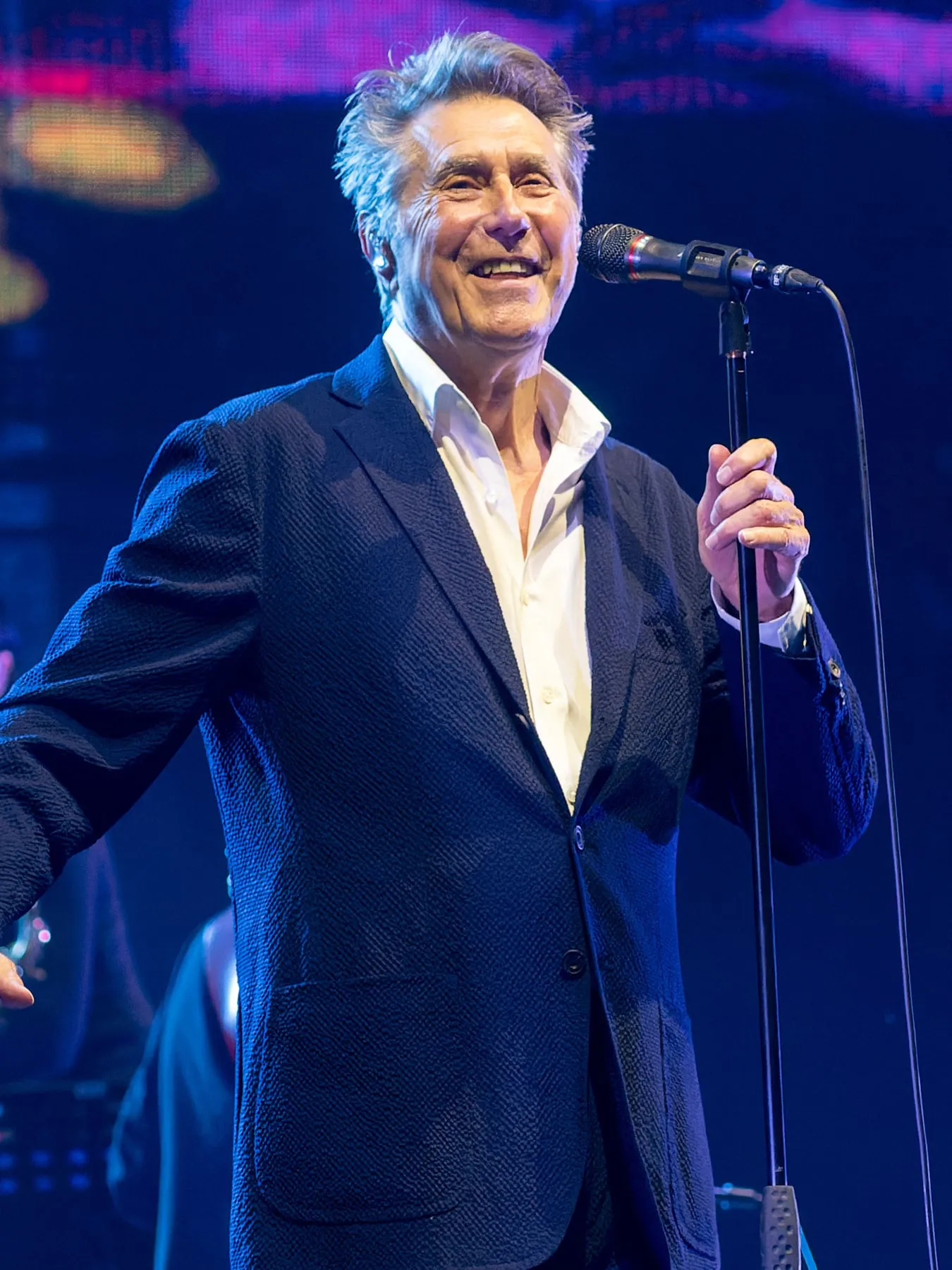
Photo by Raph_PH , licensed under CC BY 2.0 · Wikimedia Commons
Rank #387
Bryan Ferry
From Wikipedia
Bryan Ferry is an English singer and musician. He became known as the frontman of the band Roxy Music and also launched a solo career.
Discography & Previews
Browse through and click an album to open and play 30-second previews streamed from Apple Music.

These Foolish Things
1973 · 13 tracks
- 1 A Hard Rain's a-Gonna Fall ↗ 5:19
- 2 River of Salt ↗ 1:49
- 3 Don't Ever Change ↗ 2:16
- 4 Piece of My Heart ↗ 3:06
- 5 Baby I Don't Care ↗ 1:50
- 6 It's My Party ↗ 2:01
- 7 Don't Worry Baby ↗ 4:13
- 8 Sympathy for the Devil ↗ 5:50
- 9 The Track of My Tears ↗ 3:05
- 10 You Won't See Me ↗ 2:32
- 11 I Love How You Love Me ↗ 3:02
- 12 Loving You Is Sweeter Than Ever ↗ 3:06
- 13 These Foolish Things ↗ 5:41

Another Time, Another Place
1974 · 10 tracks
- 1 The 'In' Crowd ↗ 4:36
- 2 Smoke Gets in Your Eyes ↗ 2:54
- 3 Walk a Mile in My Shoes ↗ 4:45
- 4 Funny How Time Slips Away ↗ 3:32
- 5 You Are My Sunshine ↗ 6:47
- 6 (What a) Wonderful World ↗ 2:56
- 7 It Ain't Me Babe ↗ 3:57
- 8 Fingerpoppin' ↗ 3:35
- 9 Help Me Make It Through the Night ↗ 4:16
- 10 Another Time, Another Place ↗ 4:46
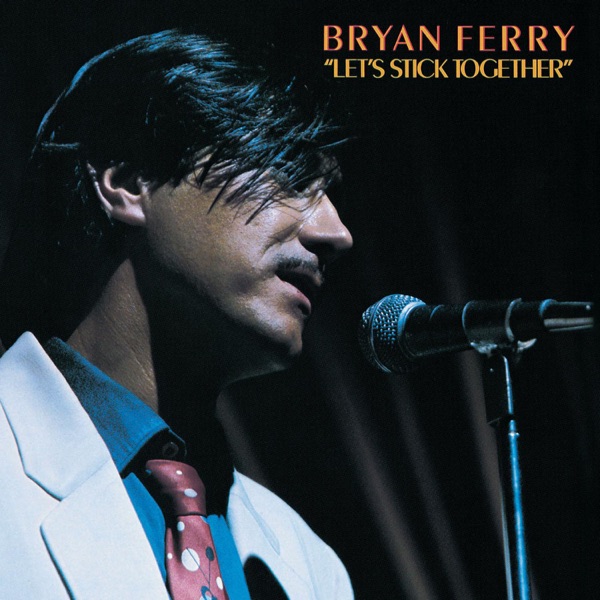
Let’s Stick Together
1976 · 11 tracks


The Bride Stripped Bare
1978 · 10 tracks


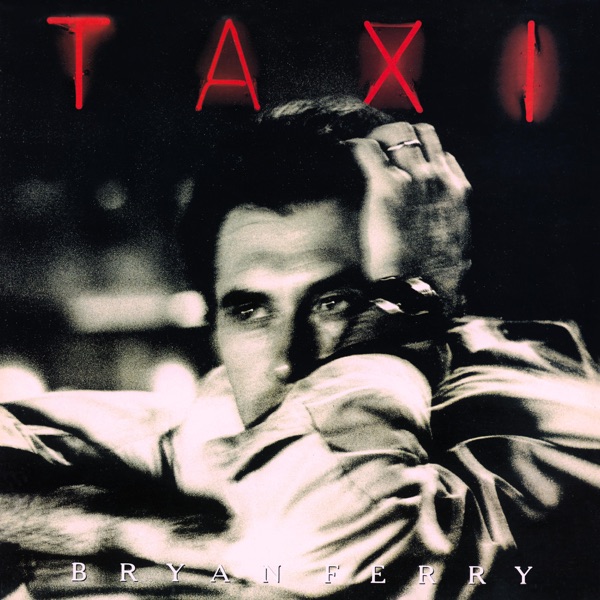


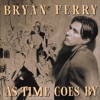
As Time Goes By
1999 · 15 tracks
- 1 As Time Goes By ↗ 2:34
- 2 The Way You Look Tonight ↗ 3:36
- 3 Easy Living ↗ 2:16
- 4 I'm In the Mood for Love ↗ 4:17
- 5 Where or When ↗ 3:20
- 6 When Somebody Thinks You're Wonderful ↗ 2:57
- 7 Sweet and Lovely ↗ 3:11
- 8 Miss Otis Regrets ↗ 2:39
- 9 Time On My Hands ↗ 3:02
- 10 Lover, Come Back to Me ↗ 2:55
- 11 Falling In Love Again ↗ 2:26
- 12 Love Me or Leave Me ↗ 2:45
- 13 You Do Something to Me ↗ 2:48
- 14 Just One of Those Things ↗ 2:47
- 15 September Song ↗ 3:03

Frantic
2002 · 13 tracks
- 1 It's All Over Now, Baby Blue ↗ 4:06
- 2 Cruel ↗ 3:55
- 3 Goin' Down ↗ 3:08
- 4 Goddess of Love ↗ 3:33
- 5 Don't Think Twice, It's Alright ↗ 4:06
- 6 Nobody Loves Me ↗ 3:23
- 7 Ja Nun Hons Pris ↗ 0:36
- 8 A Fool for Love ↗ 4:44
- 9 Goodnight Irene ↗ 3:20
- 10 Hiroshima Mon Amour ↗ 3:15
- 11 San Simeon ↗ 4:35
- 12 One Way Love ↗ 3:05
- 13 I Thought ↗ 5:41

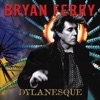
Dylanesque
2007 · 11 tracks
- 1 Just Like Tom Thumb's Blues ↗ 3:51
- 2 Simple Twist of Fate ↗ 5:18
- 3 Make You Feel My Love ↗ 3:22
- 4 The Times They are a-Changin' ↗ 3:40
- 5 All I Really Wanna Do ↗ 2:30
- 6 Knockin' on Heaven's Door ↗ 6:14
- 7 Positively Fourth Street ↗ 3:46
- 8 If Not for You ↗ 2:41
- 9 Baby, Let Me Follow You Down ↗ 2:13
- 10 Gates of Eden ↗ 5:12
- 11 All Along the Watchtower ↗ 3:43

Olympia
2010 · 12 tracks
- 1 You Can Dance ↗ 4:29
- 2 Alphaville ↗ 4:25
- 3 Heartache by Numbers ↗ 4:56
- 4 Me Oh My ↗ 4:40
- 5 Shameless ↗ 4:36
- 6 Song to the Siren ↗ 5:56
- 7 No Face, No Name, No Number ↗ 4:40
- 8 BF Bass (Ode to Olympia) ↗ 4:09
- 9 Reason or Rhyme ↗ 6:52
- 10 Tender Is the Night ↗ 4:35
- 11 Whatever Gets You Thru the Night ↗ 3:20
- 12 One Night ↗ 4:00


Loose Talk
2025 · 11 tracks
- 1 Big Things (feat. Amelia Barratt) ↗ 2:46
- 2 Stand Near Me (feat. Amelia Barratt) ↗ 3:41
- 3 Florist (feat. Amelia Barratt) ↗ 5:43
- 4 Cowboy Hat (feat. Amelia Barratt) ↗ 2:51
- 5 Demolition (feat. Amelia Barratt) ↗ 2:49
- 6 Orchestra (feat. Amelia Barratt) ↗ 3:09
- 7 Holiday (feat. Amelia Barratt) ↗ 3:05
- 8 Landscape (feat. Amelia Barratt) ↗ 3:24
- 9 Pictures On A Wall (feat. Amelia Barratt) ↗ 3:34
- 10 White Noise (feat. Amelia Barratt) ↗ 3:05
- 11 Loose Talk (feat. Amelia Barratt) ↗ 3:26
-
 These Foolish ThingsBryan Ferry197313 tracks
 -
 Another Time, Another PlaceBryan Ferry197410 tracks
 -
 Let’s Stick TogetherBryan Ferry197611 tracks
 -
 In Your MindBryan Ferry19778 tracks
 -
 The Bride Stripped BareBryan Ferry197810 tracks
 -
 Boys and GirlsBryan Ferry19859 tracks
 -
 Bête NoireBryan Ferry19879 tracks
 -
 TaxiBryan Ferry199310 tracks
 -
 MamounaBryan Ferry199410 tracks
 -
 As Time Goes ByBryan Ferry199915 tracks
 -
 FranticBryan Ferry200213 tracks
 -
 DylanesqueBryan Ferry200711 tracks
 -
 OlympiaBryan Ferry201012 tracks
 -
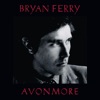 AvonmoreBryan Ferry201410 tracks
 -
 Loose TalkBryan Ferry202511 tracks
Deep Dive
Overview
Bryan Ferry is an English singer and musician who built a dual legacy as the frontman of Roxy Music and as a prolific solo recording artist in his own right. Born in 1945, Ferry emerged as a central figure in 1970s new wave and art rock, bringing sophisticated arrangement, introspective lyrics, and a distinctly mannered vocal delivery to both his band and solo work. His solo career, which began in 1973 and continues into the 2020s, demonstrates a restless artistic sensibility that has encompassed stylistic reinvention across rock, pop, and new wave idioms.
Formation Story
Ferry came of age during the post-war British cultural ferment of the 1950s and 1960s, a period that nurtured his interest in both visual art and music. Trained as a painter before turning fully to music, he brought an aesthetic sophistication to rock music that went beyond typical songwriting craft. The early 1970s saw him establish himself through Roxy Music, the art-rock band that became a flagship act of the glam and proto-punk era. By the mid-1970s, Ferry had developed sufficient songwriting and production confidence to launch a solo recording career while maintaining his primary commitment to Roxy Music, a dual track that would define his professional life for decades.
Breakthrough Moment
Ferry’s solo debut album, These Foolish Things, arrived in 1973 and immediately signaled his independent artistic ambitions. Rather than replicate Roxy Music’s sound, Ferry crafted a sophisticated adult-oriented rock statement that balanced originals with carefully chosen covers, setting a template he would revisit throughout his solo discography. The album’s success established him as a solo artist of consequence, not merely as a band frontman extending into side work. Throughout the mid-to-late 1970s, Ferry released a string of solo albums—Another Time, Another Place (1974), Let’s Stick Together (1976), In Your Mind (1977), and The Bride Stripped Bare (1978)—that consolidated his reputation during new wave’s commercial and critical ascendancy.
Peak Era
Ferry’s most commercially successful solo period arrived in the mid-1980s with Boys and Girls (1985), an album that captured the synthesizer-driven production aesthetics of its era while retaining his characteristic vocal phrasing and lyrical introspection. The album’s success at mainstream radio and in the album charts marked the apex of his solo commercial reach. He followed it with Bête Noire (1987), continuing to evolve his sound within the contemporary production landscape. This five-year span from 1985 to 1987 represented a high point of international recognition for Ferry as a solo entity, even as his output demonstrated increasing stylistic confidence and polish.
Musical Style
Ferry’s solo work is characterized by a melancholic, urbane sensibility that privileges arrangement and lyrical sophistication over raw emotional display. His voice—precise, occasionally aloof, yet capable of genuine warmth—serves as a vehicle for introspective songwriting that often dwells on romantic complexity and existential uncertainty. The musical backdrop has shifted considerably across his solo albums: the lush orchestral arrangements and glam-rock textures of the mid-1970s gave way to the synthesizer-dominated production of the 1980s and beyond. Throughout all these shifts, Ferry maintained a core commitment to craft and melodic clarity, genres of rock and pop music that favor structured songwriting and sophisticated production over experimental abstraction. His choice to record cover versions—a practice evident from his debut onward—speaks to his understanding of himself as an interpreter as much as a composer, one who finds creative meaning in reimagining the work of others.
Major Albums
These Foolish Things (1973)
Ferry’s solo debut balanced original compositions with carefully chosen covers, establishing his identity as a solo artist distinct from his role in Roxy Music and setting a template for strategic reinterpretation that would recur throughout his career.
Let’s Stick Together (1976)
Released during new wave’s rapid commercial expansion, this album showcased Ferry’s ability to write and arrange sophisticated pop-rock material that combined contemporary production sensibilities with mature lyrical content.
Boys and Girls (1985)
Ferry’s most commercially successful solo album, Boys and Girls captured the synthesizer-driven production of the mid-1980s while maintaining his distinctive vocal approach and introspective songwriting, reaching a broad international audience.
Dylanesque (2007)
This album of Dylan covers represented a late-career artistic statement, allowing Ferry to explore the songwriting of a primary influence and to demonstrate how his mature interpretive sensibility engaged with canonical rock material.
Signature Songs
- “Let’s Stick Together” — A cover that became Ferry’s signature solo piece, transformed by his refined vocal interpretation and sophisticated arrangement into something distinct from the original.
- “Don’t Stop the Dance” — A rhythmically driven track from the 1980s period that showcased Ferry’s ability to craft contemporary pop material with substantive lyrical content.
- “Slave to Love” — An introspective examination of romantic entanglement that exemplified Ferry’s thematic focus on emotional complexity and sophisticated production aesthetics.
Influence on Rock
Ferry’s solo work contributed significantly to the establishment of new wave as a commercially viable rock subgenre during the 1970s and 1980s. His approach—bridging glam rock’s theatrical sensibility with art rock’s intellectual ambition and new wave’s forward-looking production—provided a template for how rock music could be simultaneously sophisticated and accessible. Artists working in art-rock and alternative rock traditions have drawn on his example of how to maintain artistic integrity across commercial and experimental registers. His consistent release schedule across five decades and his willingness to engage with contemporary production aesthetics while remaining stylistically consistent influenced how solo artists approached longevity in an era of rapidly shifting musical fashions.
Legacy
Ferry’s career spans from the early 1970s to the present day, with ongoing recording and touring activity well into his eighth decade. His solo discography—fifteen studio albums across more than fifty years—represents one of rock music’s more sustained artistic statements by a solo performer. The continued availability of his work across streaming platforms and the periodic reissue of his catalog on physical media maintain his presence in the contemporary musical landscape. His influence extends beyond direct musical emulation to the broader establishment of a template for how rock musicians could balance commercial ambition with artistic integrity, and how solo artists could maintain relevance across multiple decades by engaging thoughtfully with evolving production and stylistic contexts.
Fun Facts
- Ferry trained as a painter before committing fully to a music career, a background that informed his approach to visual presentation and aesthetic sophistication in rock music.
- His consistent practice of recording cover versions across his solo albums reflects a deliberate artistic philosophy of interpretation and reinterpretation as compositional act.
- Ferry maintained simultaneous careers in Roxy Music and as a solo artist for much of the 1970s, a dual track that remained productive despite the demands it placed on his creative and professional energies.