
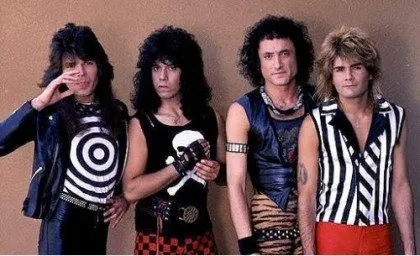
Photo by Justin Warner , licensed under CC0 · Wikimedia Commons
Rank #363
Quiet Riot
From Wikipedia
Quiet Riot is an American heavy metal band founded in Los Angeles in 1973 by guitarist Randy Rhoads, bassist Kelly Garni, and vocalist Kevin DuBrow.
Members
- Johnny Kelly (2020–present)
- Alex Grossi
- Frankie Banali
- Jizzy Pearl
- Randy Rhoads
- Rudy Sarzo
Discography & Previews
Browse through and click an album to open and play 30-second previews streamed from Apple Music.
Quiet Riot
1978 · 12 tracks
- 1 Sign of the Times (Live) ↗ 5:34
- 2 Let's Get Crazy (Live) ↗ 5:15
- 3 Mama Weer All Crazee Now (Live) ↗ 5:01
- 4 Slick Black Cadillac (Live) ↗ 5:14
- 5 Anytime You Want Me (Live) ↗ 5:08
- 6 Party All Night (Live) ↗ 4:24
- 7 Metal Health (Bang Your Head) [Live] ↗ 6:39
- 8 Run for Cover (Live) ↗ 3:46
- 9 Love's a Bitch (Live) ↗ 5:00
- 10 Stomp Your Hands, Clap Your Feet (Live) ↗ 8:07
- 11 Gonna Have a Riot (Live) ↗ 3:24
- 12 Cum On Feel the Noize (Live) ↗ 6:33


Condition Critical
1984 · 10 tracks

Quiet Riot
1988 · 12 tracks
- 1 Sign of the Times (Live) ↗ 5:34
- 2 Let's Get Crazy (Live) ↗ 5:15
- 3 Mama Weer All Crazee Now (Live) ↗ 5:01
- 4 Slick Black Cadillac (Live) ↗ 5:14
- 5 Anytime You Want Me (Live) ↗ 5:08
- 6 Party All Night (Live) ↗ 4:24
- 7 Metal Health (Bang Your Head) [Live] ↗ 6:39
- 8 Run for Cover (Live) ↗ 3:46
- 9 Love's a Bitch (Live) ↗ 5:00
- 10 Stomp Your Hands, Clap Your Feet (Live) ↗ 8:07
- 11 Gonna Have a Riot (Live) ↗ 3:24
- 12 Cum On Feel the Noize (Live) ↗ 6:33
Alive and Well
1999 · 15 tracks
- 1 Don't Know What I Want ↗ 4:52
- 2 Angry ↗ 5:22
- 3 Alive and Well ↗ 5:03
- 4 The Ritual ↗ 6:07
- 5 Overworked and Underpaid ↗ 5:36
- 6 Slam Dunk (Way to Go!) ↗ 3:23
- 7 Too Much Information ↗ 4:28
- 8 Against the Wall ↗ 4:46
- 9 Highway to Hell ↗ 3:59
- 10 Sign of the Times (Re-Recorded Version) ↗ 4:53
- 11 Don't Wanna Let You Go (Re-Recorded Version) ↗ 4:52
- 12 The Wild and the Young (Re-Recorded Version) ↗ 5:33
- 13 Mama Weer All Crazee Now (Re-Recorded Version) ↗ 3:22
- 14 Cum On Feel the Noize (Re-Recorded Version) ↗ 4:40
- 15 Metal Health (Bang Your Head) [Re-Recorded Version] ↗ 5:15

Rehab
2006 · 12 tracks

Hollywood Cowboys
2019 · 12 tracks
-
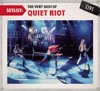 Quiet RiotQuiet Riot197812 tracks
 -
 Metal HealthQuiet Riot198310 tracks
 -
 Condition CriticalQuiet Riot198410 tracks
 -
 QR IIIQuiet Riot198611 tracks
 - Quiet RiotQuiet Riot198812 tracks
-
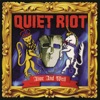 Alive and WellQuiet Riot199915 tracks
 -
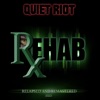 RehabQuiet Riot200612 tracks
 -
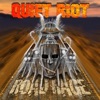 Road RageQuiet Riot201711 tracks
 -
 Hollywood CowboysQuiet Riot201912 tracks
Deep Dive
Overview
Quiet Riot stands as a defining force in American heavy metal and glam metal, emerging from Los Angeles in the early 1970s at the intersection of hard rock intensity and theatrical rock presentation. Founded by guitarist Randy Rhoads, bassist Kelly Garni, and vocalist Kevin DuBrow in 1973, the band became synonymous with the electric energy and accessibility that defined glam metal in the 1980s. Their career spanning five decades—from early underground status to mainstream breakthrough and beyond—charts the rise and evolution of a distinctly American strand of heavy metal.
Formation Story
Quiet Riot was founded in Los Angeles in 1973 by guitarist Randy Rhoads, bassist Kelly Garni, and vocalist Kevin DuBrow. The band emerged from the Los Angeles rock scene at a moment when hard rock was splintering into multiple directions: some acts pursued the bombast of stadium rock, others the emerging heaviness of proto-metal. Los Angeles itself was already home to a thriving underground rock circuit, and Quiet Riot positioned themselves within that community of musicians experimenting with heavier, more theatrical approaches to rock performance. The founding lineup set the template that would define the band’s early identity—Rhoads as the technical guitar anchor, Garni providing rhythmic foundation, and DuBrow as the charismatic frontman.
Breakthrough Moment
Quiet Riot’s earliest recordings came with the release of Quiet Riot and Quiet Riot II, both arriving in 1978, but these records arrived before the commercial machinery of the glam metal boom was fully in place. The band labored in relative obscurity through the early 1980s until Metal Health, released in 1983, became the catalyst that transformed them from Los Angeles club act to national and international phenomenon. Metal Health captured the essence of what audiences were hungry for: anthemic hooks, muscular guitar work, high-energy production, and an unashamed embrace of rock spectacle. The album’s success positioned Quiet Riot as one of the leading bands of the emerging glam metal movement and opened the door to broader touring and radio support.
Peak Era
The period from 1983 through the late 1980s represented Quiet Riot’s commercial and creative apex. Following the breakthrough of Metal Health, the band released Condition Critical in 1984, demonstrating their ability to sustain momentum and refine their approach within the glam metal idiom. A live recording, Live At The Agora 1983, captured the band’s concert energy during this fertile period. They continued recording through the late 1980s with a self-titled album in 1988, maintaining their presence even as the broader glam metal landscape began fragmenting. During these years, the band’s lineup evolved, with Frankie Banali and Rudy Sarzo becoming integral to the group’s sound and identity, anchoring the rhythm section with precision and power.
Musical Style
Quiet Riot’s sound combined the blues-derived heaviness of hard rock with the accessibility and theatrical flair of glam rock, creating a style that proved both powerful and radio-friendly. Randy Rhoads’ guitar work emphasized lead lines and solos delivered with technical fluency and melodic sensibility—a contrast to some harder rock approaches of the era. The rhythm section, particularly under Banali and Sarzo’s tenure, provided a tight, driving foundation that could lock into grooves or explode into full-throttle power. Kevin DuBrow’s vocal delivery ranged from melodic singing to shouted, emphatic choruses that emphasized the accessibility of the band’s material. The production aesthetic was polished without sacrificing heaviness; keyboards appeared in the mix to enhance atmosphere, while the drums and bass were mixed prominently enough to anchor the driving energy that defined glam metal at its most effective. The band’s songwriting favored anthemic structures with pre-chorus builds and explosive chorus payoffs.
Major Albums
Metal Health (1983)
The breakthrough album that established Quiet Riot as a major force in American heavy metal, combining accessible hooks with the band’s signature hard-rock intensity and positioning them at the forefront of the emerging glam metal movement.
Condition Critical (1984)
Following the success of Metal Health, this album demonstrated the band’s ability to sustain their commercial momentum while refining their approach within the established glam metal formula.
QR III (1986)
Released at the height of glam metal’s popularity, this record continued the band’s exploration of arena-ready heavy metal with polished production and anthemic songwriting.
Quiet Riot (1988)
A late-era self-titled release that showed the band adapting their sound to the evolving landscape of late-1980s hard rock and heavy metal.
Signature Songs
- “Cum On Feel the Noize” — The defining moment from Metal Health, a cover that became more associated with Quiet Riot than with its original composer.
- “Bang Your Head (Metal Health)” — An anthem that encapsulated the band’s celebration of heavy metal as a lifestyle and cultural identity.
- “Mental Health” — A centerpiece of their breakthrough era that showcased the band’s ability to marry musicianship with commercial appeal.
Influence on Rock
Quiet Riot’s success during the early-to-mid 1980s helped establish glam metal as a commercially viable and radio-friendly heavy metal subgenre in the United States. Their ability to balance musical heaviness with accessibility and theatrical presentation influenced how subsequent bands in the glam metal movement approached their own recordings. The band demonstrated that heavy metal could achieve mainstream radio and MTV success without abandoning the core values of technical musicianship and hard-rock intensity. Their career trajectory and stylistic template shaped expectations for American heavy metal bands working within the glam metal idiom throughout the 1980s and beyond.
Legacy
Quiet Riot’s career, spanning from their 1973 founding through the present day, reflects both the explosive rise of glam metal and the persistent appeal of the band’s core sound to devoted audiences. The band has remained active across decades, continuing to record with releases including Rehab (2006), Quiet Riot 10 (2014), Road Rage (2017), and Hollywood Cowboys (2019), demonstrating sustained commitment to their craft and audience connection. While the broader glam metal movement that brought them to prominence in the 1980s receded from mainstream attention in subsequent decades, Quiet Riot maintained touring presence and recorded new material, securing their place as a working band rather than purely a nostalgic act. The band’s early albums remain touchstones of American heavy metal and glam metal, and their recording legacy continues to reach audiences through streaming platforms and reissues.
Fun Facts
- Randy Rhoads, the band’s guitarist and founder, would later gain prominence as the guitarist for Ozzy Osbourne, showing how Los Angeles metal musicians navigated between multiple high-profile projects.
- The band’s decision to cover “Cum On Feel the Noize” became so definitive that the song is often more readily associated with Quiet Riot than with any other version.
- Quiet Riot’s continuous activity from 1973 to the present represents a longevity uncommon among glam metal acts, which often disbanded or went on extended hiatuses.
- The band recorded and released new material consistently across multiple decades, with studio albums appearing in 2014, 2017, and 2019, maintaining active status well into the 2010s.