

Photo by Raph_PH , licensed under CC BY 4.0 · Wikimedia Commons
Rank #352
Chic
From Wikipedia
Chic is an American disco band founded in 1972 by guitarist Nile Rodgers and bassist Bernard Edwards. Between 1972 and 1979, Chic released several of the biggest hits of the disco era, including "Dance, Dance, Dance " (1977), "Everybody Dance" (1977), "Le Freak" (1978), "I Want Your Love" (1978), and "Good Times" (1979). The group regarded themselves as a rock band for the disco movement "that made good on hippie peace, love and freedom". In 2017, Chic was nominated for induction into the Rock and Roll Hall of Fame for the eleventh time. As of 2025, Rodgers and Chic continue to perform as Nile Rodgers & Chic.
Members
- Bernard Edwards
- Nile Rodgers
Discography & Previews
Browse through and click an album to open and play 30-second previews streamed from Apple Music.
Chic
1977 · 20 tracks
- 1 Le Freak (2018 Remaster) [Dimitri from Paris Remix] ↗ 7:01
- 2 Lost in Music (2018 Remaster) [Dimitri from Paris Remix] ↗ 7:51
- 3 I Want Your Love (2018 Remaster) [Dimitri from Paris Remix] ↗ 8:33
- 4 Saturday (2018 Remaster) [Dimitri from Paris Remix] ↗ 9:48
- 5 Thinking of You (2018 Remaster) [Dimitri from Paris Remix] ↗ 6:29
- 6 My Forbidden Lover (Dimitri from Paris Remix) ↗ 6:28
- 7 He's the Greatest Dancer (Dimitri from Paris Remix) ↗ 6:08
- 8 I Feel Your Love Comin' on (2018 Remaster) [Dimitri from Paris Remix] ↗ 8:20
- 9 Got to Love Somebody (Dimitri from Paris Remix) ↗ 7:25
- 10 Your Love Is Good (2018 Remaster) [Dimitri from Paris Remix] ↗ 6:25
- 11 Le Freak (Dimitri from Paris Instrumental) ↗ 6:41
- 12 Lost in Music (2018 Remaster) [Dimitri from Paris Instrumental] ↗ 7:51
- 13 I Want Your Love (2018 Remaster) [Dimitri from Paris Instrumental] ↗ 8:35
- 14 Saturday (2018 Remaster) [Dimitri from Paris Instrumental] ↗ 9:48
- 15 Thinking of You (2018 Remaster) [Dimitri from Paris Instrumental] ↗ 6:13
- 16 My Forbidden Lover (Dimitri from Paris Instrumental) ↗ 6:27
- 17 He's the Greatest Dancer (Dimitri from Paris Instrumental) ↗ 6:08
- 18 I Feel Your Love Comin' on (2018 Remaster) [Dimitri from Paris Instrumental] ↗ 8:17
- 19 Got to Love Somebody (Dimitri from Paris Instrumental) ↗ 7:18
- 20 Your Love Is Good (2018 Remaster) [Dimitri from Paris Instrumental] ↗ 6:20
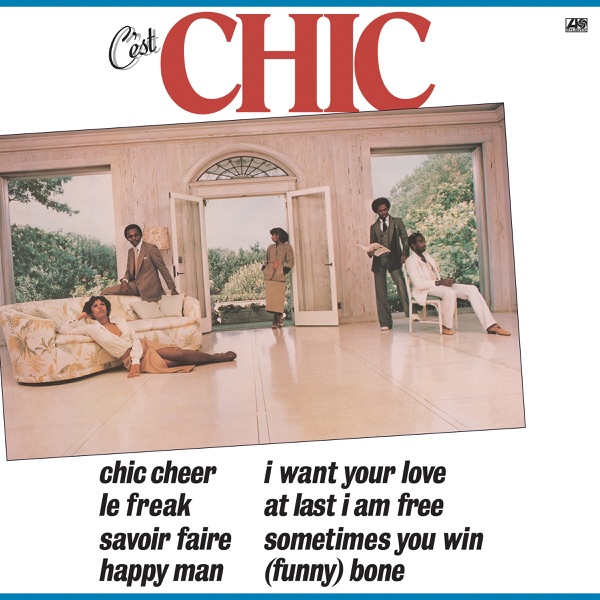
C’est Chic
1978 · 8 tracks
- 1 Chic Cheer (2018 Remaster) ↗ 4:45
- 2 Le Freak (2018 Remaster) ↗ 5:31
- 3 Savoir Faire (2018 Remaster) ↗ 5:05
- 4 Happy Man (2018 Remaster) ↗ 4:26
- 5 I Want Your Love (2018 Remaster) ↗ 6:54
- 6 At Last I Am Free (2018 Remaster) ↗ 7:14
- 7 Sometimes You Win (2018 Remaster) ↗ 4:29
- 8 (Funny) Bone [2018 Remaster] ↗ 3:44
Chic-ism
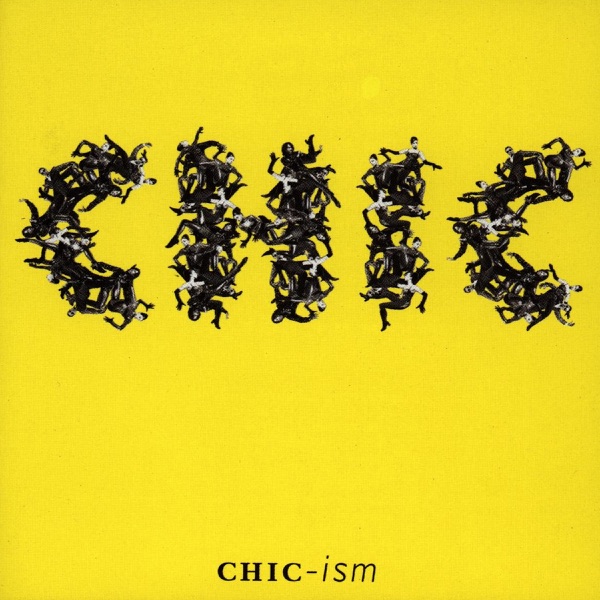
1992 · 13 tracks
- 1 Chic Mystique ↗ 6:40
- 2 Your Love ↗ 5:57
- 3 Jusagroove ↗ 3:42
- 4 Something You Can Feel ↗ 4:37
- 5 One and Only One ↗ 4:30
- 6 Doin' That Thing to Me ↗ 4:07
- 7 Chicism ↗ 4:08
- 8 In It to Win It ↗ 5:30
- 9 My Love's for Real ↗ 4:53
- 10 Take My Love ↗ 5:36
- 11 High ↗ 4:30
- 12 M.M.F.T.C.F. ↗ 4:37
- 13 Chic Mystique (Reprise) ↗ 4:05

It’s About Time
2018 · 10 tracks
- 1 Till The World Falls (feat. Mura Masa, Cosha & Vic Mensa) ↗ 5:18
- 2 Boogie All Night (feat. NAO) ↗ 3:30
- 3 Sober (feat. Craig David & Stefflon Don) ↗ 3:08
- 4 Do You Wanna Party (feat. LunchMoney Lewis) ↗ 3:22
- 5 Dance With Me (feat. Hailee Steinfeld) ↗ 3:31
- 6 I Dance My Dance ↗ 3:28
- 7 State Of Mine (It’s About Time) [feat. Philippe Saisse] ↗ 4:43
- 8 Queen (feat. Elton John & Emeli Sandé) ↗ 3:55
- 9 I Want Your Love (feat. Lady Gaga) ↗ 4:56
- 10 “New Jack” Sober (feat. Craig David & Stefflon Don) [Teddy Riley Version] ↗ 3:13
-
 ChicChic197720 tracks
 -
 C’est ChicChic19788 tracks
 -
 RisquéChic19797 tracks
 -
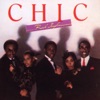 Real PeopleChic19808 tracks
 -
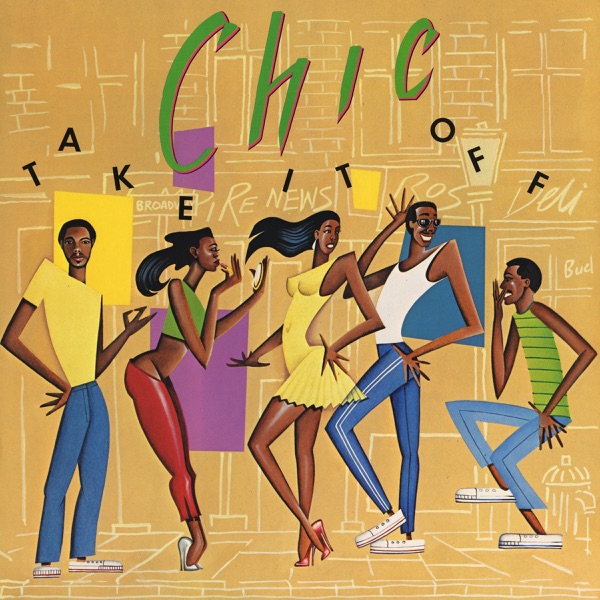
 Take It OffChic198110 tracks
 -
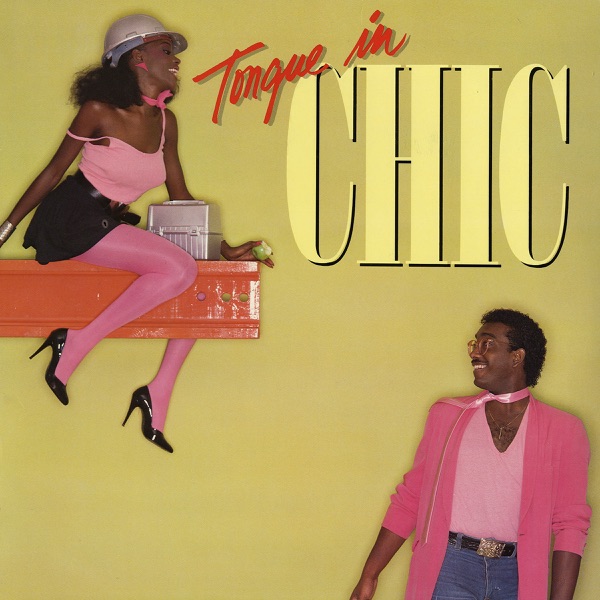
 Tongue in ChicChic19827 tracks
 -
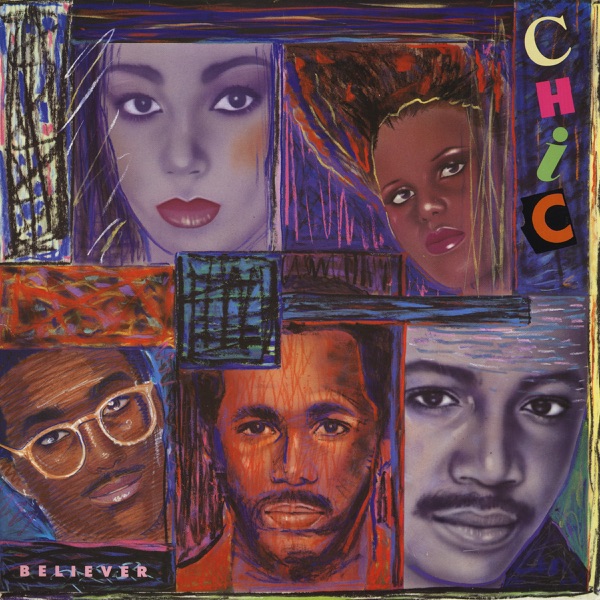
 BelieverChic19838 tracks
 -
 Chic-ismChic199213 tracks
 -
 It’s About TimeChic201810 tracks
Deep Dive
Overview
Chic is an American disco and funk-rock band founded in 1976 in New York City by guitarist Nile Rodgers and bassist Bernard Edwards. Between their formation in the mid-1970s and the early 1980s, the group released a succession of some of the decade’s most indelible dance records and became architects of a sophisticated strain of disco that merged rhythm-and-blues sophistication with rock musicianship. Unlike their peers in the genre, Chic viewed themselves not as novelty purveyors but as a rock band working within the disco idiom—one that could deliver on the counterculture’s promises of peace, love, and freedom through the medium of the dance floor.
Formation Story
Nile Rodgers and Bernard Edwards came together in New York City at a moment when disco was ascending from underground clubs into the mainstream pop landscape. The two musicians, both rooted in soul and funk traditions, recognized an opportunity to elevate dance music beyond its reputation for disposability. Rather than chase trends, they set out to construct a band that could command respect as serious instrumentalists while serving the dance-floor imperative. The pairing of Rodgers’s inventive, rhythmically precise guitar work with Edwards’s solid and melodic bass created an immediately distinctive sound. Their mission from the outset was to prove that disco could be both commercially viable and artistically substantial—a fusion of the funk tradition’s improvisational language with the pop song’s accessibility and the rock band’s ensemble sensibility.
Breakthrough Moment
Chic’s self-titled debut album, released in 1977, announced their arrival with immediate chart impact and critical acknowledgment. The record yielded multiple hit singles: “Dance, Dance, Dance” and “Everybody Dance” both became standards of the era, establishing their signature blend of sleek rhythm arrangements and hook-laden songwriting. “Dance, Dance, Dance” in particular showcased their ability to construct a disco record that felt both weightless and substantive, with Rodgers’s guitar adding texture and harmonic sophistication beneath the relentless pulse. The album’s success transformed Chic from session musicians and local New York players into national figures, setting the stage for an even more dominant period in the years immediately following.
Peak Era
The years 1978 to 1979 represented Chic’s commercial and creative zenith. Their second album, C’est Chic (1978), deepened the formula and produced what would become their most enduring signature track: “Le Freak.” That song became a cultural phenomenon, a disco single that transcended the genre’s demographic boundaries and entered the mainstream consciousness as an outright pop hit. The same year, “I Want Your Love” reinforced their dominance. By 1979, the release of “Good Times” from the album Risqué proved they could still innovate within their established sound; the track’s minimalist bass line and percussive precision became foundational to hip-hop and funk production for decades to come. Through 1980 and into the early 1980s, with albums like Real People (1980), Take It Off (1981), and Tongue in Chic (1982), Chic maintained their recording schedule even as the cultural pendulum began to swing away from disco toward new-wave and post-punk aesthetics.
Musical Style
Chic’s sound was built on a disciplined approach to groove. Rodgers’s guitar playing combined jazz-influenced chord voicings with a percussive, rhythmically locked attack—he often played the instrument almost as a rhythm section component rather than a traditional lead voice, creating intricate patterns that locked with Edwards’s bass lines. Edwards’s playing was melodically sophisticated, providing harmonic counterpoint and pocket-perfect timing that allowed the rhythm section to function as the band’s true engine. The vocal lines, whether delivered by guest singers or the band itself, were typically clean and unfussy, serving the song rather than overshadowing it. Production-wise, Chic records favored clarity and definition over the murky, reverb-heavy approaches common in much 1970s music; every instrument occupied its own frequency space. This precision extended to their songwriting: verses were lean, choruses were immediate, and the structures prioritized repetition and variation rather than complexity. Over their career span from 1977 through the early 1980s, this formula remained largely consistent, though later albums like Believer (1983) experimented with slightly broader sonic territories as disco’s commercial power waned.
Major Albums
Chic (1977)
The debut introduced Rodgers and Edwards to the world and immediately established their credentials as disco’s most musically literate architects, with “Dance, Dance, Dance” and “Everybody Dance” securing their place in the era’s pantheon.
C’est Chic (1978)
The second album refined the Chic formula and produced “Le Freak,” arguably the single most influential disco record of the entire decade and a cultural crossover phenomenon.
Risqué (1979)
Home to “Good Times,” this record showcased the duo’s ability to extract maximum impact from minimal means; its spare, bass-forward production would echo through hip-hop and dance music for generations.
Real People (1980)
Released as the cultural tide was shifting away from disco, the album found Chic adapting without abandoning their core sound, broadening their sonic palette while maintaining their rhythmic precision.
Signature Songs
- “Le Freak” (1978) — An absolute commercial and cultural juggernaut, this track transcended disco’s usual audience and became a genuine pop phenomenon.
- “Good Times” (1979) — A masterclass in rhythmic minimalism whose bass line became the DNA of countless hip-hop and funk records that followed.
- “Dance, Dance, Dance” (1977) — The debut single that announced Chic’s arrival and immediately confirmed their superior musicianship within the dance genre.
- “Everybody Dance” (1977) — An infectious invitation to the dance floor that exemplified the group’s ability to merge sophistication with immediate accessibility.
- “I Want Your Love” (1978) — A sensual, mid-tempo groover that showcased the band’s rhythmic precision applied to a more restrained tempo.
Influence on Rock
While Chic operated within the disco genre, their influence extended far beyond that category’s traditional boundaries. Their emphasis on tight, sophisticated rhythm arrangements and their demonstration that dance music could command serious musicianship fundamentally altered rock and pop’s relationship to funk and groove. The bass-forward production approach pioneered on “Good Times” became a template for emerging hip-hop producers, who sampled and built upon Chic records as foundational texts. More broadly, Chic’s insistence that disco was a legitimate vehicle for rock-band ambition pushed back against the genre’s critics and elevated the entire idiom’s cultural standing. Their work demonstrated that funk, groove, and danceability were not antithetical to serious songwriting and instrumental prowess—a lesson that reverberated through new wave, post-punk, and electronic dance music as the 1980s progressed.
Legacy
Chic’s peak years spanned roughly 1977 to 1982, a period during which they recorded some of the most commercially successful and culturally significant music of the disco era. Though the group’s commercial dominance waned as cultural tastes shifted, their records have never disappeared from the cultural conversation. Since their initial run, Chic has periodically reunited and recorded new material, including Chic-ism (1992), Rechic (2001), EVERYBODY DANCE (2011), and It’s About Time (2018), demonstrating their continuing relevance and commitment to performance. In 2017, the group received recognition of their historical stature when they were nominated for induction into the Rock and Roll Hall of Fame for the eleventh time—a testament to the enduring resonance of their work. As of 2025, Nile Rodgers continues to tour and perform as Nile Rodgers & Chic, keeping the music alive for both legacy audiences and new listeners discovering the group through sampling, streaming, and cultural retrospectives.
Fun Facts
- Chic regarded themselves explicitly as a rock band working within the disco movement rather than as a disco group per se—a distinction that proved crucial to their staying power once the disco boom cooled.
- Bernard Edwards’s bass line on “Good Times” became so culturally significant that it was sampled extensively in hip-hop; the song is considered a bridge between 1970s funk and the emerging rap genre of the 1980s.
- The group maintained an remarkably prolific recording schedule throughout the late 1970s and early 1980s, releasing seven studio albums between 1977 and 1983 despite the musical climate’s shift away from their idiom.
- Nile Rodgers would later become a highly respected and prolific producer and session musician, but his foundational work with Chic remains his most culturally emblematic contribution to popular music.