
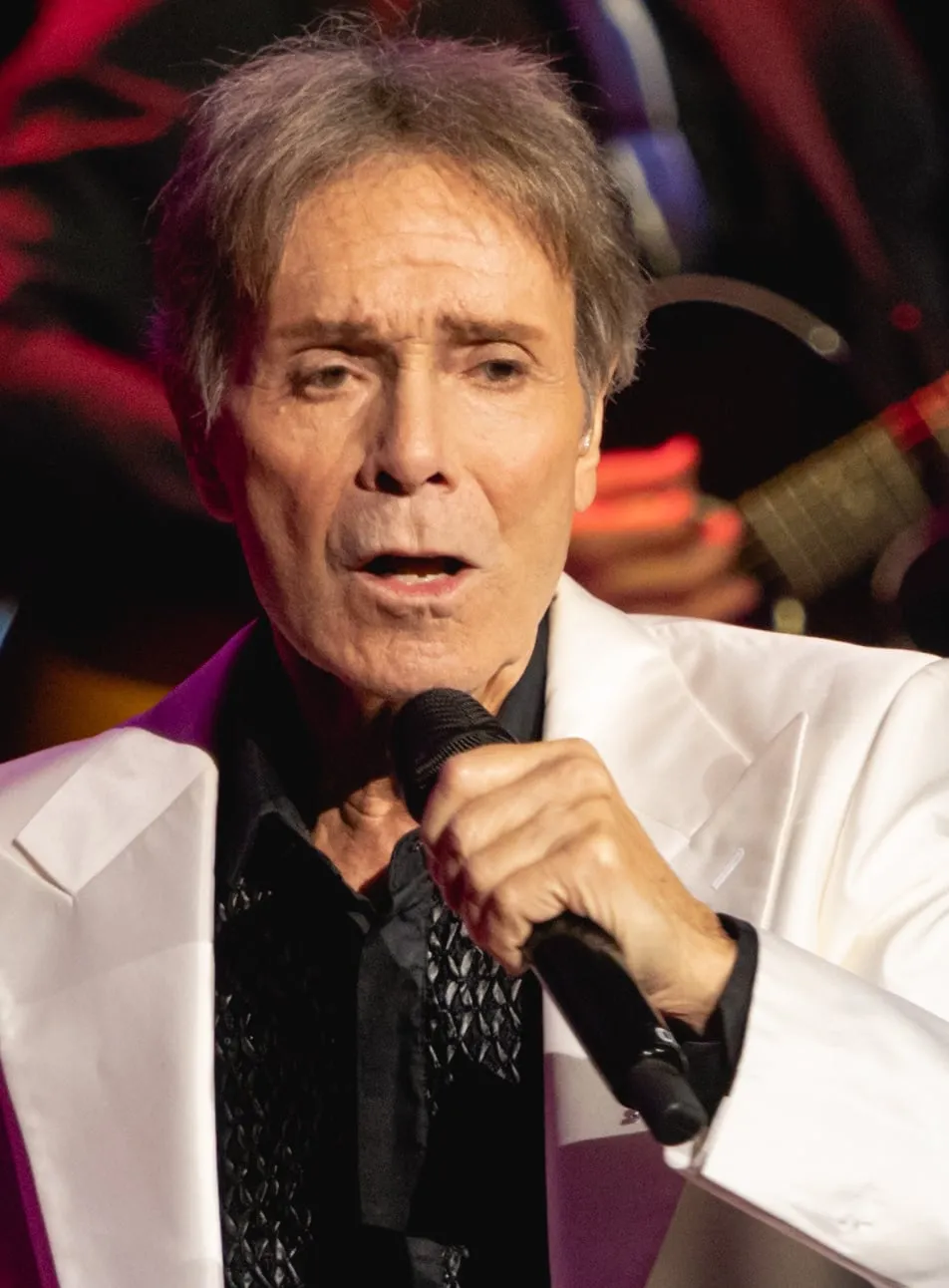
Photo by Raph_PH , licensed under CC BY 2.0 · Wikimedia Commons
Rank #409
Cliff Richard
From Wikipedia
Sir Harry Rodger Webb, known professionally as Cliff Richard, is a British singer and actor. He has total sales of over 21.5 million singles in the United Kingdom and as of 2026, is the third-top-selling artist in UK singles chart history, behind the Beatles and Elvis Presley.
Discography & Previews
Browse through and click an album to open and play 30-second previews streamed from Apple Music.

Cliff Sings
1959 · 32 tracks
- 1 Apron Strings (Live) ↗ 2:44
- 2 My Babe (Live) ↗ 2:20
- 3 Down the Line (Live) ↗ 2:04
- 4 I Got a Feeling (Live) ↗ 1:48
- 5 Jet Black (Live) ↗ 2:12
- 6 (You're So Square) Baby I Don't Care (Live) ↗ 2:09
- 7 Donna (Live) ↗ 3:09
- 8 Move It (Live) ↗ 2:18
- 9 Ready Teddy (Live) ↗ 2:01
- 10 Too Much (Live) ↗ 2:15
- 11 Don't Bug Me Baby (Live) ↗ 2:18
- 12 Driftin' (Live) ↗ 2:45
- 13 That'll Be the Day (Live) ↗ 2:11
- 14 Be-Bop-A-Lula (Live) ↗ 2:14
- 15 Danny (Live) ↗ 2:53
- 16 Whole Lotta Shakin' Goin' On (Live) ↗ 3:01
- 17 Blue Suede Shoes ↗ 1:46
- 18 The Snake and the Bookworm ↗ 2:12
- 19 I Gotta Know ↗ 2:28
- 20 Here Comes Summer ↗ 2:18
- 21 I'll String Along With You ↗ 2:22
- 22 Embraceable You ↗ 2:40
- 23 As Time Goes By ↗ 2:31
- 24 The Touch of Your Lips ↗ 2:49
- 25 Twenty Flight Rock ↗ 1:45
- 26 Pointed Toe Shoes ↗ 1:53
- 27 Mean Woman Blues ↗ 2:28
- 28 I'm Walkin' ↗ 1:51
- 29 I Don't Know Why (I Just Do) ↗ 1:58
- 30 Little Things Mean a Lot ↗ 2:34
- 31 Somewhere Along the Way ↗ 2:41
- 32 That's My Desire ↗ 2:38

Me and My Shadows
1960 · 32 tracks
- 1 I'm Gonna Get You ↗ 1:53
- 2 You and I ↗ 1:56
- 3 I Cannot Find a True Love ↗ 2:38
- 4 Evergreen Tree ↗ 2:41
- 5 She's Gone ↗ 2:35
- 6 Left Out Again ↗ 3:02
- 7 You're Just the One to Do It ↗ 2:23
- 8 Lamp of Love ↗ 1:50
- 9 Choppin' 'N' Changin' ↗ 2:29
- 10 We Have It Made ↗ 2:12
- 11 Tell Me ↗ 2:46
- 12 Gee Whiz It's You ↗ 2:08
- 13 I Love You So ↗ 3:06
- 14 I'm Willing to Learn ↗ 1:58
- 15 I Don't Know ↗ 2:08
- 16 Working After School ↗ 2:06
- 17 What'd I Say ↗ 3:03
- 18 Blue Moon ↗ 3:33
- 19 True Love Will Come to You ↗ 2:58
- 20 Lover ↗ 1:50
- 21 Unchained Melody ↗ 3:31
- 22 Idle Gossip ↗ 2:54
- 23 First Lesson In Love ↗ 1:57
- 24 Almost Like Being In Love ↗ 2:05
- 25 Beat Out Dat Rhythm On a Drum ↗ 2:00
- 26 Memories Linger On ↗ 2:40
- 27 Temptation ↗ 2:25
- 28 I Live for You ↗ 2:16
- 29 Sentimental Journey ↗ 2:09
- 30 I Want You to Know ↗ 2:29
- 31 We Kiss In a Shadow ↗ 3:23
- 32 It's You ↗ 3:22

21 Today
1961 · 30 tracks
- 1 Happy Birthday to You ↗ 1:35
- 2 Forty Days ↗ 2:48
- 3 Catch Me ↗ 2:30
- 4 How Wonderful to Know ↗ 2:40
- 5 Tough Enough ↗ 2:17
- 6 Fifty Tears for Every Kiss ↗ 2:32
- 7 The Night Is So Lonely ↗ 2:45
- 8 Poor Boy ↗ 3:00
- 9 Y'arriva ↗ 3:38
- 10 Outsider ↗ 2:45
- 11 Tea for Two ↗ 2:18
- 12 To Prove My Love for You ↗ 1:53
- 13 Without You ↗ 2:08
- 14 A Mighty Lonely Man ↗ 2:16
- 15 My Blue Heaven ↗ 2:29
- 16 Shame On You ↗ 2:11
- 17 It'll Be Me ↗ 1:55
- 18 So I've Been Told ↗ 2:28
- 19 How Long Is Forever ↗ 2:23
- 20 I'm Walkin' the Blues ↗ 2:05
- 21 Turn Around ↗ 2:27
- 22 Blueberry Hill ↗ 2:40
- 23 Let's Make a Memory ↗ 2:06
- 24 When My Dream Boat Comes Home ↗ 1:48
- 25 I'm On My Way ↗ 2:57
- 26 Spanish Harlem ↗ 2:58
- 27 You Don't Know ↗ 2:50
- 28 Falling In Love With Love ↗ 1:45
- 29 Who Are We to Say ↗ 2:45
- 30 I Wake Up Cryin' ↗ 2:08

Listen to Cliff
1961 · 18 tracks
- 1 What'd I Say ↗ 3:03
- 2 Blue Moon ↗ 3:33
- 3 True Love Will Come to You ↗ 2:58
- 4 Lover (feat. The Bernard Ebbinghouse Band) ↗ 1:50
- 5 Unchained Melody ↗ 3:31
- 6 Idle Gossip ↗ 2:54
- 7 First Lesson In Love ↗ 1:57
- 8 Almost Like Being In Love (feat. The Bernard Ebbinghouse Band) ↗ 2:05
- 9 Beat Out Dat Rhythm On a Drum (feat. The Bernard Ebbinghouse Band) ↗ 2:00
- 10 Memories Linger On ↗ 2:40
- 11 Temptation ↗ 2:25
- 12 I Live for You ↗ 2:16
- 13 Sentimental Journey (feat. The Bernard Ebbinghouse Band) ↗ 2:09
- 14 I Want You to Know ↗ 2:29
- 15 We Kiss In a Shadow ↗ 3:23
- 16 It's You ↗ 3:22
- 17 True Love Will Come to You ↗ 2:42
- 18 I Want You to Know ↗ 2:24
32 Minutes and 17 Seconds With Cliff Richard
1962 · 30 tracks
- 1 Happy Birthday to You ↗ 1:35
- 2 Forty Days ↗ 2:48
- 3 Catch Me ↗ 2:30
- 4 How Wonderful to Know ↗ 2:40
- 5 Tough Enough ↗ 2:17
- 6 Fifty Tears for Every Kiss ↗ 2:32
- 7 The Night Is So Lonely ↗ 2:45
- 8 Poor Boy ↗ 3:00
- 9 Y'arriva ↗ 3:38
- 10 Outsider ↗ 2:45
- 11 Tea for Two ↗ 2:18
- 12 To Prove My Love for You ↗ 1:53
- 13 Without You ↗ 2:08
- 14 A Mighty Lonely Man ↗ 2:16
- 15 My Blue Heaven ↗ 2:29
- 16 Shame On You ↗ 2:11
- 17 It'll Be Me ↗ 1:55
- 18 So I've Been Told ↗ 2:28
- 19 How Long Is Forever ↗ 2:23
- 20 I'm Walkin' the Blues ↗ 2:05
- 21 Turn Around ↗ 2:27
- 22 Blueberry Hill ↗ 2:40
- 23 Let's Make a Memory ↗ 2:06
- 24 When My Dream Boat Comes Home ↗ 1:48
- 25 I'm On My Way ↗ 2:57
- 26 Spanish Harlem ↗ 2:58
- 27 You Don't Know ↗ 2:50
- 28 Falling In Love With Love ↗ 1:45
- 29 Who Are We to Say ↗ 2:45
- 30 I Wake Up Cryin' ↗ 2:08

When in Spain…
1963 · 24 tracks
- 1 Perfidia ↗ 2:22
- 2 Amor, Amor, Amor ↗ 3:05
- 3 Frenesi ↗ 2:13
- 4 Solamente Una Vez (You Belong to My Heart) ↗ 2:23
- 5 Vaya Con Dios ↗ 2:58
- 6 Me Lo Dijo Adela (Sweet and Gentle) ↗ 2:04
- 7 Maria No Mas ↗ 2:08
- 8 Tus Besos (Kiss) ↗ 2:51
- 9 Quizas, Quizas, Quizas (Perhaps, Perhaps, Perhaps) ↗ 2:31
- 10 Te Quiero Dijiste (Magic Is the Moonlight) ↗ 2:28
- 11 Cancion De Orfeo (Carnival) ↗ 3:54
- 12 Quien Sera (Sway) ↗ 2:06
- 13 Blame It On the Bossa Nova ↗ 3:04
- 14 Blowin' In the Wind ↗ 3:56
- 15 Quiet Nights of Quiet Stars ↗ 3:34
- 16 Eso Beso ↗ 3:34
- 17 The Girl from Ipanema ↗ 2:46
- 18 One Note Samba ↗ 2:58
- 19 Fly Me to the Moon (In Other Words) ↗ 2:49
- 20 Our Day Will Come ↗ 2:52
- 21 Quando, Quando, Quando ↗ 2:17
- 22 Come Closer to Me ↗ 2:52
- 23 Meditation ↗ 3:11
- 24 Concrete and Clay ↗ 2:36

Love Is Forever
1965 · 28 tracks
- 1 Everyone Needs Someone to Love ↗ 2:18
- 2 Long Ago (And Far Away) ↗ 2:33
- 3 (All of a Sudden) My Heart Sings ↗ 2:30
- 4 Have I Told You Lately That I Love You ↗ 2:49
- 5 Fly Me to the Moon (In Other Words) ↗ 2:55
- 6 Theme from a Summer Place ↗ 2:31
- 7 I Found a Rose ↗ 2:41
- 8 My Foolish Heart ↗ 2:25
- 9 Through the Eye of a Needle ↗ 2:42
- 10 My Coloring Book ↗ 3:25
- 11 I'll Walk Alone ↗ 2:45
- 12 Someday (You'll Want Me to Want You) ↗ 2:21
- 13 Paradise Lost ↗ 2:41
- 14 Look Homeward Angel ↗ 2:43
- 15 Good News ↗ 2:45
- 16 It Is No Secret ↗ 3:24
- 17 We Shall Be Changed ↗ 2:30
- 18 23rd Psalm (Crimond) ↗ 2:34
- 19 Go Where I Send Thee ↗ 3:45
- 20 What a Friend We Have In Jesus ↗ 2:48
- 21 All Glory Laud and Honour ↗ 3:34
- 22 Just a Closer Walk With Thee ↗ 2:16
- 23 The King of Love My Shepherd Is ↗ 2:39
- 24 Mary What You Gonna Name That Pretty Little Baby ↗ 2:29
- 25 When I Survey the Wondrous Cross ↗ 2:24
- 26 Take My Hand, Precious Lord ↗ 3:07
- 27 Get On Board Little Children ↗ 3:09
- 28 May the Good Lord Bless and Keep You ↗ 2:35
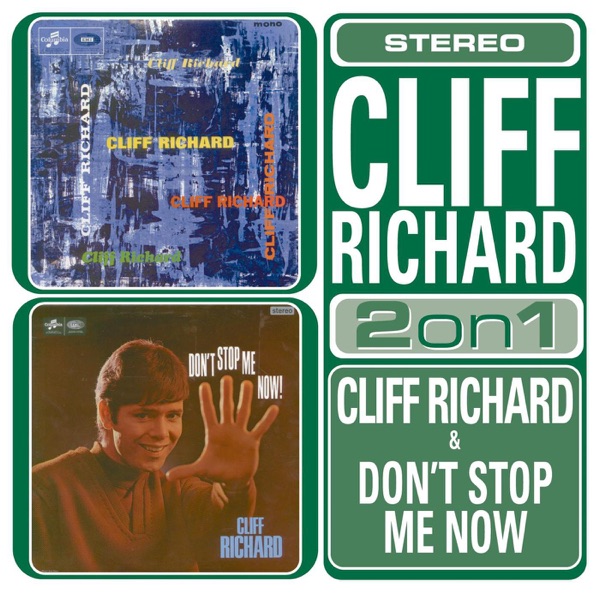
Cliff Richard
1965 · 30 tracks
- 1 Angel ↗ 2:22
- 2 Sway (Quien Sera) ↗ 2:05
- 3 I Only Came to Say Goodbye ↗ 2:26
- 4 Take Special Care ↗ 2:15
- 5 Magic Is the Moonlight ↗ 2:29
- 6 House Without Windows ↗ 2:29
- 7 Razzle Dazzle ↗ 2:06
- 8 I Don't Wanna Love You ↗ 2:29
- 9 It's Not for Me to Say ↗ 3:16
- 10 You Belong to My Heart ↗ 2:23
- 11 Again ↗ 2:34
- 12 Perfidia ↗ 2:18
- 13 Kiss ↗ 2:51
- 14 Reelin' and Rockin' ↗ 2:11
- 15 Shout ↗ 3:24
- 16 One Fine Day ↗ 2:04
- 17 I'll Be Back ↗ 2:03
- 18 Heartbeat ↗ 2:16
- 19 I Saw Her Standing There ↗ 2:11
- 20 Hang On to a Dream ↗ 2:30
- 21 You Gotta Tell Me ↗ 2:04
- 22 Homeward Bound ↗ 3:33
- 23 Good Golly Miss Molly ↗ 2:24
- 24 Don't Make Promises ↗ 3:05
- 25 Move It ↗ 2:18
- 26 Don't ↗ 2:52
- 27 Dizzy Miss Lizzy ↗ 3:00
- 28 Baby It's You ↗ 2:37
- 29 My Babe ↗ 1:34
- 30 Save the Last Dance for Me ↗ 3:43
Kinda’ Latin
1966 · 24 tracks
- 1 Perfidia ↗ 2:22
- 2 Amor, Amor, Amor ↗ 3:05
- 3 Frenesi ↗ 2:13
- 4 Solamente Una Vez (You Belong to My Heart) ↗ 2:23
- 5 Vaya Con Dios ↗ 2:58
- 6 Me Lo Dijo Adela (Sweet and Gentle) ↗ 2:04
- 7 Maria No Mas ↗ 2:08
- 8 Tus Besos (Kiss) ↗ 2:51
- 9 Quizas, Quizas, Quizas (Perhaps, Perhaps, Perhaps) ↗ 2:31
- 10 Te Quiero Dijiste (Magic Is the Moonlight) ↗ 2:28
- 11 Cancion De Orfeo (Carnival) ↗ 3:54
- 12 Quien Sera (Sway) ↗ 2:06
- 13 Blame It On the Bossa Nova ↗ 3:04
- 14 Blowin' In the Wind ↗ 3:56
- 15 Quiet Nights of Quiet Stars ↗ 3:34
- 16 Eso Beso ↗ 3:34
- 17 The Girl from Ipanema ↗ 2:46
- 18 One Note Samba ↗ 2:58
- 19 Fly Me to the Moon (In Other Words) ↗ 2:49
- 20 Our Day Will Come ↗ 2:52
- 21 Quando, Quando, Quando ↗ 2:17
- 22 Come Closer to Me ↗ 2:52
- 23 Meditation ↗ 3:11
- 24 Concrete and Clay ↗ 2:36

Finders Keepers
1966 · 17 tracks
- 1 Finders Keepers ↗ 2:38
- 2 Time Drags By ↗ 2:34
- 3 Washerwoman ↗ 2:10
- 4 La La La Song ↗ 2:28
- 5 My Way ↗ 2:21
- 6 Oh Senorita ↗ 2:35
- 7 Spanish Music and Fiesta ↗ 2:23
- 8 This Day ↗ 3:00
- 9 Paella ↗ 2:52
- 10 Finders Keepers / My Way / Paella / Fiesta ↗ 4:26
- 11 Run to the Door ↗ 2:35
- 12 Where Did the Summer Go ↗ 2:07
- 13 In to Each Life Some Rain Must Fall ↗ 2:17
- 14 Oh Senorita (Extended Version) ↗ 4:16
- 15 Visions ↗ 3:02
- 16 What Would I Do (For the Love of a Girl) ↗ 2:29
- 17 In the Country (A-Side) ↗ 2:42
Don’t Stop Me Now
1967 · 30 tracks
- 1 Angel ↗ 2:22
- 2 Sway (Quien Sera) ↗ 2:05
- 3 I Only Came to Say Goodbye ↗ 2:26
- 4 Take Special Care ↗ 2:15
- 5 Magic Is the Moonlight ↗ 2:29
- 6 House Without Windows ↗ 2:29
- 7 Razzle Dazzle ↗ 2:06
- 8 I Don't Wanna Love You ↗ 2:29
- 9 It's Not for Me to Say ↗ 3:16
- 10 You Belong to My Heart ↗ 2:23
- 11 Again ↗ 2:34
- 12 Perfidia ↗ 2:18
- 13 Kiss ↗ 2:51
- 14 Reelin' and Rockin' ↗ 2:11
- 15 Shout ↗ 3:24
- 16 One Fine Day ↗ 2:04
- 17 I'll Be Back ↗ 2:03
- 18 Heartbeat ↗ 2:16
- 19 I Saw Her Standing There ↗ 2:11
- 20 Hang On to a Dream ↗ 2:30
- 21 You Gotta Tell Me ↗ 2:04
- 22 Homeward Bound ↗ 3:33
- 23 Good Golly Miss Molly ↗ 2:24
- 24 Don't Make Promises ↗ 3:05
- 25 Move It ↗ 2:18
- 26 Don't ↗ 2:52
- 27 Dizzy Miss Lizzy ↗ 3:00
- 28 Baby It's You ↗ 2:37
- 29 My Babe ↗ 1:34
- 30 Save the Last Dance for Me ↗ 3:43
Good News
1967 · 28 tracks
- 1 Everyone Needs Someone to Love ↗ 2:18
- 2 Long Ago (And Far Away) ↗ 2:33
- 3 (All of a Sudden) My Heart Sings ↗ 2:30
- 4 Have I Told You Lately That I Love You ↗ 2:49
- 5 Fly Me to the Moon (In Other Words) ↗ 2:55
- 6 Theme from a Summer Place ↗ 2:31
- 7 I Found a Rose ↗ 2:41
- 8 My Foolish Heart ↗ 2:25
- 9 Through the Eye of a Needle ↗ 2:42
- 10 My Coloring Book ↗ 3:25
- 11 I'll Walk Alone ↗ 2:45
- 12 Someday (You'll Want Me to Want You) ↗ 2:21
- 13 Paradise Lost ↗ 2:41
- 14 Look Homeward Angel ↗ 2:43
- 15 Good News ↗ 2:45
- 16 It Is No Secret ↗ 3:24
- 17 We Shall Be Changed ↗ 2:30
- 18 23rd Psalm (Crimond) ↗ 2:34
- 19 Go Where I Send Thee ↗ 3:45
- 20 What a Friend We Have In Jesus ↗ 2:48
- 21 All Glory Laud and Honour ↗ 3:34
- 22 Just a Closer Walk With Thee ↗ 2:16
- 23 The King of Love My Shepherd Is ↗ 2:39
- 24 Mary What You Gonna Name That Pretty Little Baby ↗ 2:29
- 25 When I Survey the Wondrous Cross ↗ 2:24
- 26 Take My Hand, Precious Lord ↗ 3:07
- 27 Get On Board Little Children ↗ 3:09
- 28 May the Good Lord Bless and Keep You ↗ 2:35

Established 1958
1968 · 18 tracks
- 1 Don't Forget to Catch Me ↗ 2:49
- 2 Voyage to the Bottom of the Bath ↗ 2:24
- 3 Not the Way That It Should Be ↗ 3:09
- 4 Poem ↗ 2:37
- 5 The Dreams I Dream ↗ 2:53
- 6 The Average Life of a Daily Man ↗ 2:36
- 7 Somewhere By the Sea ↗ 2:46
- 8 Banana Man ↗ 2:39
- 9 Girl On the Bus ↗ 3:05
- 10 The Magical Mrs. Clamps ↗ 2:35
- 11 Ooh La La ↗ 2:54
- 12 Here I Go Again Loving You ↗ 2:23
- 13 What's Behind the Eyes of Mary ↗ 3:10
- 14 Maggie's Samba ↗ 2:58
- 15 High and Dry ↗ 2:23
- 16 Girl You'll Be a Woman Soon ↗ 3:04
- 17 Mr. Nice ↗ 2:19
- 18 What's More I Don't Need Her ↗ 2:38

Sincerely
1969 · 17 tracks
- 1 In the Past ↗ 2:58
- 2 Always ↗ 2:48
- 3 Will You Love Me Tomorrow ↗ 3:06
- 4 You'll Want Me ↗ 3:21
- 5 I'm Not Getting Married ↗ 2:35
- 6 Time ↗ 3:22
- 7 For Emily Whenever I May Find Her ↗ 2:04
- 8 Baby I Could Be So Good At Loving You ↗ 3:10
- 9 Sam ↗ 3:21
- 10 London's Not Too Far ↗ 3:24
- 11 Take Action ↗ 2:11
- 12 Take Good Care of Her ↗ 3:04
- 13 When I Find You ↗ 2:31
- 14 Punch and Judy ↗ 2:55
- 15 The Joy of Living ↗ 3:05
- 16 Throw Down a Line ↗ 2:50
- 17 Reflections ↗ 2:58

About That Man
1970 · 23 tracks
- 1 The Birth of John the Baptist ↗ 6:40
- 1 Ezekiel's Vision ↗ 3:18
- 2 Sweet Little Jesus Boy ↗ 2:01
- 2 Dry Bones ↗ 3:10
- 3 The Visit of the Wise Men and the Escape to Egypt ↗ 4:57
- 3 His Land ↗ 4:06
- 4 John the Baptist Points Out Jesus ↗ 2:09
- 4 Jerusalem, Jerusalem ↗ 1:37
- 5 Jesus Recruits His Helpers and Heals the Sick ↗ 7:52
- 5 The New 23rd ↗ 2:14
- 6 Where Is That Man ↗ 1:57
- 6 His Land ↗ 2:31
- 7 Jesus Addresses the Crowd On the Hill ↗ 8:12
- 7 Hava Nagila ↗ 1:32
- 8 Can It Be True ↗ 2:30
- 8 Over In Bethlehem ↗ 1:45
- 9 Jesus Is Betrayed and Arrested ↗ 6:15
- 9 Keep Me Where Love Is ↗ 2:41
- 10 The Trial of Jesus, His Execution and Death ↗ 6:18
- 10 He's Everything to Me ↗ 1:33
- 11 The First Easter - The Empty Tomb ↗ 3:30
- 11 Narration/Hallelujah Chorus ↗ 3:01
- 12 Reflections ↗ 3:01

Take Me High
1973 · 21 tracks
- 1 It's Only Money ↗ 2:42
- 2 Midnight Blue ↗ 3:44
- 3 Hover (Instrumental) ↗ 1:15
- 4 Why? ↗ 3:06
- 5 Life ↗ 3:28
- 6 Driving ↗ 1:09
- 7 The Game ↗ 3:13
- 8 Brumburger Duet ↗ 1:43
- 9 Take Me High ↗ 2:44
- 10 The Anti-Brotherhood of Man ↗ 1:33
- 11 Winning ↗ 3:27
- 12 Driving (Instrumental) ↗ 1:16
- 13 Join the Band ↗ 2:55
- 14 The Word Is Love ↗ 2:33
- 15 Brumburger (Finale) ↗ 4:36
- 16 Two a Penny ↗ 2:45
- 17 I'll Love You Forever Today ↗ 3:05
- 18 Questions ↗ 2:50
- 19 Twist and Shout ↗ 2:40
- 20 Questions (Fragen) [German Vocal Version] ↗ 1:52
- 21 Celestial Houses ↗ 2:47

The 31st of February Street
1974 · 18 tracks
- 1 The 31st of February Street (Opening) ↗ 1:07
- 2 Give Me Back That Old Familiar Feeling ↗ 2:32
- 3 The Leaving ↗ 3:23
- 4 Travellin' Light ↗ 2:47
- 5 There You Go Again ↗ 2:56
- 6 Nothing to Remind Me ↗ 3:01
- 7 Our Love Could Be So Real ↗ 3:14
- 8 No Matter What ↗ 3:15
- 9 Fireside Song ↗ 3:03
- 10 Going Away ↗ 3:20
- 11 Long, Long Time ↗ 3:03
- 12 You Will Never Know ↗ 3:15
- 13 The Singer ↗ 4:00
- 14 The 31st of February Street (Closing) ↗ 0:33
- 15 Celestial Houses ↗ 2:49
- 16 Days of Love ↗ 3:01
- 17 Ashes to Ashes ↗ 3:07
- 18 Love Is Here ↗ 2:05

I’m Nearly Famous
1976 · 18 tracks
- 1 I Can't Ask for Anymore Than You ↗ 2:51
- 2 It's No Use Pretending ↗ 3:23
- 3 I'm Nearly Famous ↗ 3:54
- 4 Lovers ↗ 2:59
- 5 Junior Cowboy ↗ 2:45
- 6 Miss You Nights ↗ 3:57
- 7 I Wish You'd Change Your Mind ↗ 3:04
- 8 Devil Woman ↗ 3:35
- 9 Such Is the Mystery ↗ 5:11
- 10 You've Got to Give Me All Your Lovin' ↗ 3:06
- 11 If You Walked Away ↗ 3:02
- 12 Alright, It's Alright ↗ 2:34
- 13 Love Enough ↗ 2:51
- 14 Love On (Shine On) ↗ 3:04
- 15 Honky Tonk Angel ↗ 3:04
- 16 Wouldn't You Know It? ↗ 3:03
- 17 It's Only Me You've Left Behind ↗ 3:08
- 18 You're the One ↗ 3:42

Green Light
1978 · 14 tracks
- 1 Green Light ↗ 4:06
- 2 Under Lock and Key ↗ 3:35
- 3 She's a Gypsy ↗ 4:14
- 4 Count Me Out ↗ 4:16
- 5 Please Remember Me ↗ 3:21
- 6 Never Even Thought ↗ 4:17
- 7 Free My Soul ↗ 3:57
- 8 Start All Over Again ↗ 4:02
- 9 While She's Young ↗ 2:51
- 10 Can't Take the Hurt Anymore ↗ 3:52
- 11 Ease Along ↗ 4:29
- 12 Please Don't Tease ↗ 4:47
- 13 Needing a Friend ↗ 2:58
- 14 Imagine Love ↗ 4:21

We Don’t Talk Anymore
1979 · 1 track
- 1 We Don't Talk Anymore ↗ 7:03

Rock ’n’ Roll Juvenile
1979 · 14 tracks
- 1 Monday Thru' Friday ↗ 3:47
- 2 Doing Fine ↗ 3:07
- 3 Cities May Fall ↗ 4:18
- 4 You Know That I Love You ↗ 2:54
- 5 My Luck Won't Change ↗ 4:13
- 6 Rock 'n' Roll Juvenile ↗ 2:47
- 7 Sci-Fi ↗ 3:47
- 8 Fallin' In Luv ↗ 3:11
- 9 Carrie ↗ 3:44
- 10 Hot Shot ↗ 3:23
- 11 Language of Love ↗ 4:41
- 12 We Don't Talk Anymore ↗ 4:17
- 13 Walking In the Light ↗ 3:17
- 14 Moving In ↗ 3:25

I’m No Hero
1980 · 12 tracks

Wired for Sound
1981 · 13 tracks
- 1 Wired for Sound ↗ 3:38
- 2 Once In a While ↗ 4:42
- 3 Better Than I Know Myself ↗ 3:43
- 4 Oh No, Don't Let Go ↗ 3:30
- 5 'Cos I Love That Rock 'N' Roll ↗ 4:13
- 6 Broken Doll ↗ 4:19
- 7 Lost In a Lonely World ↗ 4:04
- 8 Summer Rain ↗ 4:17
- 9 Young Love ↗ 4:05
- 10 Say You Don't Mind ↗ 4:03
- 11 Daddy's Home (Live) ↗ 3:04
- 12 Shakin' All Over (Live) ↗ 2:44
- 13 Hold On ↗ 3:43

Now You See Me… Now You Don’t
1982 · 14 tracks
- 1 The Only Way Out ↗ 3:25
- 2 First Date ↗ 3:36
- 3 Thief In the Night ↗ 3:56
- 4 Where Do We Go from Here ↗ 2:59
- 5 Son of Thunder ↗ 4:00
- 6 Little Town ↗ 4:09
- 7 It Has to Be You, It Has to Be Me ↗ 4:22
- 8 The Water Is Wide ↗ 3:52
- 9 Now You See Me, Now You Don't ↗ 3:02
- 10 Be In My Heart ↗ 4:38
- 11 Discovering ↗ 4:50
- 12 Under the Influence ↗ 2:50
- 13 Love and a Helping Hand ↗ 3:08
- 14 You, Me and Jesus ↗ 2:19

Silver
1983 · 12 tracks
- 1 Silver's Home Tonight ↗ 3:43
- 2 Hold On ↗ 3:18
- 3 Never Say Die (Give a Little Bit More) ↗ 3:42
- 4 Front Page ↗ 3:15
- 5 Ocean Deep ↗ 5:16
- 6 Locked Inside Your Prison ↗ 3:30
- 7 Please Don't Fall In Love ↗ 3:14
- 8 Baby You're Dynamite ↗ 3:57
- 9 The Golden Days Are Over ↗ 4:17
- 10 Love Stealer ↗ 3:39
- 11 Too Close to Heaven ↗ 4:16
- 12 Lucille ↗ 3:39


Stronger
1989 · 17 tracks
- 1 Stronger Than That ↗ 4:42
- 2 Who's In Love ↗ 4:32
- 3 The Best of Me ↗ 4:11
- 4 Clear Blue Skies ↗ 2:54
- 5 Lean On You ↗ 5:00
- 6 Keep Me Warm ↗ 4:26
- 7 Just Don't Have the Heart ↗ 3:27
- 8 Joanna ↗ 3:53
- 9 Everybody Knows ↗ 3:47
- 10 Forever You Will Be Mine ↗ 4:22
- 11 Better Day ↗ 4:50
- 12 Share a Dream ↗ 4:30
- 13 Wide Open Space ↗ 4:38
- 14 Just Don't Have the Heart (Instrumental) ↗ 4:01
- 15 Hey Mister ↗ 3:56
- 16 Lindsay Jane ↗ 4:44
- 17 Marmaduke ↗ 5:28

Real as I Wanna Be
1998 · 13 tracks
- 1 Real As I Wanna Be ↗ 4:32
- 2 Even If It Breaks My Heart ↗ 3:45
- 3 Can't Keep This Feeling In ↗ 3:49
- 4 Climbing Up Mount Everest ↗ 3:01
- 5 United for Evermore ↗ 4:21
- 6 She Makes Me Feel Like a Man ↗ 5:38
- 7 Butterfly Kisses ↗ 5:14
- 8 Snowfall On the Sahara ↗ 4:26
- 9 Woman and a Man ↗ 4:47
- 10 Till I'm Home Again ↗ 5:15
- 11 Come Back to Me ↗ 4:47
- 12 The Miracle ↗ 3:28
- 13 Vita Mia ↗ 4:18

Tracks ’n Grooves
2004 · 18 tracks
- 1 Early In the Morning ↗ 2:18
- 2 As I Walk Into the Morning of Your Life ↗ 2:20
- 3 Love, Truth & Emily Stone ↗ 2:45
- 4 My Head Goes Around ↗ 2:33
- 5 Put My Mind At Ease ↗ 2:39
- 6 Abraham, Martin & John ↗ 3:06
- 7 The Girl Can't Help It ↗ 2:59
- 8 Bang Bang (My Baby Shot Me Down) ↗ 3:10
- 9 I'll Make It All Up to You ↗ 2:06
- 10 I'd Just Be Fool Enough ↗ 2:42
- 11 Don't Let Tonight Ever End ↗ 3:44
- 12 What a Silly Thing to Do ↗ 2:54
- 13 Your Heart's Not In Your Love ↗ 2:43
- 14 Don't Ask Me to Be Friends ↗ 4:05
- 15 Are You Only Fooling Me ↗ 3:23
- 16 Don't Move Away ↗ 3:05
- 17 Leave My Woman Alone ↗ 2:59
- 18 You Never Can Tell ↗ 2:24

Help It Along
2007 · 16 tracks
- 1 Day By Day ↗ 3:23
- 2 Celestial Houses ↗ 3:13
- 3 Jesus ↗ 3:55
- 4 Silvery Rain ↗ 4:05
- 5 Jesus Loves You ↗ 4:02
- 6 Fire and Rain ↗ 4:04
- 7 Yesterday, Today, Forever ↗ 4:28
- 8 Mr. Business Man ↗ 3:32
- 9 Help It Along ↗ 3:18
- 10 Amazing Grace ↗ 4:30
- 11 Higher Ground ↗ 4:15
- 12 Sing a Song of Freedom ↗ 3:31
- 13 Help It Along (Alternate Single Version) ↗ 2:53
- 14 Tomorrow Rising ↗ 2:45
- 15 The Days of Love ↗ 3:01
- 16 Ashes to Ashes ↗ 3:04

Rote Lippen soll man küssen (Das Beste auf Deutsch)
2010 · 58 tracks
- 1 Bin Verliebt (Fall In Love With You) ↗ 2:27
- 1 Mr. Niemand (Two a Penny) ↗ 2:44
- 2 Die Stimme der Liebe (A Voice In the Wilderness) ↗ 2:14
- 2 Die Liebe Ist Immer Nur Heute (I'll Love You Forever Today) ↗ 3:03
- 3 Schön Wie Ein Traum (Theme For a Dream) ↗ 2:04
- 3 Fragen (Questions) (1997 Digital Remaster) ↗ 1:49
- 4 Vreneli ↗ 2:39
- 4 Stell' Mich Deinen Eltern Vor (Not the Way That It Should Be) ↗ 3:13
- 5 Rote Lippen Soll Man Küssen (Lucky Lips) (1996 Digital Remaster) ↗ 2:44
- 5 Deine Augen Träumen, Mary (What's Behind the Eyes of Mary) ↗ 3:06
- 6 Zuviel Allein (I'm the Lonely One) ↗ 2:19
- 6 Ooh La La (sagt Cäsar zu Cleopatra) ↗ 2:51
- 7 Sag 'No' Zu Ihm (Don't Talk To Him) (1996 Digital Remaster) ↗ 2:52
- 7 Zärtliche Sekunden (Don't Forget To Catch Me) (1996 Digital Remaster) ↗ 2:57
- 8 Das Ist Die Frage Aller Fragen (1998 Digital Remaster) ↗ 2:59
- 8 Shoom Llama Boom Boom (German Version) ↗ 2:24
- 9 Nur Mit Dir (On the Beach) ↗ 2:28
- 9 Story Ohne Happy End (Girl On the Bus) ↗ 3:12
- 10 Es War Keine So Wunderbar Wie Du (1998 Digital Remaster) ↗ 2:55
- 10 Kein Zug Nach Gretna Green ↗ 3:25
- 11 Es Könnte Schon Morgen Sein (The Minute You're Gone) (1996 Digital Remaster) ↗ 2:11
- 11 Du, Du Gefällst Mir So (1996 Digital Remaster) ↗ 2:21
- 12 Glaub' Nur Mir (On My Word) ↗ 2:41
- 12 Lieben Kann Man Einmal Nur ↗ 3:22
- 13 Nur Bei Dir Bin Ich Zu Haus (Wind Me Up (Let Me Go)) (1996 Digital Remaster) ↗ 2:42
- 13 Goodbye Sam Hello Samantha (German Version) (1996 Digital Remaster) ↗ 2:44
- 14 Du Bist Mein Erster Gedanke (1998 Digital Remaster) ↗ 2:44
- 14 Umbarella (Annabella Umbrella) (1997 Digital Remaster) ↗ 3:07
- 15 Was Ist Dabei (The Time In Between) ↗ 2:59
- 15 Lass Uns Schnell Vergessen (Don't Ask Me To Be Friends) ↗ 4:11
- 16 Das Glück Ist Rosarot ↗ 1:58
- 16 Das Girl Von Nebenan ↗ 2:43
- 17 Was Kann Ich Tun (What Would I Do) ↗ 2:26
- 17 Du Fragst Mich Immer Wieder ↗ 2:21
- 18 Ein Girl Wie Du (A Girl Like You) (1996 Digital Remaster) ↗ 3:00
- 18 Wenn Du Lachst, Lacht Das Gluck (Sally Sunshine) (1997 Digital Remaster) ↗ 2:40
- 19 Bilder Von Dir (Visions) (1996 Digital Remaster) ↗ 3:13
- 19 Ein Spiel Ohne Grenzen ↗ 2:26
- 20 Ein Sonntag Mit Marie (1998 Digital Remaster) ↗ 2:20
- 20 Concerto (1997 Digital Remaster) ↗ 2:59
- 21 Es Ist Nicht Gut, Allein Zu Sein ↗ 3:16
- 21 Neben Dir Wird's Keine Geben (Early In the Morning) ↗ 2:05
- 22 Mrs. Emily Jones ↗ 2:15
- 22 Zum Heiraten Bin Ich Kein Typ (I'm Not Getting Married) ↗ 2:30
- 23 Ich Kann Treu Sein (I'll Come Running) ↗ 2:27
- 23 Der Mann Neben Dir (Baby Don't You Know Anymore) ↗ 3:42
- 24 Sternengold (All My Love) ↗ 2:30
- 24 Ich Träume Deine Träume (1997 Digital Remaster) ↗ 2:51
- 25 London Ist Nicht Weit (London's Not Too Far) ↗ 3:04
- 25 Kleine Taube (Pigeon) ↗ 2:31
- 26 Man Gratuliert Mir (Congratulations) (1996 Digital Remaster) ↗ 2:36
- 26 Gut, Daß Es Freunde Gibt (Power To All Our Friends) (1996 Digital Remaster) ↗ 3:01
- 27 Wonderful World (1997 Digital Remaster) ↗ 2:23
- 27 Es Gehören Zwei Zum Glücklichsein ((You Keep Me) Hangin' On) (1996 Digital Remaster) ↗ 2:58
- 28 Marianne (1996 Digital Remaster) ↗ 3:23
- 28 Liebesleid (Love Is Here) ↗ 2:05
- 29 Geh Deinen Weg Nicht So Allein (The Dreams I Dream) ↗ 2:42
- 30 Twist Im Blut (Twist and Shout) ↗ 2:40

The Fabulous Rock ’n’ Roll Songbook
2013 · 15 tracks
- 1 Rip It Up ↗ 2:58
- 2 Wake Up Little Susie ↗ 2:44
- 3 Poetry In Motion ↗ 3:26
- 4 Sealed With a Kiss ↗ 2:40
- 5 Stood Up ↗ 2:56
- 6 Such a Night ↗ 2:28
- 7 School Days ↗ 2:50
- 8 Teddy Bear / Too Much ↗ 2:43
- 9 Don't Let Go ↗ 3:16
- 10 Dream Lover ↗ 3:18
- 11 Stuck On You ↗ 3:06
- 12 Fabulous ↗ 2:50
- 13 Rave On ↗ 2:41
- 14 Johnny B. Goode ↗ 2:48
- 15 One More Sunny Day ↗ 3:14

Just Fabulous Rock ’n’ Roll
2016 · 15 tracks
- 1 Blue Suede Shoes ↗ 2:06
- 2 Butterfly ↗ 2:42
- 3 Sweet Little Sixteen ↗ 3:08
- 4 She's Got It ↗ 3:01
- 5 His Latest Flame ↗ 2:53
- 6 Move It ↗ 2:55
- 7 You Send Me ↗ 2:58
- 8 Multiplication ↗ 2:45
- 9 Roll over Beethoven ↗ 2:50
- 10 Dimples ↗ 3:59
- 11 Great Balls of Fire / Whole Lotta Shakin' ↗ 4:04
- 12 Memphis, Tennessee ↗ 2:34
- 13 Cathy's Clown ↗ 3:36
- 14 Keep a Knockin' ↗ 3:22
- 15 It's Better to Dream ↗ 3:03

Music… The Air That I Breathe
2020 · 12 tracks
- 1 Falling for You ↗ 3:13
- 2 The Air That I Breathe (with Albert Hammond) ↗ 4:20
- 3 Here Comes the Sun ↗ 3:03
- 4 It Is Well Inside My Soul (feat. Sheila Walsh ) ↗ 4:16
- 5 Older ↗ 3:47
- 6 PS Please ↗ 3:36
- 7 Where or When ↗ 3:31
- 8 I Could Be Persuaded (with The Bellamy Brothers) ↗ 3:54
- 9 Too Much Heaven ↗ 5:13
- 10 Taking Control ↗ 3:34
- 11 Let It Be Me ↗ 3:18
- 12 (It’s Gonna Be) Okay [with The Piano Guys] ↗ 3:31

Cliff with Strings - My Kinda Life
2023 · 12 tracks
-
 Cliff SingsCliff Richard195932 tracks
 -
 Me and My ShadowsCliff Richard196032 tracks
 -
 21 TodayCliff Richard196130 tracks
 -
 Listen to CliffCliff Richard196118 tracks
 - 32 Minutes and 17 Seconds With Cliff RichardCliff Richard196230 tracks
-
 When in Spain…Cliff Richard196324 tracks
 -
 Love Is ForeverCliff Richard196528 tracks
 -
 Cliff RichardCliff Richard196530 tracks
 - Kinda’ LatinCliff Richard196624 tracks
-
 Finders KeepersCliff Richard196617 tracks
 - Don’t Stop Me NowCliff Richard196730 tracks
- Good NewsCliff Richard196728 tracks
-
 Established 1958Cliff Richard196818 tracks
 -
 SincerelyCliff Richard196917 tracks
 -
 About That ManCliff Richard197023 tracks
 -
 Take Me HighCliff Richard197321 tracks
 -
 The 31st of February StreetCliff Richard197418 tracks
 -
 I’m Nearly FamousCliff Richard197618 tracks
 -
 Green LightCliff Richard197814 tracks
 -
 We Don’t Talk AnymoreCliff Richard19791 track
 -
 Rock ’n’ Roll JuvenileCliff Richard197914 tracks
 -
 I’m No HeroCliff Richard198012 tracks
 -
 Wired for SoundCliff Richard198113 tracks
 -
 Now You See Me… Now You Don’tCliff Richard198214 tracks
 -
 SilverCliff Richard198312 tracks
 -
 Always GuaranteedCliff Richard198710 tracks
 -
 StrongerCliff Richard198917 tracks
 -
 Real as I Wanna BeCliff Richard199813 tracks
 -
 Tracks ’n GroovesCliff Richard200418 tracks
 -
 Help It AlongCliff Richard200716 tracks
 -
 Rote Lippen soll man küssen (Das Beste auf Deutsch)Cliff Richard201058 tracks
 -
 The Fabulous Rock ’n’ Roll SongbookCliff Richard201315 tracks
 -
 Just Fabulous Rock ’n’ RollCliff Richard201615 tracks
 -
 Music… The Air That I BreatheCliff Richard202012 tracks
 -
 Cliff with Strings - My Kinda LifeCliff Richard202312 tracks
Deep Dive
Overview
Sir Cliff Richard, born Harry Rodger Webb in 1940, stands as one of rock music’s most durable and commercially successful artists. As the third-top-selling artist in UK singles chart history—behind only the Beatles and Elvis Presley—he has moved over 21.5 million singles in the United Kingdom alone. Richard’s career spans from the emerging rock and roll culture of the 1950s to the present day, encompassing pop rock, skiffle, and eventually contemporary Christian music. His longevity and consistent chart presence across nearly seven decades make him a central figure in understanding how rock music evolved from novelty and threat to establishment institution.
Formation Story
Harry Rodger Webb was born in 1940 and came of age during the early stirrings of British rock and roll. He arrived at his artistic identity during the skiffle craze of the mid-1950s, a grassroots movement that introduced raw, rhythm-driven music to British youth at a moment when American rock and roll was still a foreign import. Richard emerged from this landscape not as an outlaw figure but as a natural performer, blending the infectious energy of skiffle with the commercial ambitions of the nascent British pop industry. By the late 1950s, he had adopted the stage name Cliff Richard and begun his recording career in earnest, signing with EMI—the label that would remain his home throughout his entire professional life.
Breakthrough Moment
Richard’s early recordings in 1959 and 1960 established him as a major force in British pop. The release of Cliff Sings in 1959 and Me and My Shadows in 1960 marked his emergence as a commercially formidable artist, moving beyond the provincial appeal of skiffle to reach national and international audiences. These early albums showcased a performer who could balance rock and roll energy with pop sensibility—a fusion that proved commercially irresistible. By the early 1960s, Richard had become a household name in the United Kingdom, a position he solidified through consistent album output and public visibility that extended beyond music into film and television. His rapid ascent from local performer to nationally recognized star happened within the span of just a few years, establishing a template for sustained pop success.
Peak Era
Richard’s most commercially prolific and creatively vital years extended from the early 1960s through the late 1970s. Albums such as 21 Today (1961), When in Spain… (1963), and the Summer Holiday soundtrack (1963) demonstrated his ability to produce commercially successful records across different contexts and settings. His musical reach expanded throughout the decade: Kinda’ Latin (1966) and When in Rome (1965) showed his willingness to experiment with geographical and stylistic variations, while films and theatrical projects like Finders Keepers (1966) and Cinderella (1967) expanded his cultural footprint beyond the recording studio. By the 1970s, albums like Take Me High (1973) and Power to All Our Friends (1973) continued to place him in the commercial mainstream, even as rock music’s center of gravity shifted around him. His 1979 album We Don’t Talk Anymore reasserted his chart presence and proved his ability to adapt to contemporary production styles without surrendering his core identity.
Musical Style
Cliff Richard’s sound crystallized early and remained remarkably consistent throughout his career: a blend of rock and roll energy, pop melody, and theatrical vocal delivery. Unlike many of his British rock contemporaries, Richard favored clarity and accessibility over raw aggression or experimental adventurousness. His vocal approach—pure-toned, expressive, and capable of both intimate vulnerability and crowd-commanding presence—became instantly recognizable. Rhythmically, his recordings typically emphasized steady, driving beats derived from his skiffle origins but refined through pop and rock and roll arrangements. The production aesthetic across his earliest albums was lean and direct, with emphasis on vocal and instrumental clarity rather than studio layering. As technology evolved through the 1960s and beyond, Richard’s recordings incorporated fuller arrangements, orchestration, and contemporary production techniques, yet the fundamental character of his music remained anchored in accessible pop-rock with rock and roll DNA. Throughout his vast catalog, instrumentation remains relatively conventional—drums, bass, guitar, keyboards—with the vocalist consistently serving as the primary focus and emotional anchor.
Major Albums
Cliff Sings (1959)
Richard’s debut album announced a fully formed artist with confidence in both selection and delivery, establishing the commercial and artistic foundation for decades of recording.
Me and My Shadows (1960)
This follow-up solidified his status as Britain’s answer to American rock and roll, demonstrating consistent commercial appeal and vocal maturity.
21 Today (1961)
Released around the artist’s twenty-first birthday, this album marked a transition toward greater stylistic sophistication and broader thematic range.
When in Spain… (1963)
A conceptual departure that showcased Richard’s willingness to work with varied geographical and musical influences while maintaining his core appeal.
We Don’t Talk Anymore (1979)
This late-era album proved Richard’s ability to remain contemporary and chart-relevant, adapting to late-1970s production styles without sacrificing his identity.
Stronger (1989)
A late-career statement that demonstrated Richard’s continued vocal capability and commercial viability well into his fifth decade as a recording artist.
Signature Songs
- “Move It” — Richard’s early rock and roll statement that established him as a force in British music and influenced generations of rock musicians.
- “Living Doll” — A pop standard that showcased his lighter, more theatrical side and achieved enduring commercial success.
- “The Young Ones” — A dramatic showcase for Richard’s vocal expressiveness and theatrical instincts.
- “Summer Holiday” — His most iconic film-associated song, combining pop accessibility with holiday charm.
- “Devil Woman” — A late-1970s chart success that proved his relevance to contemporary audiences.
- “We Don’t Talk Anymore” — A 1979 hit that reasserted his position in the commercial mainstream during an era of rapid musical change.
Influence on Rock
Cliff Richard’s influence on rock music and British popular culture extends far beyond sales figures. His emergence in the late 1950s provided a template for how British performers could absorb American rock and roll influences while creating distinctly local, commercially successful variants. Richard demonstrated that longevity in rock music was possible through consistent quality, professional competence, and willingness to evolve aesthetically without abandoning core identity. His success encouraged other British artists to view rock and roll not as a passing trend but as a sustainable, respectable career path. Throughout the 1960s, his visibility and commercial success helped normalize rock music in the cultural mainstream, contributing to its transition from perceived threat to establishment entertainment. Musicians across multiple generations—from early British Invasion acts to later pop-rock practitioners—drew lessons from Richard’s balancing act between artistic credibility and popular appeal.
Legacy
Cliff Richard’s career represents one of rock music’s most remarkable endurance tests. His continued recording into the twenty-first century—with albums like Rise Up (2018) and Cliff with Strings - My Kinda Life (2023) demonstrating undiminished productivity—has made him a living connection between the birth of rock and roll and the contemporary musical landscape. His presence across multiple decades of British popular culture, from film and television to recording and live performance, has secured his status as a foundational figure in understanding how rock music became integrated into mainstream entertainment. The body of work spanning from 1959 to the present—over sixty years of continuous recording—stands as testimony to professional discipline and artistic consistency. His ranking as the third-best-selling singles artist in UK chart history places him in the company of only the Beatles and Elvis Presley, a positioning that reflects not momentary commercial spike but sustained, decades-long popular resonance. Later in his career, Richard’s embrace of contemporary Christian music demonstrated his capacity for artistic reinvention and personal conviction, expanding his creative reach beyond secular pop-rock while maintaining his core audience.
Fun Facts
- Richard recorded extensively in multiple languages throughout his career, including German and Dutch albums, reflecting the international scope of his commercial appeal and his connection to European audiences.
- His filmography expanded beyond music vehicles to include dramatic roles, demonstrating ambitions that extended into traditional acting and theater.
- The consistency of his EMI recording relationship across his entire career—from his 1959 debut through contemporary releases—represents one of rock music’s most stable and enduring artist-label partnerships.
- Richard’s 50th Anniversary album Reunited (2009) marked six decades of professional recording and performing, a milestone achieved by few rock artists and testifying to his sustained relevance across multiple generations of listeners.