
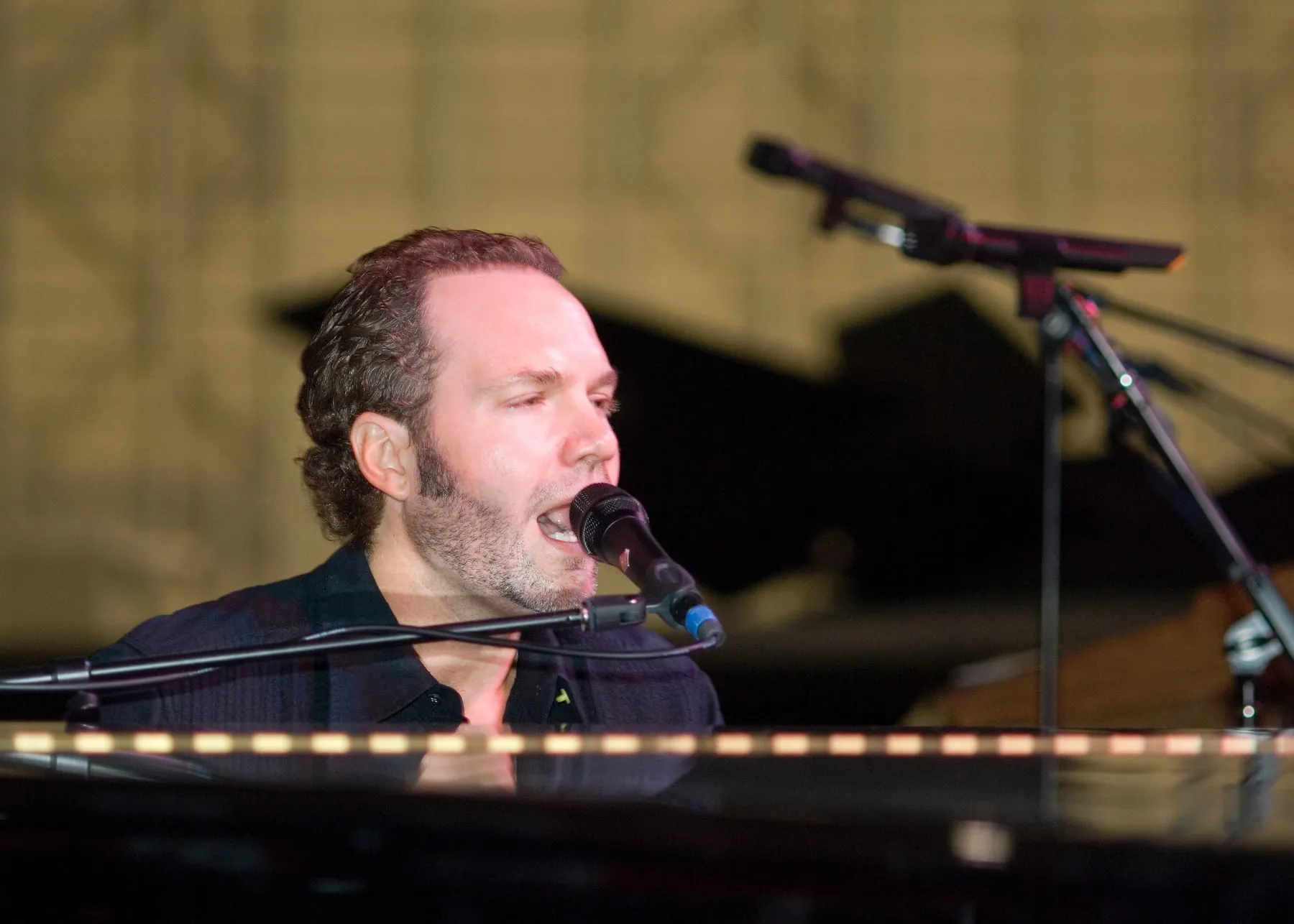
Photo by Photo by Mike Cassidy , licensed under Public domain · Wikimedia Commons
Rank #464
Five for Fighting
From Wikipedia
Vladimir John Ondrasik III, known professionally as Five for Fighting, is an American singer-songwriter and pianist. He is best known for his piano-based soft rock, such as the top 40 hits "Superman " (2001), "100 Years" (2003), and "The Riddle" (2006). He also had a string of moderate hits on the adult contemporary charts in the late 2000s and into the 2010s, including "World" (2006) and "Chances" (2009).
Discography & Previews
Browse through and click an album to open and play 30-second previews streamed from Apple Music.

Message for Albert
1997 · 12 tracks

America Town
2000 · 12 tracks

The Battle for Everything
2004 · 12 tracks


-
 Message for AlbertFive for Fighting199712 tracks
 -
 America TownFive for Fighting200012 tracks
 -
 The Battle for EverythingFive for Fighting200412 tracks
 -
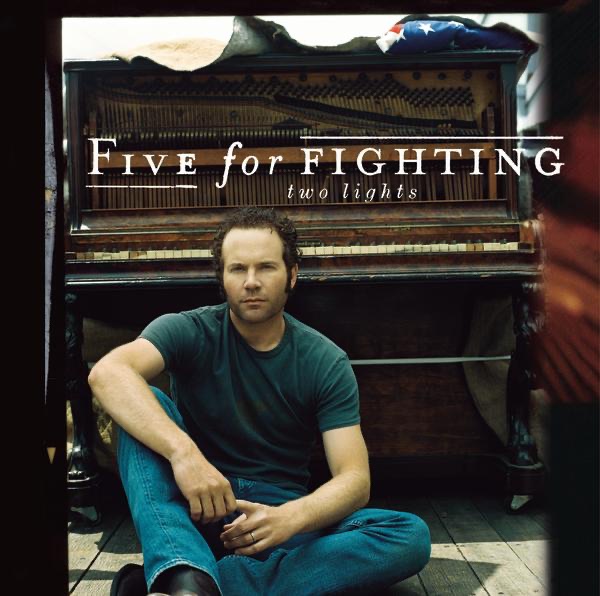
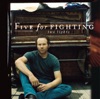 Two LightsFive for Fighting200610 tracks
 -
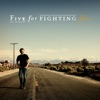 SliceFive for Fighting200912 tracks
 -
 BookmarksFive for Fighting201312 tracks
Deep Dive
Overview
Vladimir John Ondrasik III, performing under the name Five for Fighting, emerged as a piano-driven soft rock artist in the late 1990s and achieved substantial mainstream success in the early 2000s. His distinctive blend of introspective songwriting and accessible melodies, anchored by his piano work, positioned him within the broader tradition of singer-songwriters who built careers on intimate production and emotional directness. Over nearly three decades, Ondrasik has recorded seven studio albums and established himself as a fixture of adult contemporary radio and top 40 charts.
Formation Story
John Ondrasik grew up in Los Angeles, a city with deep roots in both rock and pop songwriting traditions. He gravitated toward the piano as his primary instrument and began composing songs that reflected a more introspective, lyrically driven approach to rock music. The stage name Five for Fighting originates from a hockey penalty—a reference that would follow the project through its entire history. Ondrasik adopted the name before recording his professional debut, signaling both a connection to sports culture and a willingness to embrace an unconventional artist identity. By the mid-1990s, he had developed a clear artistic vision: modern rock music built on classical instrumentation and deeply personal songwriting.
Breakthrough Moment
Five for Fighting’s initial album, Message for Albert, arrived in 1997 but remained largely in independent circulation. The real turning point came with his 2000 major-label release America Town, recorded under Sony Music’s umbrella. This album introduced his sound to a national audience, establishing the template for his commercial success: piano-forward arrangements, accessible hooks, and emotionally direct lyrics that spoke to personal and introspective themes. The album’s performance on alternative and mainstream rock radio set the stage for what would become his signature moment a year later.
Peak Era
The years 2001 to 2006 represent Five for Fighting’s commercial and creative peak. In 2001, the single “Superman” became a genuine top 40 hit and a staple of contemporary rock radio, establishing Ondrasik as a recognizable voice in mainstream music. The follow-up album The Battle for Everything (2004) cemented his position, but it was Two Lights (2006) that marked his artistic high-water mark—a cohesive collection that generated multiple charting singles including “100 Years” and “The Riddle,” both of which performed strongly on both mainstream and adult contemporary formats. “100 Years,” in particular, became his signature composition, a reflective meditation on mortality and human experience that resonated with millions of listeners. This five-year span saw him transition from alternative rock curiosity to a consistent presence on the charts and in radio playlists across multiple demographics.
Musical Style
Five for Fighting’s sound is fundamentally defined by the piano, an instrument that drives nearly every recorded arrangement and live performance. His approach draws from classical tradition and singer-songwriter lineage—artists who prioritized lyrics and melody over electric density or production maximalism. Ondrasik’s vocal delivery is conversational and unaffected, favoring clarity and emotional communication over technical display. His songwriting tends toward philosophical and personal reflection: meditations on time, identity, struggle, and resilience. The instrumentation evolved across his catalog; early work featured relatively spare arrangements, while later albums incorporated fuller production and wider instrumental palettes while maintaining the piano as the emotional anchor. The overall aesthetic occupies a space between mainstream rock accessibility and adult contemporary sophistication, making his music equally at home on alternative rock stations and soft-music formats. His production choices have consistently favored clarity and intimacy over bombast, allowing lyrics and vocal melody to dominate the mix.
Major Albums
America Town (2000)
The first major-label release that brought Five for Fighting to national attention, establishing the piano-based soft rock template that would define his career and introducing audiences to his songwriting voice.
The Battle for Everything (2004)
A continuation and refinement of his established sound, demonstrating his ability to sustain a coherent artistic vision across multiple albums and generating several charting singles on adult contemporary radio.
Two Lights (2006)
His commercial and artistic zenith, featuring “100 Years” and “The Riddle” among other tracks that achieved both chart success and longevity in rotation, establishing multiple signature songs in his catalog.
Slice (2009)
Released at the tail end of his peak commercial period, representing a continuation of his established aesthetic during the late 2000s era when adult contemporary radio remained one of his primary outlets.
Signature Songs
- “Superman” (2001) — His breakthrough single that introduced his piano-driven style to mainstream audiences and established the signature sound that would define his commercial identity.
- “100 Years” (2003) — A reflective composition examining mortality and the passage of time that became his most enduring and recognizable song across multiple demographics.
- “The Riddle” (2006) — A philosophical meditation released during his peak commercial period that achieved substantial chart presence and radio play.
- “World” (2006) — A single from Two Lights that demonstrated his consistent ability to generate charting tracks on adult contemporary formats during his peak years.
- “Chances” (2009) — A late-career single that maintained his presence on adult contemporary radio into the following decade.
Influence on Rock
Five for Fighting represents a significant voice within early-2000s mainstream rock, demonstrating that piano-based, introspective songwriting could achieve substantial commercial success without adopting the ironic detachment or aggressive production styles that dominated alternative rock of the same era. His success opened space for other singer-songwriters and piano-driven artists in mainstream radio formats and influenced the broader trajectory of adult contemporary rock radio throughout the 2000s. While not foundational to any specific subgenre, his work validated a particular approach to emotional directness and melodic accessibility that persisted in mainstream rock even as other stylistic trends rose and fell around him.
Legacy
Five for Fighting’s catalog remains a stable presence on streaming platforms and adult contemporary radio, with “100 Years” in particular maintaining cultural resonance far beyond its initial 2003 release. His songs have achieved extended lifespans through inclusion in films, television programming, and video games, introducing them to audiences outside traditional rock radio listeners. The consistency of his career over three decades—from 1997’s Message for Albert through 2013’s Bookmarks and beyond—positioned him as a reliable presence in a musical landscape dominated by shorter-term celebrity cycles. His work demonstrated the viability of a piano-centric, introspective rock approach in an era increasingly shaped by digital distribution and fragmented listening habits. Though never achieving the iconic status or cultural penetration of rock’s tier-one artists, Five for Fighting established himself as a durable figure in mainstream rock and adult contemporary music, with a catalog that speaks to millions of listeners who responded to his direct emotional communication and melodic sensibility.
Fun Facts
- The name Five for Fighting originates from hockey penalty terminology, specifically a five-minute fighting penalty in ice hockey, giving the project an unconventional origin story rooted in sports culture.
- “Superman” was originally released independently before gaining major radio traction following Ondrasik’s major-label signing, demonstrating how artist development could operate in the pre-streaming era.
- John Ondrasik is an accomplished pianist in addition to his professional music career, with classical training that directly influences the orchestration and composition of his recorded work.