
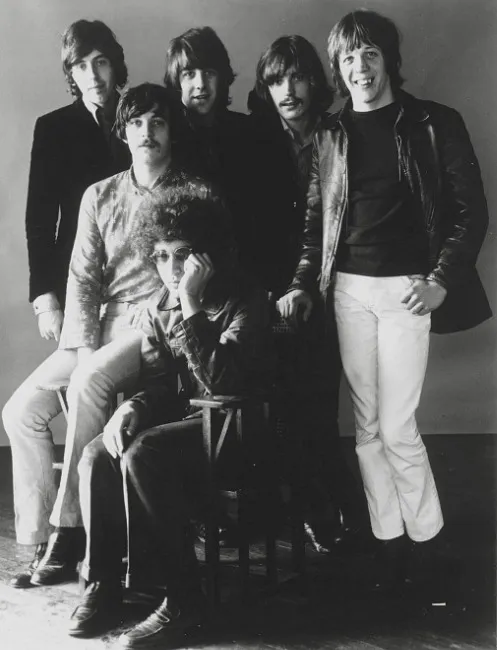
Photo by A&M Records , licensed under Public domain · Wikimedia Commons
Rank #463
Procol Harum
From Wikipedia
Procol Harum were an English rock band formed in Southend-on-Sea, Essex, in 1967. Their best-known recording is the 1967 hit single "A Whiter Shade of Pale", one of the few singles to have sold more than 10 million copies. Although noted for their baroque and classical influence, Procol Harum's music is described as psychedelic rock and proto-prog with hints of the blues, R&B, and soul.
Members
- Robin Trower (1967–1971)
- Gary Brooker
- Mick Grabham
Discography & Previews
Browse through and click an album to open and play 30-second previews streamed from Apple Music.

Procol Harum
1967 · 10 tracks
- 1 Conquistador (2009 Remaster) ↗ 2:38
- 2 She Wandered Through the Garden Fence (2009 Remaster) ↗ 3:26
- 3 Something Followed Me (2009 Remaster) ↗ 3:37
- 4 Mabel (2009 Remaster) ↗ 1:56
- 5 Cerdes (Outside the Gates Of) [2009 Remaster] ↗ 5:09
- 6 A Christmas Camel (2009 Remaster) ↗ 4:48
- 7 Kaleidoscope (2009 Remaster) ↗ 2:54
- 8 Salad Days (Are Here Again) [2009 Remaster] ↗ 3:39
- 9 Good Captain Clack (2009 Remaster) ↗ 1:30
- 10 Repent Walpurgis (2009 Remaster) ↗ 5:06

Shine On Brightly
1968 · 11 tracks
- 1 Quite Rightly So ↗ 3:42
- 2 Shine On Brightly ↗ 3:33
- 3 Skip Softly (My Moonbeams) ↗ 3:46
- 4 Wish Me Well ↗ 3:22
- 5 Rambling On ↗ 4:31
- 6 Magdalene (My Regal Zonophone) ↗ 2:49
- 7 In Held Twas In I (A) Glimpses Of Nirvana ↗ 4:29
- 8 In Held Twas In I (B) Twas Teatime At The Circus ↗ 1:19
- 9 In Held Twas In I (C) In The Autumn Of My Madness ↗ 3:02
- 10 In Held Twas In I (D) Look To Your Soul ↗ 5:05
- 11 In Held Twas In I (E) Grande Finale ↗ 3:40

A Salty Dog
1969 · 10 tracks

Grand Hotel
1973 · 14 tracks
- 1 Grand Hotel ↗ 6:08
- 2 Toujours L'amour ↗ 3:32
- 3 A Rum Tale ↗ 3:21
- 4 T.V. Caesar ↗ 5:54
- 5 A Souvenir of London ↗ 3:21
- 6 Bringing Home the Bacon ↗ 4:19
- 7 For Liquorice John ↗ 4:27
- 8 Fires (Which Burn Brightly) ↗ 5:09
- 9 Robert's Box ↗ 4:50
- 10 Grand Hotel (Raw Track without Orchestra) ↗ 6:09
- 11 Bringing Home the Bacon (Dave Ball-era Recording) ↗ 6:06
- 12 Toujours L'amour (Early Take) ↗ 3:41
- 13 Fires (Which Burn Brightly) [Early Take] ↗ 5:05
- 14 Robert's Box (Early Take) ↗ 4:39

Exotic Birds and Fruit
1974 · 35 tracks
- 1 Nothing But the Truth ↗ 3:13
- 2 Beyond the Pale ↗ 3:06
- 3 As Strong As Samson ↗ 5:09
- 4 The Idol ↗ 6:41
- 5 The Thin End of the Wedge ↗ 3:43
- 6 Monsieur R. Monde ↗ 3:42
- 7 Fresh Fruit ↗ 3:05
- 8 Butterfly Boys ↗ 4:26
- 9 New Lamps for Old ↗ 4:14
- 10 Drunk Again ↗ 4:31
- 11 As Strong As Samson (2009 Mix In D-Flat) ↗ 5:22
- 12 Conquistador (BBC Radio One In Concert, 1974) ↗ 6:33
- 13 Whaling Stories (BBC Radio One In Concert, 1974) ↗ 8:52
- 14 Bringing Home the Bacon (BBC Radio One In Concert, 1974) ↗ 4:29
- 15 New Lamps for Old (BBC Radio One In Concert, 1974) ↗ 4:44
- 16 Beyond the Pale (BBC Radio One In Concert, 1974) ↗ 3:23
- 17 As Strong As Samson (BBC Radio One In Concert, 1974) ↗ 6:12
- 18 Simple Sister (BBC Radio One In Concert, 1974) ↗ 6:23
- 19 The Idol (BBC Radio One In Concert, 1974) ↗ 7:09
- 20 Grand Hotel (BBC Radio One In Concert, 1974) ↗ 7:05
- 21 Butterfly Boys (BBC Radio One In Concert, 1974) ↗ 5:09
- 22 Nothing But the Truth (BBC Radio One In Concert, 1974) ↗ 3:41
- 23 Conquistador (Live at Dallas Sound Studio) ↗ 5:09
- 24 Bringing Home the Bacon (Live at Dallas Sound Studio) ↗ 4:25
- 25 Long Gone Geek (Live at Dallas Sound Studio) ↗ 4:59
- 26 Homburg (Live at Dallas Sound Studio) ↗ 4:27
- 27 Cerdes (Outside the Gates Of) [Live at Dallas Sound Studio] ↗ 7:03
- 28 Beyond the Pale (Live at Dallas Sound Studio) ↗ 3:34
- 29 Power Failure (Live at Dallas Sound Studio) ↗ 5:32
- 30 As Strong As Samson (Live at Dallas Sound Studio) ↗ 6:20
- 31 The Idol (Live at Dallas Sound Studio) ↗ 5:14
- 32 Butterfly Boys (Live at Dallas Sound Studio) ↗ 5:01
- 33 Mabel (Live at Dallas Sound Studio) ↗ 2:28
- 34 Nothing But the Truth (Live at Dallas Sound Studio) ↗ 3:25
- 35 New Lamps for Old (Live at Dallas Sound Studio) ↗ 4:18
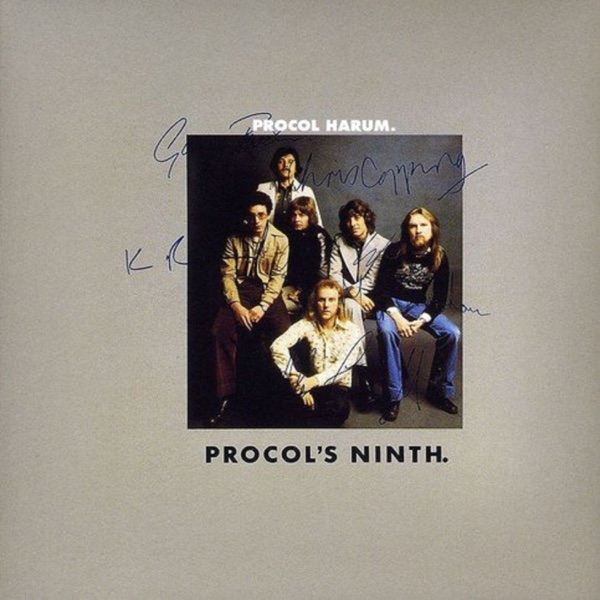
Procol’s Ninth
1975 · 43 tracks
- 1 Pandora's Box (1975 Version) ↗ 3:38
- 2 Fool's Gold ↗ 4:01
- 3 Taking the Time ↗ 3:39
- 4 The Unquiet Zone ↗ 3:40
- 5 The Final Thrust ↗ 4:38
- 6 I Keep Forgetting ↗ 3:28
- 7 Without a Doubt ↗ 4:31
- 8 The Piper's Tune ↗ 4:28
- 9 Typewriter Torment ↗ 4:30
- 10 Eight Days a Week ↗ 3:00
- 11 Pandora's Box (Raw Instrumental) ↗ 3:40
- 12 Fool's Gold (Raw Track with Guide Vocal) ↗ 3:57
- 13 Taking the Time (Raw Track) ↗ 4:38
- 14 The Unquiet Zone (Raw Track from Studio Session) ↗ 4:27
- 15 The Final Thrust (Raw Track from Studio Session) ↗ 4:42
- 16 The Poet (Raw Track) ↗ 4:19
- 17 The Piper's Tune (Raw Track) ↗ 4:56
- 18 Typewriter Torment (Raw Track from Studio Session) ↗ 4:37
- 19 Shine On Brightly (Live at the Capitol Theatre, NJ, 1975) ↗ 4:27
- 20 As Strong As Samson (Live at the Capitol Theatre, NJ, 1975) ↗ 5:38
- 21 Conquistador (Live at the Capitol Theatre, NJ, 1975) ↗ 4:38
- 22 Pandora's Box (Live at the Capitol Theatre, NJ, 1975) ↗ 4:24
- 23 The Unquiet Zone (Live at the Capitol Theatre, NJ, 1975) ↗ 5:21
- 24 A Salty Dog (Live at the Capitol Theatre, NJ, 1975) ↗ 5:27
- 25 A Souvenir of London (Live at the Capitol Theatre, NJ, 1975) ↗ 4:46
- 26 Cerdes (Outside the Gates Of) [Live at the Capitol Theatre, NJ, 1975] ↗ 6:51
- 27 I Keep Forgetting (Live at the Capitol Theatre, NJ, 1975) ↗ 4:26
- 28 Grand Hotel (Including "The Blue Danube") [Live at the Capitol Theatre, NJ, 1975] ↗ 13:34
- 29 Power Failure (Live at the Capitol Theatre, NJ, 1975) ↗ 7:40
- 30 Simple Sister (Live at the Capitol Theatre, NJ, 1975) ↗ 6:55
- 31 Shine On Brightly (Live at Leicester University, 1975) ↗ 4:31
- 32 Whaling Stories (Live at Leicester University, 1975) ↗ 9:22
- 33 Conquistador (Live at Leicester University, 1975) ↗ 4:36
- 34 Pandora's Box (Live at Leicester University, 1975) ↗ 4:19
- 35 The Piper's Tune (Live at Leicester University, 1975) ↗ 5:14
- 36 Grand Hotel (Live at Leicester University, 1975) ↗ 8:01
- 37 Beyond the Pale (Live at Leicester University, 1975) ↗ 3:38
- 38 A Salty Dog (Live at Leicester University, 1975) ↗ 5:49
- 39 I Keep Forgetting (Live at Leicester University, 1975) ↗ 4:39
- 40 The Blue Danube (Live at Leicester University, 1975) ↗ 10:00
- 41 Be-Bop-a-Lula (Live at Leicester University, 1975) ↗ 3:49
- 42 Old Black Joe (Live at Leicester University, 1975) ↗ 4:42
- 43 A Whiter Shade of Pale (Live at Leicester University, 1975) ↗ 7:17

Something Magic
1977 · 22 tracks
- 1 Something Magic ↗ 3:37
- 1 Something Magic (Live at the BBC Radio One In Concert, Golders Green Hippodrome, 03/12/77) ↗ 4:37
- 2 Skating On Thin Ice ↗ 4:50
- 2 Conquistador (Live at the BBC Radio One In Concert, Golders Green Hippodrome, 03/12/77) ↗ 4:38
- 3 Wizard Man ↗ 2:41
- 3 Nothing But the Truth (Live at the BBC Radio One In Concert, Golders Green Hippodrome, 03/12/77) ↗ 3:19
- 4 The Mark of the Claw ↗ 4:39
- 4 Strangers In Space (Live at the BBC Radio One In Concert, Golders Green Hippodrome, 03/12/77) ↗ 7:54
- 5 Strangers In Space ↗ 6:09
- 5 Grand Hotel (Live at the BBC Radio One In Concert, Golders Green Hippodrome, 03/12/77) ↗ 6:46
- 6 The Worm & The Tree, Pt. 1: Introduction / Menace / Occupation ↗ 7:51
- 6 Pandora's Box (Live at the BBC Radio One In Concert, Golders Green Hippodrome, 03/12/77) ↗ 4:52
- 7 The Worm & The Tree, Pt. 2: Enervation / Expectancy / Battle ↗ 5:29
- 7 Skating On Thin Ice (Live at the BBC Radio One In Concert, Golders Green Hippodrome, 03/12/77) ↗ 5:21
- 8 The Worm & The Tree, Pt. 3: Regeneration / Epilogue ↗ 5:25
- 8 The Mark of the Claw (Live at the BBC Radio One In Concert, Golders Green Hippodrome, 03/12/77) ↗ 5:36
- 9 Backgammon ↗ 3:26
- 9 Wizard Man (Live at the BBC Radio One In Concert, Golders Green Hippodrome, 03/12/77) ↗ 3:47
- 10 You'd Better Wait (Live Studio Recording) ↗ 4:47
- 10 This Old Dog (Live at the BBC Radio One In Concert, Golders Green Hippodrome, 03/12/77) ↗ 5:17
- 11 This Old Dog (Live Studio Recording) ↗ 3:42
- 11 A Whiter Shade of Pale (Live at the BBC Radio One In Concert, Golders Green Hippodrome, 03/12/77) ↗ 6:11
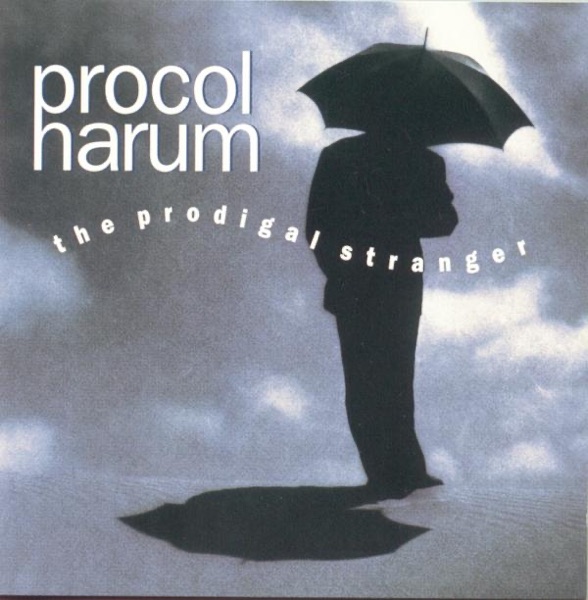
The Prodigal Stranger
1991 · 12 tracks
- 1 The Truth Won't Fade Away ↗ 4:17
- 2 Holding On ↗ 4:17
- 3 Man with a Mission ↗ 4:08
- 4 (You Can't) Turn Back the Page ↗ 3:58
- 5 One More Time ↗ 3:42
- 6 A Dream In Ev'ry Home ↗ 4:02
- 7 The Hand That Rocks the Cradle ↗ 4:05
- 8 The King of Hearts ↗ 4:22
- 9 All Our Dreams Are Sold ↗ 5:30
- 10 Perpetual Motion ↗ 4:48
- 11 Learn to Fly ↗ 4:24
- 12 The Pursuit of Happiness ↗ 4:00

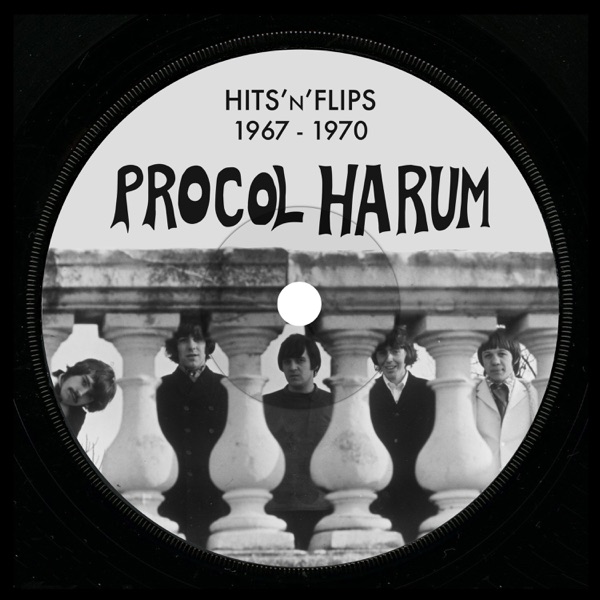
Hits’n’Flips
2019 · 11 tracks
- 1 A Whiter Shade of Pale (Original Single Version) ↗ 4:09
- 2 Lime Street Blues (2009 Remaster - Mono) ↗ 2:54
- 3 Homburg (Single Version - 2009 Remaster - Mono) ↗ 3:57
- 4 Good Captain Clack (Single Version - 2009 Remaster - Mono) ↗ 1:29
- 5 Quite Rightly So (2009 Remaster - Mono) ↗ 3:42
- 6 In the Wee Small Hours of Sixpence (2009 Remaster - Mono) ↗ 3:02
- 7 Il Tuo Diamante (Single Version Mono) ↗ 3:23
- 8 Long Gone Geek (2009 Remaster - Mono) ↗ 3:18
- 9 A Whiter Shade of Pale (50th Anniversary Stereo Mix) ↗ 5:55
- 10 Lime Street Blues (50th Anniversary Full Length Stereo Mix) ↗ 4:13
- 11 Homburg (50th Anniversary Full Length Stereo) ↗ 7:12
-
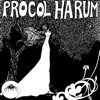 Procol HarumProcol Harum196710 tracks
 -
 Shine On BrightlyProcol Harum196811 tracks
 -
 A Salty DogProcol Harum196910 tracks
 -
 Grand HotelProcol Harum197314 tracks
 -
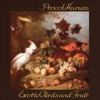 Exotic Birds and FruitProcol Harum197435 tracks
 -
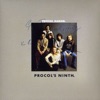 Procol’s NinthProcol Harum197543 tracks
 -
 Something MagicProcol Harum197722 tracks
 -
 The Prodigal StrangerProcol Harum199112 tracks
 -
 NovumProcol Harum201711 tracks
 -
 Hits’n’FlipsProcol Harum201911 tracks
Deep Dive
Overview
Procol Harum were an English rock band formed in Southend-on-Sea, Essex, in 1967. They are best remembered for “A Whiter Shade of Pale,” a 1967 single that became one of only a handful of records ever to sell more than 10 million copies. Beyond that landmark hit, Procol Harum occupied a distinctive position in late-1960s and 1970s rock: a band that fused baroque and classical instrumentation with psychedelic rock, proto-progressive frameworks, and hints of blues, R&B, and soul. Their music anticipated the art-rock and progressive-rock movements that would define much of the following decade.
Formation Story
Procol Harum coalesced in Southend-on-Sea in 1967, emerging from the convergence of several musical lineages. The band’s founding core included Gary Brooker, who would remain the ensemble’s creative anchor throughout its existence. Alongside him was guitarist Robin Trower, whose tenure with the band would span from their debut through 1971. Mick Grabham also became integral to their early sound. The group’s name—which they borrowed from a Buxtonian cat, according to band lore—signaled their intellectual and artistic ambitions from the outset. They arrived at a moment when British rock was rapidly absorbing classical and art-music elements, and Procol Harum positioned themselves at the vanguard of that fusion.
Breakthrough Moment
“A Whiter Shade of Pale” burst onto the charts in 1967 with immediate and extraordinary impact. Built on a harpsichord riff that evoked Bach and paired with Brooker’s distinctive vocal delivery and surreal, quasi-poetic lyrics, the song became a cultural phenomenon. It was the lead single from their self-titled debut album, Procol Harum, released in 1967, and its success catapulted the band from local English act to international recognition almost instantaneously. The single’s extraordinary sales figures—eventually exceeding 10 million copies—established Procol Harum as far more than a one-hit wonder in the public imagination, even as critics and musicians recognized the experimental ambition beneath the hit’s surface accessibility.
Peak Era
The years 1967 through the mid-1970s constituted Procol Harum’s most creatively vital and commercially successful period. Following their 1967 debut, they released Shine On Brightly in 1968, A Salty Dog in 1969, and Home in 1970, establishing themselves as a serious progressive force. By Broken Barricades (1971), the band had fully integrated baroque textures, complex harmonic arrangements, and extended instrumental passages into a rock framework. The subsequent albums—Grand Hotel (1973), Exotic Birds and Fruit (1974), and Procol’s Ninth (1975)—demonstrated sustained creative output during rock’s art-rock and progressive-rock expansion. Though their commercial profile declined after the early 1970s, the band continued to record and tour throughout this era, refining their sophisticated arrangements and deepening their engagement with classical forms.
Musical Style
Procol Harum’s defining characteristic was their marriage of baroque and classical instrumentation—particularly harpsichord and organ—with the electric guitar and drums of rock music. Brooker’s vocal approach was measured and expressive, often floating above densely layered instrumental textures rather than dominating them. The band’s arrangements frequently incorporated strings, organ swells, and intricate harmonic progressions that owed as much to art-music traditions as to rock-and-roll lineage. Their music was atmospheric and formally ambitious, with songs often building through multiple movements and key changes. Though labeled psychedelic rock and proto-prog, their sound also retained hints of soul and R&B warmth, preventing them from becoming cold or overly academic. This balance between classical sophistication and emotional directness made their music accessible to mainstream audiences while satisfying listeners seeking genuine musical complexity.
Major Albums
Procol Harum (1967)
The debut album announced the band’s full vision in one statement: the achingly beautiful “A Whiter Shade of Pale” sat alongside adventurous deeper cuts that showcased baroque arrangements and exploratory song structures.
Shine On Brightly (1968)
This album consolidated their signature sound, with extended instrumental passages and increasingly intricate orchestrations demonstrating that the band’s classical influences were fundamental to their identity, not mere window dressing.
A Salty Dog (1969)
Named for a sea-shanty standard, this record showed Procol Harum venturing further into psychedelic textures while maintaining rigorous compositional discipline and baroque sensibilities.
Home (1970)
Released in 1970, this album solidified the band’s standing as leaders in the emerging art-rock movement, with lush production and Brooker’s increasingly assured songwriting.
Broken Barricades (1971)
This was Robin Trower’s final studio album with the band before his departure in 1971; it represents the culmination of the classic Procol Harum lineup’s collaborative vision.
Grand Hotel (1973)
Released in 1973 with a revised lineup, this album maintained the baroque-rock formula while exploring new thematic territory, demonstrating the band’s resilience beyond their original configuration.
Signature Songs
- “A Whiter Shade of Pale” — The harpsichord-driven standard that defined the band and became one of rock’s most recognizable melodies.
- “Homburg” — A baroque-pop gem that showcased Brooker’s sophisticated songwriting and the band’s orchestral ambitions.
- “Conquistador” — A later track that combined complex arrangements with emotional depth, becoming a concert staple.
- “A Salty Dog” — The title track of their 1969 album, featuring nautical imagery and intricate baroque instrumentation.
- “Shine On Brightly” — The title track of their 1968 album, exemplifying their ability to merge classical form with psychedelic rock energy.
Influence on Rock
Procol Harum’s integration of baroque and classical elements into rock music presaged the art-rock and progressive-rock explosions of the early 1970s. While progressive-rock bands like Yes, Genesis, and Emerson, Lake & Palmer pursued grander and more technically virtuosic paths, Procol Harum’s example—demonstrating that rock could be intellectually ambitious without sacrificing melodic appeal—influenced a broad spectrum of artists. Their harmonic sophistication and formal experimentation provided a template for bands seeking to elevate rock’s artistic standing. “A Whiter Shade of Pale” itself became a touchstone in popular music, referenced, sampled, and covered countless times, cementing its status as one of rock’s most consequential singles and ensuring Procol Harum’s place in the music’s foundational mythology.
Legacy
Procol Harum’s legacy rests primarily on the extraordinary cultural impact of “A Whiter Shade of Pale” and their broader role in legitimizing baroque and classical influence within rock music. The band continued to record and perform in subsequent decades, releasing The Prodigal Stranger in 1991 after a lengthy hiatus, followed by The Well’s on Fire in 2003 and Novum in 2017, demonstrating their commitment to ongoing creative work. Their music remains widely recognized and streamed, and their pioneering fusion of art-music sensibilities with rock’s energy and accessibility earned them continued respect among musicologists and critics. While they may not occupy the household-name status of some contemporaries, Procol Harum’s influence on how subsequent generations thought about rock’s relationship to “higher” musical traditions remains substantial and enduring.
Fun Facts
- The band’s name derives from a Buxtonian cat, reflecting the whimsical spirit that sometimes undercut their more serious artistic ambitions.
- “A Whiter Shade of Pale” was famously based on a harpsichord riff that evoked J.S. Bach’s Prelude in C Major, making it one of rock’s most classically inspired hits.
- Robin Trower, the band’s original guitarist, departed in 1971 to pursue a solo career and later became known for his blues-rock work.
- After a 20-year recording hiatus, Procol Harum returned to the studio with The Prodigal Stranger in 1991, proving their creative resilience across generations.