
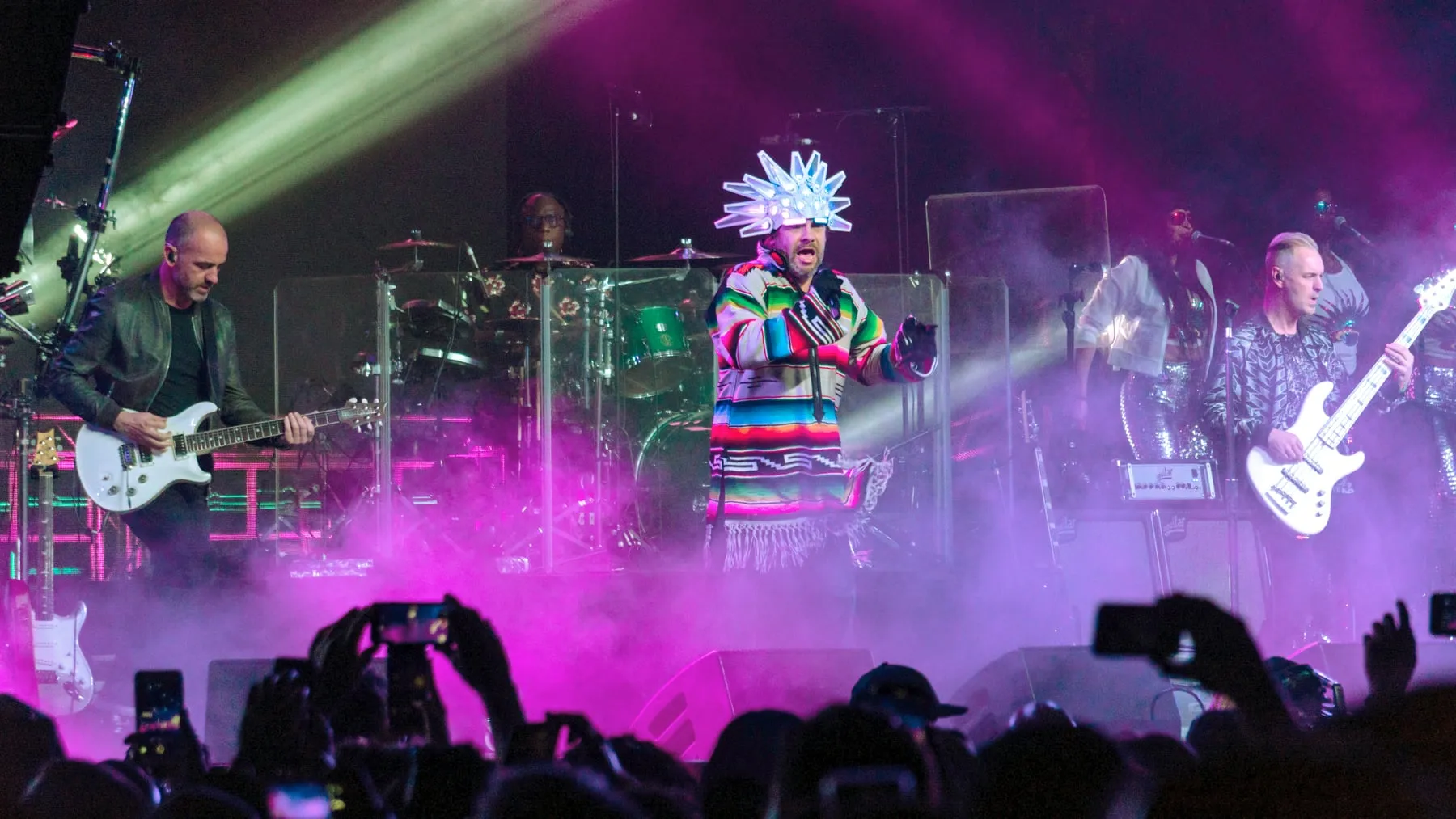
Photo by Raph_PH , licensed under CC BY 2.0 · Wikimedia Commons
Rank #442
Jamiroquai
From Wikipedia
Jamiroquai are an English acid jazz and funk band from London. Formed in 1992, they are fronted by vocalist Jay Kay, and were prominent in the London-based funk and acid jazz movement of the 1990s. They built on their acid jazz sound in their early releases and later drew from rock, disco, electronic and Latin music genres. Lyrically, the group have addressed social and environmental justice. Kay has remained the only constant member through several line-up changes.
Members
- Derrick McKenzie (1994–present)
- Simon Katz (1995–2000)
- Sola Akingbola (1995–present)
- Nick Fyffe (1999–2005)
- Rob Harris (2000–present)
- Matt Johnson (2002–present)
- Paul Turner (2005–present)
- Howard Whiddett (2017–present)
- Glenn Nightingale
- Jay Kay
- Nick Van Gelder (?–1994)
- Simon Bartholomew (?–1992)
- Stuart Zender (?–1999)
- Toby Smith (?–2002)
- Wallis Buchanan (?–1999)
Discography & Previews
Browse through and click an album to open and play 30-second previews streamed from Apple Music.

Emergency on Planet Earth
1993 · 10 tracks
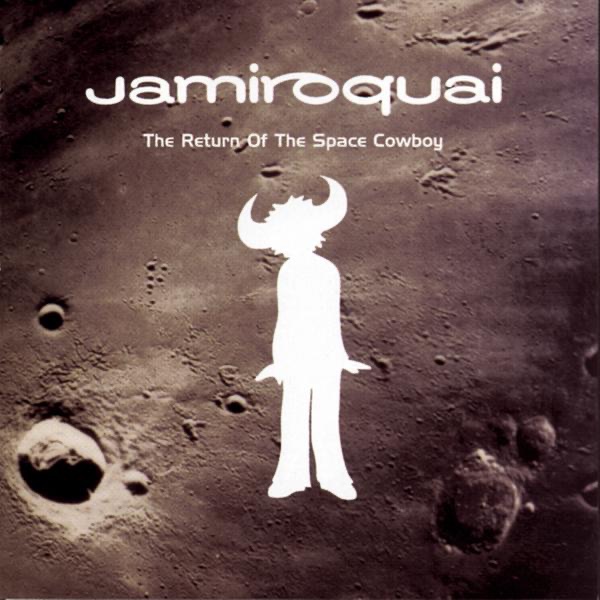
The Return of the Space Cowboy
1994 · 12 tracks

Travelling Without Moving
1996 · 13 tracks
- 1 Virtual Insanity ↗ 5:40
- 2 Cosmic Girl ↗ 4:03
- 3 Use the Force ↗ 3:59
- 4 Everyday ↗ 4:27
- 5 Alright (Full Length Version) ↗ 4:23
- 6 High Times ↗ 5:57
- 7 Drifting Along ↗ 4:04
- 8 Didjerama ↗ 3:50
- 9 Didjital Vibrations ↗ 5:47
- 10 Travelling Without Moving ↗ 3:38
- 11 You Are My Love ↗ 3:53
- 12 Spend a Lifetime ↗ 4:10
- 13 Do You Know Where You're Coming From? ↗ 4:59

Synkronized
1999 · 13 tracks
- 1 Canned Heat ↗ 5:32
- 2 Planet Home ↗ 4:44
- 3 Black Capricorn Day ↗ 5:42
- 4 Soul Education ↗ 4:15
- 5 Falling ↗ 3:45
- 6 Destitute Illusions ↗ 5:40
- 7 Supersonic ↗ 5:16
- 8 Butterfly ↗ 4:29
- 9 Where Do We Go from Here? ↗ 5:14
- 10 King for a Day ↗ 3:44
- 11 Deeper Underground (Full Version) ↗ 4:46
- 12 Wolf in Sheeps Clothing ↗ 4:04
- 13 Planet Home (Trebant Brothers Inc. Remix) ↗ 7:21

A Funk Odyssey
2001 · 11 tracks
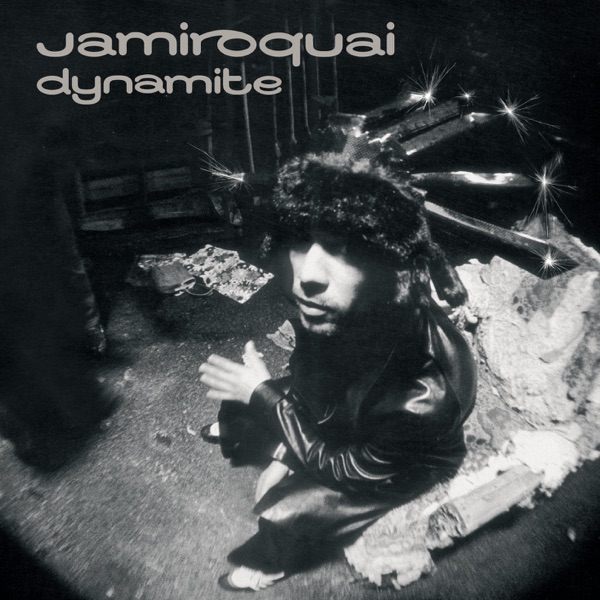
Dynamite
2005 · 12 tracks
- 1 Feels Just Like it Should ↗ 4:32
- 2 Dynamite ↗ 4:55
- 3 Seven Days in Sunny June ↗ 3:58
- 4 Electric Mistress ↗ 3:55
- 5 Starchild ↗ 5:11
- 6 Loveblind ↗ 3:34
- 7 Talullah ↗ 6:02
- 8 (Don't) Give Hate a Chance ↗ 5:00
- 9 World That He Wants ↗ 3:12
- 10 Black Devil Car ↗ 4:44
- 11 Hot Tequila Brown ↗ 4:38
- 12 Time Won't Wait ↗ 5:02

-
 Emergency on Planet EarthJamiroquai199310 tracks
 -
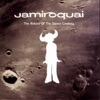 The Return of the Space CowboyJamiroquai199412 tracks
 -
 Travelling Without MovingJamiroquai199613 tracks
 -
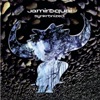 SynkronizedJamiroquai199913 tracks
 -
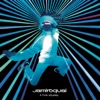 A Funk OdysseyJamiroquai200111 tracks
 -
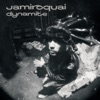 DynamiteJamiroquai200512 tracks
 -
 AutomatonJamiroquai201712 tracks
Deep Dive
Overview
Jamiroquai are an English acid jazz and funk band from London, formed in 1992. Fronted by vocalist Jay Kay, the group rose to prominence during the London-based funk and acid jazz movement of the 1990s and have remained active into the present day. The band’s sound evolved from their roots in acid jazz to incorporate rock, disco, electronic, and Latin influences, positioning them at the intersection of dancefloor grooves and rock sensibility. With socially conscious lyricism addressing environmental and social justice themes, Jamiroquai emerged as one of the decade’s defining ensembles and sustained a recording and touring presence that has extended well beyond their commercial peak.
Formation Story
Jamiroquai coalesced in London in 1992 around frontman Jay Kay, who would remain the group’s only constant member through numerous lineup changes. The band’s early constitution included drummer Derrick McKenzie, who joined in 1994 and has retained his position through the band’s entire subsequent history. The founding iteration drew from the broader London acid jazz scene, a movement that fused jazz harmonies and funkified rhythm sections with electronic production and club-oriented sensibilities. Kay’s distinctive vocal presence and the group’s cohesive grooves quickly established them as central figures within this emerging scene, positioning Jamiroquai at the forefront of a movement that married post-punk and post-soul sensibilities with a new generation’s dance-music aesthetics.
Breakthrough Moment
Jamiroquai’s debut album, Emergency on Planet Earth (1993), announced the band’s arrival with infectious funk grooves and Kay’s expressive vocal delivery. The record’s blend of live instrumentation and contemporary production caught the attention of both club audiences and mainstream listeners, establishing the group as more than a passing trend within the acid jazz movement. Their follow-up, The Return of the Space Cowboy (1994), solidified their foothold, building on the foundation of their debut with refined arrangements and expanded sonic palette. By the mid-1990s, Jamiroquai had transcended the London club circuit to achieve international recognition, setting the stage for their most commercially successful period.
Peak Era
Jamiroquai’s most commercially successful and creatively ambitious stretch came between 1996 and 2001, anchored by three landmark releases. Travelling Without Moving (1996) became their breakthrough album on a global scale, demonstrating the band’s ability to craft radio-friendly funk-rock without sacrificing musical sophistication. Synkronized (1999) continued this trajectory, further refining their sound and broadening their stylistic range. A Funk Odyssey (2001) represented the culmination of this era, showcasing the band at their most confident and expansive. Throughout these years, Jamiroquai maintained rigorous touring schedules and built a loyal fanbase across Europe, North America, and beyond, establishing themselves as one of the era’s most reliable live acts and a consistent presence on alternative and modern rock radio.
Musical Style
Jamiroquai’s sound is rooted in funk grooves anchored by live bass and drums, typically layered with keyboards, horns, and layered guitars that shift between rhythmic comping and melodic soloing. The band draws lineage from 1970s funk and jazz fusion while incorporating the production sensibilities and electronic textures of 1990s club music and alternative rock. Jay Kay’s vocals—expressive, often percussive, and capable of both spoken-word passages and soaring melodic phrases—sit at the center of their arrangements, delivering lyrics that frequently address themes of social consciousness and environmental concern. The band’s instrumentation evolved across their catalog: earlier releases emphasized organic live funk with acid jazz overtones, while later work integrated electronic elements, programmed percussion, and more elaborate production architectures. This flexibility allowed Jamiroquai to remain contemporary without abandoning the groove-based fundamentals that defined their identity.
Major Albums
Emergency on Planet Earth (1993)
Jamiroquai’s debut introduced their signature fusion of acid jazz and funk-rock, establishing the instrumental fluency and grooviness that would define their trajectory. The album announced a fully formed musical vision and caught the attention of the global music industry.
The Return of the Space Cowboy (1994)
The band’s second release refined their approach with stronger songwriting and more sophisticated arrangements, demonstrating that their debut was no one-album phenomenon. This record solidified their position within the London funk scene.
Travelling Without Moving (1996)
Jamiroquai’s third album became their commercial breakthrough, achieving international chart success and introducing the band to audiences far beyond the acid jazz cognoscenti. The album’s polish and melodic immediacy broadened their appeal without diluting their funk credentials.
Synkronized (1999)
Released at the height of the band’s popularity, this album pushed their sound toward greater electronic integration and production sophistication while maintaining the groove-centric foundation of their earlier work.
A Funk Odyssey (2001)
The final album of their initial peak period, this release showcased the band’s ambition and refinement, presenting a mature statement of their funk-rock vision before entering a more sporadic recording cycle.
Automaton (2017)
Returning after a six-year hiatus from studio recordings, Jamiroquai demonstrated their continued relevance, proving that their fundamental sound remained effective and that Jay Kay and his ensemble could still deliver cohesive, engaging funk-rock material.
Signature Songs
- “Virtual Insanity” — The band’s most recognizable single, characterized by infectious grooves and a music video that became a cultural touchstone for 1990s alternative pop.
- “When You Gonna Learn?” — An early track from Emergency on Planet Earth that exemplified the band’s socially conscious lyricism paired with compelling funk arrangements.
- “Alright” — A prominent single that showcased Jay Kay’s vocal range and the band’s ability to craft radio-friendly yet musically substantive funk-rock.
- “Cosmic Girl” — A mid-period single that demonstrated the band’s willingness to incorporate electronic and dance-oriented production elements.
- “Deeper Underground” — Released during their peak commercial period, this track highlighted the band’s knack for memorable melodies delivered atop sophisticated rhythmic foundations.
Influence on Rock
Jamiroquai’s role in popularizing acid jazz and funk-influenced alternative rock during the 1990s extended their influence well beyond their direct peer group. They demonstrated that funk could be contemporary rather than nostalgic, that live musicianship could coexist with electronic production, and that grooves grounded in African-diaspora traditions remained vital to rock-era music. Their success helped establish funk-rock as a legitimate alternative to grunge and Britpop, offering audiences a celebratory rather than introspective or ironic stance toward rock music. The band’s integration of social and environmental consciousness into funk music influenced subsequent acts working in similar spaces, proving that danceable music need not be frivolous or apolitical. Their longevity and consistent output into the 2010s and 2020s established a template for acid jazz and funk-oriented acts seeking sustained careers beyond a single successful decade.
Legacy
Jamiroquai’s legacy rests on their role as central figures in the 1990s acid jazz movement and their demonstration that this sound could achieve mainstream commercial success without compromise. The band’s continuous activity—including the 2017 release of Automaton—has kept them relevant across multiple decades, a feat accomplished by few of their contemporaries. Their influence permeates contemporary funk-rock and dance-rock contexts, and their catalog remains a touchstone for musicians seeking to balance groove-oriented funkiness with alternative rock sensibilities. Jay Kay’s status as rock music’s foremost funk vocalist of the 1990s and 2000s, alongside the band’s uncompromising musicianship, has secured their position as more than a period act; they represent a sustained creative enterprise that evolved with changing production technologies and listener expectations while maintaining core musical values.
Fun Facts
- Jay Kay has been the sole constant member throughout Jamiroquai’s entire history, with other musicians cycling in and out of the lineup across the band’s eight studio albums.
- Derrick McKenzie, the band’s drummer since 1994, represents the longest-serving member after Jay Kay and has been instrumental in establishing the band’s rhythmic identity.
- The band addressed environmental and social justice themes in their lyrics from their earliest releases, making consciousness-raising a central part of their artistic mission alongside musical innovation.
- Jamiroquai emerged from and helped define the London acid jazz scene of the early 1990s, a movement that briefly rivaled grunge and Britpop in cultural visibility before fragmenting into various successor genres.