
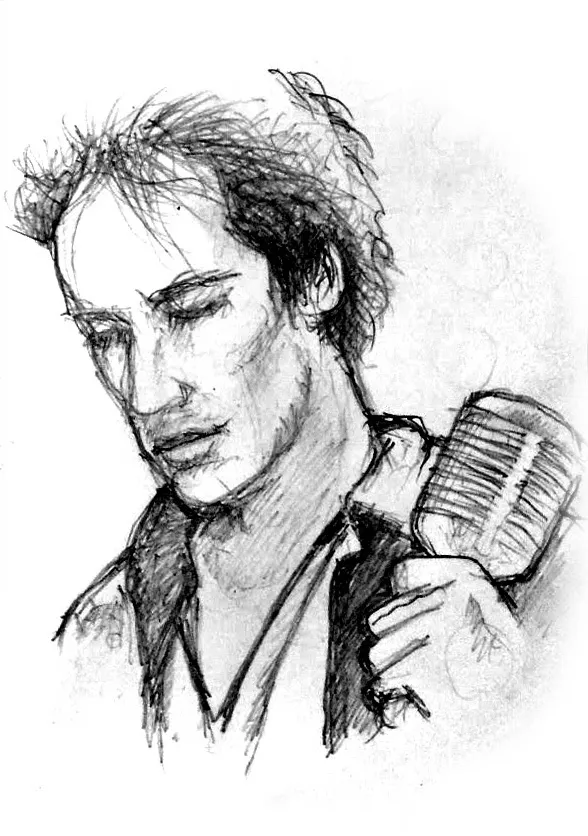
Photo by richoz , licensed under CC BY 2.0 · Wikimedia Commons
Rank #175
Jeff Buckley
From Wikipedia
Jeffrey Scott Buckley was an American musician. After a decade as a session guitarist in Los Angeles, he attracted a following in the early 1990s performing at venues in the East Village, Manhattan. He signed with Columbia and released his only studio album, Grace, in 1994. Buckley toured extensively to promote Grace, with concerts in the U.S., Europe, Japan, and Australia.
Discography & Previews
Browse through and click an album to open and play 30-second previews streamed from Apple Music.

-
 GraceJeff Buckley199411 tracks
Deep Dive
Overview
Jeff Buckley was an American musician whose career spanned three decades but whose enduring cultural impact rests primarily on a single, meticulously crafted studio album. Born in 1966, Buckley emerged from a decade of session work to achieve recognition in the early 1990s as a live performer in New York’s East Village avant-garde scene. His 1994 album Grace stands as a singular achievement in 1990s alternative rock—a fusion of folk-rock lineage, soul, gospel, and blues sensibilities that resists easy categorization. Though his recording career was cut short by his death in 1997, Grace secured his position as a significant figure in the intersection of rock tradition and contemporary alternative music.
Formation Story
Jeff Buckley was born in 1966 into a musical household shaped by folk and rock traditions. He spent his early years developing his craft in Los Angeles, where he worked as a session guitarist throughout the 1980s and into the early 1990s. This decade of session work—largely anonymous and professional—provided technical grounding and exposure to diverse recording practices, yet offered little public profile or artistic autonomy. By the early 1990s, Buckley relocated to New York, drawn to the downtown Manhattan music scene, particularly the East Village’s experimental and alternative venues. It was in this environment, performing in clubs and small theaters, that he began to build a devoted local following and establish himself as a performer of unusual emotional range and technical facility. The East Village scene of that era was characterized by art-rock experimentation, punk heritage, and post-industrial aesthetics, but Buckley’s live performances drew equally on soul, folk, and blues traditions, setting him apart from his contemporaries.
Breakthrough Moment
Buckley signed with Columbia Records and released Grace in 1994, the album that would define his recording legacy. Grace arrived at a moment when 1990s alternative rock was consolidating into recognizable mainstream currency, yet Buckley’s sound occupied an unusual position within that landscape. Rather than the guitar-driven distortion and angst of grunge or the clever pop craftsmanship of britpop, Grace offered something closer to soul music arranged for rock instrumentation, with Buckley’s voice as the central instrument—capable of tenderness and operatic power in the span of a single phrase. The album attracted immediate critical and underground attention, and Buckley embarked on an extensive touring schedule that took him across the United States, Europe, Japan, and Australia. These tours cemented his reputation as a compelling live performer, one whose intense emotional commitment and technical precision made each performance an event rather than a routine show.
Peak Era
The period from 1994 to 1997 constituted Buckley’s entire professional recording era, yet it was extraordinarily concentrated and productive. Following the release and initial reception of Grace, Buckley spent those three years in near-constant motion, touring internationally and performing at major festivals and venues. The album gradually gathered cultural weight through the mid-1990s, gaining supporters among critics and musicians who recognized its ambition and emotional honesty. Unlike many alternative-rock albums of the era that have faded into nostalgia, Grace continued to accumulate listeners and critical reassessment. Buckley’s touring schedule was relentless, and by all accounts his live performances became increasingly powerful and nuanced as he gained confidence in the material and deepened his connection to audiences. This period represented the full realization of the artistic vision that had been developing through his session work and East Village performances.
Musical Style
Buckley’s sound defied easy generic placement, drawing on folk rock as a foundational language while incorporating soul, gospel, blues, and contemporary alternative rock textures. His voice was his most distinctive instrument—a tenor of unusual flexibility capable of intimate whisper, soaring power, and stylistic variation within a single song. Vocally and compositionally, he seemed to belong to a lineage that included artists who treated rock not as a genre of conventions but as a vehicle for deep emotional expression and formal experimentation. The arrangements on Grace combined electric and acoustic instrumentation in ways that emphasized space and dynamic contrast rather than sustained intensity; songs breathed and shifted tonal centers, building from minimal accompaniment to fuller textures. Buckley’s approach to songwriting integrated narrative clarity with abstract emotional terrain, avoiding both the confessional directness of singer-songwriter tradition and the obliquity of art-rock abstraction. His guitar work, developed through years of session experience, provided harmonic sophistication and textural variety without drawing attention away from the songs themselves. The production of Grace reflected careful attention to clarity and separation of elements, allowing each instrument and vocal line to register distinctly within the mix.
Major Albums
Grace (1994)
Buckley’s only completed studio album in his lifetime, Grace is a meticulously arranged collection of original compositions that showcases his distinctive approach to song form, vocal interpretation, and arrangement. The album presents a coherent artistic vision and established the template by which his musical legacy would be understood and debated.
Born Again From the Rhythm: The Grace Outtakes (2006)
Released posthumously, this collection of unreleased material from the Grace sessions provides insight into Buckley’s compositional process and the depth of material he was working with during that concentrated creative period.
Signature Songs
- “Grace” — The album’s title track and opening statement, establishing the emotional and sonic territory that the rest of the record explores.
- “Lilac Wine” — Buckley’s interpretation of a song originally written by others, demonstrating his ability to inhabit and reimagine existing material with complete commitment.
- “Hallelujah” — A performance that became closely identified with Buckley despite not being an original composition, showcasing his vocal range and emotional intensity.
- “Last Goodbye” — A showcase for his songwriting that balances folk simplicity with soul-inflected phrasing and arrangement.
Influence on Rock
Buckley’s influence on rock and alternative music has grown in the years since his death, as Grace has been reassessed and championed by subsequent generations of musicians. His approach to arrangement—sparse yet detailed, emotionally direct yet formally sophisticated—offered an alternative model to the guitar-heavy dominance of 1990s alternative rock. Artists and producers working in genres ranging from indie rock to soul-influenced pop have cited his work as a point of reference, particularly his willingness to privilege vocal and emotional clarity over distortion or irony. The album demonstrated that alternative rock could accommodate influences from folk, soul, and gospel traditions without diluting its artistic integrity. His influence extends to his technical facility as a guitarist and his approach to interpretation, showing that mastery of traditional forms and instrumental technique need not be incompatible with contemporary alternative sensibilities.
Legacy
Jeff Buckley’s legacy rests almost entirely on Grace, an album whose cultural and critical standing has only solidified in the decades since its release. The circumstances of his death in 1997 at age thirty-one lent a poignant finality to his career, transforming Grace into a complete and closed artistic statement rather than a chapter in an ongoing career. The album has become a touchstone for discussions of 1990s alternative rock, recognized as one of the era’s most significant achievements and increasingly valued for its emotional authenticity and formal sophistication. Streaming services and reissue campaigns have ensured that Grace remains readily available and continuously accessible to new listeners, and the album’s reputation among musicians and critics has only grown over time. Buckley’s brief career serves as a reminder that artistic significance cannot be measured by commercial reach or career longevity alone.
Fun Facts
- Buckley spent over a decade working as a session guitarist in Los Angeles before his breakthrough, developing technical mastery in relative anonymity before achieving recognition for his own artistic vision.
- His performances in East Village venues in the early 1990s became legendary among New York alternative-music cognoscenti, with word-of-mouth from those shows helping to build momentum for his signing to Columbia Records.
- Grace marked a significant artistic achievement in an era when the alternative rock mainstream was consolidating, offering a distinctive sound that occupied an unusual position between 1990s alternative rock and soul-influenced traditions.