
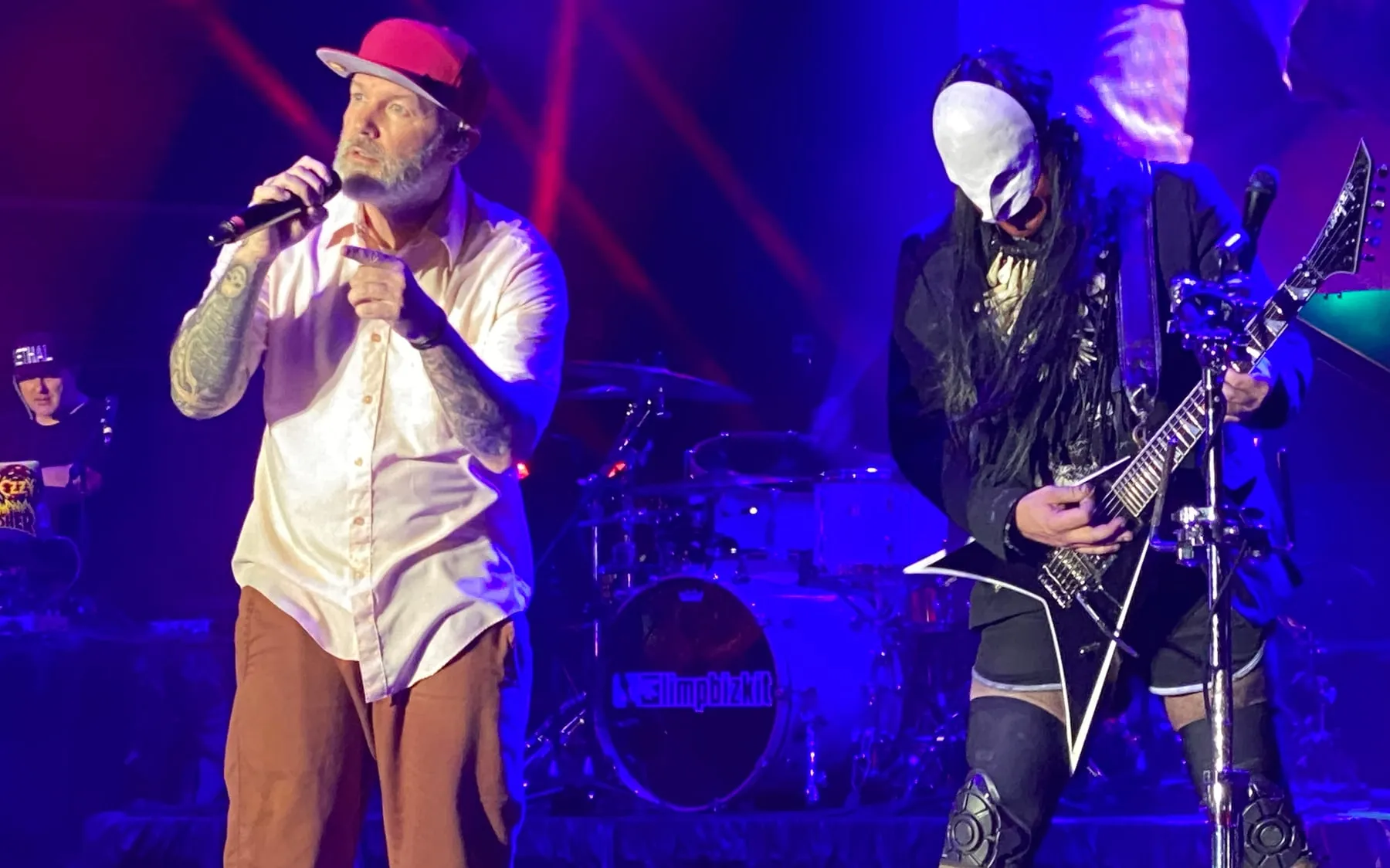
Photo by ECarterSterling , licensed under CC BY-SA 2.0 · Wikimedia Commons
Rank #198
Limp Bizkit
From Wikipedia
Limp Bizkit is an American nu metal band from Jacksonville, Florida. Its lineup consists of lead vocalist Fred Durst, drummer John Otto, guitarist Wes Borland, and turntablist DJ Lethal. The band's musical style is marked by Durst's angry vocal delivery and Borland's sonic experimentation. The band is one of the most successful nu-metal bands of all time. It has been nominated for three Grammy Awards, sold 40 million records worldwide, and won several other awards.
Members
- Rob Waters (1994–1995)
- Sam Rivers (1994–2025)
- Scott Borland (1995–1996)
- Wes Borland (1995–present)
- DJ Lethal (1996–present)
- Mike Smith (2002–2004)
- Brandon Pertzborn
- Brian Welch
- Fred Durst
- John Otto
- Sammy Siegler
- Terry Balsamo
Discography & Previews
Browse through and click an album to open and play 30-second previews streamed from Apple Music.
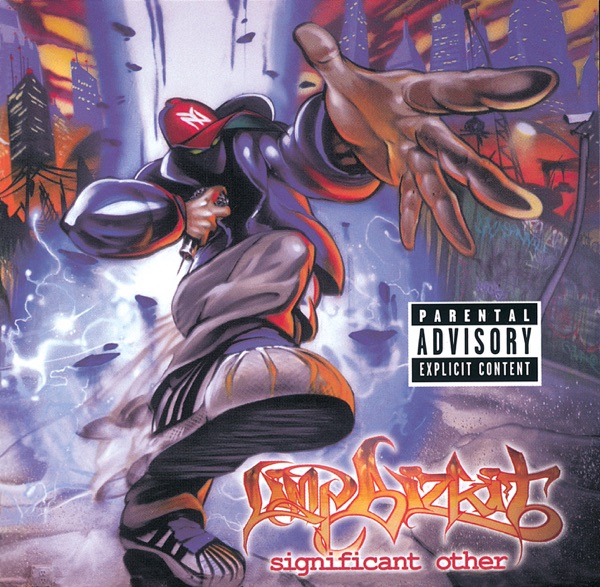
Significant Other
1999 · 16 tracks
- 1 Intro ↗ 0:37
- 2 Just Like This ↗ 3:35
- 3 Nookie ↗ 4:50
- 4 Break Stuff ↗ 2:47
- 5 Re-Arranged ↗ 5:55
- 6 I'm Broke ↗ 3:59
- 7 Nobody Like You ↗ 4:20
- 8 Don't Go Off Wandering ↗ 4:00
- 9 9 Teen 90 Nine ↗ 4:36
- 10 N 2 Gether Now ↗ 4:50
- 11 Trust? ↗ 4:59
- 12 No Sex ↗ 3:55
- 13 Show Me What You Got ↗ 4:27
- 14 A Lesson Learned ↗ 2:40
- 15 Outro ↗ 1:55
- 16 Rant (Matt Pinfield) ↗ 1:42

Chocolate Starfish and the Hot Dog Flavored Water
2000 · 15 tracks
- 1 Intro ↗ 1:19
- 2 Hot Dog ↗ 3:50
- 3 My Generation ↗ 3:41
- 4 Full Nelson ↗ 4:07
- 5 My Way ↗ 4:33
- 6 Rollin' (Air Raid Vehicle) ↗ 3:34
- 7 Livin' It Up ↗ 4:24
- 8 The One ↗ 5:43
- 9 Getcha Groove On (feat. Xzibit) [Dirt Road Mix] ↗ 4:19
- 10 Take A Look Around ↗ 5:21
- 11 It'll Be OK ↗ 5:06
- 12 Boiler ↗ 7:00
- 13 Hold On ↗ 5:48
- 14 Rollin' (Urban Assault Vehicle) [feat. Redman, Method Man & DMX] ↗ 6:23
- 15 Outro ↗ 9:50
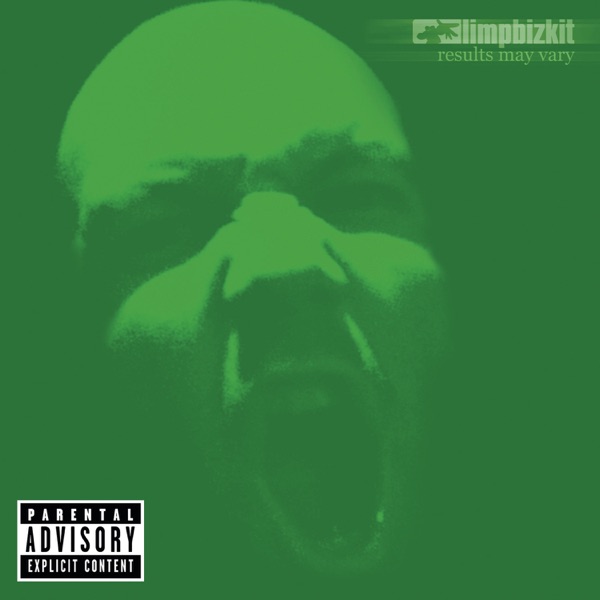
Results May Vary
2003 · 18 tracks
- 1 Re-Entry ↗ 2:38
- 2 Eat You Alive ↗ 3:56
- 3 Gimme the Mic ↗ 3:02
- 4 Underneath the Gun ↗ 5:41
- 5 Down Another Day ↗ 4:06
- 6 Almost Over ↗ 4:38
- 7 Build a Bridge ↗ 3:57
- 8 Red Light-Green Light ↗ 3:55
- 9 Take It Home ↗ 1:42
- 10 The Only One ↗ 4:09
- 11 Let Me Down ↗ 4:16
- 12 Lonely World ↗ 4:33
- 13 Phenomenon ↗ 3:57
- 14 Creamer (Radio Is Dead) ↗ 4:31
- 15 Head for the Barricade ↗ 3:32
- 16 Behind Blue Eyes ↗ 4:30
- 17 All That Easy ↗ 1:33
- 18 Drown ↗ 3:51


Still Sucks
2021 · 12 tracks
-
 Significant OtherLimp Bizkit199916 tracks
 -
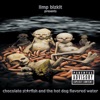 Chocolate Starfish and the Hot Dog Flavored WaterLimp Bizkit200015 tracks
 -
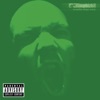 Results May VaryLimp Bizkit200318 tracks
 -
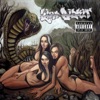 Gold CobraLimp Bizkit201113 tracks
 -
 Still SucksLimp Bizkit202112 tracks
Deep Dive
Overview
Limp Bizkit is an American nu-metal band from Jacksonville, Florida, formed in 1994. The group rose to prominence in the late 1990s as one of the defining acts of the nu-metal movement, blending rap-rock energy with heavy guitar work and electronic production. Fronted by vocalist Fred Durst and anchored by guitarist Wes Borland’s sonic experimentation, the band achieved both massive commercial success and sustained critical debate about artistic merit—a duality that has defined their 30-year trajectory.
Formation Story
Limp Bizkit emerged from Jacksonville’s metal underground in 1994, when Fred Durst and Sam Rivers assembled a lineup that initially included Rob Waters on second guitar and drummer John Otto. The group consolidated its core identity when Wes Borland joined as guitarist in 1995, followed by DJ Lethal (credited as a turntablist) in 1996. This lineup—Durst on vocals, Borland on guitar, Rivers on bass, Otto on drums, and Lethal on turntables—became the band’s most recognizable incarnation. Jacksonville lacked a major metal infrastructure at the time, but the band built a reputation through aggressive touring and a sound that synthesized rap-metal aggression with the heavier end of alternative rock. The city’s relative isolation from coastal music-industry centers meant the band had to earn their audience through sheer musical intensity rather than proximity to tastemakers.
Breakthrough Moment
Limp Bizkit’s debut album, Three Dollar Bill, Yall$ (1997), announced their arrival but remained largely underground. The breakthrough came with their second album, Significant Other (1999), which found the band hitting an international nerve through MTV’s emerging familiarity with rap-metal and the Korn-inspired wave of heavy music. Significant Other introduced Durst’s abrasive vocal performance and Borland’s willingness to deploy both crushing riffs and electronic textures, positioning them as a legitimate force rather than a novelty act. That momentum exploded with Chocolate Starfish and the Hot Dog Flavored Water (2000), which arrived at nu-metal’s cultural apex and became their definitive commercial triumph, establishing them as one of the most successful acts the genre would ever produce.
Peak Era
The period between 2000 and 2003 marked Limp Bizkit’s zenith in terms of chart dominance and cultural visibility. Chocolate Starfish and the Hot Dog Flavored Water sold in the millions, solidifying their status as stadium-level performers. The band followed with Results May Vary (2003), which attempted to explore new territory but faced mixed commercial and critical reception, signaling that the nu-metal cycle itself had begun to wane. During this era, Limp Bizkit commanded festival lineups, accumulated Grammy nominations, and accumulated a global sales total that would ultimately reach 40 million records—a figure placing them among the most commercially successful rock acts of the 1990s and 2000s. Their touring was relentless, and their visual presence—particularly Durst’s stagecraft and Borland’s guitar innovations—became as much a part of their brand as the music itself.
Musical Style
Limp Bizkit’s sound fused rap-metal (or rapcore) with nu-metal conventions, distinguishing themselves through a combination of downtuned, heavily processed guitars, DJ Lethal’s turntable work layering texture and samples over live instruments, and Durst’s vocal approach—a rapid-fire, aggressive delivery that blended rap inflections with sung and screamed passages. Wes Borland’s guitar work ranged from chuggy, groove-oriented riffs to effects-laden, almost ambient textures, making him one of the more adventurous six-string players in a genre often built on repetition. The band’s production was deliberately abrasive and compressed, emphasizing each band member’s contribution while maintaining a cohesive wall of sound. Sonically, they drew from Korn’s industrial influence, Faith No More’s genre-blending ambitions, and the rap-rock experiments of bands like Rage Against the Machine, but filtered through Durst’s blue-collar aggression and Borland’s studio-driven sensibility. Over time, the band’s later work would attempt to venture beyond strict nu-metal formulas, though this experimental push often met with resistance from a fanbase attached to the original formula.
Major Albums
Three Dollar Bill, Yall$ (1997)
The band’s debut established the rapcore template and introduced Fred Durst’s vocal approach, though the album remained a regional success before the band’s wider breakthrough.
Significant Other (1999)
A leap in songwriting and production clarity, this album captured the band at a moment when nu-metal was becoming unavoidable on MTV and rock radio, serving as the springboard for international recognition.
Chocolate Starfish and the Hot Dog Flavored Water (2000)
Limp Bizkit’s commercial and cultural peak, arriving at nu-metal’s commercial zenith and becoming one of the best-selling rock albums of the era.
Results May Vary (2003)
The band’s fourth studio effort attempted to diversify their sonic palette but arrived as the nu-metal cycle itself began cooling, making for a transitional and commercially diminished outing.
Gold Cobra (2011)
After an eight-year gap, Limp Bizkit reunited for this album, attempting to reclaim relevance in a post-nu-metal landscape while maintaining core stylistic elements.
Still Sucks (2021)
A return after a decade, the album found the band still touring and recording but operating largely outside the mainstream critical conversation.
Signature Songs
- “Nookie” — The track that became Limp Bizkit’s most recognizable global hit, featuring Durst’s rapid-fire vocal delivery and a hook designed for maximum radio penetration.
- “Break Stuff” — An anthem of controlled aggression that became synonymous with late-1990s nu-metal angst and Limp Bizkit’s live intensity.
- “Rollin’” — A later-period signature that showcased the band’s continued touring draw and Borland’s willingness to experiment with production textures.
- “Take a Look Around” — A track that demonstrated the band’s capacity for melodic variation within their core sound.
Influence on Rock
Limp Bizkit occupied a unique and contested position within rock culture. They were instrumental in the mainstream explosion of nu-metal, proving that rapcore and heavy music could achieve stadium-level commercial success during a moment when rock radio was fragmenting across multiple platforms. Their success opened doors for subsequent acts in the nu-metal and rap-metal spaces, even as they became lightning rods for criticism from rock purists who viewed nu-metal itself as a degradation of rock values. The band’s visual identity—particularly through Borland’s guitar innovations and Durst’s provocative stagecraft—influenced how subsequent heavy bands thought about performance and self-presentation. In the long view, Limp Bizkit became a case study in how commercial dominance and artistic legitimacy can remain perpetually at odds; they sold tens of millions of records while remaining unfashionable in critical circles, a tension that has only deepened across decades.
Legacy
Limp Bizkit remains one of the most commercially successful rock acts of the 1990s and 2000s, their 40 million records sold placing them in rarefied company within the rock genre. Despite waves of cultural dismissal, the band continued touring and recording into the 2020s, maintaining a devoted fanbase across multiple generations. The rise of streaming and playlist culture has allowed their back catalog to circulate in new ways, introducing younger audiences to Chocolate Starfish and the Hot Dog Flavored Water and other early albums. Their influence on the visual and sonic language of heavy music—particularly around production choices and electronic integration—persists even as the nu-metal era itself has receded into history. Limp Bizkit’s cultural footprint remains inseparable from late-1990s and early-2000s rock, regardless of critical reassessment.
Fun Facts
- The band’s name derives from a combination of Durst’s nickname “Limp” and a perceived insult (“bizkit”), later stylized with dollar signs in early album titles.
- Wes Borland’s guitar work earned Grammy nominations despite the band’s overall mixed critical reception, highlighting how individual musicianship was recognized even when the broader project faced skepticism.
- The band maintained an active touring schedule throughout the 2010s and 2020s, proving that their commercial appeal, while diminished from peak levels, remained substantial enough to sustain a major touring operation.
- Limp Bizkit’s discography spans 27 years with only six studio albums, a relatively sparse output for a band of their stature, reflecting periods of dissolution and reformation.