
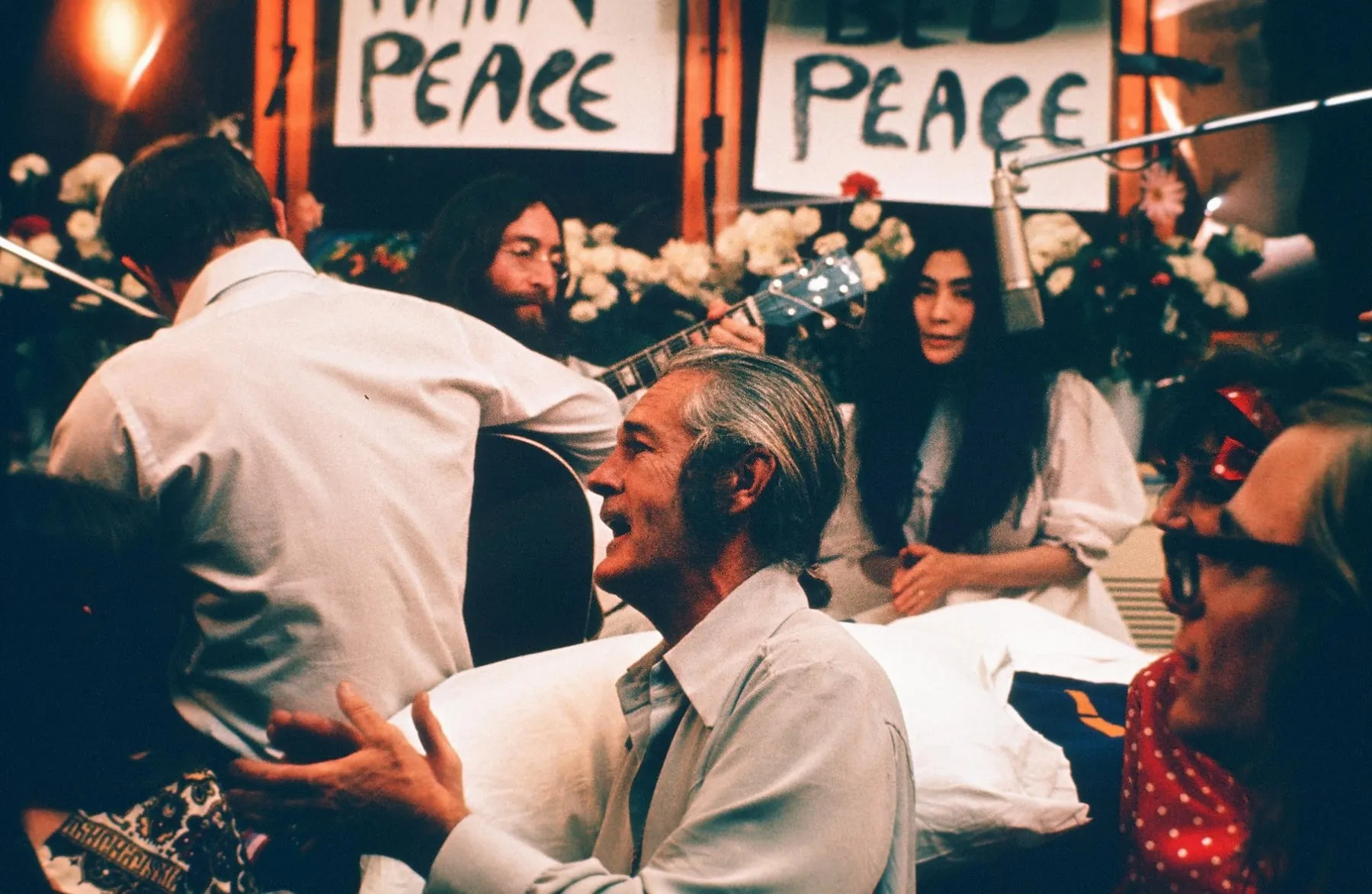
Photo by Roy Kerwood , licensed under CC BY 2.5 · Wikimedia Commons
Rank #359
Plastic Ono Band
From Wikipedia
The Plastic Ono Band was an English rock band and Fluxus-based artist collective formed by John Lennon and Yoko Ono in 1968–69 for their collaborative musical and sound art projects, films, conceptual art projects and eventual solo LPs. The creation of the Plastic Ono Band, which began in 1967 with Ono's idea for an art exhibition in Berlin, allowed Lennon to separate his artistic output from that of the Beatles.
Members
- John Lennon
- Yoko Ono
Discography & Previews
Browse through and click an album to open and play 30-second previews streamed from Apple Music.

Between My Head and the Sky
2009 · 13 tracks
- 1 Waiting For the D Train ↗ 2:49
- 2 The Sun Is Down! ↗ 4:50
- 3 Ask the Elephant! ↗ 3:04
- 4 Memory of Footsteps ↗ 3:17
- 5 Moving Mountains ↗ 2:54
- 6 Calling ↗ 4:20
- 7 Healing ↗ 4:24
- 8 Hashire, Hashire! ↗ 3:36
- 9 Between My Head and the Sky ↗ 5:35
- 10 Feel the Sand ↗ 6:01
- 11 Watching the Rain ↗ 5:31
- 12 Unun. To ↗ 3:19
- 13 I'm Going Away Smiling ↗ 2:53
-
 Between My Head and the SkyPlastic Ono Band200913 tracks
Deep Dive
Overview
The Plastic Ono Band was an English rock band and Fluxus-based artist collective formed by John Lennon and Yoko Ono in 1969. Emerging from London, the ensemble served as a vehicle for their collaborative musical and sound art projects, films, and conceptual art works—allowing Lennon to pursue artistic output separate from the Beatles. Operating at the intersection of rock music, visual art, and avant-garde sound experimentation, Plastic Ono Band represented a radical departure from conventional rock structures and aesthetic expectations of the era.
Formation Story
The origins of Plastic Ono Band trace back to 1967, when Yoko Ono conceived the idea for an art exhibition in Berlin. From that conceptual seed, the formal musical and artistic partnership between Lennon and Ono took shape in 1968–69, crystallizing into the Plastic Ono Band as both a rock band and Fluxus collective. Based in London, the ensemble functioned as an expansive collaborative platform rather than a traditional rock group with a fixed touring lineup. The project emerged at a pivotal moment in Lennon’s career—as the Beatles were fragmenting, Plastic Ono Band provided a framework through which he could explore sound art, conceptual work, and experimental rock alongside his wife. The ensemble’s founding reflected a deliberate artistic choice to merge high-art conceptualism with popular music, positioning rock as a valid medium for avant-garde expression.
Breakthrough Moment
Plastic Ono Band’s presence was established immediately upon the release of two studio albums in 1970: Yoko Ono/Plastic Ono Band and John Lennon/Plastic Ono Band. The John Lennon album, in particular, signaled a stark artistic statement—stripped of orchestral production or conventional rock instrumentation, it featured raw vocal performances and minimalist arrangements that prioritized emotional directness over sonic polish. These parallel releases demonstrated the collective’s commitment to presenting both members’ artistic voices with equal weight and unconventional sonic palettes. The 1970 albums generated significant attention within the avant-garde music and art worlds, marking the band’s transition from concept to recorded reality and establishing their credentials as serious experimental artists rather than mere celebrity dilettantes.
Peak Era
The period from 1970 to 1973 represented Plastic Ono Band’s most prolific and culturally prominent stretch. Following the dual 1970 releases, the band issued Some Time in New York City in 1972, continuing their exploration of experimental rock combined with social and political commentary. Feeling the Space, released in 1973, extended this trajectory further, demonstrating sustained artistic ambition across multiple albums. During these years, Plastic Ono Band functioned not only as a recording entity but also as a conceptual project through which Lennon and Ono explored film, sound art, and visual presentation alongside their music. This era solidified their reputation within experimental and art-rock circles, even as critical reception remained divided between those who embraced their avant-garde approach and traditionalists dismissive of their unconventional methods.
Musical Style
Plastic Ono Band’s sound defied easy categorization, intentionally straddling rock music, experimental composition, and sound art. The collective rejected the ornate production and elaborate arrangements favored by much 1960s rock, instead embracing minimalism, dissonance, and unpolished vocal performance as primary tools. John Lennon’s vocal delivery ranged from whispered intimacy to raw, anguished expression, while Yoko Ono’s contributions encompassed vocal experimentation, conceptual frameworks, and artistic direction. The instrumentation varied widely across their recordings—from sparse acoustic guitar and voice to avant-garde electronic textures and unconventional percussion. Rather than pursuing technical virtuosity or melodic accessibility, Plastic Ono Band prioritized artistic intent and emotional authenticity. The collective’s sound evolved across their early-1970s output, incorporating elements of rock, folk, experimental electronics, and sound collage while remaining fundamentally committed to challenging listener expectations and blurring boundaries between rock music and visual art.
Major Albums
John Lennon/Plastic Ono Band (1970)
A starkly intimate exploration of Lennon’s songwriting and vocal expression, this album stripped away orchestral production in favor of minimal arrangements and unadorned emotional delivery, establishing Plastic Ono Band’s aesthetic of artistic authenticity over commercial polish.
Yoko Ono/Plastic Ono Band (1970)
Released alongside its counterpart, this album presented Ono’s artistic vision and compositional voice within the Plastic Ono Band framework, treating her as an equal creative force and expanding the collective’s sonic palette beyond conventional rock.
Some Time in New York City (1972)
The band’s most overtly political work, this album combined experimental rock with socially conscious themes, demonstrating the collective’s willingness to engage contemporary issues alongside their avant-garde aesthetic.
Feeling the Space (1973)
Continuing their exploration of minimalism and unconventional song structures, this album further established Plastic Ono Band’s artistic independence and their sustained commitment to experimental approaches across multiple releases.
Signature Songs
- “Instant Karma!” — A collaboration from the early Plastic Ono Band period that combined accessible pop sensibility with experimental production techniques.
- “Working Class Hero” — A politically charged acoustic composition that exemplified Lennon’s songwriting during the band’s formation phase.
- “Woman Is the Nigger of the World” — An overtly political track that demonstrated the collective’s willingness to address social issues through rock music.
Influence on Rock
Plastic Ono Band expanded the conceptual and artistic possibilities available to rock musicians, demonstrating that the genre could accommodate avant-garde aesthetics, visual art, and sound experimentation without sacrificing credibility or relevance. By positioning rock as a valid vehicle for Fluxus-influenced art projects and conceptual work, the band influenced subsequent generations of experimental and art-rock musicians. The collective’s integration of high art with popular music challenged conventional distinctions between fine art and rock music, encouraging other artists to pursue boundary-crossing work. Their insistence on presenting unpolished, emotionally direct vocal performances and minimalist arrangements influenced approaches to production and songwriting in experimental rock and art rock throughout the 1970s and beyond.
Legacy
Plastic Ono Band’s legacy extends beyond their recorded output into broader conversations about artistic integrity, the relationship between rock and visual art, and the possibilities for non-commercial music within popular contexts. The collective’s work with Apple Records and their sustained output across multiple decades demonstrated their commitment to artistic autonomy and experimental practice. The project’s longevity—spanning from 1969 through the 2010s with releases like Between My Head and the Sky (2009) and Take Me to the Land of Hell (2013)—indicates an enduring artistic partnership and vision. Plastic Ono Band’s influence persists in contemporary art-rock and experimental music communities, where their integration of conceptual art, avant-garde sound, and rock music remains relevant and instructive.
Fun Facts
- Plastic Ono Band began as Yoko Ono’s conceptual art idea for an exhibition in Berlin in 1967, eventually evolving into a full musical and artistic collective by 1968–69.
- The band’s formation allowed Lennon to create music outside the context of the Beatles during a period of significant creative divergence from his former group.
- The collective operated as an expansive Fluxus-based project, merging rock music with visual art, film, and sound art in ways that challenged conventional genre boundaries.
- Plastic Ono Band continued releasing new material decades after their initial formation, demonstrating an artistic partnership sustained across multiple generations.