
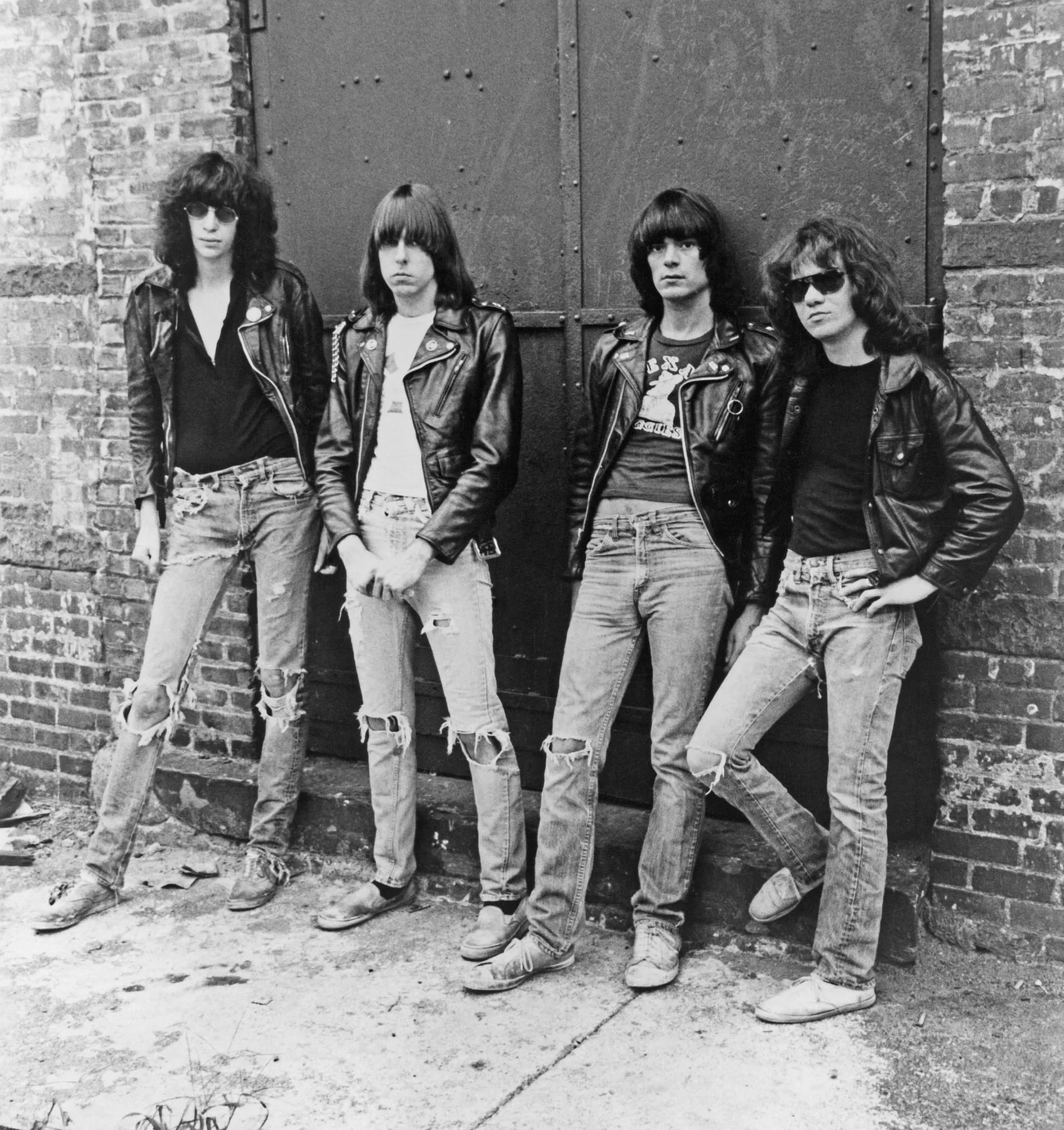
Photo by Danny Fields , licensed under Public domain · Wikimedia Commons
Rank #36
Ramones
From Wikipedia
The Ramones were an American punk rock band formed in the New York City neighborhood Forest Hills, Queens in 1974. Known for helping establish the punk movement in the United States and elsewhere, the Ramones are often recognized as one of the first bands of the genre. Although they never achieved significant commercial success during their existence, the band is seen today as highly influential in punk culture.
Members
- Dee Dee Ramone · bass guitar (1974–1989)
- Joey Ramone · voice (1974–1996)
- Johnny Ramone · guitar (1974–1996)
- Tommy Ramone · drum kit (1974–1978)
- Marky Ramone · drum kit (1978–1983)
- Richie Ramone · drum kit (1983–1987)
- C. J. Ramone · bass guitar (1989–1996)
Discography & Previews
Browse through and click an album to open and play 30-second previews streamed from Apple Music.
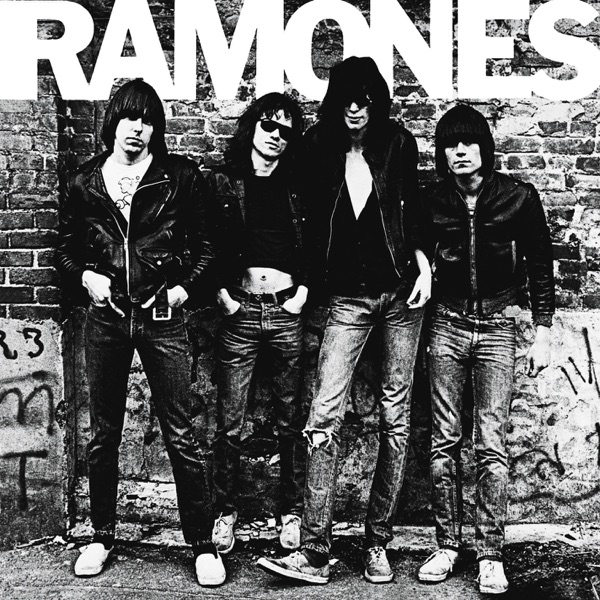
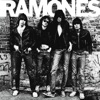
Ramones
1976 · 14 tracks
- 1 Blitzkrieg Bop ↗ 2:13
- 2 Beat On the Brat ↗ 2:32
- 3 Judy Is a Punk ↗ 1:32
- 4 I Wanna Be Your Boyfriend ↗ 2:24
- 5 Chain Saw ↗ 1:56
- 6 Now I Wanna Sniff Some Glue ↗ 1:36
- 7 I Don't Wanna Go Down to the Basement ↗ 2:39
- 8 Loudmouth ↗ 2:14
- 9 Havana Affair ↗ 1:56
- 10 Listen to My Heart ↗ 1:58
- 11 53rd & 3rd ↗ 2:21
- 12 Let's Dance ↗ 1:51
- 13 I Don't Wanna Walk Around With You ↗ 1:43
- 14 Today Your Love, Tomorrow the World ↗ 2:10

Leave Home
1977 · 14 tracks
- 1 Glad to See You Go ↗ 2:13
- 2 Gimme Gimme Shock Treatment ↗ 1:43
- 3 I Remember You ↗ 2:20
- 4 Oh Oh I Love Her So ↗ 2:08
- 5 Carbona Not Glue ↗ 1:55
- 6 Suzy Is a Headbanger ↗ 2:13
- 7 Pinhead ↗ 2:46
- 8 Now I Wanna Be a Good Boy ↗ 2:16
- 9 Swallow My Pride ↗ 2:08
- 10 What's Your Game ↗ 2:39
- 11 California Sun ↗ 2:06
- 12 Commando ↗ 1:55
- 13 You're Gonna Kill That Girl ↗ 2:42
- 14 You Should Have Never Opened That Door ↗ 1:55
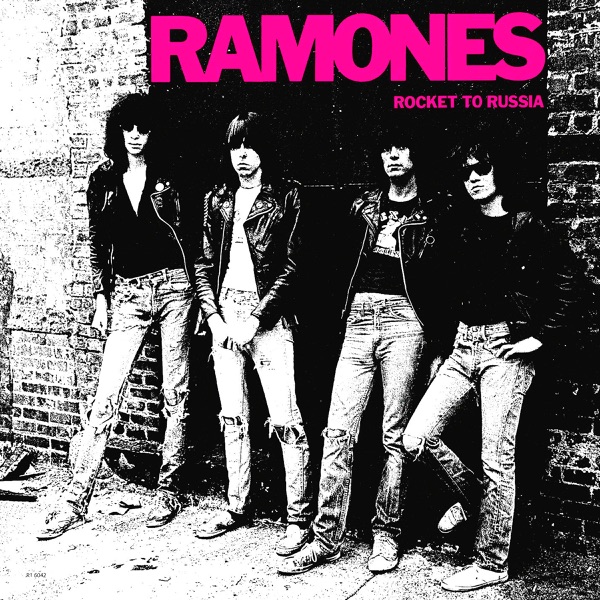
Rocket to Russia
1977 · 14 tracks
- 1 Cretin Hop ↗ 1:55
- 2 Rockaway Beach ↗ 2:06
- 3 Here Today, Gone Tomorrow ↗ 2:49
- 4 Locket Love ↗ 2:11
- 5 I Don't Care ↗ 1:39
- 6 Sheena Is a Punk Rocker ↗ 2:49
- 7 We're a Happy Family ↗ 2:31
- 8 Teenage Lobotomy ↗ 2:01
- 9 Do You Wanna Dance? ↗ 1:55
- 10 I Wanna Be Well ↗ 2:28
- 11 I Can't Give You Anything ↗ 2:01
- 12 Ramona ↗ 2:37
- 13 Surfin' Bird ↗ 2:37
- 14 Why Is It Always This Way ↗ 2:16

Road to Ruin
1978 · 12 tracks
- 1 I Just Want to Have Something to Do ↗ 2:41
- 2 I Wanted Everything ↗ 3:19
- 3 Don't Come Close ↗ 2:45
- 4 I Don't Want You ↗ 2:27
- 5 Needles and Pins ↗ 2:21
- 6 I'm Against It ↗ 2:07
- 7 I Wanna Be Sedated ↗ 2:30
- 8 Go Mental ↗ 2:43
- 9 Questioningly ↗ 3:22
- 10 She's the One ↗ 2:13
- 11 Bad Brain ↗ 2:25
- 12 It's a Long Way Back ↗ 2:21

End of the Century
1980 · 12 tracks
- 1 Do You Remember Rock 'N' Roll Radio? ↗ 3:52
- 2 I'm Affected ↗ 2:55
- 3 Danny Says ↗ 3:10
- 4 Chinese Rock ↗ 2:31
- 5 The Return of Jackie and Judy ↗ 3:15
- 6 Let's Go ↗ 2:37
- 7 Baby, I Love You ↗ 3:51
- 8 I Can't Make It On Time ↗ 2:34
- 9 This Ain't Havana ↗ 2:20
- 10 Rock 'N' Roll High School ↗ 2:41
- 11 All the Way ↗ 2:30
- 12 High Risk Insurance ↗ 2:08

Pleasant Dreams
1981 · 12 tracks
- 1 We Want the Airwaves ↗ 3:22
- 2 All's Quiet On the Eastern Front ↗ 2:15
- 3 The KKK Took My Baby Away ↗ 2:32
- 4 Don't Go ↗ 2:49
- 5 You Sound Like You're Sick ↗ 2:43
- 6 It's Not My Place (In the 9 to 5 World) ↗ 3:23
- 7 She's a Sensation ↗ 3:29
- 8 7-11 ↗ 3:39
- 9 You Didn't Mean Anything to Me ↗ 3:00
- 10 Come On Now ↗ 2:33
- 11 This Business Is Killing Me ↗ 2:42
- 12 Sitting In My Room ↗ 2:31

Subterranean Jungle
1983 · 12 tracks
- 1 Little Bit O' Soul ↗ 2:43
- 2 I Need Your Love ↗ 3:06
- 3 Outsider ↗ 2:11
- 4 What'd Ya Do? ↗ 2:24
- 5 Highest Trails Above ↗ 2:10
- 6 Somebody Like Me ↗ 2:32
- 7 Psycho Therapy ↗ 2:35
- 8 Time Has Come Today ↗ 4:25
- 9 My My Kind of Girl ↗ 3:32
- 10 In the Park ↗ 2:37
- 11 Time Bomb ↗ 2:08
- 12 Everytime I Eat Vegetables It Makes Me Think of You ↗ 3:06

Too Tough to Die
1984 · 13 tracks
- 1 Mama's Boy ↗ 2:11
- 2 I'm Not Afraid of Life ↗ 3:13
- 3 Too Tough to Die ↗ 2:37
- 4 Durango 95 ↗ 0:55
- 5 Wart Hog ↗ 1:54
- 6 Danger Zone ↗ 2:08
- 7 Chasing the Night ↗ 4:28
- 8 Howling At the Moon (Sha-La-La) ↗ 4:06
- 9 Daytime Dilemma ↗ 4:32
- 10 Planet Earth 1988 ↗ 2:54
- 11 Human Kind ↗ 2:42
- 12 Endless Vacation ↗ 1:48
- 13 No Go ↗ 3:03

Animal Boy
1986 · 12 tracks
- 1 Somebody Put Something In My Drink ↗ 3:26
- 2 Animal Boy ↗ 1:53
- 3 Love Kills ↗ 2:21
- 4 Apeman Hop ↗ 2:05
- 5 She Belongs to Me ↗ 3:57
- 6 Crummy Stuff ↗ 2:07
- 7 Bonzo Goes to Bitburg ↗ 4:00
- 8 Mental Hell ↗ 2:40
- 9 Eat That Rat ↗ 1:40
- 10 Freak of Nature ↗ 1:34
- 11 Hair of the Dog ↗ 2:22
- 12 Something to Believe In ↗ 4:09

Halfway to Sanity
1987 · 12 tracks
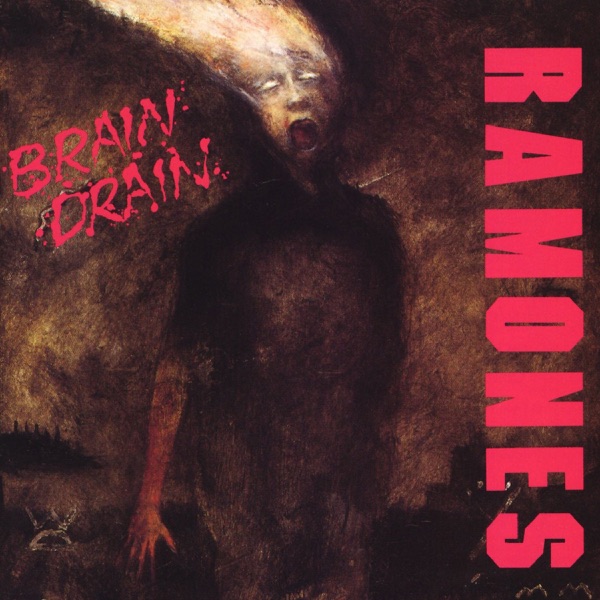
Brain Drain
1989 · 12 tracks
- 1 I Believe In Miracles ↗ 3:19
- 2 Zero Zero UFO ↗ 2:25
- 3 Don't Bust My Chops ↗ 2:28
- 4 Punishment Fits the Crime ↗ 3:05
- 5 All Screwed Up ↗ 4:00
- 6 Palisades Park ↗ 2:22
- 7 Pet Sematary (Single Version) ↗ 3:30
- 8 Learn to Listen ↗ 1:51
- 9 Can't Get You Outta My Mind ↗ 3:22
- 10 Ignorance Is Bliss ↗ 2:38
- 11 Come Back, Baby ↗ 4:02
- 12 Merry Christmas (I Don't Want to Fight Tonight) [Single Version] ↗ 2:04

Mondo Bizarro
1992 · 13 tracks
- 1 C********t ↗ 3:12
- 2 The Job That Ate My Brain ↗ 2:18
- 3 Poison Heart ↗ 4:04
- 4 Anxiety ↗ 2:04
- 5 Strength to Endure ↗ 2:59
- 6 It's Gonna Be Alright ↗ 3:20
- 7 Take It As It Comes ↗ 2:08
- 8 Main Man ↗ 3:28
- 9 Tomorrow She Goes Away ↗ 2:42
- 10 I Won't Let It Happen ↗ 2:21
- 11 Cabbies On Crack ↗ 3:00
- 12 Heidi Is a Headcase ↗ 2:47
- 13 Touring ↗ 2:52

Acid Eaters
1993 · 12 tracks
- 1 Journey to the Center of the Mind ↗ 2:52
- 2 Substitute ↗ 3:15
- 3 Out of Time ↗ 2:41
- 4 The Shape of Things to Come ↗ 1:47
- 5 Somebody to Love ↗ 2:32
- 6 When I Was Young ↗ 3:16
- 7 7 and 7 Is ↗ 1:51
- 8 My Back Pages ↗ 2:28
- 9 Can't Seem to Make You Mine ↗ 2:43
- 10 Have You Ever Seen the Rain? ↗ 2:22
- 11 I Can't Control Myself ↗ 2:56
- 12 Surf City ↗ 2:27

¡Adios Amigos!
1995 · 13 tracks
- 1 I Don't Want to Grow Up ↗ 2:45
- 2 Makin' Monsters for My Friends ↗ 2:36
- 3 It's Not for Me to Know ↗ 2:52
- 4 The Crusher ↗ 2:27
- 5 Life's a Gas ↗ 3:34
- 6 Take the Pain Away ↗ 2:43
- 7 I Love You ↗ 2:21
- 8 Cretin Family ↗ 2:10
- 9 Have a Nice Day ↗ 1:39
- 10 Scattergun ↗ 2:31
- 11 Got Alot to Say ↗ 1:42
- 12 She Talks to Rainbows ↗ 3:15
- 13 Born to Die In Berlin ↗ 3:32
-
 RamonesRamones197614 tracks
 -
 Leave HomeRamones197714 tracks
 -
 Rocket to RussiaRamones197714 tracks
 -
 Road to RuinRamones197812 tracks
 -
 End of the CenturyRamones198012 tracks
 -
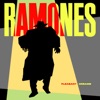 Pleasant DreamsRamones198112 tracks
 -
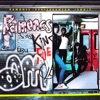 Subterranean JungleRamones198312 tracks
 -
 Too Tough to DieRamones198413 tracks
 -
 Animal BoyRamones198612 tracks
 -
 Halfway to SanityRamones198712 tracks
 -
 Brain DrainRamones198912 tracks
 -
 Mondo BizarroRamones199213 tracks
 -
 Acid EatersRamones199312 tracks
 -
 ¡Adios Amigos!Ramones199513 tracks
Deep Dive
Overview
The Ramones were an American punk rock band formed in Forest Hills, Queens in 1974, and they stand as one of the first and most foundational groups in punk history. Although the band never achieved major commercial success during their 22-year existence, their influence on rock music and punk culture proved immeasurable. They established the sonic and stylistic template that countless bands would follow: stripped-down instrumentation, three-chord urgency, deadpan vocals, and a fiercely independent approach to recording and touring.
Formation Story
The Ramones emerged from the Forest Hills neighborhood of Queens in 1974, a working-class area far removed from Manhattan’s mainstream music scene. The founding lineup consisted of Joey Ramone on vocals, Johnny Ramone on guitar, Dee Dee Ramone on bass, and Tommy Ramone on drums. All four members adopted the surname “Ramone” as a unified front, creating a band identity that transcended individual ego. The group crystallized amid the mid-1970s New York underground, drawing inspiration from garage rock, 1950s rock and roll, and the raw energy of contemporary glam rock, while forging something entirely new: a punk rock sound that would prove more durable and influential than anyone could have predicted from their early local shows.
Breakthrough Moment
The Ramones’ self-titled debut album, released in 1976, became the definitive statement of intent. Recorded with minimal studio budget and maximum raw power, Ramones introduced the world to songs that would become punk anthems: three-minute bursts of driving rhythm and crystalline guitar that felt both primitive and meticulously crafted. The album’s urgency and the band’s relentless touring—often playing small clubs multiple nights per week—began to establish them as the emblematic New York punk band. By the time Leave Home and Rocket to Russia arrived in 1977, the Ramones had become synonymous with punk rock itself, despite limited radio play and modest chart penetration.
Peak Era
The period from 1976 through 1980 represented the Ramones’ creative and cultural apex. During these years, the band released five studio albums that defined punk rock’s first chapter. Road to Ruin (1978) continued their unstoppable output, followed by End of the Century (1980), their most ambitious production to date, helmed by producer Phil Spector. Though the band never topped mainstream charts, their albums became essential documents for anyone engaging with punk, and their touring schedule—performing hundreds of shows annually—cemented them as punk’s most tireless ambassadors.
Musical Style
The Ramones’ sound was deceptively simple yet devilishly effective: driving four-on-the-floor drums, a thunderous bass line, power-chord guitar riffs played at breakneck speed, and Joey Ramone’s distinctive deadpan vocal delivery, often sung through a thicket of hair that became iconic in itself. Johnny Ramone’s guitar style—power chords, minimal soloing, relentless rhythm—became the punk rock template. The songwriting favored brevity, simple chord progressions, and lyrics that ranged from absurdist humor to genuine emotional vulnerability, often wrapped in a veneer of detachment. From their inception through their dissolution in 1996, the Ramones maintained this core aesthetic even as punk itself splintered into countless subgenres. Unlike some of their peers who experimented with post-punk sophistication or new wave accessibility, the Ramones remained philosophically committed to the three-chord punk ethos.
Major Albums
Ramones (1976)
The self-titled debut, recorded in just two weeks on a shoestring budget, became the blueprint for punk rock worldwide. Its lean production, economy of expression, and infectious melodies proved that punk rock could be both artless and artfully constructed.
Rocket to Russia (1977)
The third album in less than two years, Rocket to Russia solidified the band’s prolific output and contained some of their most enduring songs, establishing them as the defining voice of American punk during punk’s explosive 1977 peak.
Road to Ruin (1978)
A more varied record that introduced longer song structures and more nuanced arrangements while maintaining the band’s essential punk identity, demonstrating their ability to evolve without abandoning their core sound.
End of the Century (1980)
Produced by Phil Spector, this album represented their most polished production and biggest commercial push, proving the band could work within a major studio framework while retaining their raw aesthetic.
Too Tough to Die (1984)
Released with Richie Ramone on drums (1983–1987), this album showcased the band’s enduring vitality after a quiet period, reasserting their presence in a rock landscape that had shifted around them.
Signature Songs
- “Blitzkrieg Bop” — An instant punk anthem featuring the famous “Hey! Ho! Let’s Go!” chant that became a rallying cry for the punk movement.
- “I Wanna Be Sedated” — A deceptively upbeat song about numbness and dissociation that became one of their most recognizable tracks.
- “Rock and Roll Radio” — A love letter to rock music and radio that captured the band’s reverence for the genre’s history.
- “Teenage Lobotomy” — A playful, grotesque take on teenage angst that exemplified their darkly comic sensibility.
- “Questioningly” — A driving punk anthem that exemplified their relentless guitar-driven approach.
- “Cretin Hop” — A kinetic celebration of punk culture delivered with signature deadpan charm.
Influence on Rock
The Ramones’ influence on rock music cannot be overstated. By establishing punk rock as a viable and sustainable genre through their relentless touring and prolific recording, they created a template that enabled countless bands to emerge from local scenes worldwide. They influenced not only direct punk inheritors but also garage rock, alternative rock, and indie rock bands who adopted their DIY ethic and three-chord minimalism. Their approach to songwriting—brief, melodic, emotionally direct beneath a layer of irony—shaped how rock music could be constructed. The Ramones proved that commercial success was not a prerequisite for cultural impact, and their example enabled generations of artists to pursue music on their own terms rather than seeking industry validation.
Legacy
The Ramones disbanded in 1996 after more than two decades of nearly continuous activity, but their cultural footprint has only grown. They are widely recognized as foundational architects of punk rock, and their recordings remain essential listening for anyone studying rock history. Streams and sales of their catalog have sustained their music across generations, introducing Ramones songs to listeners born decades after the band’s final show. The band’s commitment to their aesthetic and refusal to compromise their vision—despite limited commercial success during their active years—has become a defining aspect of their legend. Their influence appears not only in punk rock’s ongoing vitality but in the broader rock underground’s insistence on artistic integrity over commercial calculation.
Fun Facts
- The band members all adopted the surname “Ramone” as a unifying band identity, with each member choosing or being given a Ramone first name.
- The Ramones performed at CBGB, the legendary New York punk club, regularly during their formative years, helping establish it as ground zero for American punk rock.
- Despite their critical importance to punk history, the band never achieved a top-40 hit in the United States during their original run, yet remained hugely influential in Europe and Japan throughout their career.
- Dee Dee Ramone (1974–1989) was replaced on bass by C.J. Ramone (1989–1996), with Tommy Ramone (1974–1978) and subsequent drummers Marky Ramone (1978–1983), Richie Ramone (1983–1987), and others rotating through the drum kit over the band’s 22-year existence.