
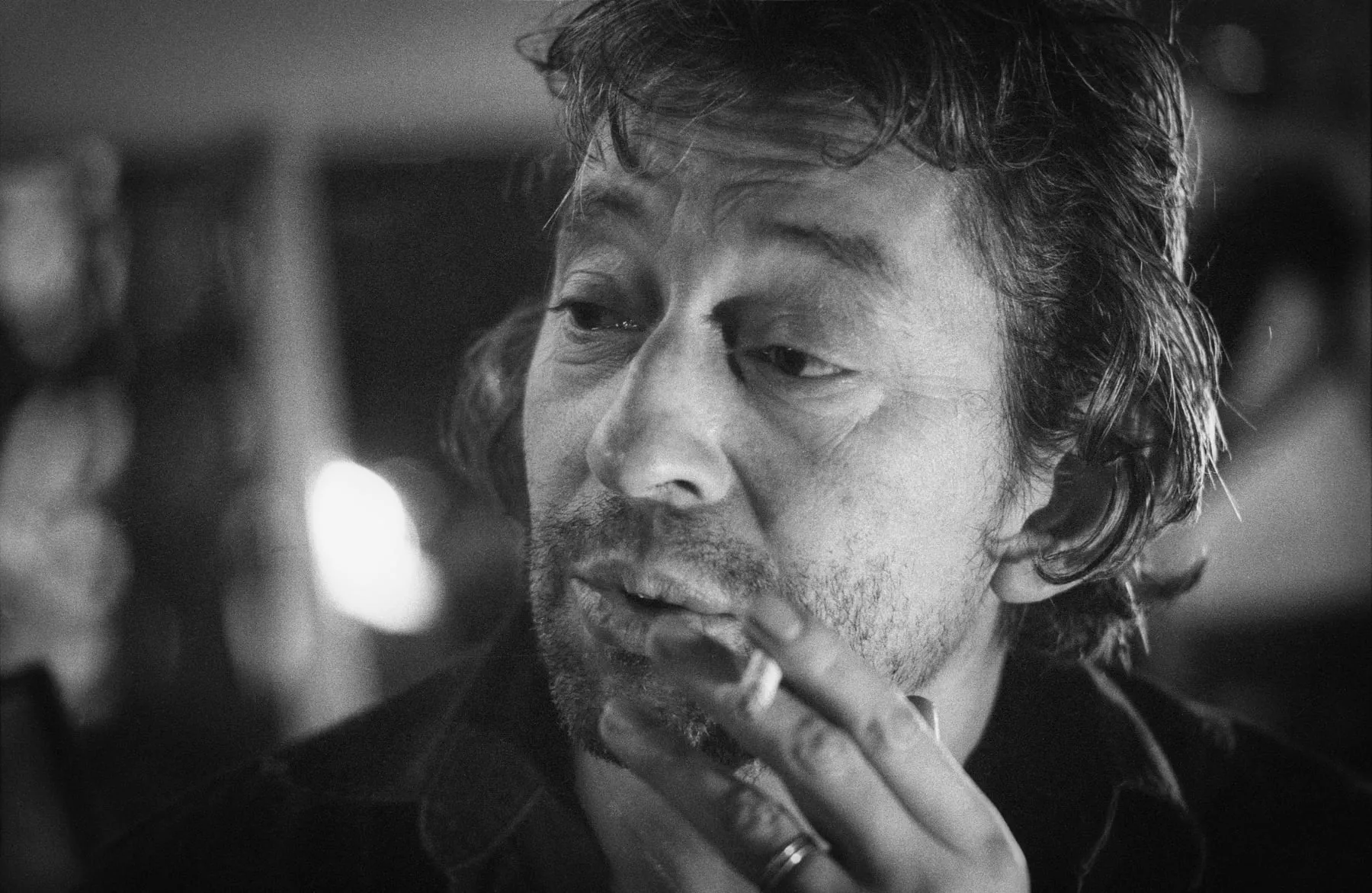
Photo by Claude TRUONG-NGOC , licensed under CC BY-SA 3.0 · Wikimedia Commons
Rank #187
Serge Gainsbourg
From Wikipedia
Serge Gainsbourg was a French singer-songwriter, actor, composer, and director. Regarded as one of the most important figures in French pop, he was renowned for often provocative releases which caused uproar in France, dividing public opinion. His artistic output ranged from his early work in jazz, chanson, and yé-yé to later efforts in rock, zouk, funk, reggae, and electronica. Gainsbourg's varied musical style and individuality make him difficult to categorise, although his legacy has been firmly established and he is often regarded as one of the world's most influential popular musicians.
Discography & Previews
Browse through and click an album to open and play 30-second previews streamed from Apple Music.

Du chant à la une !…
1958 · 10 tracks
- 1 Le poinçonneur des Lilas ↗ 2:43
- 2 La recette de l'amour fou ↗ 1:58
- 3 Douze belles dans la peau ↗ 1:55
- 4 Ce mortel ennui ↗ 2:55
- 5 Ronsard 58 ↗ 1:54
- 6 La femme des uns sous le corps des autres ↗ 3:00
- 7 L'alcool ↗ 3:57
- 8 Du jazz dans le ravin ↗ 2:12
- 9 Charleston des déménageurs de piano ↗ 2:24
- 10 Friedland (Version 45t) ↗ 2:32

Nº2
1959 · 12 tracks
- 1 Le claqueur de doigts ↗ 3:09
- 2 La nuit d'Octobre ↗ 3:08
- 3 Adieu créature ↗ 2:12
- 4 L'anthracite ↗ 2:34
- 5 Mambo miam miam ↗ 2:35
- 6 Indifférente ↗ 2:17
- 7 Jeunes femmes et vieux messieurs ↗ 2:05
- 8 L'amour à la papa ↗ 2:49
- 9 Cha cha cha du loup ↗ 1:56
- 10 Sois belle et tais-toi ↗ 1:59
- 11 Judith ↗ 2:32
- 12 Laissez-moi tranquille ↗ 1:55
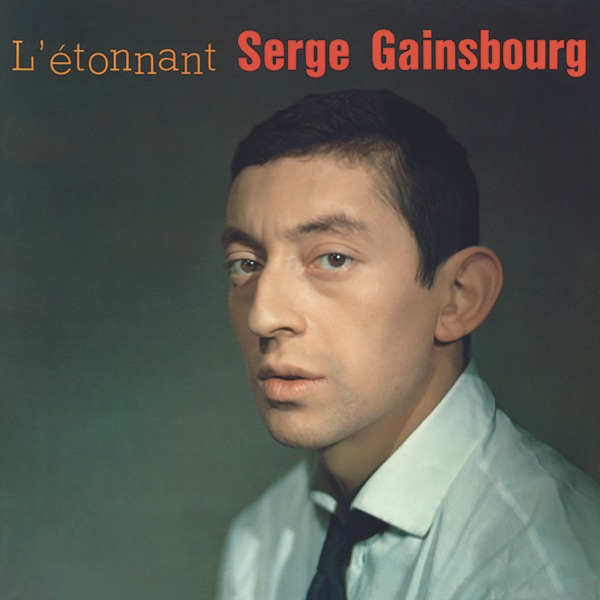
L’Étonnant Serge Gainsbourg
1961 · 10 tracks

N°4
1962 · 12 tracks
- 1 Les goémons ↗ 2:42
- 2 Black Trombone ↗ 2:39
- 3 Baudelaire ↗ 2:29
- 4 Intoxicated Man ↗ 2:39
- 5 Quand tu t'y mets ↗ 1:51
- 6 Les cigarillos ↗ 1:49
- 7 Requiem pour un twisteur ↗ 2:40
- 8 Ce grand méchant vous ↗ 2:21
- 9 Vilaines filles, mauvais garçons ↗ 2:00
- 10 L'appareil à sous ↗ 1:34
- 11 La javanaise ↗ 2:31
- 12 Un violon, un jambon ↗ 2:24

Confidentiel
1963 · 14 tracks
- 1 Chez les yé-yé ↗ 2:29
- 2 Sait-on jamais où va une fille quand elle vous quitte ? ↗ 2:01
- 3 Le Talkie Walkie ↗ 2:04
- 4 La fille au rasoir ↗ 1:45
- 5 La saison des pluies ↗ 3:28
- 6 Elaeudanla téitéia ↗ 1:39
- 7 Scenic Railway ↗ 2:35
- 8 Le temps des yoyos ↗ 2:38
- 9 Amour sans amour ↗ 2:04
- 10 No No Thank's No ↗ 2:32
- 11 Maxim's ↗ 1:51
- 12 Negative Blues ↗ 1:32
- 13 Chez les yé-yé (Complete Take) ↗ 3:17
- 14 La fille au rasoir (Complete Take) ↗ 2:16

Gainsbourg Percussions
1964 · 12 tracks

Bonnie and Clyde
1968 · 12 tracks
- 1 Bonnie And Clyde ↗ 4:16
- 2 Bubble Gum ↗ 1:45
- 3 Comic Strip (Mono Version) ↗ 2:10
- 4 Un jour comme un autre ↗ 2:20
- 5 Pauvre Lola ↗ 2:21
- 6 L'eau à la bouche (BOF "L'eau à la bouche") ↗ 2:30
- 7 La Javanaise (Mono Version) ↗ 2:29
- 8 La madrague ↗ 2:33
- 9 Intoxicated Man ↗ 2:37
- 10 Everybody Loves My Baby ↗ 2:11
- 11 Baudelaire (Sur Un Poème De Charles Beaudelaire) ↗ 2:26
- 12 Docteur Jekyll et monsieur Hyde ↗ 2:00

Initials B.B.
1968 · 13 tracks
- 1 Initials B.B. ↗ 3:34
- 2 Comic Strip ↗ 2:10
- 3 Bloody Jack ↗ 2:04
- 4 Docteur Jekyll et monsieur Hyde ↗ 1:55
- 5 Torrey Canyon ↗ 2:43
- 6 Shu ba du ba loo ba ↗ 2:07
- 7 Ford Mustang ↗ 2:39
- 8 Bonnie And Clyde ↗ 4:16
- 9 Black And White ↗ 2:08
- 10 Qui est 'In", qui est "Out" ↗ 2:13
- 11 Hold Up ↗ 2:19
- 12 Marilu ↗ 2:34
- 13 Chatterton ↗ 2:06
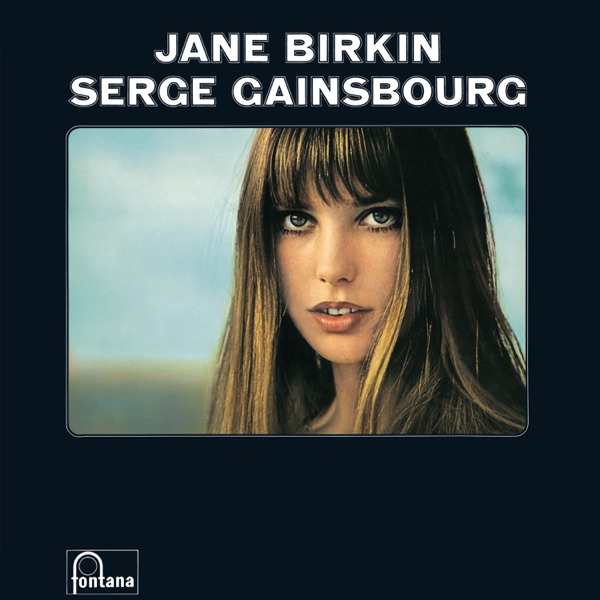
Jane Birkin & Serge Gainsbourg
1969 · 11 tracks
- 1 Je t'aime moi non plus ↗ 4:22
- 2 L'anamour ↗ 2:16
- 3 Orang outang ↗ 2:26
- 4 Sous le soleil exactement ↗ 2:50
- 5 18 - 39 ↗ 2:38
- 6 69 année érotique (feat. Jane Birkin) ↗ 3:18
- 7 Jane B. ↗ 3:06
- 8 Elisa (BOF "L'horizon") ↗ 2:30
- 9 Le canari est sur le balcon ↗ 2:21
- 10 Les sucettes ↗ 2:35
- 11 Manon (BOF "Manon 70") ↗ 2:42

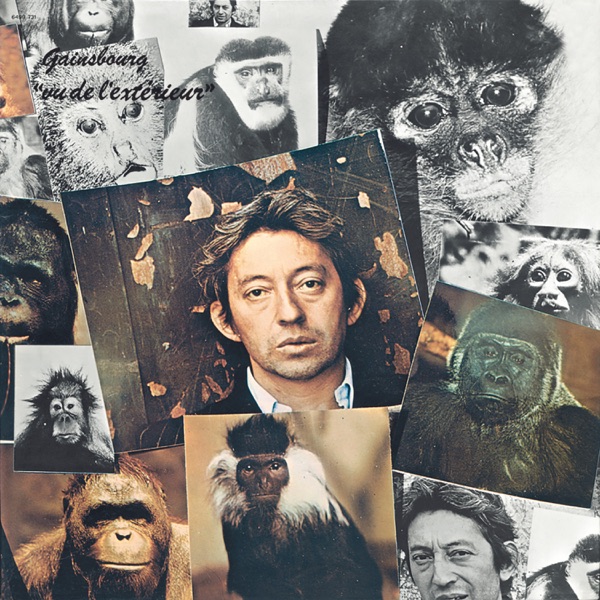
Vu de l’extérieur
1973 · 10 tracks

L’Homme à tête de chou
1976 · 12 tracks
- 1 L'homme à tête de chou ↗ 3:00
- 2 Chez Max coiffeur pour hommes ↗ 2:00
- 3 Marilou reggae ↗ 2:12
- 4 Transit à Marilou ↗ 1:33
- 5 Flash Forward ↗ 2:37
- 6 Aéroplanes ↗ 2:37
- 7 Premiers symptômes ↗ 1:14
- 8 Ma Lou Marilou ↗ 2:42
- 9 Variations sur Marilou ↗ 7:40
- 10 Meurtre à l'extincteur ↗ 0:47
- 11 Marilou sous la neige ↗ 2:23
- 12 Lunatic Asylum ↗ 3:22
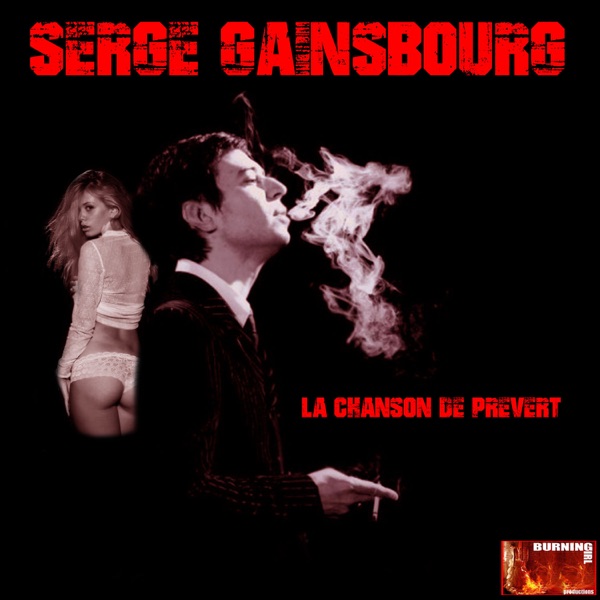
La Chanson de Prévert
2008 · 24 tracks
- 1 La chanson de Prévert ↗ 3:00
- 2 En réalisant ta lettre ↗ 2:00
- 3 Le Rock De Nerval ↗ 1:50
- 4 Les oubliettes ↗ 2:27
- 5 Chanson De Magli ↗ 2:04
- 6 Viva Villa ↗ 3:21
- 7 Les Amours Perdues ↗ 2:56
- 8 Les Femmes C'est De Chinois ↗ 2:31
- 9 Personne ↗ 2:44
- 10 Le Sonnet D'arvers ↗ 1:52
- 11 Le Claquer De Doigts ↗ 3:06
- 12 La Nuit D'octobre ↗ 3:05
- 13 Adieu, Creature! ↗ 2:09
- 14 L'anthracite ↗ 2:31
- 15 Mambo Miam Miam ↗ 2:34
- 16 Indifférente ↗ 2:16
- 17 Jeune Femmes Et Vieux Messieurs ↗ 2:03
- 18 L'amour à la papa ↗ 2:48
- 19 Mes Petites Odalisques ↗ 2:45
- 20 Le Poinçonneur des Lilas ↗ 2:37
- 21 Cha-Cha-Cha Du Loop ↗ 1:55
- 22 Sois Belle at Tais-Tois ↗ 1:59
- 23 Laissez Moi Tranquille ↗ 1:55
- 24 Judith ↗ 2:29
-
 Du chant à la une !…Serge Gainsbourg195810 tracks
 -
 Nº2Serge Gainsbourg195912 tracks
 -
 L’Étonnant Serge GainsbourgSerge Gainsbourg196110 tracks
 -
 N°4Serge Gainsbourg196212 tracks
 -
 ConfidentielSerge Gainsbourg196314 tracks
 -
 Gainsbourg PercussionsSerge Gainsbourg196412 tracks
 -
 Bonnie and ClydeSerge Gainsbourg196812 tracks
 -
 Initials B.B.Serge Gainsbourg196813 tracks
 -
 Jane Birkin & Serge GainsbourgSerge Gainsbourg196911 tracks
 -
 Histoire de Melody NelsonSerge Gainsbourg19717 tracks
 -
 Vu de l’extérieurSerge Gainsbourg197310 tracks
 -
 L’Homme à tête de chouSerge Gainsbourg197612 tracks
 -
 La Chanson de PrévertSerge Gainsbourg200824 tracks
Deep Dive
Overview
Serge Gainsbourg stands as one of the most important figures in French popular music and among the world’s most influential popular musicians. Born in 1928 and active until his death in 1991, Gainsbourg worked across multiple idioms—jazz, chanson, yé-yé, rock, funk, reggae, and electronica—with a restlessness and willingness to provoke that left French audiences divided and the international music world intrigued. His artistic range made him difficult to categorize, but that very difficulty became his signature: a refusal to settle into a single genre or audience expectation, and a consistent pursuit of songs that were as much about scandal and intellectual play as they were about melody and groove.
Formation Story
Serge Gainsbourg emerged from the French chanson and jazz traditions of the 1950s. His early work drew from the storytelling modes of traditional French song, but he grafted onto them a modernist sensibility shaped by exposure to American jazz and pop. Throughout the late 1950s and early 1960s, he recorded a string of albums—Du chant à la une !… (1958), Nº2 (1959), L’Étonnant Serge Gainsbourg (1961), and N°4 (1962)—that established him as a distinctive voice in French pop. These early records mixed jazz inflections, Latin percussion (mambo, cha-cha-cha), and the conversational intimacy of chanson. Gainsbourg’s approach was intellectual and often ironic, building an aesthetic that treated pop music as a space for artistic experiment rather than mass entertainment alone.
Breakthrough Moment
Gainsbourg’s trajectory shifted decisively in the late 1960s. The 1968 albums Bonnie and Clyde and Initials B.B. marked a turn toward more contemporary sound palettes and a willingness to engage with rock music proper. His 1969 collaboration with actress and singer Jane Birkin, Jane Birkin & Serge Gainsbourg, brought him international notice, particularly through the album’s contentious material. That same period saw him working in film as an actor and director, embedding himself in French cultural production beyond music alone. By the early 1970s, Gainsbourg had moved from cult French figure to an artist whose provocations commanded attention across Europe and beyond.
Peak Era
The 1970s through mid-1980s constituted Gainsbourg’s most creatively fertile and culturally significant period. Histoire de Melody Nelson (1971) represented a landmark: a concept album that blended orchestral arrangements, funk grooves, and character-driven storytelling into a unified work of pop art. Rock Around the Bunker (1975) and L’Homme à tête de chou (1976) continued his exploration of rock idioms, while Aux armes et cætera (1979) integrated reggae and world-music influences. Mauvaises nouvelles des étoiles (1981) and Love on the Beat (1984) pushed further into funk and electronic production, showing an artist unafraid of 1980s technology and sonic trends. You’re Under Arrest (1987) closed this era with more dance-oriented material. Throughout these years, Gainsbourg remained a figure of cultural controversy in France, his sexual explicitness, political commentary, and genre-hopping ensuring that his work generated debate as often as it generated hits.
Musical Style
Gainsbourg’s sound evolved dramatically across his career, yet certain traits remained constant: a conversational, often deadpan vocal delivery; an ear for orchestral and rhythmic texture; and a fascination with mixing high and low cultural references. In his early period, he worked within the French chanson tradition, emphasizing melody and lyrical sophistication. By the 1960s and 1970s, he absorbed rock instrumentation, funk rhythms, and reggae production techniques. His arrangements often paired strings or horns with electric bass and drums, creating a hybrid aesthetic that was neither quite rock nor quite pop, but something distinctly his own. Production-wise, Gainsbourg was willing to embrace whatever tools served the song: orchestral grandeur in Histoire de Melody Nelson, crisp funk in Love on the Beat, experimental electronic textures in his later work. His voice—reedy, understated, sometimes almost spoken—became an instrument in itself, a vehicle for irony, seduction, and provocation in equal measure.
Major Albums
Histoire de Melody Nelson (1971)
A narrative album that follows the titular character through Paris, blending orchestral pop with funk undertones and establishing Gainsbourg as a concept-album artist of the first rank.
Bonnie and Clyde (1968)
Marked a shift toward contemporary rock arrangements and cemented Gainsbourg’s appeal beyond French borders through more aggressive, rhythm-driven production.
Love on the Beat (1984)
Embodied Gainsbourg’s embrace of 1980s electronic production and funk, proving his continued relevance as electronic music and dance became mainstream.
Jane Birkin & Serge Gainsbourg (1969)
A watershed collaboration that brought Gainsbourg international attention and showcased his ability to work with other artists while maintaining his provocative edge.
Aux armes et cætera (1979)
Integrated reggae and world-music influences into Gainsbourg’s rock vocabulary, demonstrating his ongoing openness to genre fusion.
Signature Songs
- “Je t’aime… moi non plus” — The 1969 duet with Jane Birkin that became an international controversy for its sexual frankness and breathy vocal delivery.
- “Melody” — A centerpiece of Histoire de Melody Nelson, marrying narrative storytelling to lush orchestration.
- “Comic Strip” — From Histoire de Melody Nelson, showcasing Gainsbourg’s talent for transforming vernacular language into art.
- “Variations sur le thème de Casino Royale” — A playful, orchestral take on the James Bond theme, typifying his irreverent approach to existing cultural material.
Influence on Rock
Gainsbourg’s influence extends across rock and popular music far beyond France. His willingness to treat rock and pop as intellectual and artistic spaces rather than purely commercial vehicles influenced generations of art-rock, post-punk, and alternative musicians who saw in his work a model for how to be provocative, experimental, and commercially viable simultaneously. His genre-hopping—from chanson to rock to funk to reggae—established a template for artists unafraid to move between musical idioms. The concept album tradition that he helped shape through Histoire de Melody Nelson rippled through rock music well into subsequent decades. His influence on electronic and dance music producers, particularly in the 1980s and beyond, testifies to his openness to technological change and contemporary production methods.
Legacy
Serge Gainsbourg died in 1991 with his reputation as one of the world’s most influential popular musicians firmly established. His catalog has remained in print and culturally active long after his death, with his music streaming and circulating to new audiences. The 2008 release La Chanson de Prévert and the 2023 La Comédie-Française chante Gainsbourg demonstrate ongoing interest in his work, both as historical artifact and as material worthy of reinterpretation. Gainsbourg’s refusal to accept categorical limits—his insistence on moving between rock, funk, reggae, electronica, and chanson—made him a patron saint for artists who rejected genre boundaries. His provocative persona, coupled with his undeniable musicality, created a template for the provocateur-artist that has influenced rock culture’s relationship with sexuality, politics, and artistic seriousness. In France, Gainsbourg remains a towering cultural figure whose death prompted national mourning and whose legacy continues to shape French popular music.
Fun Facts
- Gainsbourg was also a working actor and director, embedding himself in French cinema alongside his musical career.
- His 1969 duet “Je t’aime… moi non plus” was banned by numerous radio stations for its suggestive content and moaning vocal delivery.
- Histoire de Melody Nelson (1971) was a concept album before concept albums became commonplace in rock, establishing Gainsbourg as an innovator in album-length storytelling.
- His taste for reggae and funk in the late 1970s and 1980s showed an artist in his fifth and sixth decades willing to embrace contemporary musical trends rather than rest on earlier achievements.