
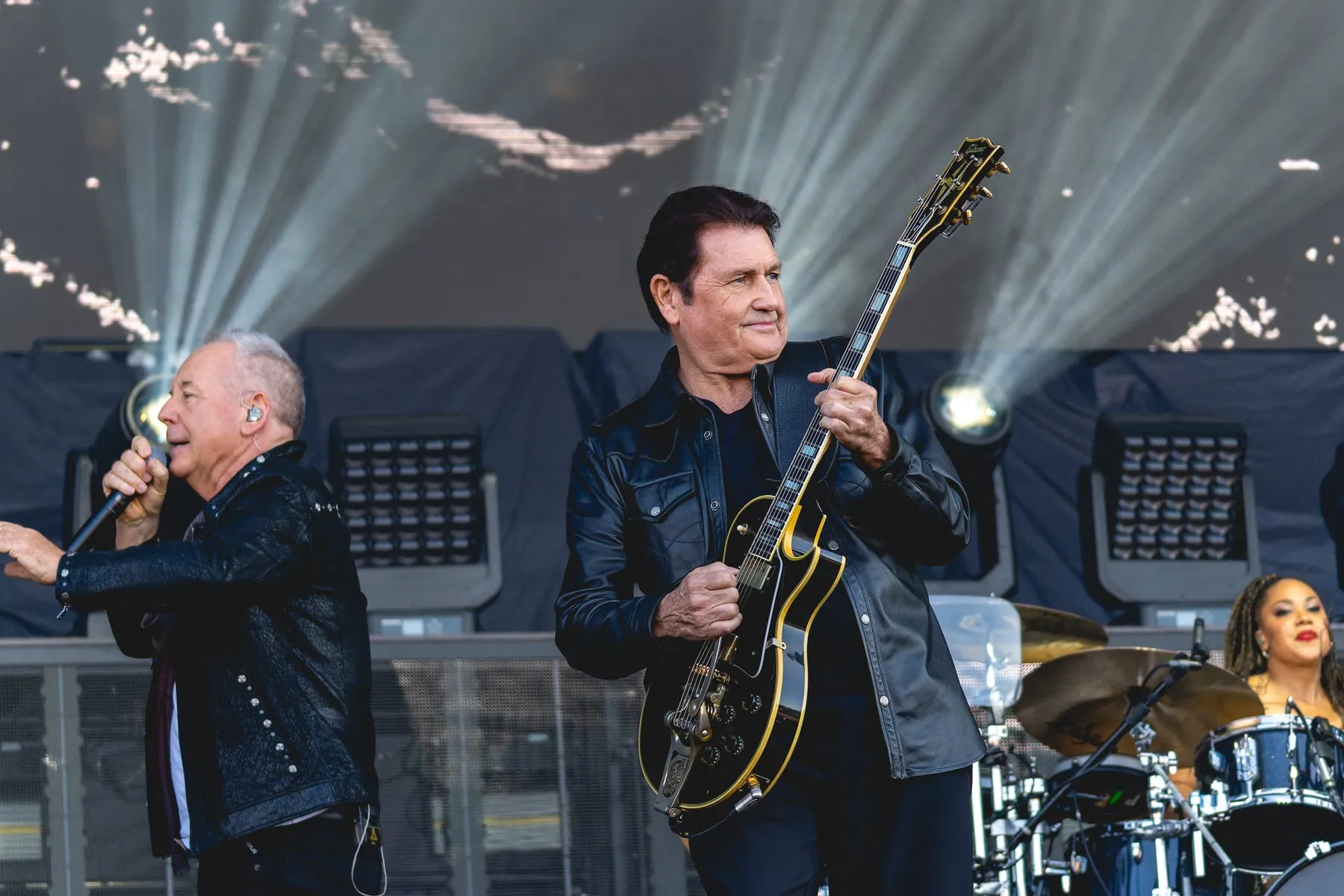
Photo by Raph_PH , licensed under CC BY 2.0 · Wikimedia Commons
Rank #169
Simple Minds
From Wikipedia
Simple Minds are a Scottish rock band formed in Glasgow in 1977. The band is currently a core duo of original members Jim Kerr (vocals) and Charlie Burchill (guitar), augmented by guest musicians. Notable former members include Mick MacNeil (keyboards), Derek Forbes (bass), Brian McGee (drums), Mel Gaynor (drums), and John Giblin (bass).
Members
- Charlie Burchill
- Jim Kerr
- Mick MacNeil
Discography & Previews
Browse through and click an album to open and play 30-second previews streamed from Apple Music.


Sons and Fascination
1981 · 15 tracks
- 1 In Trance As Mission ↗ 6:53
- 2 Sweat In Bullet ↗ 4:30
- 3 70 Cities As Love Brings the Fall ↗ 4:50
- 4 Boys from Brazil ↗ 5:31
- 5 Love Song ↗ 5:04
- 6 This Earth That You Walk Upon ↗ 5:28
- 7 Sons and Fascination ↗ 5:23
- 8 Seeing Out the Angel ↗ 6:11
- 9 Theme for Great Cities ↗ 5:52
- 10 The American ↗ 3:51
- 11 20th Century Promised Land ↗ 4:55
- 12 Wonderful In Young Life ↗ 5:21
- 13 League of Nations ↗ 4:57
- 14 Careful In Career ↗ 5:09
- 15 Sound In 70 Cities ↗ 5:05
Sister Feelings Call
1981 · 15 tracks
- 1 In Trance As Mission ↗ 6:53
- 2 Sweat In Bullet ↗ 4:30
- 3 70 Cities As Love Brings the Fall ↗ 4:50
- 4 Boys from Brazil ↗ 5:31
- 5 Love Song ↗ 5:04
- 6 This Earth That You Walk Upon ↗ 5:28
- 7 Sons and Fascination ↗ 5:23
- 8 Seeing Out the Angel ↗ 6:11
- 9 Theme for Great Cities ↗ 5:52
- 10 The American ↗ 3:51
- 11 20th Century Promised Land ↗ 4:55
- 12 Wonderful In Young Life ↗ 5:21
- 13 League of Nations ↗ 4:57
- 14 Careful In Career ↗ 5:09
- 15 Sound In 70 Cities ↗ 5:05

New Gold Dream (81‐82‐83‐84)
1982 · 9 tracks
- 1 Someone Somewhere (In Summertime) [Remastered 2002] ↗ 4:38
- 2 Colours Fly and Catherine Wheel (Remastered 2002) ↗ 3:50
- 3 Promised You a Miracle (Remastered 2002) ↗ 4:27
- 4 Big Sleep (Remastered 2002) ↗ 5:00
- 5 Somebody Up There Likes You (Remastered 2002) ↗ 5:03
- 6 New Gold Dream (81–82–83–84) [Remastered 2002] ↗ 5:39
- 7 Glittering Prize (Remastered 2002) ↗ 4:33
- 8 Hunter and the Hunted (Remastered 2002) ↗ 5:55
- 9 King Is White and in the Crowd (Remastered 2002) ↗ 7:03

Sparkle in the Rain
1984 · 10 tracks

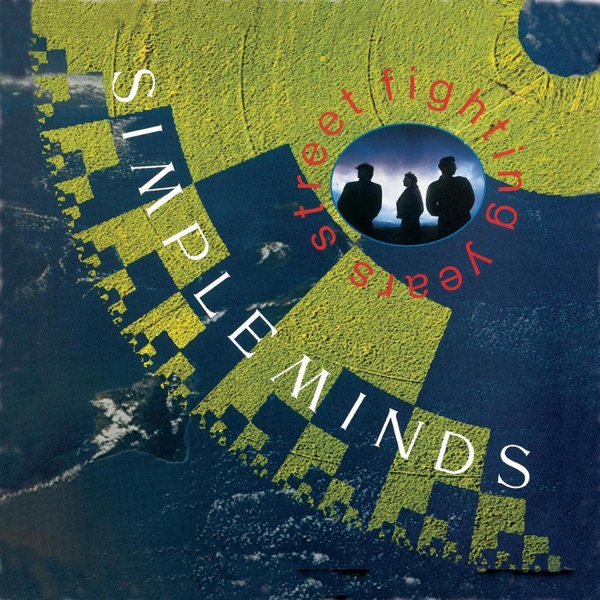
Street Fighting Years
1989 · 11 tracks
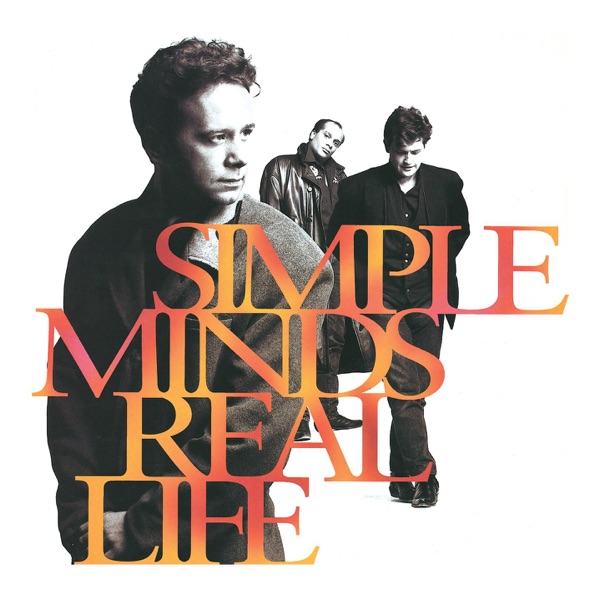
Real Life
1991 · 12 tracks


Neon Lights
2001 · 14 tracks
- 1 Gloria ↗ 3:44
- 2 The Man Who Sold the World ↗ 4:08
- 3 Homosapien ↗ 4:21
- 4 Dancing Barefoot ↗ 3:48
- 5 Neon Lights ↗ 4:17
- 6 Hello I Love You ↗ 3:33
- 7 Bring On the Dancing Horses ↗ 5:52
- 8 The Needle & the Damage Done ↗ 4:15
- 9 For Your Pleasure ↗ 4:09
- 10 All Tomorrow's Parties ↗ 3:36
- 11 Being Boiled (Bonus Track) ↗ 3:51
- 12 Love Will Tear Us Apart (Bonus Track) ↗ 4:49
- 13 The Man Who Sold the World (White Spaces Main Mix [Bonus Track]) ↗ 5:21
- 14 Homosapien (Vince Clarke Mix [Bonus Track]) ↗ 3:55

Cry
2002 · 17 tracks
- 1 Cry ↗ 3:55
- 2 Spaceface ↗ 3:54
- 3 New Sunshine Morning ↗ 3:36
- 4 One Step Closer ↗ 6:06
- 5 Face In the Sun ↗ 3:58
- 6 Disconnected ↗ 3:38
- 7 Lazy Lately ↗ 4:02
- 8 Sugar ↗ 3:13
- 9 Sleeping Girl ↗ 4:11
- 10 Cry Again ↗ 3:36
- 11 Slave Nation ↗ 3:02
- 12 The Floating World ↗ 4:25
- 13 Lead The Blind (Bonus Track) ↗ 3:59
- 14 For What It's Worth (Bonus Track) ↗ 3:44
- 15 The Garden (Bonus Track) ↗ 3:15
- 16 New Sunrise (Bonus Track) ↗ 4:17
- 17 Where Is the Max (Bonus Track) ↗ 4:40

Graffiti Soul
2009 · 19 tracks
- 1 Moscow Underground ↗ 5:00
- 2 Rockets ↗ 4:36
- 3 Stars Will Lead The Way ↗ 3:26
- 4 Light Travels ↗ 4:12
- 5 Kiss & Fly ↗ 5:01
- 6 Graffiti Soul ↗ 4:48
- 7 Blood Type O ↗ 3:49
- 8 This Is It ↗ 4:52
- 9 Shadows & Light (Bonus Track) ↗ 2:50
- 10 Rockin' In the Free World (Bonus Track) ↗ 4:17
- 11 A Song From Under the Floorboards (Bonus Track) ↗ 4:33
- 12 Christine (Bonus Track) ↗ 3:12
- 13 (Get A) Grip (On Yourself) [Bonus Track] ↗ 3:52
- 14 Let the Day Begin (Bonus Track) ↗ 3:00
- 15 Peace, Love & Understanding (Bonus Track) ↗ 3:34
- 16 Teardrop (Bonus Track) ↗ 5:33
- 17 Whiskey In the Jar (Bonus Track) ↗ 4:00
- 18 Sloop John B ↗ 4:34
- 19 Children of the Revolution (Bonus Track) ↗ 3:28

Big Music
2014 · 23 tracks
- 1 Blindfolded ↗ 5:23
- 2 Midnight Walking ↗ 3:54
- 3 Honest Town ↗ 4:47
- 4 Big Music ↗ 4:12
- 5 Human ↗ 3:42
- 6 Blood Diamonds ↗ 4:21
- 7 Let the Day Begin ↗ 5:10
- 8 Concrete & Cherry Blossom ↗ 3:33
- 9 Imagination ↗ 3:42
- 10 Kill Or Cure ↗ 4:12
- 11 Broken Glass Park ↗ 4:41
- 12 Spirited Away ↗ 4:09
- 13 Blindfolded (Reprise [Bonus Track]) ↗ 4:24
- 14 Swimming Towards the Sun (Bonus Track) ↗ 5:16
- 15 Bittersweet (Bonus Track) ↗ 3:58
- 16 Liaison (Bonus Track) ↗ 4:35
- 17 Riders On the Storm (Bonus Track) ↗ 3:46
- 18 Dancing Barefoot (Bonus Track) ↗ 4:03
- 19 (Get A) Grip [On Yourself] [with The Stranglers] [Bonus Track] ↗ 4:06
- 20 Blindfolded (Johnson Somerset Remix [Bonus Track]) ↗ 10:08
- 21 Midnight Walking (Johnson Somerset Remix [Bonus Track]) ↗ 9:06
- 22 Honest Town (Johnson Somerset Remix [Bonus Track]) ↗ 10:25
- 23 Big Music (Johnson Somerset Remix [Bonus Track]) ↗ 11:00

Acoustic
2016 · 12 tracks
- 1 The American ↗ 4:30
- 2 Promised You A Miracle (feat. KT Tunstall) ↗ 4:35
- 3 Glittering Prize ↗ 4:07
- 4 See The Lights ↗ 4:58
- 5 New Gold Dream ↗ 4:58
- 6 Someone Somewhere In Summertime ↗ 4:40
- 7 Waterfront ↗ 5:16
- 8 Sanctify Yourself ↗ 4:59
- 9 Chelsea Girl ↗ 4:28
- 10 Alive And Kicking ↗ 5:53
- 11 Don't You (Forget About Me) ↗ 5:16
- 12 Long Black Train ↗ 4:36

Walk Between Worlds
2018 · 11 tracks
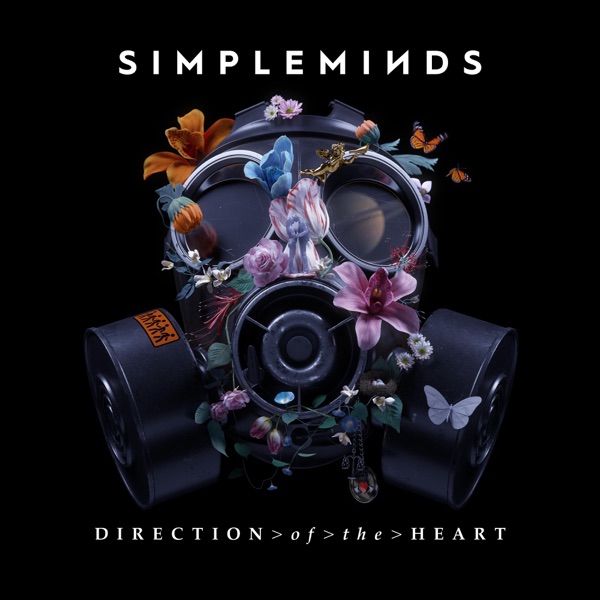
Direction of the Heart
2022 · 11 tracks
-
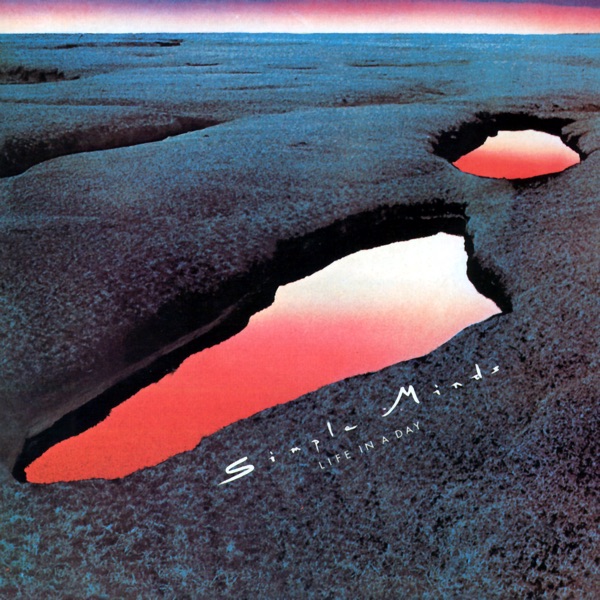
 Life in a DaySimple Minds197910 tracks
 -
 Empires and DanceSimple Minds198010 tracks
 -
 Sons and FascinationSimple Minds198115 tracks
 - Sister Feelings CallSimple Minds198115 tracks
-
 New Gold Dream (81‐82‐83‐84)Simple Minds19829 tracks
 -
 Sparkle in the RainSimple Minds198410 tracks
 -
 Once Upon a TimeSimple Minds19858 tracks
 -
 Street Fighting YearsSimple Minds198911 tracks
 -
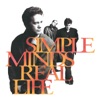 Real LifeSimple Minds199112 tracks
 -
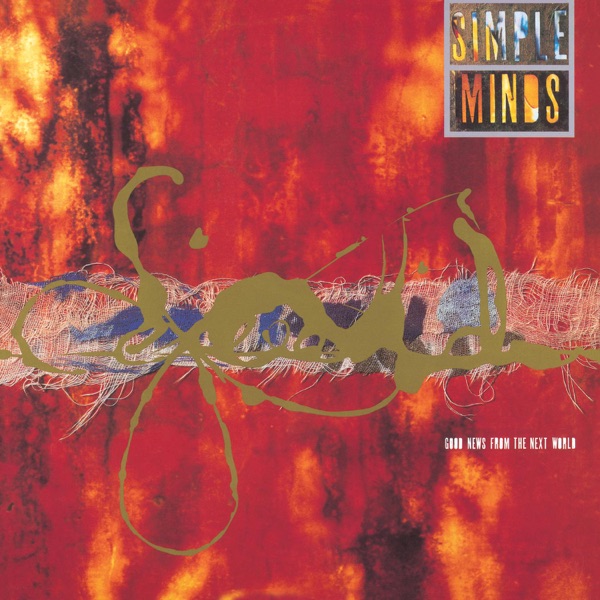
 Good News From the Next WorldSimple Minds19959 tracks
 -
 NéapolisSimple Minds19989 tracks
 -
 Neon LightsSimple Minds200114 tracks
 -
 CrySimple Minds200217 tracks
 -
 Graffiti SoulSimple Minds200919 tracks
 -
 Big MusicSimple Minds201423 tracks
 -
 AcousticSimple Minds201612 tracks
 -
 Walk Between WorldsSimple Minds201811 tracks
 -
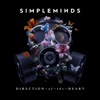 Direction of the HeartSimple Minds202211 tracks
Deep Dive
Overview
Simple Minds are a Scottish rock band that emerged from Glasgow in 1977 and evolved from art-rock experimenters into one of the decade’s most commercially successful arena acts. The core of the band—vocalist Jim Kerr and guitarist Charlie Burchill—anchored a shifting ensemble that blended synthesizer-driven new wave with post-punk intensity and, by the mid-1980s, stadium-ready alternative rock. Their trajectory from small British club stages to global tours and multi-platinum albums traces the broader arc of how new wave mutated into the mainstream rock of the 1980s.
Formation Story
Simple Minds coalesced in Glasgow in 1977 from the city’s emerging art-rock scene, with Jim Kerr on vocals and Charlie Burchill on guitar forming the partnership that would define the band’s identity. The lineup stabilized around keyboardist Mick MacNeil, bassist Derek Forbes, and drummer Brian McGee, establishing a five-piece that grounded their synthesizer-heavy arrangements in live percussion and bass weight. Glasgow’s music culture in the late 1970s—positioned between the experimental impulses of art school and the scrappier energy of punk—provided the context for Simple Minds’ early fusion of textured, rhythmically complex compositions with raw vocal delivery.
Breakthrough Moment
Simple Minds released their debut, Real to Real Cacophony, in 1979, followed immediately by Life in a Day the same year, establishing themselves as prolific and restless. Empires and Dance (1980) and the paired releases Sons and Fascination and Sister Feelings Call (both 1981) gradually sharpened their sound, but it was New Gold Dream (81‐82‐83‐84) in 1982 that signaled their emergence as a major force. The album marked a turning point—more polished and cohesive than their earlier work, yet retaining the synth-driven intensity that set them apart from both punk revivalists and established art-rockers. By 1984, Sparkle in the Rain consolidated this upward trajectory, positioning them for the stadium crossover that followed.
Peak Era
The mid-to-late 1980s represented Simple Minds’ commercial and creative zenith. Once Upon a Time (1985) achieved massive international success, cementing their status as arena headliners capable of selling out large venues and achieving substantial radio airplay. The album’s blend of atmospheric synthesizer work, Kerr’s soaring vocal melodies, and memorable hooks made them fixtures on MTV and in mainstream rock radio. The period from 1984 through the late 1980s saw the band touring extensively and maintaining a high creative profile, with Street Fighting Years (1989) continuing their relevance as the 1980s ended and alternative rock entered a new phase. During this window, they became one of the defining sounds of stadium rock—intellectually credible enough to satisfy art-school audiences, commercially accessible enough to reach millions.
Musical Style
Simple Minds’ sound is rooted in the marriage of synthesizers and rock instrumentation, with Mick MacNeil’s keyboard textures providing the atmospheric foundation over which Burchill’s guitar work moves between angular post-punk riffing and more conventionally melodic playing. Kerr’s vocals operate in a upper-register tenor that conveys both emotional vulnerability and anthemic certainty, often deployed over wide-dynamic arrangements that build from sparse, echoing verses to densely orchestrated choruses. The rhythm section—Derek Forbes on bass and successive drummers including Brian McGee and later Mel Gaynor—anchored these arrangements with propulsive, syncopated bass lines and driving, sometimes martial percussion. Early work retained art-rock complexity and rhythmic unpredictability, while mid-to-late-1980s output streamlined these elements into more direct pop-rock structures without sacrificing textural depth. Their evolution reflects the broader trajectory of new wave toward stadium rock: initial conceptual density gradually transformed into songs designed for arenas and radio, though never sacrificing the synth-based identity that distinguished them from guitar-driven hard rock contemporaries.
Major Albums
New Gold Dream (81‐82‐83‐84) (1982)
A defining early-period album that balanced the band’s experimental instincts with growing melodic sophistication and production polish, marking their transition toward wider commercial viability.
Sparkle in the Rain (1984)
Sharpened the stadium-ready hooks and atmospheric synthesizer arrangements that would define their peak, establishing the sound that carried them into arenas across Europe and North America.
Once Upon a Time (1985)
Their commercial breakthrough and most successful album, combining soaring vocal melodies, lush keyboard textures, and anthemic rock structures that reached millions of listeners globally.
Street Fighting Years (1989)
A late-80s statement that sustained their relevance as alternative rock shifted, maintaining their core identity while engaging with contemporary production and songwriting approaches.
Real Life (1991)
Continued their 1990s output, sustaining their touring presence and recording activity through the decade’s genre fragmentation.
Signature Songs
- “Waterfront” — A haunting, minor-key track exemplifying the band’s ability to build intensity through synth textures and restrained vocal delivery before building to anthemic release.
- “Don’t You (Forget About Me)” — The Breakfast Club soundtrack contribution that became their most recognizable single, balancing new-wave synth work with mainstream rock accessibility.
- “Alive and Kicking” — A propulsive synth-rock workout showcasing Kerr’s vocal range and the band’s gift for building rhythmic momentum from synthesizer arpeggios and bass interplay.
- “Love Song” — A vulnerable ballad demonstrating Kerr’s melodic sensibility and the band’s willingness to explore emotional restraint and dynamic range.
Influence on Rock
Simple Minds’ evolution from new-wave art-rock to stadium-filling alternative rock helped establish a blueprint for how post-punk synthesizer bands could reach mainstream audiences without sacrificing musical complexity or sonic identity. Their success in the 1980s demonstrated that synthesizers and art-school sensibilities could coexist with arena rock ambitions and broad commercial appeal. The band influenced countless subsequent alternative and new-wave acts, proving that intellectual credibility and mainstream success were not mutually exclusive. Their sustained presence through multiple decades of rock history—continuing to record and tour from the 1990s onward—positioned them as elder statesmen of post-punk and new-wave traditions during eras dominated by grunge, britpop, and contemporary alternative music.
Legacy
Simple Minds remain a sustained presence in rock music, with a core duo of Jim Kerr and Charlie Burchill continuing to record and perform into the 2020s. Walk Between Worlds (2018) and Direction of the Heart (2022) demonstrate their ongoing creative engagement, maintaining a recording schedule across four decades of activity. The band’s catalog—spanning from 1979 through the present—documents the technical and commercial evolution of new-wave and alternative rock across the 1980s and beyond. Their influence persists in arena rock and alternative traditions, and their extensive touring history has maintained a devoted international fanbase. The 1980s remains their most commercially dominant period, but their decision to remain active rather than disband during less commercially fertile eras has sustained their relevance across generational shifts in rock music.
Fun Facts
- Simple Minds released two albums in 1979, Real to Real Cacophony and Life in a Day, demonstrating the band’s prolific early output before settling into a more regular release schedule.
- The band’s paired 1981 releases, Sons and Fascination and Sister Feelings Call, were conceptually and sonically linked, representing an ambitious double-album experiment released as two separate records.
- Jim Kerr and Charlie Burchill have remained as the core of Simple Minds since formation, making them one of rock’s longest-running primary partnerships across distinct musical eras.