
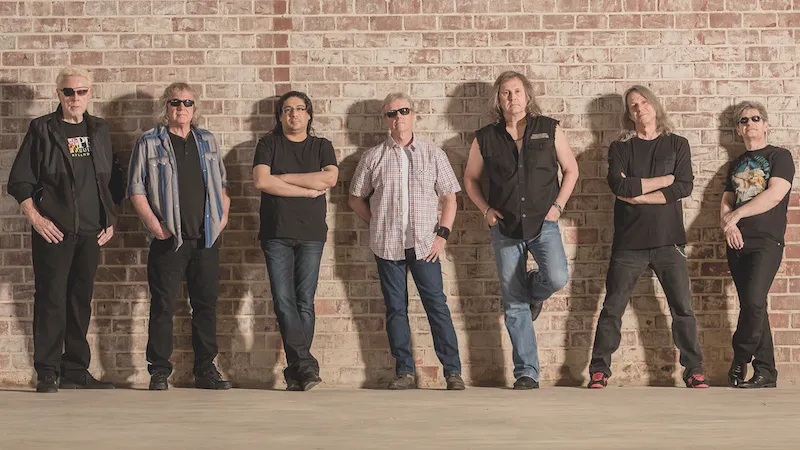
Photo by DanielleCannova , licensed under CC BY-SA 4.0 · Wikimedia Commons
Rank #170
Kansas
From Wikipedia
Kansas is an American rock band formed in Topeka, Kansas in 1973. They became popular during the 1970s initially on album-oriented rock charts and later with hit singles such as "Carry On Wayward Son" and "Dust in the Wind". The band has produced nine gold albums, three multi-platinum albums, one other platinum studio album (Monolith), one platinum live double album, and a million-selling single, "Dust in the Wind". Kansas appeared on the US Billboard charts for over 200 weeks throughout the 1970s and 1980s and played to sold-out arenas and stadiums throughout North America, Europe and Japan. "Carry On Wayward Son" was the second-most-played track on US classic rock radio in 1995 and No. 1 in 1997. Jason Ankeny of AllMusic referred to Kansas as "staples" of classic rock radio.
Members
- Billy Greer
- Dave Hope
- David Ragsdale
- John Elefante
- Kerry Livgren
- Phil Ehart
- Rich Williams
- Robby Steinhardt
- Steve Morse
- Steve Walsh
- Tom Brislin
Discography & Previews
Browse through and click an album to open and play 30-second previews streamed from Apple Music.


Masque
1975 · 10 tracks
- 1 It Takes a Woman's Love (To Make a Man) ↗ 3:07
- 2 Two Cents Worth ↗ 3:08
- 3 Icarus (Borne On Wings of Steel) ↗ 6:03
- 4 All the World ↗ 7:10
- 5 Child of Innocence ↗ 4:35
- 6 It's You ↗ 2:32
- 7 Mysteries and Mayhem ↗ 4:19
- 8 The Pinnacle ↗ 9:35
- 9 Child of Innocence (Recording Sessions Demo) ↗ 5:05
- 10 It's You (Recording Sessions Demo) ↗ 2:41
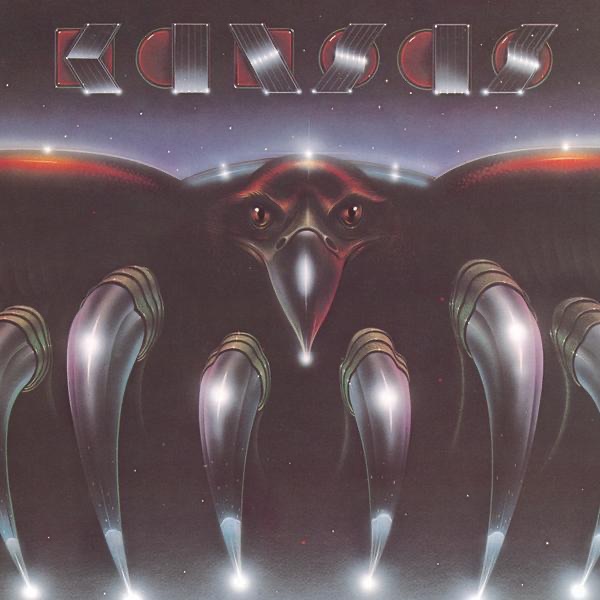
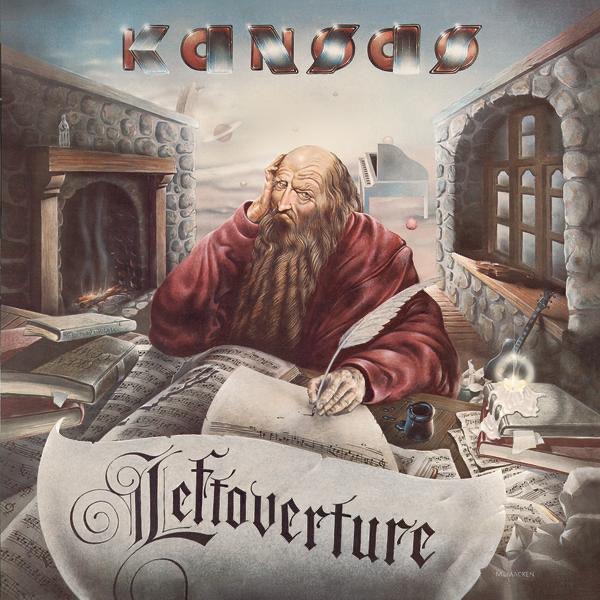
Leftoverture
1976 · 10 tracks
- 1 Carry On Wayward Son ↗ 5:23
- 2 The Wall ↗ 4:48
- 3 What's On My Mind ↗ 3:29
- 4 Miracles Out of Nowhere ↗ 6:27
- 5 Opus Insert ↗ 4:26
- 6 Questions of My Childhood ↗ 3:37
- 7 Cheyenne Anthem ↗ 6:53
- 8 Magnum Opus: Father Padilla Meets the Perfect Gnat / Howling at the Moon / Man Overboard / Industry On Parade / Release the Beavers / Gnat Attack ↗ 8:26
- 9 Carry On Wayward Son (Live In MI) ↗ 4:43
- 10 Cheyenne Anthem (Live In NYC, 1977) ↗ 6:41
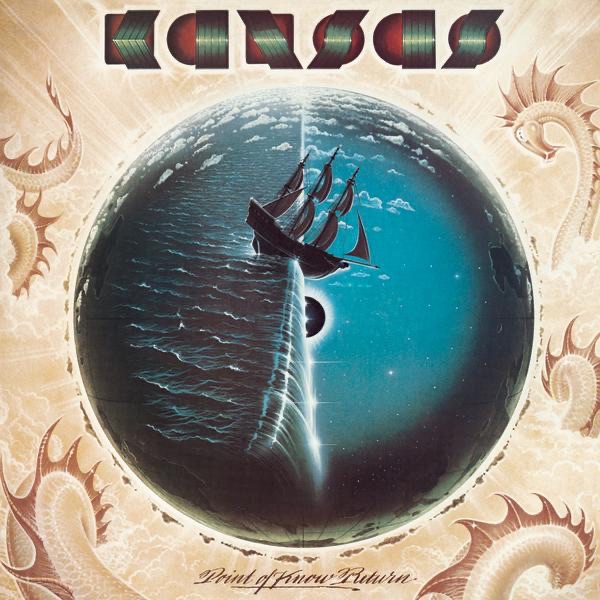
Point of Know Return
1977 · 12 tracks
- 1 Point of Know Return ↗ 3:11
- 2 Paradox ↗ 3:51
- 3 The Spider ↗ 2:05
- 4 Portrait (He Knew) ↗ 4:36
- 5 Closet Chronicles ↗ 6:30
- 6 Lightning's Hand ↗ 4:24
- 7 Dust In the Wind ↗ 3:26
- 8 Sparks of the Tempest ↗ 4:15
- 9 Nobody's Home ↗ 4:40
- 10 Hopelessly Human ↗ 7:08
- 11 Sparks of the Tempest (Live In Maryland) ↗ 5:16
- 12 Portrait (He Knew) [Remix] ↗ 4:50


In the Spirit of Things
1988 · 12 tracks

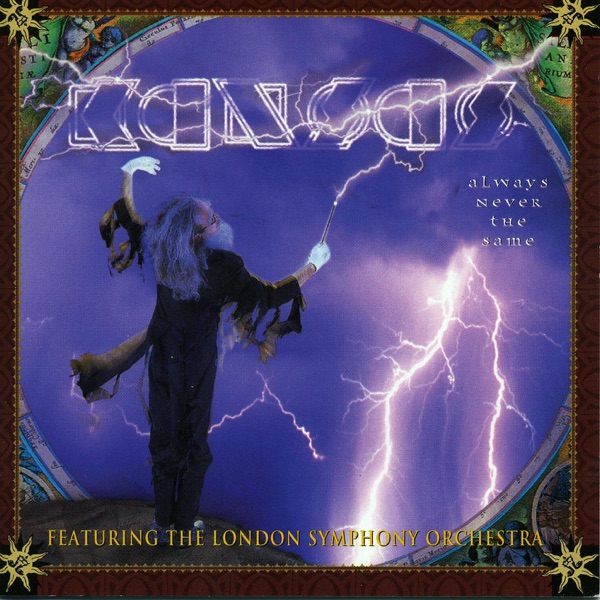
Always Never the Same
1998 · 13 tracks
- 1 Eleanor Rigby (feat. London Symphony Orchestra) ↗ 3:22
- 2 Dust In the Wind (feat. London Symphony Orchestra) ↗ 4:01
- 3 Preamble (feat. London Symphony Orchestra) ↗ 3:26
- 4 Song for America (feat. London Symphony Orchestra) ↗ 9:17
- 5 In Your Eyes (feat. London Symphony Orchestra) ↗ 4:31
- 6 Miracles Out of Nowhere (feat. London Symphony Orchestra) ↗ 6:29
- 7 Hold On (feat. London Symphony Orchestra) ↗ 4:19
- 8 The Sky Is Falling (feat. London Symphony Orchestra) ↗ 7:52
- 9 Cheyenne Anthem (feat. London Symphony Orchestra) ↗ 7:32
- 10 Prelude & Introduction (feat. London Symphony Orchestra) ↗ 4:53
- 11 The Wall (feat. London Symphony Orchestra) ↗ 5:30
- 12 Need to Know (feat. London Symphony Orchestra) ↗ 3:59
- 13 Nobody's Home (feat. London Symphony Orchestra) ↗ 6:02
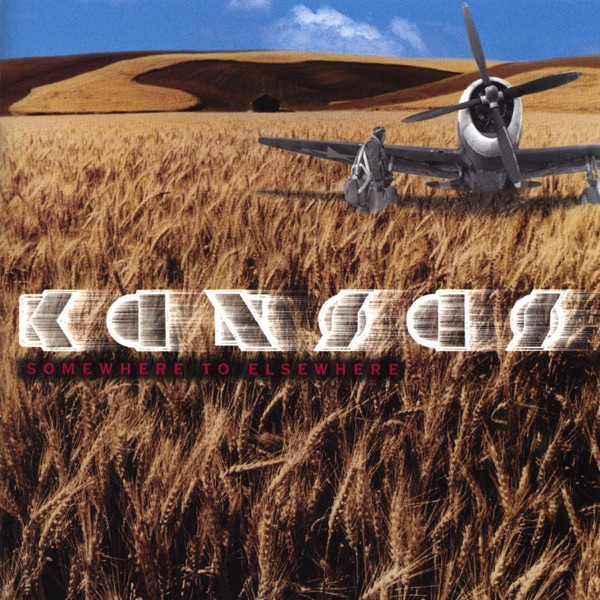
Somewhere to Elsewhere
2000 · 11 tracks
- 1 Icarus II ↗ 7:17
- 2 When the World Was Young ↗ 5:51
- 3 Grand Fun Alley ↗ 4:39
- 4 The Coming Dawn (Thanatopsis) ↗ 5:44
- 5 Myriad ↗ 8:56
- 6 Look at the Time ↗ 5:37
- 7 Disappearing Skin Tight Blues ↗ 7:03
- 8 Distant Vision ↗ 8:48
- 9 Byzantium ↗ 4:15
- 10 Not Man Big ↗ 8:39
- 11 (I Wanna Live In A) Geodesic Dome ↗ 1:24


-
 KansasKansas19749 tracks
 -
 MasqueKansas197510 tracks
 -
 Song for AmericaKansas19758 tracks
 -
 LeftovertureKansas197610 tracks
 -
 Point of Know ReturnKansas197712 tracks
 -
 MonolithKansas19798 tracks
 -
 Audio‐VisionsKansas198010 tracks
 -
 Vinyl ConfessionsKansas198210 tracks
 -
 Drastic MeasuresKansas19839 tracks
 -
 PowerKansas198610 tracks
 -
 In the Spirit of ThingsKansas198812 tracks
 -
 Freaks of NatureKansas19959 tracks
 -
 Always Never the SameKansas199813 tracks
 -
 Somewhere to ElsewhereKansas200011 tracks
 -
 The Prelude ImplicitKansas201610 tracks
 -
 The Absence of PresenceKansas20209 tracks
Deep Dive
Overview
Kansas is an American rock band formed in Topeka in 1973, emerging as one of the defining art rock acts of the 1970s. Built on a foundation of progressive instrumentation, complex arrangements, and emotionally resonant songwriting, the band transcended the regional circuits to become a staple of arena rock and album-oriented radio. Their catalog produced nine gold albums, three multi-platinum releases, and the million-selling single “Dust in the Wind,” cementing their place in the broader landscape of 1970s and 1980s rock radio.
Formation Story
Kansas coalesced in Topeka, Kansas in 1973 from a convergence of local musical ambitions and technical prowess. The core lineup—Steve Walsh on keyboards and vocals, Kerry Livgren on guitar and keyboards, Robby Steinhardt on violin and vocals, Phil Ehart on drums, Rich Williams on guitar, and Dave Hope on bass—brought together a rare blend of classical training and rock sensibility. Topeka, though not a major music hub, provided the crucible in which these musicians developed their distinctive sound. The band’s formation in the early 1970s coincided with a broader cultural appetite for ambitious, intellectually demanding rock music, positioning them to capitalize on a growing audience for art rock and progressive styles that had begun to establish themselves alongside more straightforward hard rock idioms.
Breakthrough Moment
Kansas’s first album, released in 1974, introduced their multi-instrumental aesthetic to a national audience, but it was Leftoverture (1976) that secured their breakthrough into mainstream recognition. The album’s success on album-oriented rock charts translated into substantial radio play and touring momentum. Point of Know Return (1977) consolidated and expanded this success, helping the band achieve the kind of commercial stability that allowed them to headline sold-out arenas and stadiums throughout North America, Europe, and Japan. By the late 1970s, Kansas appeared on the US Billboard charts for over 200 weeks, a testament to the enduring appeal of their work across multiple album cycles and the sustained cultural resonance of their hit singles.
Peak Era
The years spanning 1976 through 1980 represent Kansas’s creative and commercial zenith. Leftoverture, Point of Know Return, and Monolith (1979) formed a trilogy of substantial achievements, each reaching broad audiences and demonstrating the band’s ability to craft songs that worked both as radio singles and as extended album pieces. Monolith, which earned platinum certification, showcased their matured approach to balancing accessibility with technical ambition. During this period, Kansas maintained a grueling touring schedule, building a devoted fanbase that would sustain their relevance through the 1980s and beyond. The band’s willingness to layer violins, keyboards, and multi-tracked vocals atop driving rock rhythms set them apart from their peers and enabled them to dominate album-oriented rock radio formats.
Musical Style
Kansas’s sound rested on a foundation of hard rock and progressive rock aesthetics, distinguished by the prominent use of violin, synthesizers, and multiple vocal harmonies. Steve Walsh’s keyboard work, ranging from organ to synthesizer to piano, anchored the band’s orchestral ambitions, while Robby Steinhardt’s violin lines—treated sometimes as a lead instrument, sometimes as orchestral texture—provided a classical sheen that elevated their arrangements beyond standard rock vocabulary. Kerry Livgren’s guitar work balanced melodic sensibility with technical proficiency, often weaving in and out of the band’s densely layered arrangements. The band’s songwriting evolved across their decade of peak activity, moving from longer, exploration-oriented compositions on early albums toward more concise, single-friendly structures in the late 1970s without sacrificing harmonic sophistication. Vocals were often treated as another instrument, with Walsh and Steinhardt trading lead roles and creating layered vocal arrangements that emphasized emotional delivery and textural richness.
Major Albums
Leftoverture (1976)
The album that established Kansas as major-label rock players, featuring intricate instrumental passages and the kind of conceptual ambition that appealed to the album-rock audience.
Point of Know Return (1977)
Building on Leftoverture’s success, this album solidified Kansas’s formula of lengthy compositions with strong melodic hooks, becoming a fixture on rock radio and arena playlists.
Monolith (1979)
A platinum-certified achievement that demonstrated the band’s continued evolution, balancing their progressive instincts with the commercial appeal that had made them arena headliners.
Masque (1975)
An early release that showcased the band’s developing technical abilities and complex compositional approach before their major-label breakthrough.
Audio-Visions (1980)
Continuing their late-1970s momentum into a new decade, the album represented the band’s sustained popularity on both radio and in the touring market.
Signature Songs
- “Carry On Wayward Son” — A hard rock anthem that became one of the most-played tracks on classic rock radio, peaking at No. 1 in 1997 and No. 2 in 1995.
- “Dust in the Wind” — A million-selling single that balanced acoustic gentleness with philosophical introspection, defining the band’s ability to reach beyond their core progressive-rock audience.
- “Portrait (He Knew)” — A showcase for the band’s lyrical depth and instrumental sophistication from the mid-1970s.
- “Leftoverture” — The title track exemplifying Kansas’s capacity for extended compositional development and multi-instrumental dialogue.
- “The Wall” — Demonstrating the band’s knack for constructing narratively coherent and musically ambitious album tracks.
Influence on Rock
Kansas occupied a crucial position in the 1970s rock landscape, proving that art rock and hard rock aesthetics could coexist commercially without sacrificing either camp’s core values. By bringing violin and classical harmonic thinking into the realm of arena rock, they expanded the instrumental palette available to rock musicians and opened doors for countless acts seeking to merge progressive ambition with mainstream accessibility. Their success on album-oriented rock radio formats helped establish the viability of the AOR model itself, showing that radio playlists could sustain bands built on album-length artistic statements rather than single-driven pop strategies. The band’s longevity and touring presence influenced how progressive and art rock acts approached the business of live performance, establishing expectations for technical proficiency and elaborate stage presentation that became standard for the genre.
Legacy
Kansas’s output across five decades has sustained their presence in rock music’s cultural memory, particularly through classic rock radio, where “Carry On Wayward Son” and “Dust in the Wind” remain fixtures. The band has continued recording and touring into the 2020s, with releases including The Prelude Implicit (2016) and The Absence of Presence (2020), demonstrating their commitment to active musicianship well beyond their peak commercial period. Their multi-platinum certifications and sustained chart presence throughout the 1970s and 1980s cemented their status as more than a novelty act, marking them as genuinely significant contributors to the era’s musical landscape. The continued streaming and broadcast life of their catalog ensures that successive generations encounter Kansas as an authentic artifact of 1970s ambition and rock radio excellence.
Fun Facts
- Kansas appeared on the US Billboard charts for over 200 weeks throughout the 1970s and 1980s, a testament to the sustained commercial strength of their album output.
- The band played to sold-out arenas and stadiums throughout North America, Europe, and Japan during their peak years, establishing themselves as international touring headliners.
- “Carry On Wayward Son” achieved the No. 1 position on US classic rock radio in 1997, decades after its original release, demonstrating the song’s enduring cultural resonance.
- The band’s use of violin as a lead instrument in a hard rock context was relatively uncommon in the 1970s, setting them apart from their contemporaries and influencing how rock musicians viewed orchestral instrumentation.