
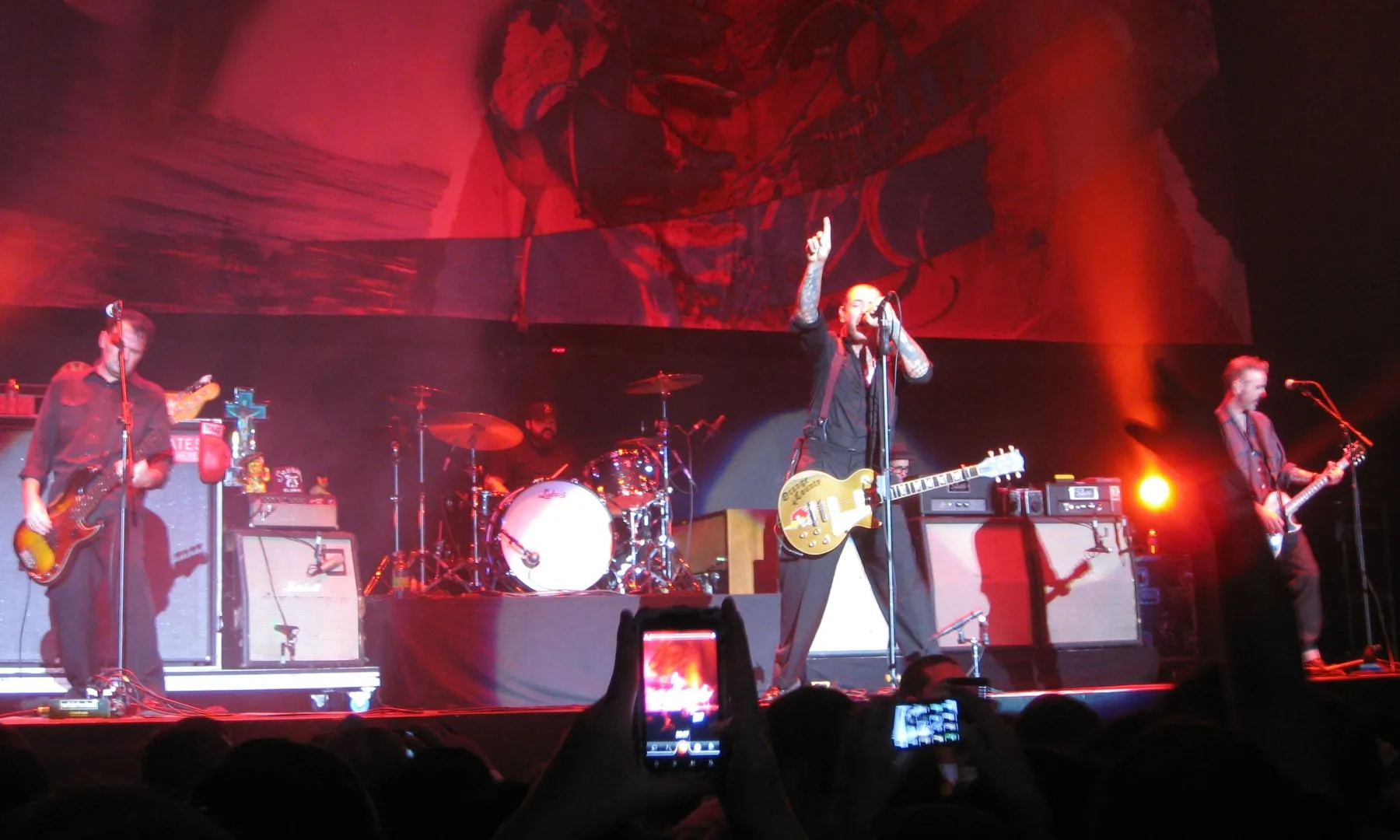
Photo by IllaZilla , licensed under CC BY-SA 3.0 · Wikimedia Commons
Rank #375
Social Distortion
From Wikipedia
Social Distortion is an American punk rock band formed in 1978 in Fullerton, California. It consists of Mike Ness, Jonny Wickersham (guitar), Brent Harding (bass), and David Hidalgo Jr. (drums).
Members
- Mike Ness
Discography & Previews
Browse through and click an album to open and play 30-second previews streamed from Apple Music.


Somewhere Between Heaven and Hell
1992 · 11 tracks

White Light White Heat White Trash
1996 · 12 tracks
- 1 Dear Lover ↗ 4:44
- 2 Don't Drag Me Down ↗ 3:51
- 3 Untitled ↗ 4:46
- 4 I Was Wrong ↗ 3:59
- 5 Through These Eyes ↗ 3:16
- 6 Down On the World Again ↗ 3:22
- 7 When the Angels Sing ↗ 4:16
- 8 Gotta Know the Rules ↗ 3:29
- 9 Crown of Thorns ↗ 4:16
- 10 Pleasure Seeker ↗ 3:33
- 11 Down Here (With the Rest of Us) ↗ 4:21
- 12 Under My Thumb ↗ 2:50

Sex, Love and Rock ’n’ Roll
2004 · 10 tracks

Hard Times and Nursery Rhymes
2011 · 13 tracks
- 1 Road Zombie ↗ 2:21
- 2 California (Hustle and Flow) ↗ 5:00
- 3 Gimme the Sweet and Lowdown ↗ 3:22
- 4 Diamond in the Rough ↗ 4:35
- 5 Machine Gun Blues ↗ 3:33
- 6 Bakersfield ↗ 6:25
- 7 Far Side of Nowhere ↗ 3:29
- 8 Alone and Forsaken ↗ 4:02
- 9 Writing on the Wall ↗ 5:01
- 10 Can't Take It with You ↗ 5:02
- 11 Still Alive ↗ 4:06
- 12 Take Care of Yourself ↗ 3:59
- 13 I Won't Run No More ↗ 3:41

Born to Kill
2026 · 11 tracks
-
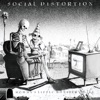 Mommy's Little MonsterSocial Distortion19839 tracks
 -
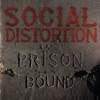 Prison BoundSocial Distortion198810 tracks
 -
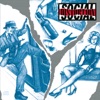 Social DistortionSocial Distortion199010 tracks
 -
 Somewhere Between Heaven and HellSocial Distortion199211 tracks
 -
 White Light White Heat White TrashSocial Distortion199612 tracks
 -
 Sex, Love and Rock ’n’ RollSocial Distortion200410 tracks
 -
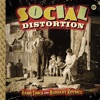 Hard Times and Nursery RhymesSocial Distortion201113 tracks
 -
 Born to KillSocial Distortion202611 tracks
Deep Dive
Overview
Social Distortion is an American punk rock band that emerged from Orange County, California, in 1978 and has remained active into the present day. The group occupies a distinctive position within punk’s landscape: they channel the urgency and directness of punk rock while drawing deeply from classic rock and roll tradition, creating a sound that balances raw street-level energy with melody and craft. Over four decades, Social Distortion became one of the defining voices of American punk, moving far beyond the genre’s initial three-chord template to construct a body of work rooted in working-class storytelling and unflinching emotional honesty.
Formation Story
Social Distortion formed in Fullerton, Orange County, California, in 1978, emerging from the sprawling punk underground that had begun to flourish across Southern California in the mid-to-late 1970s. The band coalesced around Mike Ness, whose songwriting vision and vocal presence would become the group’s anchor. Assembled alongside founding members including Jonny Wickersham on guitar, Brent Harding on bass, and David Hidalgo Jr. on drums, Social Distortion immediately tapped into the energy and DIY ethos of the regional punk scene. Fullerton, a working-class industrial city in Orange County, provided the gritty backdrop and cultural texture that would inform much of the band’s aesthetic and lyrical concerns. Unlike some of their punk contemporaries who embraced pure nihilism or art-school abstraction, Social Distortion’s founders were rooted in the hardscrabble realities of their community, and that grounding would become central to their identity.
Breakthrough Moment
Social Distortion’s initial breakthrough came with the 1983 release of Mommy’s Little Monster, their debut album on the Mommy’s Little Monster label. The record announced the band’s ability to fuse punk rock’s raw force with hooks and melodies that lingered in the listener’s mind, establishing them as capable songwriters rather than mere thrashers. Following that debut, the band’s reach expanded significantly through the late 1980s and early 1990s, culminating in their self-titled album Social Distortion in 1990. That album, arriving on 550 Music, marked a critical juncture: it consolidated the band’s sound and demonstrated that their particular blend of punk and rock and roll could connect with audiences well beyond the underground. The album Somewhere Between Heaven and Hell (1992) further solidified their position as one of punk’s most commercially viable and artistically credible acts, establishing them as fixtures in rock radio and touring circuits.
Peak Era
The 1990s represented Social Distortion’s peak era in terms of creative ambition and commercial success. The release of White Light White Heat White Trash in 1996 saw the band operating at their artistic height, crafting sophisticated arrangements while maintaining the street-level authenticity that had always distinguished them. This period, spanning from Social Distortion (1990) through White Light White Heat White Trash (1996), established the band as one of the most important American punk acts, capable of selling out venues and receiving substantial airplay on rock radio while retaining the respect of hardcore punk audiences. During these years, Social Distortion proved that punk rock could mature into full artistic expression without surrendering its core values or audience connection. The band’s ability to tour extensively and maintain a dedicated following across this decade cemented their place in rock’s pantheon.
Musical Style
Social Distortion’s sound is fundamentally rooted in punk rock’s aggressive energy and three-chord foundation, yet it is tempered and enriched by influences drawn from classic rock and roll, country music, and rockabilly. Mike Ness’s vocals carry a distinctive rasp and emotional weight, capable of conveying both defiance and vulnerability within a single performance. The guitar work of Jonny Wickersham combines buzzsaw punk urgency with more melodic, structured song arrangements, while the rhythm section of Brent Harding and David Hidalgo Jr. provides a driving, disciplined backbone. Where many punk bands of the era dissolved into undifferentiated noise, Social Distortion maintained clarity of composition and arrangement, allowing songs to breathe while preserving their punch. The band’s production values evolved considerably across their career—from the raw directness of their early records through increasingly polished studio work—yet they consistently resisted the glossiness that diluted other punk acts’ impact. Lyrically, Social Distortion concerned themselves with themes of struggle, redemption, community, and personal hardship, drawing from the working-class Orange County milieu they inhabited.
Major Albums
Mommy’s Little Monster (1983)
The debut album that introduced Social Distortion’s fusion of punk aggression and melodic sensibility, establishing the template that would define their career.
Prison Bound (1988)
A turning point that refined the band’s songwriting craft and demonstrated their ability to sustain an album-length narrative around themes of constraint and survival.
Social Distortion (1990)
The self-titled record that achieved both critical recognition and commercial breakthrough, proving the band could operate in the mainstream without compromising their core identity.
Somewhere Between Heaven and Hell (1992)
A landmark album showcasing the band’s mastery of melody, arrangement, and emotional depth, solidifying their position as one of punk’s most accomplished acts.
White Light White Heat White Trash (1996)
The band’s artistic apex, featuring fully realized songwriting, sophisticated production, and thematic cohesion while maintaining punk rock’s essential character.
Sex, Love and Rock ‘n’ Roll (2004)
A return to recording after a gap, demonstrating that Social Distortion’s sound remained vital and their songwriting capability undiminished by time.
Signature Songs
- “Mommy’s Little Monster” — The title track from their debut, encapsulating the band’s unflinching look at urban despair and survival.
- “Prison Bound” — A defining statement on confinement and the cycles of hardship that mark working-class existence.
- “Story of My Life” — A fan favorite that distills the band’s lyrical concerns into a deeply personal narrative.
- “Ring of Fire” — Showcasing the band’s ability to infuse rock and roll tradition with punk’s contemporary urgency.
Influence on Rock
Social Distortion’s influence on rock music lies primarily in their demonstration that punk rock could mature into sophisticated artistic expression without losing its edge or audience connection. They proved that punk need not remain static or bound by strict genre limitations, and that blending punk’s ethos with rock and roll’s traditions could produce something more resonant than either on its own. Their success opened pathways for subsequent punk acts to pursue studio sophistication, melodic complexity, and thematic depth without apology. The band’s consistent touring presence and accessibility also helped normalize punk rock within mainstream rock culture, making the genre viable for major labels and radio formats in a way that benefited the entire ecosystem of punk acts that followed. Within punk specifically, Social Distortion demonstrated that working-class authenticity and commercial success need not contradict one another.
Legacy
Social Distortion’s legacy is fundamentally one of endurance and integrity. Having remained active for nearly five decades without substantial breakups or lineup instability, the band has accumulated one of punk rock’s most substantial and consistent discographies. Their influence extends across multiple generations of punk and rock musicians who recognized in their work a model for how to maintain artistic credibility while achieving commercial viability. The band’s presence on streaming platforms ensures their catalog reaches contemporary audiences, while their continued touring maintains their connection to live music culture. Social Distortion’s ability to remain relevant across changing musical landscapes—from the 1980s punk underground through the 1990s alternative rock boom into the digital era—speaks to the durability of their fundamental songwriting craft and the universal resonance of their thematic concerns. They stand as one of American punk rock’s most important and least compromising acts.
Fun Facts
- Social Distortion was formed in Fullerton, a working-class city in Orange County that sits at the heart of Southern California’s sprawling punk underground.
- The band’s early recordings appeared on the independent Mommy’s Little Monster label before moving to larger operations, reflecting the underground-to-mainstream trajectory that defined much 1980s punk.
- Mike Ness’s songwriting remained the consistent creative force throughout the band’s four decades, ensuring tonal and thematic continuity across all eras of their work.
- The band released Born to Kill in 2026, demonstrating their continued engagement with recording and artistic expression into the present era.