

Photo by Szarka , licensed under CC BY-SA 4.0 · Wikimedia Commons
Rank #459
Squeeze
From Wikipedia
Squeeze are an English rock band that came to prominence in the United Kingdom during the new wave period of the late 1970s, and continued recording in the 1980s, 1990s and 2010s. In the UK, their singles "Cool for Cats", "Up the Junction", and "Labelled with Love" were top-ten chart hits. Though not as commercially successful in the United States, Squeeze had American hits with "Tempted", "Black Coffee in Bed", and "Hourglass", and were considered a part of the Second British Invasion.
Members
- Chris Difford
- Glenn Tilbrook
- Harri Kakoulli
- Jools Holland
Discography & Previews
Browse through and click an album to open and play 30-second previews streamed from Apple Music.

Squeeze
1978 · 12 tracks

Cool for Cats
1979 · 12 tracks

Argybargy
1980 · 11 tracks
- 1 Pulling Mussels (From the Shell) ↗ 3:58
- 2 Another Nail In My Heart ↗ 2:56
- 3 Separate Beds ↗ 3:20
- 4 Misadventure ↗ 2:55
- 5 I Think I'm Go Go ↗ 4:17
- 6 If I Didn't Love You ↗ 4:11
- 7 Farfisa Beat ↗ 2:57
- 8 Here Comes That Feeling ↗ 2:12
- 9 Vicky Verky ↗ 3:11
- 10 Wrong Side of the Moon ↗ 2:24
- 11 There At the Top ↗ 3:45
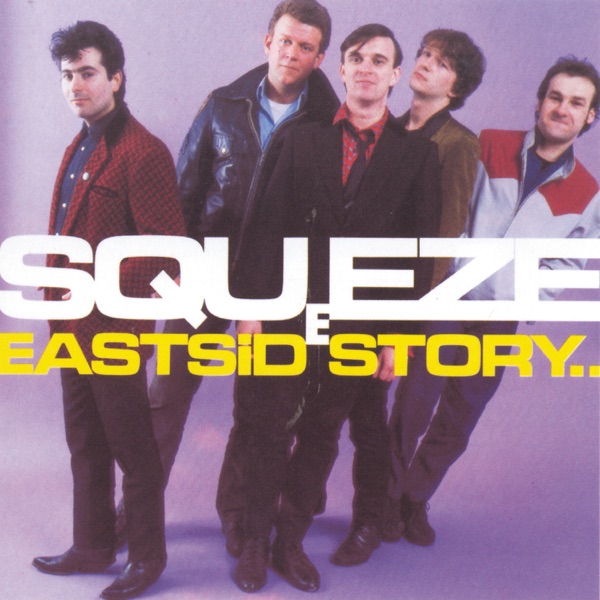
East Side Story
1981 · 14 tracks
- 1 In Quintessence ↗ 2:55
- 2 Someone Else's Heart ↗ 3:00
- 3 Tempted ↗ 4:00
- 4 Piccadilly ↗ 3:28
- 5 There's No Tomorrow ↗ 3:29
- 6 Heaven ↗ 3:49
- 7 Woman's World ↗ 3:43
- 8 Is That Love ↗ 2:31
- 9 F-Hole ↗ 4:41
- 10 Labelled With Love ↗ 4:44
- 11 Someone Else's Bell ↗ 3:10
- 12 Mumbo Jumbo ↗ 3:14
- 13 Vanity Fair ↗ 3:10
- 14 Messed Around ↗ 2:43

Sweets From a Stranger
1982 · 12 tracks
- 1 Out of Touch ↗ 3:51
- 2 I Can't Hold On ↗ 3:34
- 3 Points of View ↗ 4:13
- 4 Stranger Than the Stranger On the Shore ↗ 3:20
- 5 Onto the Dance Floor ↗ 3:38
- 6 When the Hangover Strikes ↗ 4:30
- 7 Black Coffee In Bed ↗ 6:12
- 8 I've Returned ↗ 2:35
- 9 Tongue Like a Knife ↗ 4:11
- 10 His House Her Home ↗ 3:23
- 11 The Very First Dance ↗ 3:18
- 12 The Elephant Ride ↗ 3:23

Cosi Fan Tutti Frutti
1985 · 10 tracks

Babylon and On
1986 · 12 tracks

Frank
1989 · 12 tracks
- 1 Frank ↗ 0:15
- 2 If It's Love ↗ 4:02
- 3 Peyton Place ↗ 4:08
- 4 Rose I Said ↗ 3:36
- 5 Slaughtered Gutted and Heartbroken ↗ 4:37
- 6 (This Could Be) The Last Time ↗ 3:49
- 7 She Doesn't Have to Shave ↗ 3:27
- 8 Love Circles ↗ 5:34
- 9 Melody Motel ↗ 3:51
- 10 Can of Worms ↗ 4:47
- 11 Dr. Jazz ↗ 4:04
- 12 It's Too Late ↗ 3:12
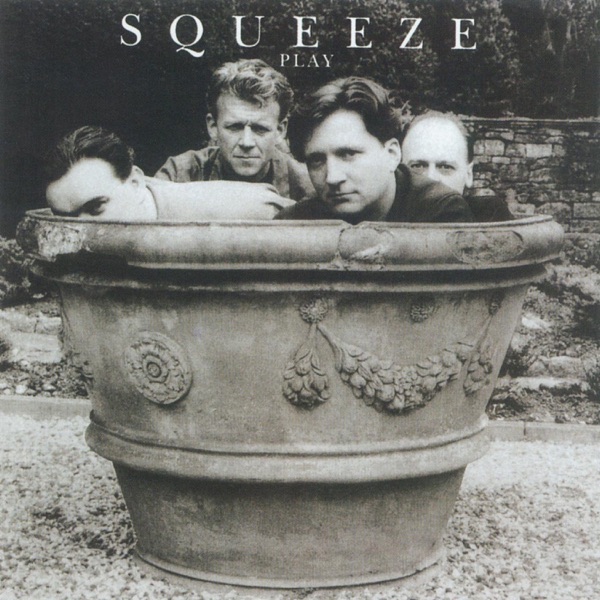
Play
1991 · 12 tracks

Some Fantastic Place
1993 · 11 tracks

Ridiculous
1995 · 20 tracks
- 1 Electric Trains ↗ 4:04
- 2 Heaven Knows ↗ 4:34
- 3 Grouch of the Day ↗ 3:28
- 4 Walk Away ↗ 4:43
- 5 This Summer ↗ 3:39
- 6 Got To Me ↗ 3:46
- 7 Long Face ↗ 4:31
- 8 I Want You ↗ 4:04
- 9 Daphne ↗ 3:44
- 10 Lost For Words ↗ 2:00
- 11 Great Escape ↗ 3:27
- 12 Temptation For Love ↗ 3:38
- 13 Sound Asleep ↗ 4:38
- 14 Fingertips ↗ 5:42
- 15 This Road ↗ 3:10
- 16 This Summer (Remix) ↗ 3:34
- 17 Cappuccino Lips (Fingertips) ↗ 4:06
- 18 Electrical Trains (Live/Acoustic Version) ↗ 3:38
- 19 I Want You (Live/Acoustic Version) ↗ 3:42
- 20 Grouch of the Day (Live/Acoustic Version) ↗ 3:10

Domino
1998 · 12 tracks

Spot the Difference
2010 · 14 tracks
- 1 Another Nail In My Heart ↗ 3:01
- 2 Black Coffee In Bed ↗ 6:08
- 3 Cool For Cats ↗ 3:10
- 4 Goodbye Girl ↗ 3:00
- 5 Hourglass ↗ 3:16
- 6 Is That Love? ↗ 2:33
- 7 Labelled With Love ↗ 4:30
- 8 Loving You Tonight ↗ 4:10
- 9 Pulling Mussels (From The Shell) ↗ 4:00
- 10 Slap And Tickle ↗ 4:13
- 11 Some Fantastic Place ↗ 4:42
- 12 Take Me I'm Yours ↗ 2:47
- 13 Tempted ↗ 4:01
- 14 Up The Junction ↗ 3:10


Trixies
2026 · 13 tracks
- 1 What More Can I Say ↗ 3:33
- 2 You Get the Feeling ↗ 2:44
- 3 The Place We Call Mars ↗ 3:27
- 4 Hell on Earth ↗ 3:02
- 5 The Dancer ↗ 3:11
- 6 Good Riddance ↗ 3:12
- 7 Don't Go Out in the Dark ↗ 3:49
- 8 Why Don't You ↗ 2:46
- 9 Anything but Me ↗ 3:00
- 10 It's Over ↗ 3:09
- 11 The Jaguars ↗ 3:12
- 12 Trixies, Pt. 1 ↗ 2:50
- 13 Trixies, Pt. 2 ↗ 3:51
-
 SqueezeSqueeze197812 tracks
 -
 Cool for CatsSqueeze197912 tracks
 -
 ArgybargySqueeze198011 tracks
 -
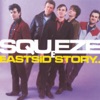 East Side StorySqueeze198114 tracks
 -
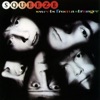 Sweets From a StrangerSqueeze198212 tracks
 -
 Cosi Fan Tutti FruttiSqueeze198510 tracks
 -
 Babylon and OnSqueeze198612 tracks
 -
 FrankSqueeze198912 tracks
 -
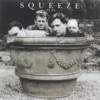 PlaySqueeze199112 tracks
 -
 Some Fantastic PlaceSqueeze199311 tracks
 -
 RidiculousSqueeze199520 tracks
 -
 DominoSqueeze199812 tracks
 -
 Spot the DifferenceSqueeze201014 tracks
 -
 Cradle to the GraveSqueeze201512 tracks
 -
 The KnowledgeSqueeze201712 tracks
 -
 TrixiesSqueeze202613 tracks
Deep Dive
Overview
Squeeze are an English rock band that emerged from London in 1974 and came to prominence during the new wave period of the late 1970s. Operating across more than four decades, they became central figures in the Second British Invasion while establishing themselves as consistent recording artists throughout the 1980s, 1990s, and into the 2010s. In the United Kingdom, the band achieved substantial commercial success with top-ten singles including “Cool for Cats,” “Up the Junction,” and “Labelled with Love.” Though their impact proved more modest in the American market, they secured significant U.S. hits with “Tempted,” “Black Coffee in Bed,” and “Hourglass,” cementing their place in rock music’s transatlantic dialogue.
Formation Story
Squeeze coalesced in London in 1974, drawing together musicians who would define the city’s new wave scene. The founding lineup included Glenn Tilbrook and Chris Difford, whose partnership became the creative engine of the band, along with Jools Holland and Harri Kakoulli. The band emerged during a period when London’s musical landscape was fragmenting into punk, post-punk, and the more melodic and accessible new wave idiom that Squeeze would come to exemplify. Rather than embracing the confrontational postures of punk, Squeeze married new wave’s angular production sensibilities with pop songwriting traditions, positioning themselves as accessible yet sophisticated voices in an era dominated by both avant-garde experimentation and raw teenage fury.
Breakthrough Moment
Squeeze’s breakthrough arrived with their 1979 album Cool for Cats, which yielded the title track as a major UK hit and announced the band’s commercial potential to British audiences. The single “Cool for Cats” climbed the UK charts, establishing the band’s knack for crafting infectious hooks wrapped in new wave production—sparse arrangements punctuated by bright keyboards and precisely articulated vocals. The album consolidated the band’s arrival, demonstrating they could sustain an album-length narrative while delivering the hit singles that drove radio play and record sales. This early success positioned Squeeze within the vanguard of the new wave movement, distinguishing them from punk’s rawer energy and art rock’s sprawling ambitions through their commitment to craft, melody, and conciseness.
Peak Era
The band’s most commercially and creatively vital period spanned the early 1980s, particularly 1980–1982. The 1980 album Argybargy continued their upward trajectory, while East Side Story (1981) and Sweets From a Stranger (1982) represented the fullest realization of their songwriting and production approach. During these years, Squeeze consolidated their UK chart presence while beginning to break through in America, where “Tempted” and “Black Coffee in Bed” established a foothold on American radio and MTV. The band’s combination of witty, observational lyrics, sophisticated but pop-oriented production, and Tilbrook and Difford’s intuitive songwriting partnership created a distinctive voice that stood apart from both the synthesizer-heavy synth-pop dominating British charts and the arena rock that remained dominant in the United States.
Musical Style
Squeeze’s musical identity fused new wave’s mechanical precision and angular sensibility with pop songwriting rooted in melody and lyrical narrative. Their sound typically featured keyboards as a primary textural element, supported by conventional rock instrumentation—bass, drums, and guitar—deployed with economy and emphasis rather than excess. Vocals were typically crisp and expressive rather than shouted or strained, fitting the band’s sophisticated approach to production and arrangement. Lyrically, Difford and Tilbrook crafted songs that observed British life with specificity and humor, moving beyond the abstract or emotional declarations of much rock music toward domestic scenes, romantic entanglements, and social observation rendered with precision and wit. The band’s arrangement philosophy privileged space and clarity; songs breathed rather than accumulated, with hooks emerging from the interaction of parts rather than sheer volume or density.
Major Albums
Cool for Cats (1979)
The band’s breakthrough album that announced their commercial potential and yielded the UK chart hit “Cool for Cats,” establishing their signature blend of new wave production and pop sensibility.
East Side Story (1981)
A defining early 1980s statement that solidified their creative partnership and commercial appeal, featuring material that would drive their presence on both British and American charts.
Sweets From a Stranger (1982)
The third album in their classic early-1980s run, representing the fullest realization of their songwriting craft and production approach before a brief dissolution.
Some Fantastic Place (1993)
A return to recording after an extended hiatus, demonstrating the band’s ability to sustain their songwriting voice and reconnect with audiences across a decade.
Domino (1998)
A late-1990s effort that continued the band’s post-reunion trajectory, maintaining their commitment to melody-driven new wave composition.
Spot the Difference (2010)
A 2010s statement of artistic continuity, documenting Squeeze’s ongoing creative presence after reuniting for touring and recording in the 2000s.
Signature Songs
- “Cool for Cats” — The band’s breakthrough single and signature UK chart hit that crystallized their new wave-pop approach.
- “Up the Junction” — A major UK chart success that showcased their ability to craft melodic hooks within new wave arrangements.
- “Labelled with Love” — A top-ten UK single that demonstrated their sustained commercial appeal during their peak early-1980s period.
- “Tempted” — Their most significant American chart success, introducing the band to U.S. audiences and securing international radio play.
- “Black Coffee in Bed” — A major U.S. hit that further established their transatlantic presence and showcased their gift for romantic observational songwriting.
- “Hourglass” — A notable American single that contributed to their presence on American radio and MTV throughout the 1980s.
Influence on Rock
Squeeze contributed substantially to the new wave movement’s demonstration that melodic sophistication and commercial appeal were compatible rather than contradictory. In an era when punk and art rock positioned themselves against pop accessibility, and when synth-pop often substituted texture for substance, Squeeze proved that economical arrangements, clever songwriting, and clear production could reach mainstream audiences without sacrificing artistic coherence. Their work influenced subsequent generations of British pop and new wave musicians, establishing a template for thoughtful, lyrically clever rock music that entertained rather than confronted. The band represented the Second British Invasion not through revolutionary sound design but through the sheer quality of their songwriting and the appeal of their melodic instincts—a model that legitimized new wave as a sustainable artistic approach rather than a passing trend.
Legacy
Squeeze’s longevity across multiple decades speaks to the durability of their songwriting and the affection audiences maintained for their music. Though the band dissolved briefly, they returned to recording in the 1990s and have continued releasing albums into the 2010s, documenting an extended creative life that few bands of the 1970s new wave generation achieved. Their UK chart success established them as major figures in British rock history, while their American hits ensured their inclusion in the broader new wave narrative. The band’s discography from their debut in 1978 through releases like Cradle to the Grave (2015) and The Knowledge (2017) demonstrates sustained artistic engagement rather than nostalgia-driven reunion cycles.
Fun Facts
- Jools Holland, the band’s keyboardist, became a prominent television personality in British media, hosting music programs that extended his cultural influence far beyond Squeeze’s recordings.
- The band recorded for both I.R.S. Records and A&M Records during their career, navigating different label relationships as they pursued both UK and American chart success.
- Squeeze maintained recording activity across five decades, releasing new material as recently as 2017’s The Knowledge, making them one of the new wave era’s longest-active bands.
- The band’s observational, specifically British lyrical approach gave their music a distinctive character compared to American new wave acts, rooting them in a particular cultural moment and place.