
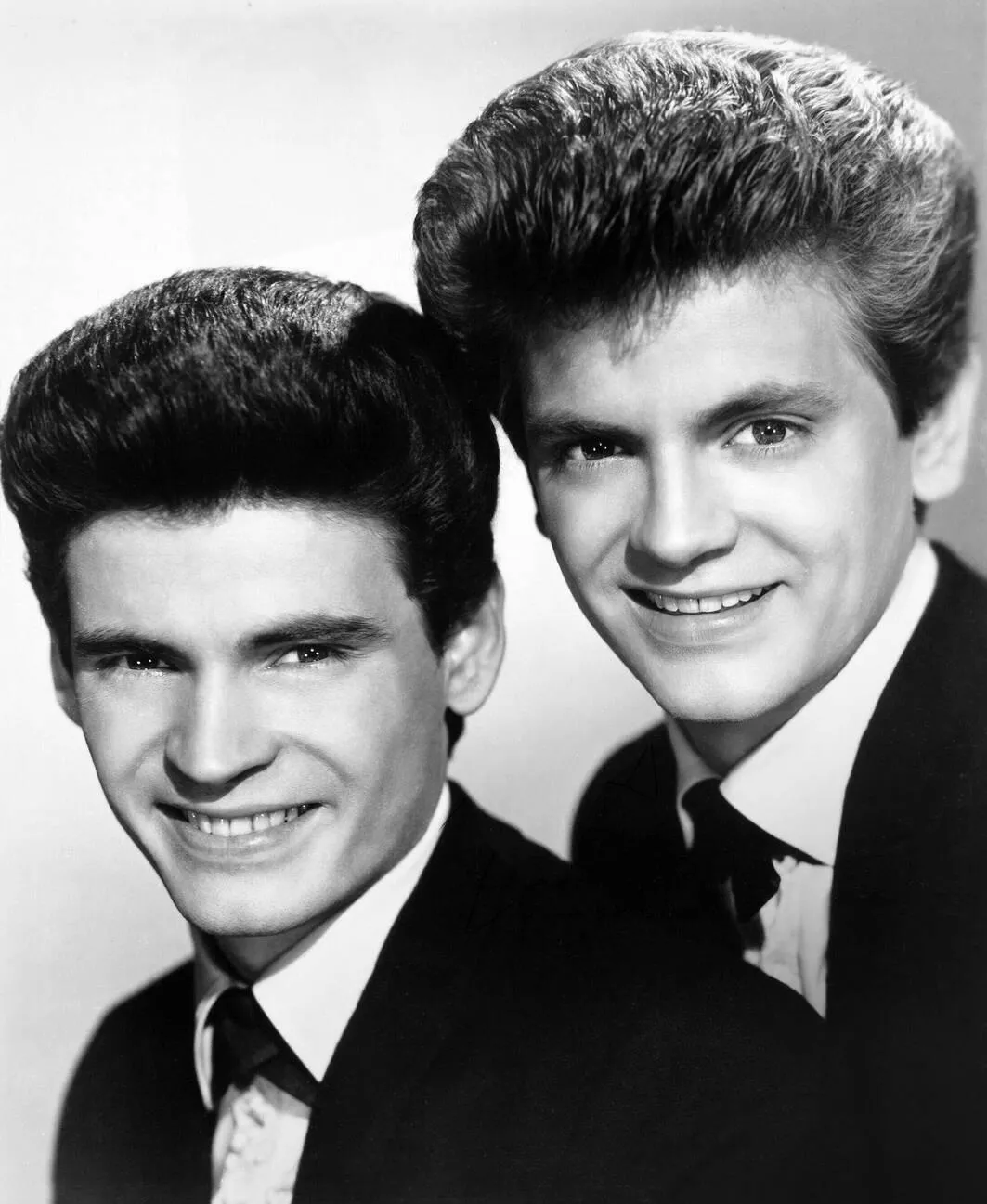
Photo by Edward Roth , licensed under Public domain · Wikimedia Commons
Rank #402
The Everly Brothers
From Wikipedia
The Everly Brothers were an American musical duo known for steel-string acoustic guitar playing and close-harmony singing. Consisting of Isaac Donald "Don" Everly and Phillip "Phil" Everly, the duo combined elements of rock and roll, country, and pop, becoming pioneers of country rock.
Members
- Don Everly
- Phil Everly
Discography & Previews
Browse through and click an album to open and play 30-second previews streamed from Apple Music.

The Everly Brothers
1958 · 11 tracks
- 1 This Little Girl of Mine ↗ 2:17
- 2 Maybe Tomorrow ↗ 2:10
- 3 Bye Bye Love ↗ 2:24
- 4 Brand New Heartache ↗ 2:17
- 5 Keep a-Knockin' ↗ 2:18
- 6 Be Bop a-Lula ↗ 2:19
- 7 Rip It Up ↗ 2:17
- 8 I Wonder If I Care As Much ↗ 2:17
- 9 Wake Up Little Susie ↗ 2:07
- 10 Leave My Woman Alone ↗ 2:38
- 11 Should We Tell Him ↗ 2:08

Songs Our Daddy Taught Us
1958 · 12 tracks
- 1 Roving Gambler ↗ 3:41
- 2 Down In the Willow Garden ↗ 3:05
- 3 Long Time Gone ↗ 2:27
- 4 Lightning Express ↗ 4:53
- 5 That Silver Haired Daddy of Mine ↗ 3:10
- 6 Who's Gonna Shoe Your Pretty Little Feet ↗ 2:41
- 7 Barbara Allen ↗ 4:42
- 8 Oh, So Many Years ↗ 2:37
- 9 I'm Here To Get My Baby Out of Jail ↗ 3:38
- 10 Rocking Alone (In an Old Rockin' Chair) ↗ 3:01
- 11 Kentucky ↗ 3:11
- 12 Put My Little Shoes Away ↗ 3:24
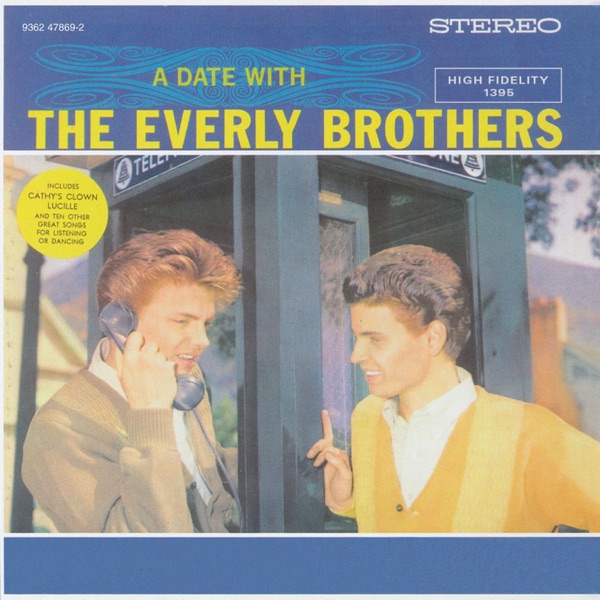
A Date With The Everly Brothers
1960 · 12 tracks
- 1 Made to Love ↗ 2:04
- 2 That's Just Too Much ↗ 2:41
- 3 Stick With Me Baby ↗ 1:56
- 4 Baby What You Want Me to Do ↗ 2:21
- 5 Sigh, Cry, Almost Die ↗ 2:17
- 6 Always It's You ↗ 2:30
- 7 Love Hurts ↗ 2:22
- 8 Lucille ↗ 2:33
- 9 So How Come (No One Loves Me) ↗ 2:18
- 10 Donna, Donna ↗ 2:14
- 11 A Change of Heart ↗ 2:06
- 12 Cathy's Clown ↗ 2:26

It’s Everly Time!
1960 · 12 tracks
- 1 So Sad (To Watch Good Love Go Bad) ↗ 2:34
- 2 Just In Case ↗ 2:12
- 3 Memories Are Made of This ↗ 2:33
- 4 That's What You Do to Me ↗ 2:02
- 5 Sleepless Nights ↗ 2:25
- 6 What Kind of Girl Are You ↗ 1:54
- 7 Oh True Love ↗ 2:11
- 8 Carol Jane ↗ 1:50
- 9 Some Sweet Day ↗ 2:24
- 10 Nashville Blues ↗ 2:38
- 11 You Thrill Me (Through and Through) ↗ 2:04
- 12 I Want You to Know ↗ 2:02

Both Sides of an Evening
1961 · 14 tracks
- 1 My Mammy ↗ 2:15
- 2 Muskrat ↗ 2:17
- 3 My Gal Sal ↗ 2:48
- 4 Grandfather's Clock ↗ 2:22
- 5 Bully of the Town ↗ 2:00
- 6 Chlo-E ↗ 2:03
- 7 Mention My Name In Sheboygan ↗ 1:49
- 8 Hi-Lili, Hi-Lo ↗ 1:47
- 9 The Wayward Wind ↗ 2:22
- 10 Don't Blame Me ↗ 3:25
- 11 Now Is the Hour (Maori Farewell Song) ↗ 2:39
- 12 Little Old Lady ↗ 2:23
- 13 When I Grow Too Old to Dream ↗ 2:30
- 14 Love Is Where You Find It ↗ 1:48

Instant Party!
1962 · 12 tracks
- 1 Step It Up and Go ↗ 2:00
- 2 Theme from "Carnival" (Love Makes the World Go 'Round) ↗ 2:43
- 3 Jezebel ↗ 2:22
- 4 True Love ↗ 2:05
- 5 Bye Bye Blackbird ↗ 3:19
- 6 When It's Night-Time In Italy It's Wednesday Over Here ↗ 2:03
- 7 Oh, My Pa-Pa (O Mein Papa) ↗ 2:09
- 8 Trouble In Mind ↗ 2:33
- 9 Autumn Leaves ↗ 2:58
- 10 Long Lost John ↗ 1:50
- 11 The Party's Over ↗ 2:17
- 12 Ground Hawg ↗ 2:05

The Everly Brothers Sing Great Country Hits
1963 · 12 tracks
- 1 Oh, Lonesome Me ↗ 2:16
- 2 Born to Lose ↗ 2:24
- 3 Just One Time ↗ 2:19
- 4 Send Me the Pillow That You Dream On ↗ 2:32
- 5 Release Me ↗ 2:22
- 6 Please Help Me, I'm Falling ↗ 2:24
- 7 I Walk the Line ↗ 2:37
- 8 Lonely Street ↗ 2:22
- 9 Silver Threads and Golden Needles ↗ 2:17
- 10 I'm So Lonesome I Could Cry ↗ 2:55
- 11 Sweet Dreams ↗ 2:42
- 12 This Is the Last Song I'm Ever Going to Sing ↗ 2:15
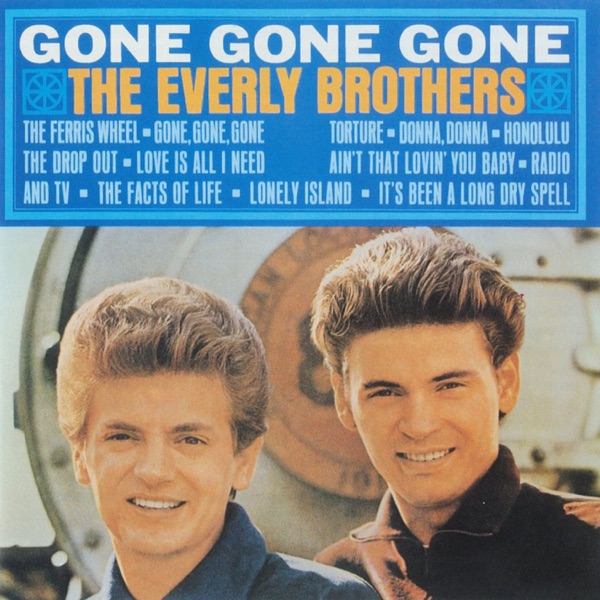
Gone, Gone, Gone
1964 · 12 tracks
- 1 Donna, Donna ↗ 2:14
- 2 Lonely Island ↗ 2:14
- 3 The Facts of Life ↗ 2:05
- 4 Ain't That Lovin' You Baby ↗ 2:03
- 5 Love Is All I Need ↗ 1:54
- 6 Torture ↗ 2:23
- 7 The Drop Out ↗ 2:16
- 8 Radio and TV ↗ 2:13
- 9 Honolulu ↗ 1:50
- 10 It's Been a Long Dry Spell ↗ 2:28
- 11 The Ferris Wheel ↗ 2:18
- 12 Gone, Gone, Gone ↗ 2:04
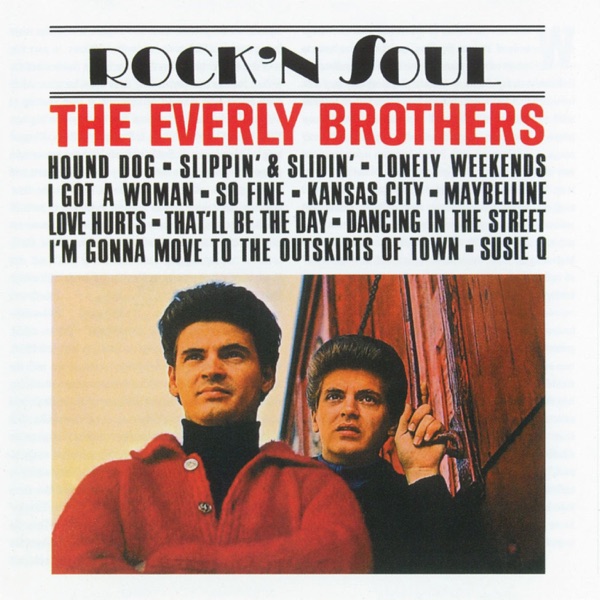
Rock’n Soul
1965 · 12 tracks
- 1 That'll Be the Day ↗ 2:19
- 2 So Fine ↗ 2:00
- 3 Maybellene ↗ 1:50
- 4 Dancing In the Street ↗ 2:37
- 5 Kansas City ↗ 2:26
- 6 I Got a Woman ↗ 2:08
- 7 Love Hurts ↗ 2:01
- 8 Slippin' and Slidin' ↗ 1:58
- 9 Susie Q ↗ 1:56
- 10 Hound Dog ↗ 1:58
- 11 I'm Gonna Move to the Outskirts of Town ↗ 2:53
- 12 Lonely Weekends ↗ 2:01

Beat & Soul
1965 · 12 tracks
- 1 Love Is Strange ↗ 2:54
- 2 Money (That's What I Want) ↗ 2:31
- 3 What Am I Living For ↗ 3:07
- 4 Hi Heel Sneakers ↗ 3:16
- 5 See See Rider ↗ 2:11
- 6 Lonely Avenue ↗ 2:35
- 7 Man With Money ↗ 2:19
- 8 People Get Ready ↗ 2:06
- 9 My Babe ↗ 2:40
- 10 Walking the Dog ↗ 2:40
- 11 I Almost Lost My Mind ↗ 2:37
- 12 The Girl Can't Help It ↗ 2:11
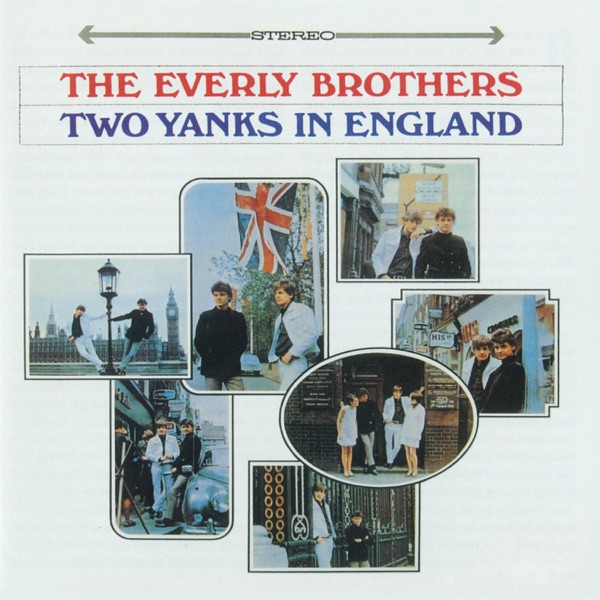
Two Yanks in England
1966 · 12 tracks
- 1 Somebody Help Me ↗ 2:01
- 2 So Lonely ↗ 2:39
- 3 Kiss Your Man Goodbye ↗ 2:33
- 4 Signs That Will Never Change ↗ 3:04
- 5 Like Everytime Before ↗ 1:56
- 6 Pretty Flamingo ↗ 2:35
- 7 I've Been Wrong Before ↗ 2:12
- 8 Have You Ever Loved Somebody ↗ 2:47
- 9 The Collector ↗ 2:53
- 10 Don't Run and Hide ↗ 2:36
- 11 Fifi the Flea ↗ 2:40
- 12 Hard Hard Year ↗ 2:56
In Our Image
1966 · 12 tracks
- 1 Leave My Girl Alone ↗ 2:21
- 2 (Why Am I) Chained to a Memory ↗ 2:05
- 3 I'll Never Get Over You ↗ 2:07
- 4 The Doll House Is Empty ↗ 1:59
- 5 Glitter and Gold ↗ 2:38
- 6 (You Got) The Power of Love ↗ 2:38
- 7 The Price of Love ↗ 2:06
- 8 It's All Over ↗ 2:20
- 9 I Used to Love You ↗ 2:13
- 10 Lovey Kravezit ↗ 2:35
- 11 June Is As Cold As December ↗ 2:51
- 12 It Only Costs a Dime ↗ 1:57
The Hit Sound of the Everly Brothers
1967 · 12 tracks
- 1 Blueberry Hill ↗ 3:01
- 2 I'm Movin' On ↗ 2:27
- 3 Devils's Child ↗ 2:38
- 4 Trains and Boats and Planes ↗ 3:01
- 5 Sea of Heartbreak ↗ 2:21
- 6 Oh, Boy! ↗ 2:45
- 7 (I'd Be) A Legend In My Time ↗ 2:46
- 8 Let's Go Get Stoned ↗ 3:04
- 9 Sticks and Stones ↗ 2:47
- 10 The House of the Rising Sun ↗ 4:34
- 11 She Never Smiles Anymore ↗ 3:18
- 12 Good Golly, Miss Molly ↗ 2:50
The Everly Brothers Sing
1967 · 12 tracks
- 1 Bowling Green ↗ 2:47
- 2 A Voice Within ↗ 2:22
- 3 I Don't Want to Love You ↗ 2:46
- 4 It's All Over ↗ 2:20
- 5 Deliver Me ↗ 2:32
- 6 Talking to the Flowers ↗ 2:55
- 7 Mary Jane ↗ 2:59
- 8 I'm Finding It Rough ↗ 2:44
- 9 Do You ↗ 2:45
- 10 Somebody Help Me ↗ 2:01
- 11 A Whiter Shade of Pale ↗ 4:53
- 12 Mercy, Mercy, Mercy ↗ 2:29

Roots
1968 · 13 tracks
- 1 The Introduction: The Everly Family (1952) ↗ 1:13
- 2 Mama Tried ↗ 2:20
- 3 Less of Me ↗ 3:05
- 4 T for Texas (Blue Yodel No. 1) ↗ 3:32
- 5 I Wonder If I Care As Much ↗ 3:00
- 6 Ventura Boulevard ↗ 2:52
- 7 Shady Grove ↗ 2:31
- 8 Illinois ↗ 2:15
- 9 Living Too Close to the Ground ↗ 2:18
- 10 You Done Me Wrong ↗ 2:18
- 11 Turn Around ↗ 2:50
- 12 Sing Me Back Home ↗ 5:19
- 13 Montage: Everly Family (1952) / Shady Grove / Kentucky ↗ 2:47
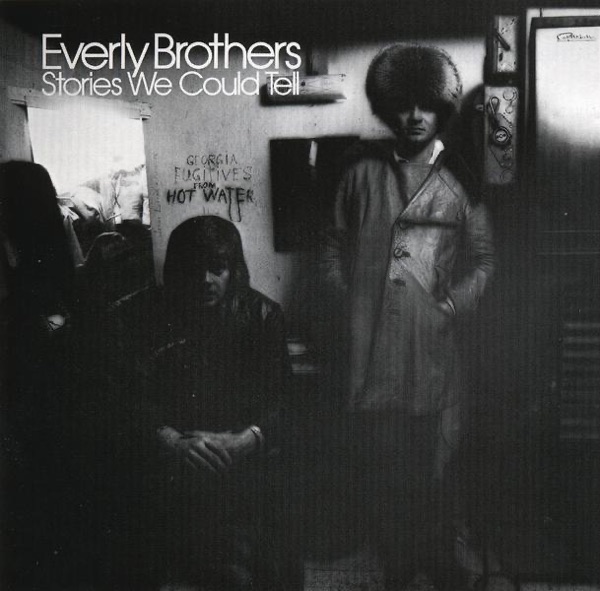
Stories We Could Tell
1972 · 12 tracks
- 1 All We Really Want to Do ↗ 2:22
- 2 Breakdown ↗ 3:13
- 3 Green River ↗ 4:44
- 4 Mandolin Wind ↗ 3:01
- 5 Up In Mabel's Room ↗ 3:16
- 6 Del Rio Dan ↗ 4:00
- 7 Ridin' High ↗ 2:41
- 8 Christmas Eve Can Kill You ↗ 3:26
- 9 Three Armed, Poker-Playin' River Rat ↗ 2:46
- 10 I'm Tired of Singing My Song In Las Vegas ↗ 3:14
- 11 The Brand New Tennessee Waltz ↗ 3:11
- 12 Stories We Could Tell ↗ 3:22
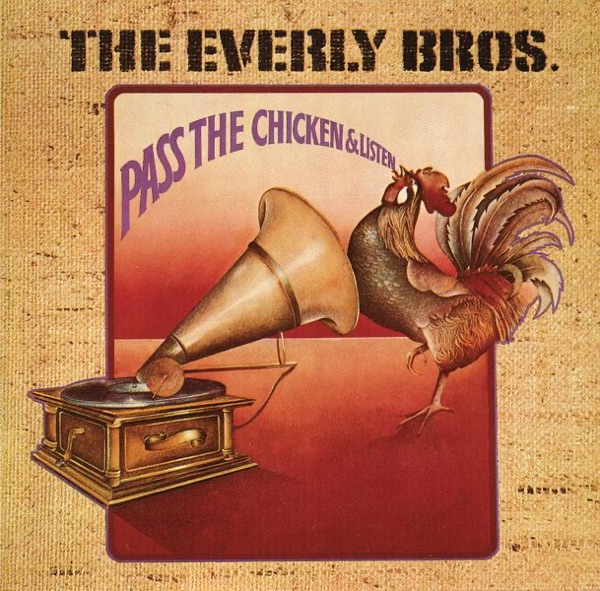
Pass the Chicken & Listen
1972 · 12 tracks
- 1 Lay It Down ↗ 3:18
- 2 Husbands and Wives ↗ 2:23
- 3 Woman Don't Try to Tie Me Down ↗ 4:01
- 4 Sweet Memories ↗ 2:55
- 5 Ladies Love Outlaws ↗ 3:13
- 6 Not Fade Away ↗ 2:01
- 7 Watching It Go ↗ 2:26
- 8 Paradise ↗ 3:37
- 9 Somebody Nobody Knows ↗ 3:37
- 10 Good Hearted Woman ↗ 2:34
- 11 A Nickel for the Fiddler ↗ 2:24
- 12 Rocky Top ↗ 2:53


Born Yesterday
1985 · 12 tracks


The Everly Brothers
1995 · 50 tracks
- 1 Cathy's Clown ↗ 2:24
- 1 The Price of Love ↗ 2:07
- 2 So Sad (To Watch Good Love Go Bad) ↗ 2:34
- 2 Man With Money ↗ 2:21
- 3 Walk Right Back ↗ 2:20
- 3 Love Is Strange ↗ 2:52
- 4 Love Hurts ↗ 2:01
- 4 Give Me a Sweetheart ↗ 2:11
- 5 Sleepless Nights ↗ 2:23
- 5 You're the One I Love ↗ 2:03
- 6 Nashville Blues ↗ 2:38
- 6 You're My Girl ↗ 2:48
- 7 Lucille ↗ 2:31
- 7 Kiss Your Man Goodbye ↗ 2:34
- 8 What Kind of Girl Are You ↗ 1:55
- 8 Gone, Gone, Gone ↗ 2:04
- 9 Made to Love ↗ 2:02
- 9 Don't Let the Whole World Know ↗ 2:10
- 10 Radio and TV ↗ 2:15
- 10 Don't Forget to Cry ↗ 2:08
- 11 Stick With Me Baby ↗ 1:52
- 11 Nothing Matters But You ↗ 2:13
- 12 Always It's You ↗ 2:29
- 12 It's All Over ↗ 2:22
- 13 Temptation ↗ 2:14
- 13 Empty Boxes ↗ 2:48
- 14 Ebony Eyes ↗ 3:06
- 14 Bowling Green ↗ 2:50
- 15 Crying In the Rain ↗ 1:59
- 15 Love of the Common People ↗ 3:28
- 16 Don't Blame Me ↗ 2:26
- 16 (I'd Be) A Legend In My Time ↗ 2:48
- 17 True Love ↗ 2:05
- 17 I'm Movin' On ↗ 2:29
- 18 That's Old Fashioned (That's the Way Love Should Be) ↗ 2:22
- 18 T for Texas (Blue Yodel No. 1) ↗ 3:32
- 19 Nancy's Minuet ↗ 2:25
- 19 I Wonder If I Care As Much ↗ 3:00
- 20 I'm Not Angry ↗ 2:03
- 20 Lord of the Manor ↗ 4:50
- 21 How Can I Meet Her? ↗ 1:50
- 21 Sing Me Back Home ↗ 3:59
- 22 Burma Shave (Take 2) ↗ 2:28
- 22 Shady Grove ↗ 1:53
- 23 Muskrat ↗ 2:19
- 23 Cuckoo Bird ↗ 2:41
- 24 Just One Time ↗ 2:19
- 24 I'm On My Way Home Again ↗ 2:20
- 25 Lonely Street ↗ 2:22
- 26 Sweet Dreams ↗ 2:42

Wake Up, Little Susie
2000 · 1 track
- 1 Wake Up Little Susie (Performed live on The Ed Sullivan Show 10/6/57) ↗ 1:59
Wake Up Little Susie (CD1)
2001 · 1 track
- 1 Wake Up Little Susie (Performed live on The Ed Sullivan Show 10/6/57) ↗ 1:59
Walk Right Back
2006 · 50 tracks
- 1 Cathy's Clown ↗ 2:24
- 1 The Price of Love ↗ 2:07
- 2 So Sad (To Watch Good Love Go Bad) ↗ 2:34
- 2 Man With Money ↗ 2:21
- 3 Walk Right Back ↗ 2:20
- 3 Love Is Strange ↗ 2:52
- 4 Love Hurts ↗ 2:01
- 4 Give Me a Sweetheart ↗ 2:11
- 5 Sleepless Nights ↗ 2:23
- 5 You're the One I Love ↗ 2:03
- 6 Nashville Blues ↗ 2:38
- 6 You're My Girl ↗ 2:48
- 7 Lucille ↗ 2:31
- 7 Kiss Your Man Goodbye ↗ 2:34
- 8 What Kind of Girl Are You ↗ 1:55
- 8 Gone, Gone, Gone ↗ 2:04
- 9 Made to Love ↗ 2:02
- 9 Don't Let the Whole World Know ↗ 2:10
- 10 Radio and TV ↗ 2:15
- 10 Don't Forget to Cry ↗ 2:08
- 11 Stick With Me Baby ↗ 1:52
- 11 Nothing Matters But You ↗ 2:13
- 12 Always It's You ↗ 2:29
- 12 It's All Over ↗ 2:22
- 13 Temptation ↗ 2:14
- 13 Empty Boxes ↗ 2:48
- 14 Ebony Eyes ↗ 3:06
- 14 Bowling Green ↗ 2:50
- 15 Crying In the Rain ↗ 1:59
- 15 Love of the Common People ↗ 3:28
- 16 Don't Blame Me ↗ 2:26
- 16 (I'd Be) A Legend In My Time ↗ 2:48
- 17 True Love ↗ 2:05
- 17 I'm Movin' On ↗ 2:29
- 18 That's Old Fashioned (That's the Way Love Should Be) ↗ 2:22
- 18 T for Texas (Blue Yodel No. 1) ↗ 3:32
- 19 Nancy's Minuet ↗ 2:25
- 19 I Wonder If I Care As Much ↗ 3:00
- 20 I'm Not Angry ↗ 2:03
- 20 Lord of the Manor ↗ 4:50
- 21 How Can I Meet Her? ↗ 1:50
- 21 Sing Me Back Home ↗ 3:59
- 22 Burma Shave (Take 2) ↗ 2:28
- 22 Shady Grove ↗ 1:53
- 23 Muskrat ↗ 2:19
- 23 Cuckoo Bird ↗ 2:41
- 24 Just One Time ↗ 2:19
- 24 I'm On My Way Home Again ↗ 2:20
- 25 Lonely Street ↗ 2:22
- 26 Sweet Dreams ↗ 2:42

The Songs of the Everly Brothers
2016 · 36 tracks
- 1 Life Ain't Worth Living ↗ 1:17
- 1 Give Me a Future (Version 2) ↗ 1:43
- 2 Give Me a Future ↗ 2:01
- 2 Maybe Tomorrow (Version 2) ↗ 1:59
- 3 That's Too Good to Be True ↗ 1:58
- 3 How Did We Stay Together (Version 2) ↗ 1:17
- 4 Should We Tell Him ↗ 1:47
- 4 You're the One ↗ 2:02
- 5 How Did We Stay Together ↗ 1:13
- 5 Who's to Be the One ↗ 2:05
- 6 Maybe Tomorrow ↗ 1:37
- 6 Don't Call Me, I'll Call You ↗ 1:19
- 7 I Didn't Mean to Go This Far ↗ 1:23
- 7 I'm Gonna Make Real Sure ↗ 1:42
- 8 I Wonder If I Care As Much ↗ 2:14
- 8 Her Love Was Meant for Me ↗ 2:03
- 9 I'll Throw Myself at You ↗ 1:49
- 9 Since You Broke My Heart (Version 2) ↗ 1:58
- 10 It's Too Late to Say Goodbye ↗ 1:33
- 10 I'll Bide My Time ↗ 1:25
- 11 All I Ask of Life ↗ 1:40
- 11 Turned Down ↗ 1:20
- 12 Kiss Me Once ↗ 1:26
- 12 Captain, Captain ↗ 2:10
- 13 Made to Love ↗ 1:51
- 13 Oh, What a Feeling ↗ 1:43
- 14 Dancing on My Feet ↗ 2:00
- 14 I'm Tired of Singing ↗ 2:16
- 15 Since You Broke My Heart ↗ 2:12
- 15 Only Me ↗ 2:48
- 16 When Will I Be Loved ↗ 1:39
- 16 You Can Fly ↗ 1:54
- 17 Do You Love Me ↗ 1:55
- 17 Hello Amy ↗ 2:56
- 18 Will I Ever Have a Chance Again ↗ 2:04
- 18 It's All Over ↗ 2:08
-
 The Everly BrothersThe Everly Brothers195811 tracks
 -
 Songs Our Daddy Taught UsThe Everly Brothers195812 tracks
 -
 A Date With The Everly BrothersThe Everly Brothers196012 tracks
 -
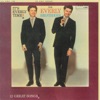 It’s Everly Time!The Everly Brothers196012 tracks
 -
 Both Sides of an EveningThe Everly Brothers196114 tracks
 -
 Instant Party!The Everly Brothers196212 tracks
 -
 The Everly Brothers Sing Great Country HitsThe Everly Brothers196312 tracks
 -
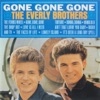 Gone, Gone, GoneThe Everly Brothers196412 tracks
 -
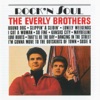 Rock’n SoulThe Everly Brothers196512 tracks
 -
 Beat & SoulThe Everly Brothers196512 tracks
 -
 Two Yanks in EnglandThe Everly Brothers196612 tracks
 -
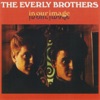 In Our ImageThe Everly Brothers196612 tracks
 -
 The Hit Sound of the Everly BrothersThe Everly Brothers196712 tracks
 -
 The Everly Brothers SingThe Everly Brothers196712 tracks
 -
 RootsThe Everly Brothers196813 tracks
 -
 Stories We Could TellThe Everly Brothers197212 tracks
 -
 Pass the Chicken & ListenThe Everly Brothers197212 tracks
 -
 EB 84The Everly Brothers198410 tracks
 -
 Born YesterdayThe Everly Brothers198512 tracks
 -
 Some HeartsThe Everly Brothers198810 tracks
 -
 The Everly BrothersThe Everly Brothers199550 tracks
 -
 Wake Up, Little SusieThe Everly Brothers20001 track
 - Wake Up Little Susie (CD1)The Everly Brothers20011 track
- Walk Right BackThe Everly Brothers200650 tracks
-
 The Songs of the Everly BrothersThe Everly Brothers201636 tracks
Deep Dive
Overview
The Everly Brothers were an American musical duo formed in 1957 in Shenandoah, consisting of Don Everly and Phil Everly. Known for their steel-string acoustic guitar playing and close-harmony singing, they combined elements of rock and roll, country, and pop into a distinctive sound that became foundational to country rock. The brothers’ approach to instrumentation and vocal arrangement—intimate, acoustic-driven, and deeply melodic—distinguished them from the electric-centered rock music dominating the mid-to-late 1950s, establishing a template that would influence generations of folk and country-rock artists.
Formation Story
Don and Phil Everly emerged from a family steeped in music; their father had been a musician, and their early training rooted them in country and vocal harmony traditions. The brothers began recording together as The Everly Brothers in 1957, the year they formally established themselves as a duo. Shenandoah, Iowa served as their birthplace as a recording act, though their sound drew from broader American roots traditions—country music, rockabilly, and the emerging hybrid styles of the mid-1950s. Their foundation in acoustic guitar and close vocal harmony set them apart from contemporaries who favored louder, more electric textures. The brothers’ ability to arrange and perform in two-part harmony became their signature from the start.
Breakthrough Moment
The Everly Brothers built a steady catalog beginning with their self-titled debut in 1958, followed quickly by Songs Our Daddy Taught Us that same year. These early records established their core aesthetic: acoustic-driven arrangements, tight two-part harmonies, and a blend of country and rock influences. By 1960, they had released A Date With The Everly Brothers and It’s Everly Time!, albums that demonstrated their range and solidified their presence in the recording industry. Their willingness to record country-influenced material at a time when rock and roll was increasingly electric positioned them as distinctive voices, gaining them credibility across multiple audiences—country listeners, pop audiences, and the emerging folk-rock demographic.
Peak Era
The brothers’ creative output remained prolific throughout the early-to-mid 1960s. Albums such as Both Sides of an Evening (1961) and The Everly Brothers Sing Great Country Hits (1963) showcased their deepening command of country material and sophisticated vocal arrangements. Rock’n Soul and Beat & Soul (both 1965) revealed their adaptability, moving into soul and R&B influences while maintaining their acoustic foundation. This period, spanning roughly 1958 through the mid-1960s, represented their most consistent and influential era, during which they proved that country and rock traditions need not be in opposition—they could be woven together through careful arrangement and committed vocal performance. Their prolific recording schedule across multiple labels, including Cadence and later Warner Bros. Records, reflected their commercial viability and the industry’s confidence in their ability to deliver across genres.
Musical Style
The Everly Brothers’ sound was built on a deceptively simple foundation: two acoustic guitars, two voices in close harmony, and an ear for melody derived from both country and pop traditions. Steel-string acoustic guitars formed the backbone of their arrangements, a choice that gave their records an intimacy and clarity that contrasted sharply with the heavily amplified rock music of their era. Don and Phil’s vocal blend was characterized by precise intonation, natural vibrato, and an almost conversational interplay between the parts—one brother would carry a phrase, the other would join or answer, creating a seamless emotional narrative. Their approach to harmony drawing from country duet traditions (particularly the influence of their father’s generation) but applied to contemporary material gave their records a timeless quality. As the 1960s progressed and they incorporated soul, R&B, and other influences into their repertoire, the acoustic guitar and vocal harmony remained constant, ensuring their identity remained coherent even as their thematic interests expanded.
Major Albums
The Everly Brothers (1958)
Their debut studio album established the template for all that followed: acoustic-driven arrangements, country-rock fusion, and vocal harmonies that felt both intimate and sophisticated.
Songs Our Daddy Taught Us (1958)
Released the same year as their debut, this collection underscored the brothers’ roots in family tradition and country heritage, presenting material that connected them to earlier American musical lineages.
It’s Everly Time! (1960)
This album captured the brothers at a moment of growing confidence and broader audience reach, demonstrating their ability to command the studio and craft cohesive, radio-friendly yet artistically substantive records.
The Everly Brothers Sing Great Country Hits (1963)
The title articulated their mission: to prove that country material was not provincial but universal, deserving serious interpretation and capable of reaching pop and rock audiences.
Rock’n Soul (1965)
This album revealed the brothers’ willingness to absorb soul and R&B influences without abandoning their core identity, showing an adaptability that kept them relevant amid rapid musical change in the mid-1960s.
Signature Songs
While specific song titles are not exhaustively documented in the supplied discography, the brothers’ catalog drew from standards, country classics, and contemporary compositions across their decade-plus of active recording. Their recordings of songs drawing on both traditional country material and contemporary pop-influenced compositions became benchmarks in how rock artists could approach the intersection of country and pop idioms without diluting either tradition. Their approach to interpretation—spare arrangements, focused vocals, and tasteful instrumentation—made even familiar material feel fresh and essential.
Influence on Rock
The Everly Brothers occupied a crucial position in rock music’s evolution by demonstrating that acoustic instruments and country traditions were not obstacles to rock credibility but could be central to it. Their success with acoustic guitars and country-inflected material anticipated the folk-rock boom of the mid-to-late 1960s and influenced countless artists who would follow, from folk-rockers seeking fuller arrangements to country-rock pioneers who saw their work as proof that country and rock audiences could overlap. The brothers’ close-harmony vocal style and acoustic-guitar-centered approach became a reference point for acts pursuing sophistication and melodic depth. By treating country material with seriousness and skill rather than novelty, they helped legitimize country music’s place within broader rock music discourse.
Legacy
The Everly Brothers maintained their recording presence across multiple decades and labels—Apex, Cadence, Warner Bros., and Arista—demonstrating sustained commercial and artistic longevity. Albums such as EB 84 (1984), Born Yesterday (1985), and Some Hearts (1988) showed them continuing to record and engage with contemporary production techniques while maintaining their foundational aesthetic. Later works including reunion and retrospective recordings underscore their enduring cultural significance. Their impact on country-rock, folk-rock, and the broader equation of acoustic instruments with rock authenticity remained substantial throughout the late 20th century and into the 21st. The brothers’ catalog and influence continue to circulate through streaming and reissue, testament to the durability of their songwriting and arrangements.
Fun Facts
- The brothers released two studio albums in 1958, their inaugural year, demonstrating remarkable productive capacity from the very start of their recording career.
- A 1962 album, Christmas With The Everly Brothers & the Boys Town Choir, blended their signature acoustic style with choral arrangements, showing their flexibility across different musical contexts.
- The title Two Yanks in England (1966) reflected their touring and recording activity abroad, indicating their international presence and appeal beyond the American market.
- Reunion Concert, Vol. 2 (1996) suggests the brothers had reunited for live performances after a potential separation, showing that their partnership remained viable for revisiting and reviving across different eras.