
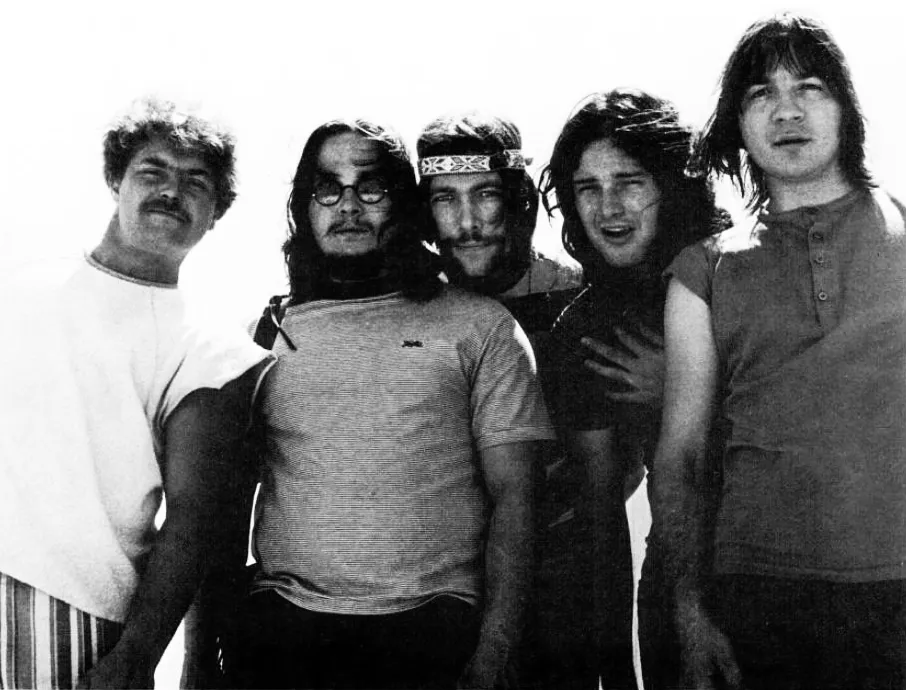
Photo by RCA Records , licensed under Public domain · Wikimedia Commons
Rank #287
The Guess Who
From Wikipedia
The Guess Who is a Canadian rock band formed in Winnipeg, Manitoba, in 1958. The band found their greatest success from 1969 to 1972, with hit songs including "American Woman", "These Eyes", "No Time", "Laughing", and "Share the Land".
Members
- Jim Kale
Discography & Previews
Browse through and click an album to open and play 30-second previews streamed from Apple Music.

Hey Ho (What You Do to Me!)
1965 · 11 tracks

Shakin' All Over
1965 · 1 track
- 1 Shakin' All Over (Rerecorded) ↗ 2:59
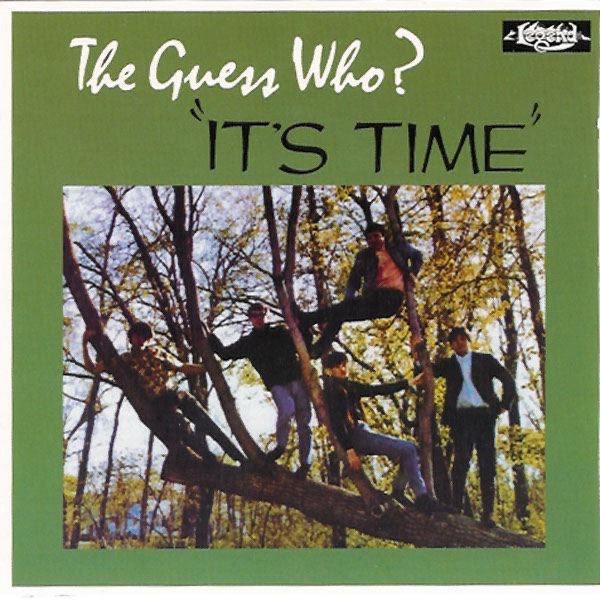
It’s Time
1966 · 12 tracks

Canned Wheat
1969 · 9 tracks
- 1 No Time (2024 Remaster) ↗ 5:35
- 2 Minstrel Boy (2024 Remaster) ↗ 3:19
- 3 Laughing (2024 Remaster) ↗ 3:01
- 4 Undun (2024 Remaster) ↗ 4:12
- 5 6 A.M. or Nearer (2024 Remaster) ↗ 5:03
- 6 Old Joe (2024 Remaster) ↗ 3:16
- 7 Of a Dropping Pin (2024 Remaster) ↗ 3:21
- 8 Key (2024 Remaster) ↗ 11:28
- 9 Fair Warning (2024 Remaster) ↗ 1:45

Wheatfield Soul
1969 · 10 tracks
- 1 These Eyes (2003 Remastered) ↗ 3:47
- 2 Pink Wine Sparkles In the Glass (2003 Remastered) ↗ 2:16
- 3 I Found Her In a Star (2003 Remastered) ↗ 2:38
- 4 Friends of Mine (2003 Remastered) ↗ 10:08
- 5 When You Touch Me (2003 Remastered) ↗ 3:40
- 6 A Wednesday In Your Garden (2003 Remastered) ↗ 3:24
- 7 Lightfoot (2003 Remastered) ↗ 3:09
- 8 Love and a Yellow Rose (2003 Remastered) ↗ 5:06
- 9 Maple Fudge (2003 Remastered) ↗ 1:55
- 10 We're Coming to Dinner (2003 Remastered) ↗ 2:45

American Woman
1970 · 9 tracks
- 1 American Woman (2024 Remaster) ↗ 5:09
- 2 No Time (2024 Remaster) ↗ 3:49
- 3 Talisman (2024 Remaster) ↗ 5:10
- 4 No Sugar Tonight / New Mother Nature (2024 Remaster) ↗ 4:54
- 5 969 (The Oldest Man) [2024 Remaster] ↗ 3:00
- 6 When Friends Fall Out (2024 Remaster) ↗ 3:03
- 7 8:15 (2024 Remaster) ↗ 3:29
- 8 Proper Stranger (2024 Remaster) ↗ 4:04
- 9 Humpty's Blues / American Woman (Epilogue) [2024 Remaster] ↗ 6:07

Share the Land
1970 · 10 tracks

So Long, Bannatyne
1971 · 11 tracks
- 1 Rain Dance (2024 Remaster) ↗ 2:46
- 2 She Might Have Been a Nice Girl (2024 Remaster) ↗ 3:15
- 3 Goin' a Little Crazy (2024 Remaster) ↗ 6:59
- 4 Fiddlin' (2024 Remaster) ↗ 1:07
- 5 Pain Train (2024 Remaster) ↗ 3:43
- 6 One Divided (2024 Remaster) ↗ 2:40
- 7 Grey Day (2024 Remaster) ↗ 4:17
- 8 Life In the Bloodstream (2024 Remaster) ↗ 3:12
- 9 One Man Army (2024 Remaster) ↗ 3:56
- 10 Sour Suite (2024 Remaster) ↗ 4:08
- 11 So Long, Bannatyne (2024 Remaster) ↗ 5:56

Rockin’
1972 · 10 tracks
- 1 Heartbroken Bopper (2003 Remastered) ↗ 4:55
- 2 Get Your Ribbons On (2003 Remastered) ↗ 2:36
- 3 Smoke Big Factory (2003 Remastered) ↗ 3:59
- 4 Arrivederci Girl (2003 Remastered) ↗ 2:32
- 5 Guns, Guns, Guns (2003 Remastered) ↗ 5:00
- 6 Running Bear (2003 Remastered) ↗ 2:19
- 7 Back to the City (2003 Remastered) ↗ 3:43
- 8 Your Nashville Sneakers (2003 Remastered) ↗ 2:56
- 9 Herbert's a Loser (2003 Remastered) ↗ 3:34
- 10 Hi Rockers (2003 Remastered) ↗ 6:49

#10
1973 · 8 tracks
- 1 Take It Off My Shoulders (2003 Remastered) ↗ 4:02
- 2 Musicione (2003 Remastered) ↗ 3:56
- 3 Miss Frizzy (2003 Remastered) ↗ 4:23
- 4 Glamour Boy (2003 Remastered) ↗ 5:20
- 5 Self Pity (2003 Remastered) ↗ 4:21
- 6 Lie Down (2003 Remastered) ↗ 4:41
- 7 Cardboard Empire (2003 Remastered) ↗ 3:26
- 8 Just Let Me Sing (2003 Remastered) ↗ 6:11
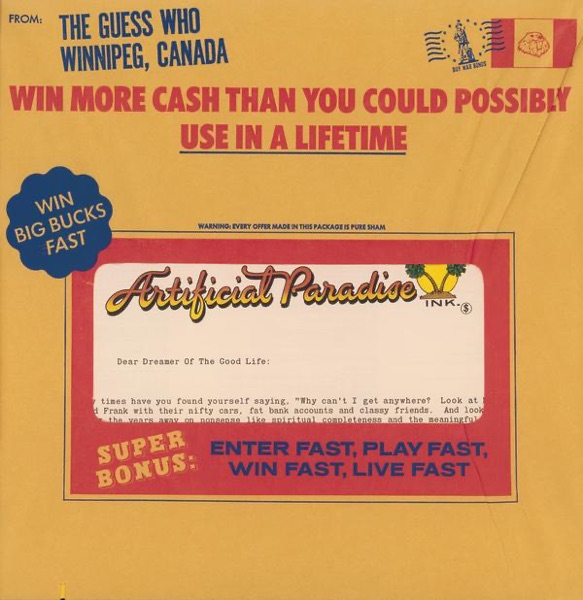
Artificial Paradise
1973 · 10 tracks
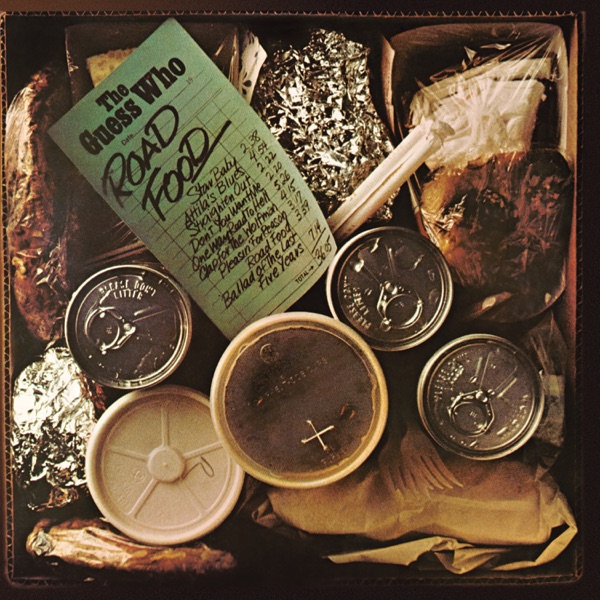
Road Food
1974 · 9 tracks
- 1 Star Baby (2003 Remastered) ↗ 2:40
- 2 Attila's Blues (2003 Remastered) ↗ 4:54
- 3 Straighten Out (2003 Remastered) ↗ 2:24
- 4 Don't You Want Me (2003 Remastered) ↗ 2:21
- 5 One Way Road to Hell (2003 Remastered) ↗ 5:27
- 6 Clap for the Wolfman (2003 Remastered) ↗ 4:16
- 7 Pleasin' for Reason (2003 Remastered) ↗ 3:18
- 8 Road Food (2003 Remastered) ↗ 3:39
- 9 Ballad of the Last Five Years (2003 Remastered) ↗ 7:15
-
 Hey Ho (What You Do to Me!)The Guess Who196511 tracks
 -
 Shakin' All OverThe Guess Who19651 track
 -
 It’s TimeThe Guess Who196612 tracks
 -
 Canned WheatThe Guess Who19699 tracks
 -
 Wheatfield SoulThe Guess Who196910 tracks
 -
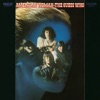 American WomanThe Guess Who19709 tracks
 -
 Share the LandThe Guess Who197010 tracks
 -
 So Long, BannatyneThe Guess Who197111 tracks
 -
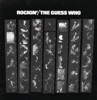 Rockin’The Guess Who197210 tracks
 -
 #10The Guess Who19738 tracks
 -
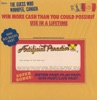 Artificial ParadiseThe Guess Who197310 tracks
 -
 Road FoodThe Guess Who19749 tracks
 -
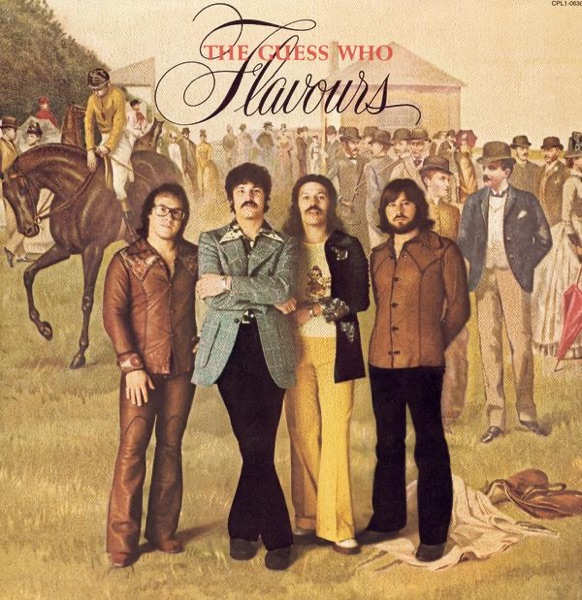
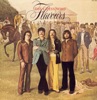 FlavoursThe Guess Who19749 tracks
 -
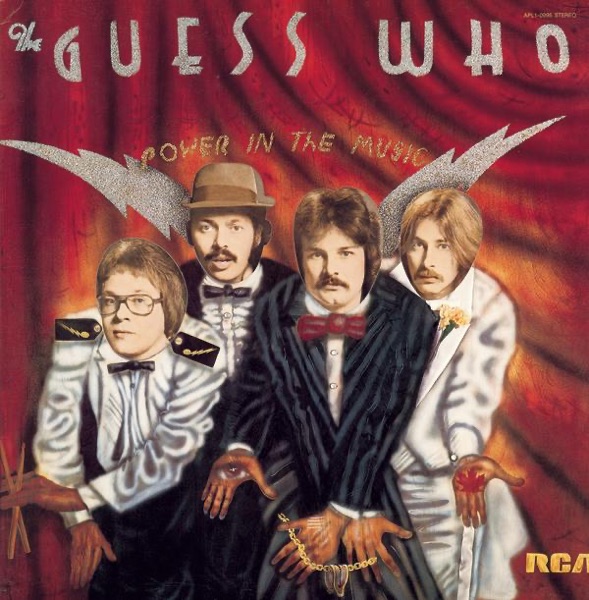
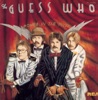 Power in the MusicThe Guess Who19759 tracks
Deep Dive
Overview
The Guess Who is a Canadian rock band formed in Winnipeg, Manitoba, in 1965. Emerging from the Canadian prairies at a time when rock and roll was still heavily dominated by American and British acts, the band became one of Canada’s first major rock exports, reaching their commercial and creative peak between 1969 and 1972. Their string of hit singles—“American Woman,” “These Eyes,” “No Time,” “Laughing,” and “Share the Land”—established them as architects of a distinctly North American hard rock and pop-rock sound that would influence generations of Canadian musicians.
Formation Story
The Guess Who emerged from Winnipeg’s vibrant mid-1960s music scene, a city that produced a disproportionate number of rock acts during that decade. The band crystallized into their most recognizable form in 1965, drawing from the garage rock and blues traditions that were spreading across North America in the wake of the British Invasion. The group built their reputation playing the Canadian circuit and local venues before attracting the attention of major record labels. Jim Kale, the band’s bassist, became a cornerstone of their sound and lineup, providing the anchor for the group’s increasingly ambitious arrangements.
Breakthrough Moment
The Guess Who’s breakthrough came with Canned Wheat in 1969, an album that captured the band at a pivotal moment of commercial and artistic maturation. The album’s success on both Canadian and American radio signaled that a rock band from Winnipeg could compete on an international stage. However, it was American Woman, released in 1970, that catapulted them into the upper echelon of rock acts. The title track became an instant hit, dominating radio throughout North America and establishing the band as a household name. The album demonstrated their ability to craft hook-laden rock songs with genuine grit and appeal, blending hard rock energy with accessible pop sensibilities. That same year, Share the Land reinforced their commercial dominance, proving that their success was not a one-album phenomenon.
Peak Era
From 1969 to 1972, The Guess Who occupied a rare position in rock: critically respected, commercially unstoppable, and perpetually present on the charts. The period spanning Wheatfield Soul (1969) through Rockin’ (1972) represented their most fertile creative window. During these years, they released a steady stream of albums that maintained both radio appeal and credibility with rock audiences. Their ability to alternate between anthem-style rock songs and more introspective, folk-influenced material kept them fresh and unpredictable in an era when rock was fragmenting into countless subgenres. The band’s consistent touring and media presence reinforced their status as one of the decade’s most reliable rock acts.
Musical Style
The Guess Who’s sound synthesized multiple strands of 1960s and early 1970s rock: the blues-rock foundation, the melodic pop sensibilities of psychedelic rock, and the harder edge that was emerging in contemporary hard rock. Their arrangements typically featured prominent keyboards, layered guitars, and a rhythm section that favored straightforward, driving grooves over technical complexity. The band’s songwriting often centered on accessible hooks and singalong choruses, yet maintained enough musical sophistication to appeal beyond the AM radio audience. Vocally, the band employed a conversational, almost vernacular delivery that gave their songs an unpretentious, working-class character—a refreshing contrast to some of the more theatrical rock of the era. Over time, their albums explored blues rock, progressive rock, jazz fusion, and folk rock influences, though they never abandoned the hard rock foundation that had brought them initial success.
Major Albums
Wheatfield Soul (1969)
An album that demonstrated the band’s transition from garage-rock energy to more layered, studio-savvy production; it established the template for their most successful period.
American Woman (1970)
The album that broke the band internationally, anchored by the title track and showcasing their ability to craft radio-friendly rock songs without sacrificing instrumental quality or songwriting depth.
Share the Land (1970)
Released the same year as American Woman, this album proved they could sustain success with a broader range of material, from harder rock to more folk-influenced ballads.
So Long, Bannatyne (1971)
A reflection of the band’s continued commercial strength and their willingness to experiment with different production approaches and lyrical themes.
Rockin’ (1972)
The final album of their primary peak era, demonstrating both the strengths and limitations of their approach as the broader rock landscape began to shift.
Signature Songs
- “American Woman” — The band’s biggest hit and signature moment, a propulsive hard rock song that became synonymous with their name and legacy.
- “These Eyes” — A more introspective, melody-driven track that demonstrated the band’s range beyond pure rock aggression.
- “No Time” — A quintessential example of their ability to craft hook-laden, radio-friendly rock without sacrificing punch.
- “Laughing” — A groove-oriented track that showcased their blues-rock roots and rhythmic sophistication.
- “Share the Land” — The title track from their second 1970 album, featuring a more optimistic, folk-influenced sensibility.
Influence on Rock
The Guess Who’s primary historical significance lies in their role as Canadian rock pioneers who proved that major commercial and critical success could originate from outside the traditional American and British powerhouses. Their success in the early 1970s helped establish a template for Canadian rock acts and demonstrated that the Canadian market could produce internationally competitive artists. The band’s blend of hard rock energy with accessible pop production influenced countless rock acts throughout the 1970s and beyond. Their emphasis on strong songwriting, memorable hooks, and studio craftsmanship aligned them with the broader arena rock movement that would dominate the 1970s. Bands that followed benefited from the path The Guess Who had blazed, proving that geography was no barrier to reaching a worldwide audience.
Legacy
The Guess Who remained active beyond their commercial peak, continuing to record and tour through the mid-1970s and beyond. The band continued performing into the 21st century, with Jim Kale serving as a constant through the group’s various incarnations. Their studio output from 1965 onward has been periodically reissued, ensuring that later audiences have access to their catalog. The band’s most celebrated work—particularly the albums from 1969–1972—retains a permanent place in classic rock radio rotation and streaming catalogs. Their hits remain instantly recognizable touchstones of 1970s rock, and “American Woman” in particular has achieved the status of a cultural touchstone, covered and referenced repeatedly across multiple genres and decades. The Guess Who’s story remains central to any comprehensive history of 1970s rock and Canadian popular music.
Fun Facts
- The band’s origins trace back to earlier Winnipeg groups, with various lineups and name changes preceding the 1965 formation of The Guess Who as a recorded entity.
- Despite forming in 1965, their early recordings under the name The Guess Who, including Hey Ho (What You Do to Me!) and Shakin’ All Over, took several years to gain significant traction before their 1969 breakthrough.
- The band recorded for multiple major labels including RCA Records and Buddah Records, reflecting the shifting landscape of record industry consolidation during the 1970s.
- Their album So Long, Bannatyne (1971) referenced Bannatyne Avenue in Winnipeg, anchoring the band’s identity firmly in their hometown geography despite their international success.