
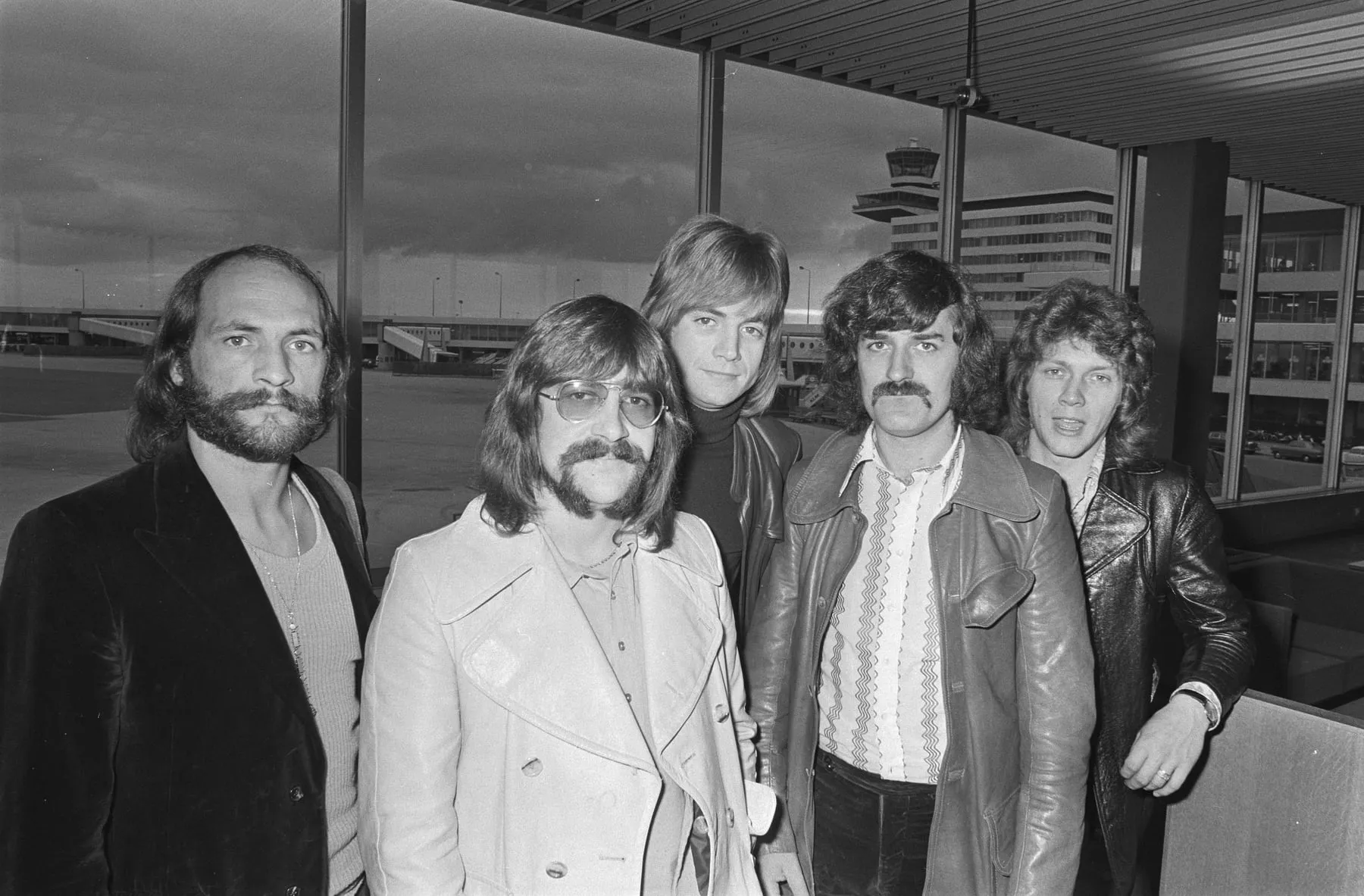
Photo by Nationaal Archief, Den Haag, Rijksfotoarchief: Fotocollectie Algemeen Nederlands Fotopersbureau (ANEFO), 1945-1989 - negatiefstroken zwart/wit, nummer toegang 2.24.01.05, bestanddeelnummer 923-9509 , licensed under CC0 · Wikimedia Commons
Rank #220
The Moody Blues
From Wikipedia
The Moody Blues were an English rock band formed in Birmingham in May 1964. The band initially consisted of Graeme Edge (drums), Denny Laine (guitar/vocals), Mike Pinder (keyboards/vocals), Ray Thomas (multi-instrumentalist/vocals) and Clint Warwick (bass/vocals). Originally part of the British beat and R&B scene of the early-to-mid-1960s, the band came to prominence with the UK No. 1 and US Top 10 single "Go Now" in late 1964/early 1965. Laine and Warwick both left the band in 1966, with Edge, Pinder and Thomas recruiting new members Justin Hayward (guitar/vocals) and John Lodge (bass/vocals). They embraced the psychedelic rock movement of the late 1960s, with their second album, Days of Future Passed (1967), a fusion of rock with classical music that established the band as pioneers in the development of art rock and progressive rock. It has been described as a "landmark" and "one of the first successful concept albums".
Members
- Clint Warwick (1964–1966)
- Denny Laine (1964–1966)
- Justin Hayward (1966–present)
- Graeme Edge
- John Lodge
- Ray Thomas
- Rod Clark
Discography & Previews
Browse through and click an album to open and play 30-second previews streamed from Apple Music.

The Magnificent Moodies
1965 · 27 tracks
- 1 I'll Go Crazy ↗ 2:12
- 2 Something You Got ↗ 2:53
- 3 Go Now ↗ 3:13
- 4 Can't Nobody Love You ↗ 4:03
- 5 I Don't Mind ↗ 3:28
- 6 I've Got a Dream ↗ 2:52
- 7 Let Me Go ↗ 3:13
- 8 Stop ↗ 2:06
- 9 Thank You Baby ↗ 2:29
- 10 It Ain't Necessarily So ↗ 3:21
- 11 True Story ↗ 1:45
- 12 Bye Bye Bird ↗ 2:54
- 13 Lose Your Money (But Don't Lose Your Mind) ↗ 2:00
- 14 Steal Your Heart Away ↗ 2:15
- 15 Go Now! (First Version) ↗ 3:49
- 16 It's Easy Child ↗ 3:13
- 17 I Don't Want to Go On Without You ↗ 2:47
- 18 Time Is on My Side ↗ 3:04
- 19 From the Bottom of My Heart (I Love You) ↗ 3:27
- 20 And My Baby's Gone ↗ 2:22
- 21 Everyday ↗ 1:49
- 22 You Don't (All the Time) ↗ 2:22
- 23 Boulevard De Madeleine ↗ 2:55
- 24 This Is My House (But Nobody Calls) ↗ 2:35
- 25 People Gotta Go ↗ 2:36
- 26 Life's Not Life ↗ 2:36
- 27 He Can Win ↗ 2:25


In Search of the Lost Chord
1968 · 21 tracks
- 1 Departure ↗ 0:45
- 2 Ride My See-Saw ↗ 3:39
- 3 Dr. Livingstone, I Presume ↗ 2:59
- 4 House of Four Doors (Pt. 1) ↗ 4:13
- 5 Legend of a Mind ↗ 6:37
- 6 House of Four Doors (Pt. 2) ↗ 1:47
- 7 Voices In the Sky ↗ 3:29
- 8 The Best Way to Travel ↗ 3:14
- 9 Visions of Paradise ↗ 4:15
- 10 The Actor (Full Version) ↗ 4:39
- 11 The Word ↗ 0:49
- 12 Om ↗ 5:48
- 13 Simple Game (Justin Hayward Vocal Mix) ↗ 3:26
- 14 The Best Way to Travel (Additional Vocal Mix) ↗ 4:03
- 15 Visions of Paradise (Instrumental Sitar Mix) ↗ 4:29
- 16 What Am I Doing Here (Alternate Mix) ↗ 3:53
- 17 The Word (Mellotron Mix) ↗ 1:01
- 18 Om (Full Version) ↗ 6:07
- 19 Dr. Livingstone, I Presume (BBC Session - Top Gear 16/7/68) ↗ 2:57
- 20 The Best Way to Travel (BBC Session - Top Gear 16/7/68) ↗ 3:38
- 21 A Simple Game ↗ 3:45
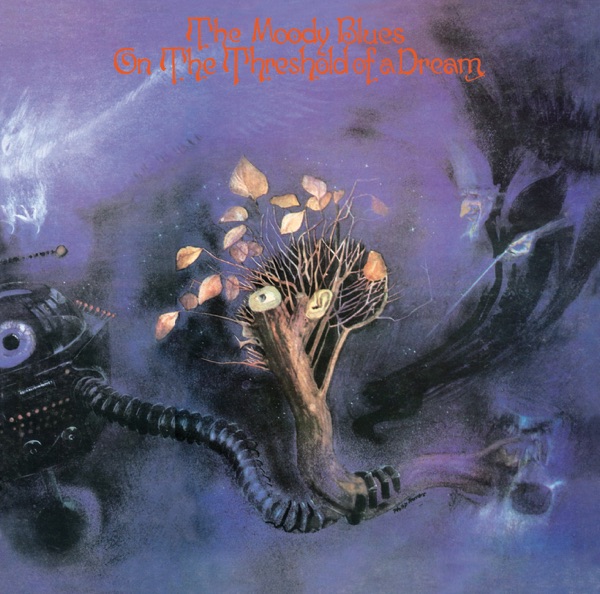
On the Threshold of a Dream
1969 · 22 tracks
- 1 In the Beginning ↗ 2:09
- 2 Lovely to See You ↗ 2:34
- 3 Dear Diary ↗ 3:57
- 4 Send Me No Wine ↗ 2:20
- 5 To Share Our Love ↗ 2:55
- 6 So Deep Within You ↗ 3:07
- 7 Never Comes the Day ↗ 4:44
- 8 Lazy Day ↗ 2:44
- 9 Are You Sitting Comfortably ↗ 3:30
- 10 The Dream ↗ 0:58
- 11 Have You Heard, Pt. 1 ↗ 1:28
- 12 The Voyage ↗ 4:11
- 13 Have You Heard, Pt. 2 (Full Version) ↗ 2:31
- 14 In the Beginning (Full Version) ↗ 3:28
- 15 So Deep Within You (Full Version) ↗ 3:30
- 16 Dear Diary (Alternate Mix) ↗ 4:05
- 17 Have You Heard (Original take) ↗ 3:53
- 18 The Voyage (Original Take) ↗ 4:20
- 19 Lovely to See You (BBC Sessions Version) ↗ 2:26
- 20 Send Me No Wine (BBC Sessions Version) ↗ 2:40
- 21 So Deep Within You (BBC Sessions Version) ↗ 3:08
- 22 Are You Sitting Comfortably (BBC Sessions Version) ↗ 3:39

To Our Children’s Children’s Children
1969 · 13 tracks
- 1 Higher and Higher ↗ 4:06
- 2 Eyes of a Child, Pt. 1 (Full Version with Intro) ↗ 3:24
- 3 Floating ↗ 3:01
- 4 Eyes of a Child, Pt. 2 ↗ 1:21
- 5 I Never Thought I'd Like to Be a Hundred ↗ 1:06
- 6 Beyond ↗ 2:58
- 7 Out and In ↗ 3:46
- 8 Gypsy ↗ 3:34
- 9 Eternity Road ↗ 4:18
- 10 Candle of Life ↗ 4:17
- 11 Sun Is Still Shining ↗ 3:37
- 12 I Never Thought I'd Live to Be a Million ↗ 0:34
- 13 Watching and Waiting ↗ 4:16

A Question of Balance
1970 · 16 tracks
- 1 Question ↗ 5:44
- 2 How Is It (We Are Here) ↗ 2:45
- 3 And the Tide Rushes In ↗ 2:56
- 4 Don't You Feel Small ↗ 2:39
- 5 Tortoise and the Hare ↗ 3:20
- 6 It's Up to You ↗ 3:12
- 7 Minstrel's Song ↗ 4:28
- 8 Dawning Is the Day ↗ 4:22
- 9 Melancholy Man ↗ 5:45
- 10 The Balance ↗ 3:33
- 11 Mike's Number One ↗ 3:37
- 12 Question (Alternate Version) ↗ 6:09
- 13 Minstrel's Song ↗ 4:37
- 14 It's Up to You ↗ 3:23
- 15 Don't You Feel Small ↗ 3:04
- 16 Dawning Is the Day (Full Original Mix) ↗ 4:39

Every Good Boy Deserves Favour
1971 · 11 tracks
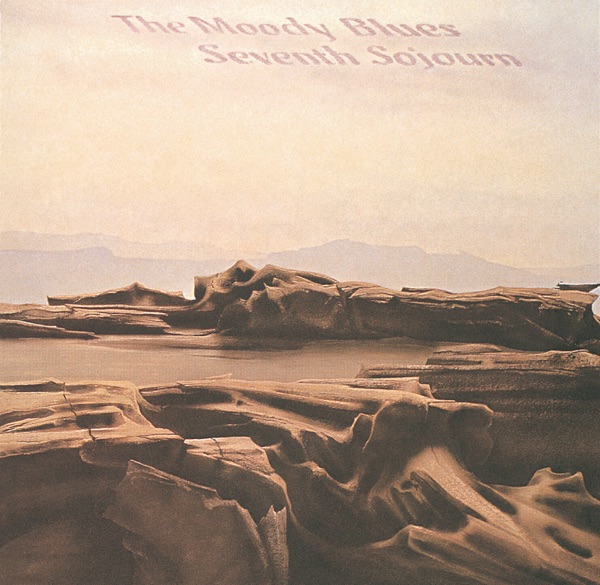


The Present
1983 · 12 tracks
- 1 Blue World ↗ 5:19
- 2 Meet Me Halfway ↗ 4:09
- 3 Sitting At the Wheel ↗ 5:39
- 4 Going Nowhere ↗ 5:30
- 5 Hole In the World (Instrumental) ↗ 1:54
- 6 Under My Feet ↗ 4:51
- 7 It's Cold Outside of Your Heart ↗ 4:27
- 8 Running Water ↗ 3:23
- 9 I Am ↗ 1:39
- 10 Sorry ↗ 5:01
- 11 Blue World (Bonus Track) ↗ 3:39
- 12 Sitting At the Wheel (Steven Greenberg Remix) [Bonus Track] ↗ 7:32


Keys of the Kingdom
1991 · 11 tracks
- 1 Say It with Love ↗ 3:57
- 2 Bless the Wings (That Bring You Back) ↗ 5:11
- 3 Is This Heaven? ↗ 4:05
- 4 Say What You Mean, Pt. 1 & 2 (Parts I And II) ↗ 5:39
- 5 Lean On Me (Tonight) ↗ 4:59
- 6 Hope and Pray ↗ 5:03
- 7 Shadows On the Wall ↗ 5:07
- 8 Once Is Enough ↗ 4:04
- 9 Celtic Sonant ↗ 5:02
- 10 Magic ↗ 5:11
- 11 Never Blame the Rainbows for the Rain ↗ 4:58

Strange Times
1999 · 14 tracks
- 1 English Sunset ↗ 5:05
- 2 Haunted ↗ 4:31
- 3 Sooner or Later (Walkin' on Air) ↗ 3:50
- 4 Wherever You Are ↗ 3:36
- 5 Foolish Love ↗ 3:56
- 6 Love Don't Come Easy ↗ 4:34
- 7 All That Is Real Is You ↗ 3:34
- 8 Strange Times ↗ 4:29
- 9 Words You Say ↗ 5:32
- 10 My Little Lovely ↗ 1:46
- 11 Forever Now ↗ 4:37
- 12 The One ↗ 3:39
- 13 The Swallow ↗ 4:59
- 14 Nothing Changes ↗ 3:33

December
2003 · 11 tracks
- 1 Don't Need a Reindeer ↗ 4:00
- 2 December Snow ↗ 5:11
- 3 The Quiet of Christmas Morning (Bach 147) ↗ 2:51
- 4 On This Christmas Day ↗ 3:40
- 5 Happy Christmas (War Is Over) ↗ 2:37
- 6 A Winters Tale ↗ 4:28
- 7 The Spirit of Christmas ↗ 4:53
- 8 Yes I Believe ↗ 4:21
- 9 When a Child Is Born ↗ 3:35
- 10 White Christmas ↗ 3:09
- 11 In the Bleak Midwinter ↗ 3:27
-
 The Magnificent MoodiesThe Moody Blues196527 tracks
 -
 Days of Future PassedThe Moody Blues19677 tracks
 -
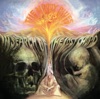 In Search of the Lost ChordThe Moody Blues196821 tracks
 -
 On the Threshold of a DreamThe Moody Blues196922 tracks
 -
 To Our Children’s Children’s ChildrenThe Moody Blues196913 tracks
 -
 A Question of BalanceThe Moody Blues197016 tracks
 -
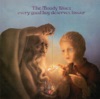 Every Good Boy Deserves FavourThe Moody Blues197111 tracks
 -
 Seventh SojournThe Moody Blues19728 tracks
 -
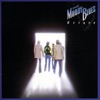 OctaveThe Moody Blues197810 tracks
 -
 Long Distance VoyagerThe Moody Blues198111 tracks
 -
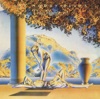 The PresentThe Moody Blues198312 tracks
 -
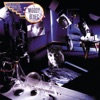 The Other Side of LifeThe Moody Blues19869 tracks
 -
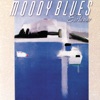 Sur la merThe Moody Blues198810 tracks
 -
 Keys of the KingdomThe Moody Blues199111 tracks
 -
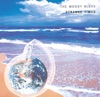 Strange TimesThe Moody Blues199914 tracks
 -
 DecemberThe Moody Blues200311 tracks
Deep Dive
Overview
The Moody Blues were an English rock band that emerged from Birmingham in the mid-1960s and became foundational architects of art rock and progressive rock. Beginning as part of the British beat and rhythm-and-blues movement, they achieved early commercial success with the 1964 single “Go Now,” which reached No. 1 in the United Kingdom and the top ten in the United States. Yet their historical significance rests primarily on their 1967 album Days of Future Passed, a fusion of rock instrumentation with orchestral arrangements that established a template for ambitious, concept-driven rock music and influenced decades of progressive and experimental rock to follow.
Formation Story
The Moody Blues formed in Birmingham in May 1964, coalescing around the members Graeme Edge on drums, Ray Thomas on multi-instruments and vocals, and Mike Pinder on keyboards and vocals. The initial lineup was completed by Denny Laine on guitar and vocals and Clint Warwick on bass and vocals. The band emerged from the ferment of the British beat and R&B scene, a movement that had been galvanized by the success of groups like The Beatles and The Rolling Stones. In their earliest incarnation, The Moody Blues performed in local clubs and quickly attracted attention on the British rock circuit, their rhythm-and-blues orientation and energetic live performances marking them as part of the broader mid-1960s British Invasion wave.
Breakthrough Moment
The release of “Go Now” in late 1964 and early 1965 became The Moody Blues’ entrée to mass audiences. The single climbed to No. 1 on the UK charts and penetrated the top ten in the United States, establishing the band as significant commercial contenders in a crowded market. This early success brought them recording contracts and touring opportunities, yet the single’s R&B sensibility would soon be superseded by the band’s artistic evolution. By 1966, both Laine and Warwick had departed the group, and Edge, Pinder, and Thomas recruited Justin Hayward on guitar and vocals and John Lodge on bass and vocals, a lineup change that would prove pivotal to the band’s subsequent direction and creative achievements.
Peak Era
The defining creative period of The Moody Blues spanned the late 1960s and early 1970s. Their peak began with Days of Future Passed (1967), which fused orchestral arrangements with rock instrumentation in a concept-album framework that became a landmark in progressive and art rock. The album’s success established them as innovators, and they sustained that momentum across a series of albums including In Search of the Lost Chord (1968), On the Threshold of a Dream (1969), To Our Children’s Children’s Children (1969), A Question of Balance (1970), Every Good Boy Deserves Favour (1971), and Seventh Sojourn (1972). During this period, The Moody Blues refined their signature sound and released material that earned both critical respect and substantial commercial success, solidifying their position at the forefront of progressive rock.
Musical Style
The Moody Blues’ sound was defined by the integration of classical orchestration with rock instrumentation, a synthesis that was uncommon in rock music prior to their work. Keyboards played a central role in their arrangements, with Mike Pinder’s synthesizer work and piano establishing harmonic and textural foundations that songs built upon, often with prominent string sections and elaborate production. Their approach to composition was ambitious and narrative in scope, favoring extended instrumental passages, multiple vocal harmonies, and lyrical themes that explored philosophical and spiritual territory. Ray Thomas’s flute and other woodwind instrumentation added another layer of sophistication, while Justin Hayward’s vocals provided a lyrical focal point. The band’s sound evolved through the late 1960s and into the 1970s as synthesizer technology advanced, but the core aesthetic remained rooted in the marriage of classical sensibility with rock energy.
Major Albums
Days of Future Passed (1967)
A landmark fusion of rock and classical music, organized as a concept album following a single day in the life of an unnamed character. The album established The Moody Blues as pioneers in art rock and remains one of the first successful concept albums in rock history.
In Search of the Lost Chord (1968)
Following the commercial and critical success of their previous effort, the band deepened their exploration of orchestral rock with expanded arrangements and more elaborate compositional structures.
On the Threshold of a Dream (1969)
A concept album exploring themes of existence and consciousness, continuing the band’s ambitious approach to rock songwriting and demonstrating their commitment to thematic coherence across a full-length release.
A Question of Balance (1970)
Released as the band’s creative output remained prolific, this album maintained their signature orchestral-rock sound while exploring questions of equilibrium and harmony, both musically and thematically.
Every Good Boy Deserves Favour (1971)
A double album that showcased the full range of The Moody Blues’ creative ambitions, featuring expansive arrangements and ambitious production that solidified their status as masters of progressive rock.
Long Distance Voyager (1981)
Returning after a gap in releases, the band demonstrated that their orchestral-rock approach remained viable in the 1980s, adapting their sound to contemporary production techniques while maintaining their core musical identity.
Signature Songs
- “Go Now” — The breakthrough single that introduced The Moody Blues to mass audiences and established their early commercial presence in the mid-1960s.
- “Nights in White Satin” — An extended, orchestrally arranged composition that became one of the band’s most enduring and recognizable pieces.
- “Tuesday Afternoon” — A memorable song from Days of Future Passed that exemplified the album’s fusion of rock and classical elements.
- “The Story in Your Eyes” — A standout track from the early 1970s that highlighted the band’s sophisticated compositional approach and vocal harmonies.
Influence on Rock
The Moody Blues’ integration of orchestral instrumentation into rock music established a foundational template that would influence progressive rock, symphonic rock, and art rock for decades. Their concept-album approach and emphasis on thematic coherence across entire releases helped legitimize the rock album as a serious artistic medium capable of sustained narrative and musical development. Bands emerging in the 1970s and beyond, across progressive rock, symphonic rock, and experimental music, drew on the precedent set by Days of Future Passed and subsequent albums. Their demonstration that rock music could incorporate classical forms and compositional techniques without sacrificing energy or emotional directness challenged assumptions about the boundaries of rock and expanded the sonic possibilities available to musicians working in the genre.
Legacy
The Moody Blues’ place in rock history remains secure, grounded in the innovations of the late 1960s and their sustained output across the 1970s and beyond. Days of Future Passed continues to be recognized as a landmark album that shaped the development of progressive and art rock, and the band remained active into subsequent decades, touring and recording new material. Their influence can be traced through generations of rock musicians who adopted and adapted their orchestral approach to rock composition. The band’s catalog has retained cultural presence through streaming platforms and periodic reissues, and their contributions to the development of concept albums and symphonic rock instrumentation remain widely acknowledged by historians and musicians.
Fun Facts
- The Moody Blues’ founding lineup in 1964 underwent a significant change in 1966 when Denny Laine and Clint Warwick departed, with Justin Hayward and John Lodge joining as their replacements, a transformation that coincided with the band’s shift toward art rock and orchestral arrangements.
- Mike Pinder’s keyboard work, particularly his early synthesizer experiments on albums like In Search of the Lost Chord, was instrumental in establishing the synthesizer as a central instrument in progressive rock during the late 1960s.
- The band recorded Days of Future Passed with orchestral arrangements that were uncommon in rock production at the time, requiring collaboration with classical musicians and arrangers to realize their vision.