
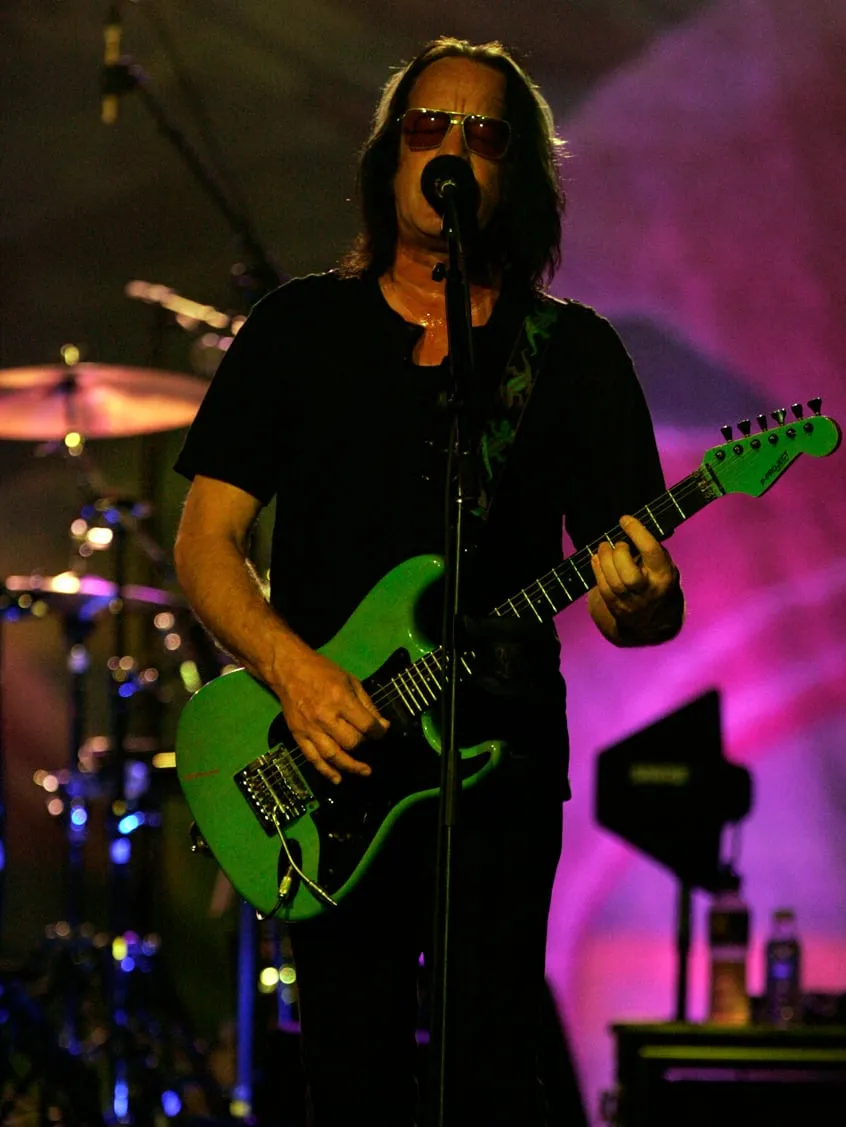
Photo by Eva Rinaldi , licensed under CC BY-SA 2.0 · Wikimedia Commons
Rank #102
Todd Rundgren
From Wikipedia
Todd Harry Rundgren is an American musician, singer, songwriter, and record producer who has performed a diverse range of styles as a solo artist and as a member of the bands Nazz and Utopia. He is known for his sophisticated and often unorthodox music, his occasionally lavish stage shows, and his later experiments with interactive art. He also produced music videos and was an early adopter and promoter of various computer technologies, such as using the Internet as a means of music distribution in the late 1990s.
Discography & Previews
Browse through and click an album to open and play 30-second previews streamed from Apple Music.

Runt
1970 · 10 tracks
- 1 Broke Down and Busted ↗ 4:34
- 2 Believe In Me ↗ 2:02
- 3 We Gotta Get You a Woman ↗ 3:07
- 4 Who's That Man? ↗ 3:01
- 5 Once Burned ↗ 2:08
- 6 Devil's Bite ↗ 3:56
- 7 I'm In the Clique ↗ 4:56
- 8 There Are No Words ↗ 2:12
- 9 Baby Let's Swing / The Last Thing You Said / Don't Tie My Hands ↗ 5:27
- 10 Birthday Carol ↗ 9:13

Runt: The Ballad of Todd Rundgren
1971 · 12 tracks
- 1 Long Flowing Robe ↗ 3:25
- 2 The Ballad (Denny & Jean) ↗ 3:06
- 3 Bleeding ↗ 4:02
- 4 Wailing Wall ↗ 3:05
- 5 The Range War ↗ 2:37
- 6 Chain Letter ↗ 5:06
- 7 A Long Time, a Long Way to Go ↗ 2:13
- 8 Boat On the Charles ↗ 4:26
- 9 Be Nice to Me ↗ 3:25
- 10 Hope I'm Around ↗ 4:54
- 11 Parole ↗ 4:20
- 12 Remember Me ↗ 0:52
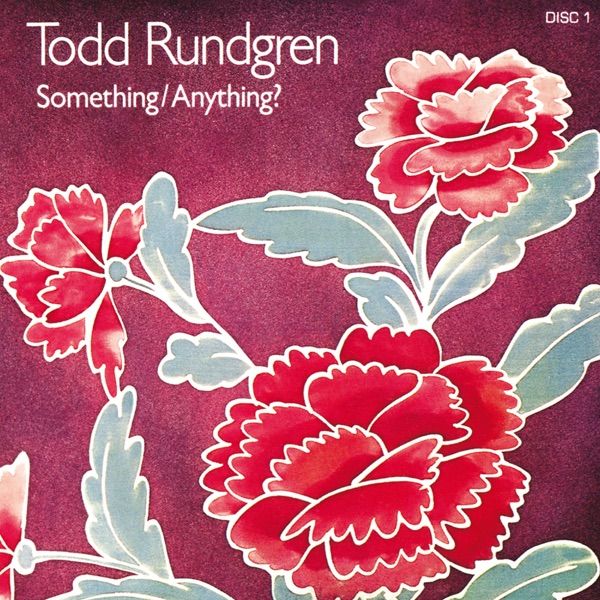
Something/Anything?
1972 · 25 tracks
- 1 I Saw the Light ↗ 3:00
- 2 It Wouldn't Have Made Any Difference ↗ 3:50
- 3 Wolfman Jack ↗ 2:56
- 4 Cold Morning Light ↗ 3:35
- 5 It Takes Two to Tango (This Is for the Girls) ↗ 2:41
- 6 Sweeter Memories ↗ 3:36
- 7 Intro ↗ 1:11
- 8 Breathless ↗ 3:15
- 9 The Night the Carousel Burned Down ↗ 4:29
- 10 Saving Grace ↗ 4:12
- 11 Marlene ↗ 3:54
- 12 Song of the Viking ↗ 2:36
- 13 I Went to the Mirror ↗ 4:07
- 14 Black Maria ↗ 5:20
- 15 One More Day (No Word) ↗ 3:43
- 16 Couldn't I Just Tell You ↗ 3:34
- 17 Torch Song ↗ 2:53
- 18 Little Red Lights ↗ 4:52
- 19 Overture—My Roots: Money (That's What I Want) / Messin' with the Kid ↗ 2:29
- 20 Dust In the Wind ↗ 3:49
- 21 Piss Aaron ↗ 3:27
- 22 Hello It's Me ↗ 4:38
- 23 Some Folks Is Even Whiter Than Me ↗ 4:00
- 24 You Left Me Sore ↗ 3:14
- 25 Slut ↗ 4:03
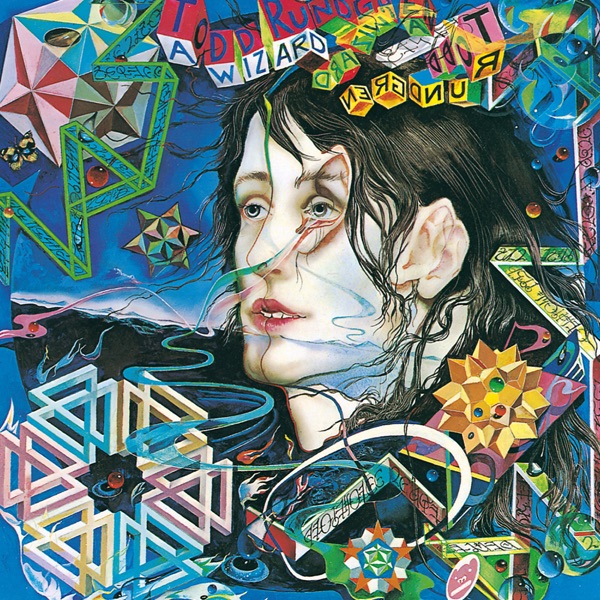
A Wizard, a True Star
1973 · 19 tracks
- 1 International Feel ↗ 2:50
- 2 Never Never Land ↗ 1:35
- 3 Tic Tic Tic It Wears Off ↗ 1:14
- 4 You Need Your Head ↗ 1:02
- 5 Rock and Roll P***y ↗ 1:09
- 6 Dogfight Giggle ↗ 1:05
- 7 You Don't Have to Camp Around ↗ 1:03
- 8 Flamingo ↗ 2:35
- 9 Zen Archer ↗ 5:35
- 10 Just Another Onionhead; Da Da Dali ↗ 2:24
- 11 When the Shit Hits the Fan; Sunset Blvd. ↗ 4:02
- 12 Le Feel Internacionale ↗ 1:53
- 13 Sometimes I Don't Know What to Feel ↗ 4:15
- 14 Does Anybody Love You? ↗ 1:31
- 15 I'm So Proud / Ooh Baby Baby / La La Means I Love You / Cool Jerk ↗ 10:34
- 16 Hungry for Love ↗ 2:18
- 17 I Don't Want to Tie You Down ↗ 1:56
- 18 Is It My Name? ↗ 4:01
- 19 Just One Victory ↗ 4:59
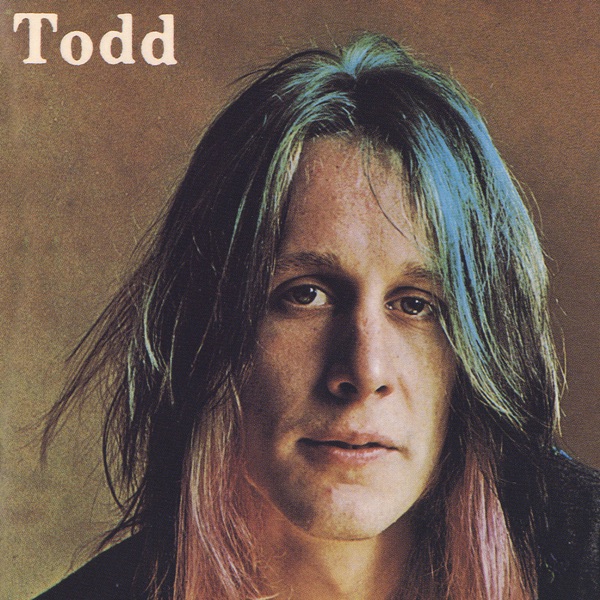
Todd
1974 · 17 tracks
- 1 How About a Little Fanfare? ↗ 1:03
- 2 I Think You Know ↗ 3:05
- 3 The Spark of Life ↗ 6:23
- 4 An Elpee's Worth of Toons ↗ 2:09
- 5 A Dream Goes On Forever ↗ 2:21
- 6 Lord Chancellor's Nightmare Song ↗ 3:32
- 7 Drunken Blue Rooster ↗ 3:01
- 8 The Last Ride ↗ 4:49
- 9 Everybody's Going to Heaven / King Kong Reggae ↗ 6:38
- 10 No. 1 Lowest Common Denominator ↗ 5:13
- 11 Useless Begging ↗ 3:40
- 12 Sidewalk Cafe ↗ 2:15
- 13 Izzat Love? ↗ 1:55
- 14 Heavy Metal Kids ↗ 4:17
- 15 In and Out the Chakras We Go (Formerly: Shaft Goes to Outer Space) ↗ 5:48
- 16 Don't You Ever Learn? ↗ 6:07
- 17 Sons of 1984 ↗ 4:34

Initiation
1975 · 10 tracks
- 1 Real Man ↗ 4:25
- 2 Born to Synthesize ↗ 3:44
- 3 The Death of Rock and Roll ↗ 3:48
- 4 Eastern Intrigue ↗ 5:04
- 5 Initiation ↗ 7:04
- 6 Fair Warning ↗ 8:00
- 7 A Treatise On Cosmic Fire: Intro—Prana ↗ 4:21
- 8 A Treatise On Cosmic Fire: II. The Fire of Mind or Solar Fire ↗ 3:50
- 9 A Treatise On Cosmic Fire: III. The Fire of Spirit or Electric Fire ↗ 7:32
- 10 A Treatise On Cosmic Fire: I. The Internal Fire or Fire By Friction / Outro—Prana ↗ 19:34

Faithful
1976 · 12 tracks
- 1 Happenings Ten Years Time Ago ↗ 3:13
- 2 Good Vibrations ↗ 3:44
- 3 Rain ↗ 3:18
- 4 Most Likely You Go Your Way and I'll Go Mine ↗ 3:27
- 5 If Six Was Nine ↗ 4:55
- 6 Strawberry Fields Forever ↗ 3:52
- 7 Black and White ↗ 4:44
- 8 Love of the Common Man ↗ 3:36
- 9 When I Pray ↗ 2:59
- 10 Cliché ↗ 4:01
- 11 The Verb "To Love" ↗ 7:25
- 12 Boogies (Hamburger Hell) ↗ 5:05
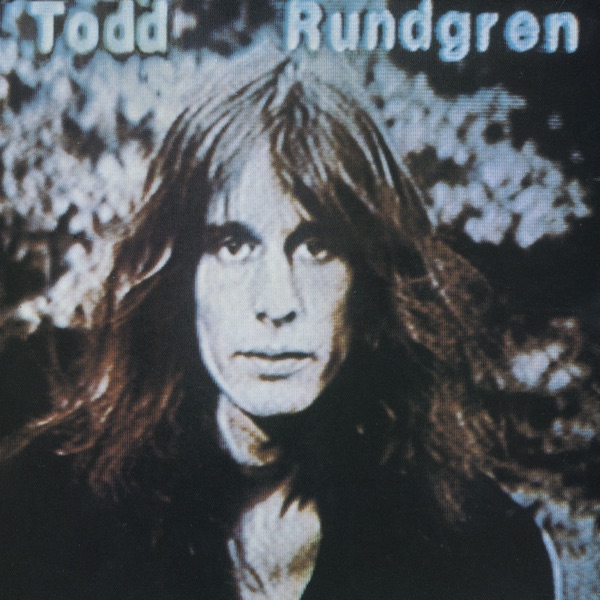
Hermit of Mink Hollow
1978 · 12 tracks


2nd Wind
1991 · 10 tracks
- 1 Change Myself (Live) ↗ 5:21
- 2 Love Science (Live) ↗ 5:23
- 3 Who's Sorry Now? (Live) ↗ 6:16
- 4 The Smell of Money (Live) ↗ 4:07
- 5 If I Have to Be Alone (Live) ↗ 3:52
- 6 Love In Disguise (Live) ↗ 4:03
- 7 Kindness (Live) ↗ 5:32
- 8 Public Servant (Live) ↗ 5:38
- 9 Gaya's Eyes (Live) ↗ 6:13
- 10 Second Wind (Live) ↗ 7:32

No World Order
1993 · 37 tracks
- 1 World Epiphany 1.0 ↗ 1:19
- 1 Worldwide Epiphany ↗ 5:22
- 2 No World Order 1.0 ↗ 0:58
- 2 Love Thing ↗ 3:46
- 3 World Epiphany 1.1 ↗ 1:21
- 3 Property ↗ 4:14
- 4 Day Job 1.0 ↗ 4:25
- 4 Day Job ↗ 3:13
- 5 Property 1.0 ↗ 4:31
- 5 Fascist Christ ↗ 4:52
- 6 Fascist Christ 1.0 ↗ 5:35
- 6 No World Order ↗ 5:12
- 7 Love Thing 1.0 ↗ 3:44
- 7 Proactivity ↗ 3:14
- 8 Time Stood Still 1.0 ↗ 1:42
- 8 Word Made Flesh ↗ 2:56
- 9 Proactivity 1.0 ↗ 2:55
- 9 Fever Broke ↗ 4:39
- 10 No World Order 1.1 ↗ 6:22
- 10 Fascist Christ (Fax Version) ↗ 2:57
- 11 World Epiphany 1.2 ↗ 4:24
- 11 Property (Video Version) ↗ 4:13
- 12 Time Stood Still 1.1 ↗ 0:38
- 12 Day Job (Radio Version) ↗ 3:59
- 13 Love Thing 1.1 ↗ 1:36
- 13 Fascist Christ (Radio Version) ↗ 4:28
- 14 Time Stood Still 1.2 ↗ 2:34
- 14 Fever Broke (Xaos Version) ↗ 4:04
- 15 Word Made Flesh 1.0 ↗ 4:37
- 15 Property (Lost Version) ↗ 3:59
- 16 Fever Broke 1.0 ↗ 6:35
- 16 Day Job (Club Version) ↗ 4:36
- 17 Day Job (U.S Club Version) ↗ 5:48
- 17 Fascist Christ (Broken Version) ↗ 3:54
- 18 No World Order (Yokohama Morning Version) ↗ 3:47
- 18 No World Order (Yokohama Night Version) ↗ 3:45
- 19 Day Job (U.S Radio Version) ↗ 3:43

The Individualist
1995 · 10 tracks

Live in Chicago '91
1999 · 23 tracks
- 1 Love Science (Live at Riviera Theater, Chicago, 1991) ↗ 7:06
- 2 Real Man (Live at Riviera Theater, Chicago, 1991) ↗ 4:32
- 3 Love of the Common Man (Live at Riviera Theater, Chicago, 1991) ↗ 5:39
- 4 Who's Sorry Now (Live at Rivera Theater, Chicago, 1991) ↗ 7:49
- 5 Johnee Jingo (Live at Riviera Theater, Chicago, 1991) ↗ 4:27
- 6 Mighty Love (Live at Riviera Theater, Chicago, 1991) ↗ 3:23
- 7 Parallel Lines (Live at Riviera Theater, Chicago, 1991) ↗ 4:33
- 8 Can't Stop Running (Live at Riviera Theater, Chicago, 1991) ↗ 5:53
- 9 Unloved Children (Live at Riviera Theater, Chicago, 1991) ↗ 5:13
- 10 Smell of Money (Live at Riviera Theater, Chicago, 1991) ↗ 4:22
- 11 Change Myself (Live at Riviera Theater, Chicago, 1991) ↗ 5:42
- 12 Kindness (Live at Riviera Theater, Chicago, 1991) ↗ 6:03
- 13 Secret Society (Live at Riviera Theater, Chicago, 1991) ↗ 4:31
- 14 Something to Fall Back On (Live at Riviera Theater, Chicago, 1991) ↗ 3:33
- 15 Rock Love (Live at Riviera Theater, Chicago, 1991) ↗ 5:31
- 16 Lost Horizon (Live at Riviera Theater, Chicago, 1991) ↗ 3:06
- 17 What's Going On / Mercy Mercy Me / I Want You (Live at Riviera Theater, Chicago, 1991) ↗ 7:59
- 18 Feel It (Live at Riviera Theater, Chicago, 1991) ↗ 7:43
- 19 Second Wind (Live at Riviera Theater, Chicago, 1991) ↗ 7:47
- 20 The Want of a Nail (Live at Riviera Theater, Chicago, 1991) ↗ 5:17
- 21 Hello It's Me (Live at Riviera Theater, Chicago, 1991) ↗ 6:31
- 22 Jesse (Live at Riviera Theater, Chicago, 1991) ↗ 6:33
- 23 Public Servant (Live at Riviera Theater, Chicago, 1991) ↗ 7:01

One Long Year
2000 · 10 tracks

Todd Rundgren
2002 · 13 tracks
- 1 Real Man (Live Japan 1990) ↗ 4:49
- 2 Love of the Common Man (Live Chicago 1991) ↗ 5:36
- 3 I Saw the Light (Live Dallas 1985) ↗ 3:29
- 4 It Wouldn't Have Made Any Difference (Live Tokyo 1979) ↗ 4:19
- 5 Soul Brother (Live Albany 2004) ↗ 4:46
- 6 Love in Action (Live Japan 1990) ↗ 3:58
- 7 Can't Stop Running (Live Japan 1990) ↗ 5:45
- 8 Can We Still Be Friends (Live Japan 1990) ↗ 3:46
- 9 While My Guitar Gently Weeps (Live Albany 2004) ↗ 5:12
- 10 Something to Fall Back On (Live Chicago 1991) ↗ 3:40
- 11 Rock Love (Live Chicago 1991) ↗ 5:40
- 12 Hello It's Me (Live Chicago 1991) ↗ 6:24
- 13 Love is the Answer (Live Dallas 1985) ↗ 4:12


[Re]Production
2011 · 15 tracks
- 1 Prime Time ↗ 3:30
- 2 Dancing Barefoot ↗ 3:56
- 3 Two Out of Three Ain't Bad ↗ 3:22
- 4 Chasing Your Ghost ↗ 3:29
- 5 Love My Way ↗ 4:31
- 6 Personality Crisis ↗ 3:53
- 7 Is It a Star? ↗ 3:38
- 8 Tell Me Your Dreams ↗ 3:50
- 9 Take It All ↗ 4:09
- 10 I Can't Take It ↗ 3:12
- 11 Dear God ↗ 3:59
- 12 Out of My Mind ↗ 3:27
- 13 Everything ↗ 4:25
- 14 Walk Like a Man ↗ 3:27
- 15 Nothing to Lose ↗ 3:05

Todd Rundgren’s Johnson
2011 · 12 tracks
- 1 Dust My Broom ↗ 2:45
- 2 Stop Breakin' Down ↗ 3:52
- 3 Kindhearted Woman Blues ↗ 3:08
- 4 Walking Blues ↗ 3:24
- 5 Love In Vain ↗ 3:42
- 6 Last Fair Deal Gone Down ↗ 2:53
- 7 Sweet Home Chicago ↗ 5:18
- 8 They're Red Hot ↗ 2:37
- 9 Come On In My Kitchen ↗ 2:58
- 10 Hellhound On My Trail ↗ 3:28
- 11 Traveling Riverside Blues ↗ 2:58
- 12 Crossroads Blues ↗ 3:06


Runddans
2015 · 12 tracks
- 1 B for Birth ↗ 3:09
- 2 Liquid Joy from the Womb of Infinity ↗ 5:58
- 3 Oppad, Over Skyene ↗ 2:16
- 4 Solus ↗ 1:40
- 5 Put Your Arms Around Me ↗ 3:53
- 6 Altar of Kauaian Six String (Todd's Solo) ↗ 1:03
- 7 Out of My Head (Lone Vibes) ↗ 1:58
- 8 Rundt Rundt Rundt ↗ 5:27
- 9 Wave of Heavy Red (Disko-Nektar) ↗ 5:19
- 10 T.H.E. Golden Triangle (Dry Mouthed Gargoyles in a Fountain of Fluorescent Shepard Tones) ↗ 1:17
- 11 Ravende Gal (Full Circle) ↗ 5:10
- 12 Ohr.. Um.. Am.. Amen (Aftermath) ↗ 2:30


White Knight
2017 · 15 tracks
- 1 Come ↗ 4:07
- 2 I Got Your Back (feat. KK Watson & DāM FunK) ↗ 3:39
- 3 Chance for Us (feat. Daryl Hall & Bobby Strickland) ↗ 4:14
- 4 Fiction ↗ 3:42
- 5 Beginning (Of the End) [feat. John Boutté] ↗ 3:55
- 6 Tin Foil Hat (feat. Donald Fagen) ↗ 3:24
- 7 Look at Me (feat. Michael Holman) ↗ 3:08
- 8 Let's Do This (feat. Moe Berg) ↗ 3:07
- 9 Sleep (feat. Joe Walsh) ↗ 2:52
- 10 That Could Have Been Me (feat. Robyn) ↗ 3:18
- 11 Deaf Ears (feat. Trent Reznor & Atticus Ross) ↗ 2:58
- 12 Naked & Afraid (feat. Bettye LaVette) ↗ 3:57
- 13 Buy My T ↗ 3:11
- 14 Wouldn't You Like to Know (feat. Rebop Rundgren) ↗ 3:54
- 15 This Is Not a Drill (feat. Joe Satriani, Kasim Sulton & Prairie Prince) ↗ 3:18

Space Force
2022 · 12 tracks
- 1 Puzzle (feat. Adrian Belew) ↗ 4:48
- 2 Down with the Ship ↗ 2:56
- 3 Artist in Residence (feat. Neil Finn) ↗ 3:13
- 4 Godiva Girl (feat. The Roots) ↗ 4:21
- 5 Your Fandango ↗ 4:24
- 6 Someday (feat. Davey Lane) ↗ 3:00
- 7 I'm Not Your Dog (feat. Thomas Dolby) ↗ 5:49
- 8 Espionage (feat. Narcy) ↗ 5:02
- 9 Stfu (feat. Rick Nielsen) ↗ 3:17
- 10 Head in the Ocean (feat. Alfie Templeman) ↗ 3:30
- 11 I'm Leaving (feat. The Lemon Twigs) ↗ 2:57
- 12 Eco Warrior Goddess (feat. Steve Vai) ↗ 5:31
-
 RuntTodd Rundgren197010 tracks
 -
 Runt: The Ballad of Todd RundgrenTodd Rundgren197112 tracks
 -
 Something/Anything?Todd Rundgren197225 tracks
 -
 A Wizard, a True StarTodd Rundgren197319 tracks
 -
 ToddTodd Rundgren197417 tracks
 -
 InitiationTodd Rundgren197510 tracks
 -
 FaithfulTodd Rundgren197612 tracks
 -
 Hermit of Mink HollowTodd Rundgren197812 tracks
 -
 HealingTodd Rundgren198111 tracks
 -
 The Ever Popular Tortured Artist EffectTodd Rundgren19829 tracks
 -
 A CappellaTodd Rundgren198510 tracks
 -
 Nearly HumanTodd Rundgren198910 tracks
 -
 2nd WindTodd Rundgren199110 tracks
 -
 No World OrderTodd Rundgren199337 tracks
 -
 The IndividualistTodd Rundgren199510 tracks
 -
 Live in Chicago '91Todd Rundgren199923 tracks
 -
 One Long YearTodd Rundgren200010 tracks
 -
 Todd RundgrenTodd Rundgren200213 tracks
 -
 LiarsTodd Rundgren200414 tracks
 -
 ArenaTodd Rundgren200813 tracks
 -
 [Re]ProductionTodd Rundgren201115 tracks
 -
 Todd Rundgren’s JohnsonTodd Rundgren201112 tracks
 -
 StateTodd Rundgren201311 tracks
 -
 RunddansTodd Rundgren201512 tracks
 -
 GlobalTodd Rundgren201513 tracks
 -
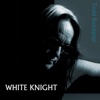 White KnightTodd Rundgren201715 tracks
 -
 Space ForceTodd Rundgren202212 tracks
Deep Dive
Overview
Todd Rundgren is an American musician, singer, songwriter, and record producer whose solo career spans over five decades of stylistic restlessness and technical innovation. Born in 1948, he has moved fluidly across soul, hard rock, progressive rock, pop, and proto-punk, while simultaneously establishing himself as one of rock’s most consequential behind-the-scenes figures. Rundgren’s work as a producer and his early embrace of computer technologies and internet-based music distribution have proven as influential as his own recordings, positioning him as both an artist and a technological pioneer within rock.
Formation Story
Todd Rundgren emerged from the American pop-rock landscape of the late 1960s, initially gaining attention as a member of the proto-punk band Nazz before launching a solo career under the project name Runt in 1970. That first album, Runt, announced a musician comfortable with multiple vocal registers, lush orchestration, and sophisticated production—aesthetic hallmarks that would define his solo work. By the time of his second release, Runt: The Ballad of Todd Rundgren in 1971, Rundgren had begun to consolidate his approach, blending blue-eyed soul vocals with rock instrumentation and an increasingly experimental approach to multitrack recording. The move from band context to solo recording allowed him to pursue the kind of textural and conceptual ambitions that would animate the most adventurous phases of his career.
Breakthrough Moment
Rundgren’s commercial and artistic breakthrough arrived with Something/Anything? in 1972, a double album that showcased his ability to write, perform, and engineer sophisticated pop-rock material. The album established him as more than a session player or sideman—it was a comprehensive artistic statement that demonstrated his skill across multiple instruments and vocal styles. This release marked the moment when Rundgren transitioned from promising newcomer to a major voice in contemporary rock, securing his position in the broader cultural conversation around progressive rock and singer-songwriter ambition that defined the early 1970s.
Peak Era
From 1972 through the late 1970s, Rundgren sustained a period of exceptional productivity and creative range. A Wizard, a True Star (1973) and Todd (1974) deepened his exploration of orchestration, conceptual sequencing, and genre-blending—moving between hard rock, soul, and art-pop within single albums. Hermit of Mink Hollow (1978) refined his approach into a more cohesive aesthetic, blending introspection with pop sensibility. During this same period, he formed Utopia, a progressive rock ensemble that allowed him to explore extended instrumental passages and band dynamics alongside his solo work. This era positioned Rundgren as a restless innovator unwilling to settle into a single sound or commercial lane.
Musical Style
Rundgren’s sonic fingerprint combines blue-eyed soul vocals—often multi-tracked and layered—with sophisticated pop-rock arrangements that freely incorporate orchestral, hard-rock, and electronic elements. His production aesthetic emphasizes clarity and texture, with particular attention to vocal harmony and instrumental balance. Across albums like Healing (1981) and A Cappella (1985), he demonstrated technical mastery of his studio environment, using overdubbing and layering not as gimmickry but as compositional tools. His songwriting tends toward elaborate structures, unconventional chord progressions, and conceptual coherence across entire albums. Over time, his work incorporated proto-punk urgency, progressive rock complexity, and increasingly overt electronic and digital production, reflecting his genuine engagement with emerging technologies rather than their adoption for fashion’s sake.
Major Albums
Something/Anything? (1972)
A double album showcasing Rundgren’s full command of songwriting, arrangement, and multitrack production. It remains his most commercially successful work and established the template for his sophisticated pop-rock approach.
A Wizard, a True Star (1973)
An ambitious concept album that shifts between hard rock, soul, and art-pop styles, demonstrating Rundgren’s refusal to be confined to a single genre or aesthetic.
Hermit of Mink Hollow (1978)
A more focused work that balances introspection with accessibility, refining the multi-genre approach of his mid-seventies output into a cohesive statement.
A Cappella (1985)
A vocal-only album that showcases Rundgren’s command of his instrument and his mastery of layering and harmonic complexity without instrumental support.
Signature Songs
- “I Think It’s Me” — A soul-inflected vocal showcase that highlights Rundgren’s ability to channel blue-eyed soul with genuine emotional conviction.
- “Hello It’s Me” — One of his most commercially successful compositions, balancing pop accessibility with harmonic sophistication.
- “Couldn’t I Just Tell You” — Demonstrates his gift for melancholic pop-rock songwriting with intricate vocal arrangements.
- “Just One Victory” — An extended composition that showcases Rundgren’s approach to conceptual album-building and progressive rock ambition.
Influence on Rock
Rundgren’s influence extends across multiple domains: as a producer, he shaped the sound of major rock artists and demonstrated that musicians could maintain creative control over their own work and sonic presentation. His early adoption of digital recording, computer-based music production, and internet distribution—particularly his late-1990s experimentation with online music delivery—positioned him as a technical innovator who understood that the infrastructure of music creation and consumption was evolving. His multi-genre restlessness and refusal to be commercially calculated influenced generations of musicians uncomfortable with categorical boundaries. The progressive rock movement of the 1970s absorbed his sophisticated production values and conceptual ambitions, while his blue-eyed soul work and proto-punk flirtations demonstrated that rock music could absorb and synthesize multiple traditions without losing coherence.
Legacy
Todd Rundgren’s legacy rests on his sustained commitment to musical independence and technical innovation. Over five decades of recording, from Runt in 1970 through Space Force in 2022, he has remained active, prolific, and willing to explore new production techniques and conceptual frameworks. His work as a producer—shaping records for artists across multiple genres—ranks among rock’s most consequential behind-the-scenes contributions. The breadth of his output and his refusal to calcify around a single commercial formula or sound established him as an artist for whom artistic exploration mattered more than market positioning. His work continues to be discovered by musicians and listeners interested in sophisticated pop-rock production, progressive structures, and the possibilities of the recording studio as an instrument itself.
Fun Facts
- Rundgren was an early adopter of interactive art and later experiments with computer technologies, positioning himself at the intersection of music and digital culture decades before such convergence became commonplace.
- He released multiple albums in 1997 and 1998 alone, demonstrating a creative output rate that rivals the most prolific rock artists across all eras.
- Rundgren has maintained his official website and engaged directly with internet-based distribution channels since the late 1990s, embodying his theoretical commitment to technological innovation in music.
- His record label affiliation with Bearsville Records allowed him significant artistic autonomy throughout his career, enabling the kind of genre-hopping and conceptual risk-taking that might have been compromised under more conventional major-label arrangements.