
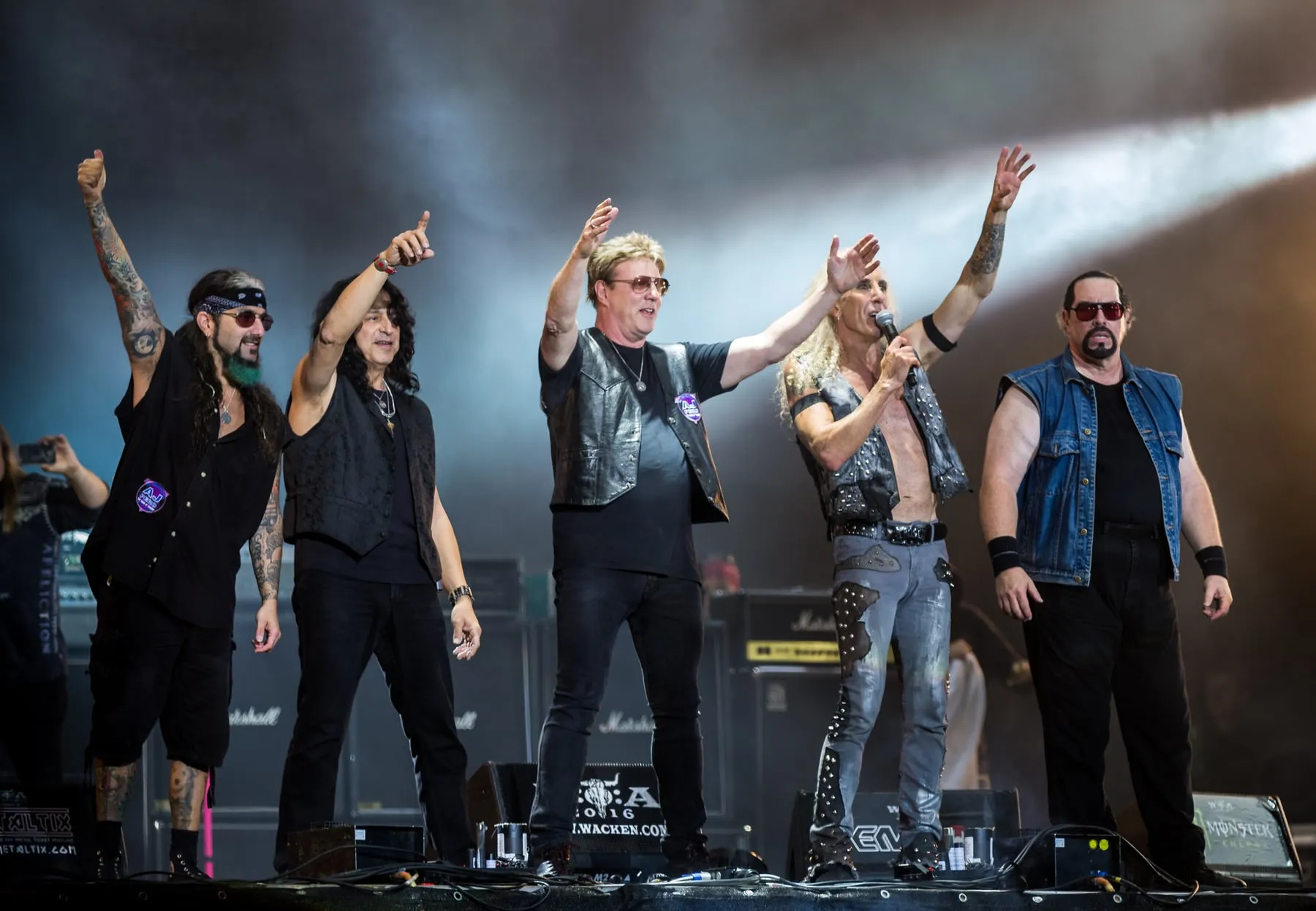
Photo by Andreas Lawen, Fotandi , licensed under CC BY-SA 3.0 · Wikimedia Commons
Rank #263
Twisted Sister
From Wikipedia
Twisted Sister is an American heavy metal band formed in 1972 in Ho-Ho-Kus, New Jersey, and later based on Long Island, New York. Their best-known songs include "We're Not Gonna Take It" and "I Wanna Rock", both of which were associated with music videos noted for their sense of slapstick humour. Besides their music, the band is equally remembered for their hairstyles and wearing androgynous clothing and make-up, leading to a categorization in the hair metal scene of the 1980s.
Members
- A. J. Pero
- Dee Snider
- Eddie Ojeda
- Jay Jay French
- Mark Mendoza
Discography & Previews
Browse through and click an album to open and play 30-second previews streamed from Apple Music.

Under the Blade
1982 · 10 tracks
- 1 What You Don't Know (Sure Can Hurt You) ↗ 4:46
- 2 Bad Boys (Of Rock 'N' Roll) [2017 Remaster] ↗ 3:20
- 3 Run for Your Life ↗ 3:28
- 4 Sin After Sin ↗ 3:23
- 5 Shoot 'Em Down ↗ 3:55
- 6 Destroyer ↗ 4:10
- 7 Under the Blade ↗ 4:40
- 8 Tear It Loose ↗ 3:08
- 9 I'll Never Grow Up, Now! ↗ 4:09
- 10 Day of the Rocker ↗ 5:02

You Can’t Stop Rock ’n’ Roll
1983 · 10 tracks
- 1 The Kids Are Back ↗ 3:17
- 2 Like a Knife in the Back ↗ 3:05
- 3 Ride to Live, Live to Ride ↗ 4:05
- 4 I Am (I'm Me) ↗ 3:35
- 5 The Power and the Glory ↗ 4:22
- 6 We're Gonna Make It ↗ 3:45
- 7 I've Had Enough ↗ 4:03
- 8 I'll Take You Alive ↗ 3:07
- 9 You're Not Alone (Suzette's Song) ↗ 4:06
- 10 You Can't Stop Rock 'N' Roll ↗ 4:42

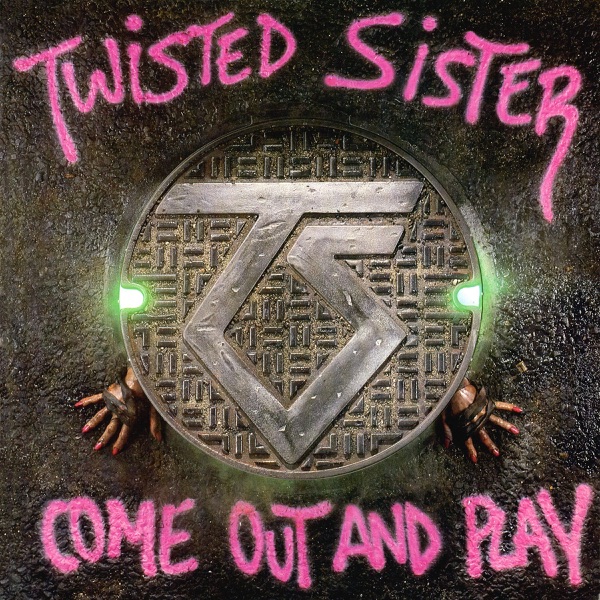
Come Out and Play
1985 · 11 tracks
- 1 Come Out and Play ↗ 4:52
- 2 Leader of the Pack ↗ 3:47
- 3 You Want What We Got ↗ 3:44
- 4 I Believe in Rock 'N' Roll ↗ 4:03
- 5 The Fire Still Burns ↗ 3:33
- 6 Be Chrool to Your Scuel ↗ 3:54
- 7 I Believe in You ↗ 5:23
- 8 Out on the Streets ↗ 4:27
- 9 Lookin' Out for #1 ↗ 3:07
- 10 Kill or Be Killed ↗ 2:46
- 11 King of the Fools ↗ 6:25

Love Is for Suckers
1987 · 10 tracks

Still Hungry
2004 · 16 tracks
- 1 Stay Hungry ↗ 3:15
- 2 We're Not Gonna Take It ↗ 4:37
- 3 Burn in Hell ↗ 5:38
- 4 Horror-Teria (The Beginning): A) Captain Howdy B) Street Justice ↗ 8:42
- 5 I Wanna Rock ↗ 3:15
- 6 The Price ↗ 4:08
- 7 Don't Let Me Down ↗ 4:46
- 8 The Beast ↗ 3:26
- 9 S.M.F. ↗ 3:28
- 10 Never Say Never ↗ 2:19
- 11 Blastin' Fast & Loud ↗ 3:01
- 12 Come Back ↗ 6:25
- 13 Plastic Money ↗ 4:06
- 14 You Know I Cry ↗ 4:21
- 15 Rock 'N' Roll Saviours ↗ 5:04
- 16 Heroes Are Hard to Find ↗ 5:01

A Twisted Christmas
2006 · 11 tracks
- 1 Have Yourself a Merry Little Christmas ↗ 4:48
- 2 Oh Come All Ye Faithful ↗ 4:40
- 3 White Christmas ↗ 3:57
- 4 I'll Be Home for Christmas ↗ 4:08
- 5 Silver Bells ↗ 5:05
- 6 I Saw Mommy Kissing Santa Claus ↗ 3:39
- 7 Let It Snow, Let It Snow, Let It Snow ↗ 3:10
- 8 Deck the Halls ↗ 2:52
- 9 The Christmas Song (Chestnuts Roasting on an Open Fire) ↗ 3:40
- 10 Heavy Metal Christmas (The Twelve Days of Christmas) ↗ 5:15
- 11 We Wish You a Twisted Christmas ↗ 0:36
-
 Under the BladeTwisted Sister198210 tracks
 -
 You Can’t Stop Rock ’n’ RollTwisted Sister198310 tracks
 -
 Stay HungryTwisted Sister19849 tracks
 -
 Come Out and PlayTwisted Sister198511 tracks
 -
 Love Is for SuckersTwisted Sister198710 tracks
 -
 Still HungryTwisted Sister200416 tracks
 -
 A Twisted ChristmasTwisted Sister200611 tracks
Deep Dive
Overview
Twisted Sister is an American heavy metal band formed in 1972 in Ho-Ho-Kus, New Jersey, and later based on Long Island, New York. The band rose to prominence in the 1980s as a defining act of the glam metal era, known for combining heavy rock instrumentation with theatrical presentation, elaborate makeup, and androgynous fashion. Beyond their musical catalog, Twisted Sister became equally synonymous with visual excess and cultural provocation—their best-known songs, “We’re Not Gonna Take It” and “I Wanna Rock,” paired with slapstick-humor music videos, made them cultural fixtures of their age.
Formation Story
Twisted Sister emerged from the New Jersey club circuit in 1972, assembling a lineup that would eventually become the face of 1980s hair metal. The band formed in Oyster Bay on Long Island, New York, and spent much of the late 1970s and early 1980s building a regional following through relentless touring and club dates. The founding lineup featured Dee Snider on vocals, Jay Jay French on guitar, Eddie Ojeda on guitar, Mark Mendoza on bass, and A. J. Pero on drums—a configuration that would remain stable through their most commercially successful period. This lineup represented a synthesis of ambitions: musicianship grounded in rock tradition, but a presentation deliberately designed to challenge mainstream propriety and aesthetic norms.
Breakthrough Moment
Twisted Sister’s commercial breakthrough came with their third studio album, Stay Hungry, released in 1984. The record’s success was amplified by the band’s strategic embrace of the nascent MTV platform, where their music videos—particularly those for “We’re Not Gonna Take It” and “I Wanna Rock”—became massive hits. The Stay Hungry era marked the shift from underground cult act to platinum-selling mainstream phenomenon. The album’s energetic production and Snider’s commanding vocal presence resonated with a teenage audience seeking rock music that was both sonically heavy and visually entertaining, establishing Twisted Sister as one of the decade’s most commercially viable rock acts.
Peak Era
The band’s peak commercial period spanned the middle 1980s, particularly from 1984 to 1987. Following Stay Hungry, they released Come Out and Play in 1985 and Love Is for Suckers in 1987, both of which sustained their presence on MTV and in rock radio playlists. This era coincided with the height of the glam metal movement, and Twisted Sister’s combination of lyrical accessibility, musicianship, and theatrical flair positioned them among the decade’s most recognizable rock acts. During this period, the band’s aesthetic—big hair, makeup, leather, and chain accessories—became iconic symbols of 1980s rock culture, transcending music to influence fashion and youth identity broadly.
Musical Style
Twisted Sister played a hybrid form of heavy metal and glam rock that emphasized accessibility without sacrificing power. Ojeda and French’s dual guitar approach combined melodic riffs with loud, distorted textures typical of metal, while Mendoza’s bass playing provided solid rhythmic grounding. Pero’s drumming was straightforward and propulsive, designed to serve the songs rather than showcase technical complexity. Snider’s vocals—a husky, commanding tenor with clear articulation—became the band’s calling card; he could deliver both aggressive shouts and surprisingly melodic passages, making Twisted Sister’s songs immediate and memorable. The production style was polished and radio-friendly, with synthesizers and layered guitars creating a dense, wall-of-sound aesthetic that separated them from earlier, grittier metal acts. Lyrically, they favored themes of teenage rebellion, partying, and defiance of adult authority, positioning themselves as mouthpieces for their audience’s frustrations.
Major Albums
Under the Blade (1982)
The band’s debut studio album, featuring early versions of their signature sound and establishing the foundations of their later commercial approach.
You Can’t Stop Rock ‘n’ Roll (1983)
A follow-up that refined their formula and expanded their touring profile across North America and Europe.
Stay Hungry (1984)
Their commercial peak: a platinum success anchored by “We’re Not Gonna Take It” and “I Wanna Rock,” becoming the defining statement of their career and a landmark glam metal album.
Come Out and Play (1985)
A direct successor to Stay Hungry that maintained commercial momentum with additional hit songs and widespread MTV rotation.
Love Is for Suckers (1987)
Their final album of the primary era, released as the broader glam metal scene began to fragment under pressure from emerging musical trends.
Signature Songs
- “We’re Not Gonna Take It” — A defiant anthem against parental and institutional authority, bolstered by a iconic music video that remains synonymous with 1980s rock rebellion.
- “I Wanna Rock” — An exuberant celebration of rock music and teenage freedom, paired with a comedic video showcasing the band’s theatrical humor.
- “I Wanna Rock” — An energetic track that epitomizes the band’s party-rock ethos and became a staple of their live performances.
- “Come Out and Play” — The title track of their 1985 album, featuring the band’s signature blend of melody and metal aggression.
Influence on Rock
Twisted Sister’s impact on rock music lies primarily in their demonstration that theatrical presentation and accessible songwriting could coexist with heavy guitar music. They helped legitimize glam metal as a commercially viable subgenre during the 1980s, proving that audiences would embrace rock acts that embraced androgyny, makeup, and visual spectacle. While their musical innovations were incremental, their cultural role was significant—they became avatars of a particular vision of teenage rebellion and rock excess that defined the decade. The band’s embrace of MTV as a promotional and artistic platform influenced how subsequent rock and metal acts approached music video production, understanding that visual identity was as important as sonic identity to commercial success.
Legacy
Twisted Sister’s legacy remains tied to 1980s rock and glam metal specifically. Though the band’s commercial prominence waned in the 1990s as musical tastes shifted, they maintained an active touring presence and have continued to record and perform in the decades since. The release of Still Hungry in 2004 and A Twisted Christmas in 2006 demonstrated an ongoing commitment to their audience. Their music has retained a presence in popular culture, with songs appearing in films and television, and their visual aesthetic remaining instantly recognizable. The band’s frank embrace of makeup and androgynous presentation, while commonplace in rock by the 2010s, represented a significant statement of rock identity in the 1980s, marking them as genuinely transgressive figures within their historical moment. For subsequent generations of rock fans, Twisted Sister remains a touchstone of hair metal excess and theatrical rock spectacle.
Fun Facts
- Twisted Sister spent over a decade as a regional touring act before achieving national fame, enduring years of club gigs and modest record sales before Stay Hungry broke through in 1984.
- The band’s music videos, particularly those directed with a comedic sensibility, were among the most requested on MTV during their peak years, demonstrating their understanding of the visual medium as central to rock music.
- Dee Snider became a polarizing cultural figure in the mid-1980s, particularly after the band’s appearance at a Parents Music Resource Center hearing, making them symbolic of broader debates about rock music and youth culture.
- The band adopted their theatrical aesthetic partly as a response to the regional club circuit’s demand for visual entertainment, gradually building their look into a signature statement.