
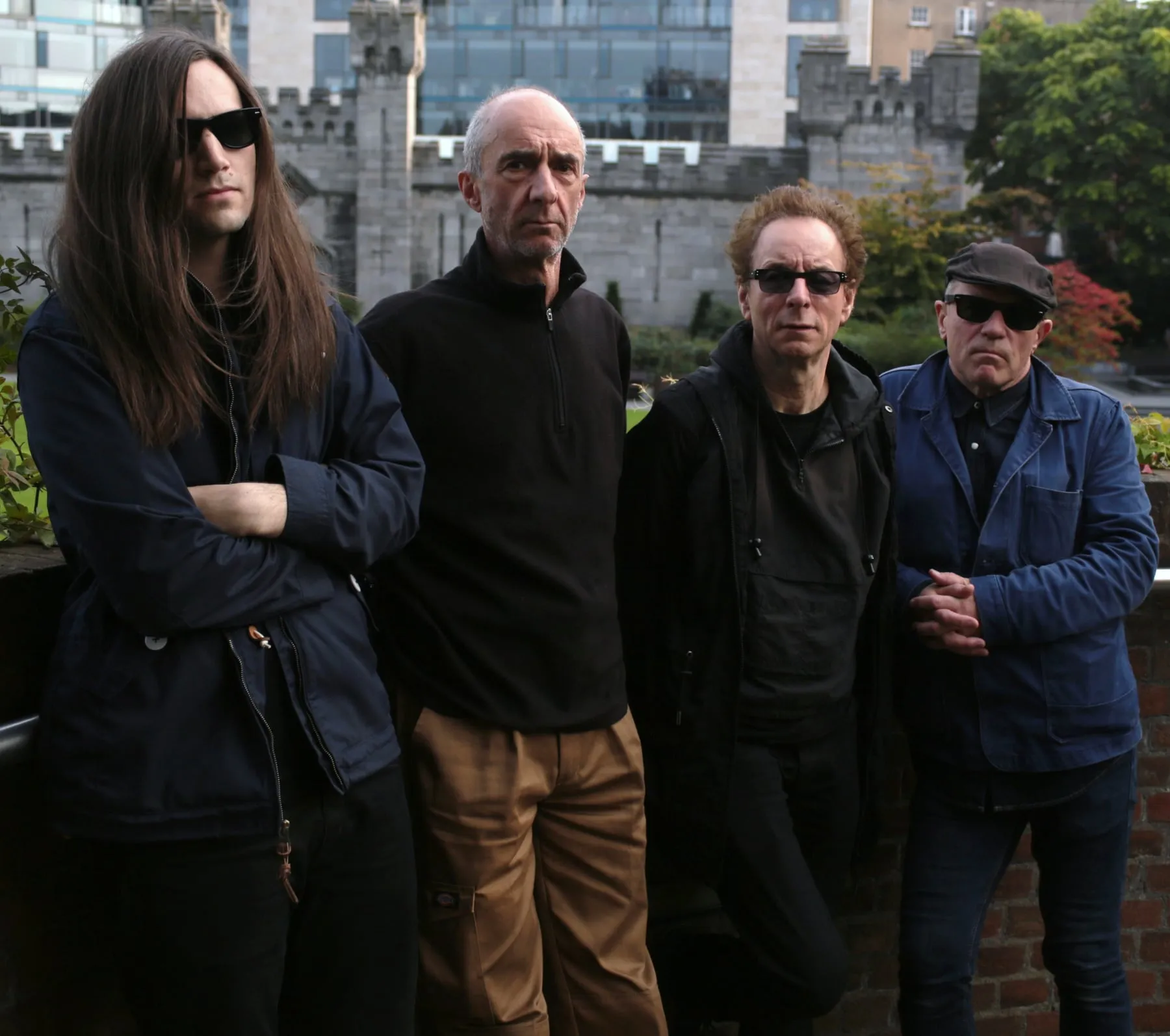
Photo by Fergus Kelly , licensed under CC BY-SA 2.0 · Wikimedia Commons
Rank #427
Wire
From Wikipedia
Wire are an English rock band, formed in London in October 1976 by Colin Newman, Graham Lewis, Bruce Gilbert (guitar), George Gill and Robert Grey. They were originally associated with the punk rock scene, appearing on The Roxy London WC2 album, and were instrumental to the development of post-punk, while their debut album, Pink Flag, was influential for hardcore punk.
Members
- Bruce Gilbert
- Colin Newman
- Graham Lewis
- Robert Gotobed
Discography & Previews
Browse through and click an album to open and play 30-second previews streamed from Apple Music.

Pink Flag
1977 · 21 tracks
- 1 Reuters (2006 Remastered Version) ↗ 3:04
- 2 Field Day for the Sundays (2006 Remastered Version) ↗ 0:28
- 3 Three Girl Rhumba (2006 Remastered Version) ↗ 1:24
- 4 Ex Lion Tamer (2006 Remastered Version) ↗ 2:20
- 5 Lowdown (2006 Remastered Version) ↗ 2:27
- 6 Start to Move (2006 Remastered Version) ↗ 1:13
- 7 Brazil (2006 Remastered Version) ↗ 0:41
- 8 It's So Obvious (2006 Remastered Version) ↗ 0:54
- 9 Surgeon's Girl (2006 Remastered Version) ↗ 1:18
- 10 Pink Flag (2006 Remastered Version) ↗ 3:46
- 11 The Commercial (2006 Remastered Version) ↗ 0:49
- 12 Straight Line (2006 Remastered Version) ↗ 0:45
- 13 106 Beats That (2006 Remastered Version) ↗ 1:13
- 14 Mr Suit (2006 Remastered Version) ↗ 1:25
- 15 Strange (2006 Remastered Version) ↗ 3:59
- 16 Fragile (2006 Remastered Version) ↗ 1:18
- 17 Mannequin (2006 Remastered Version) ↗ 2:37
- 18 Different to Me (2006 Remastered Version) ↗ 0:44
- 19 Champs (2006 Remastered Version) ↗ 1:46
- 20 Feeling Called Love (2006 Remastered Version) ↗ 1:28
- 21 1 2 X U (2006 Remastered Version) ↗ 1:57

Chairs Missing
1978 · 15 tracks
- 1 Practice Makes Perfect (2006 Remastered Version) ↗ 4:12
- 2 French Film Blurred (2006 Remastered Version) ↗ 2:35
- 3 Another the Letter (2006 Remastered Version) ↗ 1:08
- 4 Men 2nd (2006 Remastered Version) ↗ 1:44
- 5 Marooned (2006 Remastered Version) ↗ 2:22
- 6 Sand in My Joints (2006 Remastered Version) ↗ 1:51
- 7 Being Sucked in Again (2006 Remastered Version) ↗ 3:15
- 8 Heartbeat (2006 Remastered Version) ↗ 3:18
- 9 Mercy (2006 Remastered Version) ↗ 5:46
- 10 Outdoor Miner (2006 Remastered Version) ↗ 1:45
- 11 I Am the Fly (2006 Remastered Version) ↗ 3:10
- 12 I Feel Mysterious Today (2006 Remastered Version) ↗ 1:58
- 13 From the Nursery (2006 Remastered Version) ↗ 2:59
- 14 Used To (2006 Remastered Version) ↗ 2:24
- 15 Too Late (2006 Remastered Version) ↗ 4:14

154
1979 · 13 tracks
- 1 I Should Have Known Better (2006 Remastered Version) ↗ 3:52
- 2 Two People In a Room (2006 Remastered Version) ↗ 2:11
- 3 The 15th (2006 Remastered Version) ↗ 3:05
- 4 The Other Window (2006 Remastered Version) ↗ 2:08
- 5 Single K.O. (2006 Remastered Version) ↗ 2:24
- 6 A Touching Display (2006 Remastered Version) ↗ 6:56
- 7 On Returning (2006 Remastered Version) ↗ 2:06
- 8 A Mutual Friend (2006 Remastered Version) ↗ 4:28
- 9 Blessed State (2006 Remastered Version) ↗ 3:28
- 10 Once Is Enough (2006 Remastered Version) ↗ 3:23
- 11 Map Ref 41 Degrees N 93 Degrees W (2006 Remastered Version) ↗ 3:40
- 12 Indirect Enquiries (2006 Remastered Version) ↗ 3:37
- 13 40 Versions (2006 Remastered Version) ↗ 3:29

The Ideal Copy
1987 · 16 tracks
- 1 Point of Collapse ↗ 3:23
- 2 Ahead ↗ 5:00
- 3 Madman's Honey ↗ 4:29
- 4 Feed Me ↗ 5:59
- 5 Ambitious ↗ 4:05
- 6 Cheeking Tongues ↗ 2:08
- 7 Still Shows ↗ 4:11
- 8 Over Theirs ↗ 5:23
- 9 Ahead (II) ↗ 3:30
- 10 A Serious of Snakes (Snakedrill EP Version) ↗ 4:42
- 11 Drill (Snakedrill EP Version) ↗ 5:03
- 12 Advantage In Height (Snakedrill EP Version) ↗ 3:03
- 13 Up to the Sun (Snakedrill EP Version) ↗ 2:42
- 14 Ambulance Chasers (Live) ↗ 2:55
- 15 Feed Me (Live) ↗ 4:28
- 16 Vivid Riot of Red (Live) ↗ 2:22

A Bell Is a Cup Until It Is Struck
1988 · 14 tracks
- 1 Silk Skin Paws ↗ 4:53
- 2 The Finest Drops ↗ 5:01
- 3 The Queen of Ur and the King of Um ↗ 4:04
- 4 Free Falling Divisions ↗ 3:40
- 5 It's a Boy ↗ 4:26
- 6 The Boiling Boy ↗ 6:23
- 7 Kidney Bingos ↗ 4:12
- 8 Come Back in Two Halves ↗ 2:44
- 9 Follow the Locust ↗ 4:22
- 10 A Public Place ↗ 4:31
- 11 The Queen of Ur and the King of Um (Alternative Version) ↗ 4:03
- 12 Pieta (La Piccola) ↗ 7:30
- 13 Over Theirs (Live) ↗ 6:36
- 14 Drill (Live) ↗ 8:02

It’s Beginning to and Back Again
1989 · 11 tracks

Manscape
1990 · 13 tracks
- 1 Life in the Manscape ↗ 3:29
- 2 Stampede ↗ 4:35
- 3 Patterns of Behaviour ↗ 4:34
- 4 Other Moments ↗ 3:50
- 5 Small Black Reptile ↗ 3:15
- 6 Torch It ↗ 7:31
- 7 Morning Bell ↗ 4:23
- 8 Where's the Deputation? ↗ 3:51
- 9 What Do You See? ↗ 6:48
- 10 Goodbye Ploy ↗ 3:50
- 11 Sixth Sense ↗ 4:19
- 12 Children of Groceries ↗ 3:03
- 13 You Hung Your Lights in the Trees/A Craftsman's Touch ↗ 10:04



Change Becomes Us
2013 · 13 tracks
- 1 Doubles & Trebles ↗ 3:51
- 2 Keep Exhaling ↗ 1:40
- 3 Adore Your island ↗ 2:46
- 4 Re-Invent Your Second Wheel ↗ 3:46
- 5 Stealth of a Stork ↗ 1:54
- 6 B / W Silence ↗ 4:40
- 7 Time Lock Fog ↗ 5:46
- 8 Magic Bullet ↗ 3:42
- 9 Eels Sang ↗ 2:16
- 10 Love Bends ↗ 4:02
- 11 As We Go ↗ 4:36
- 12 & Much Besides ↗ 6:13
- 13 Attractive Space ↗ 3:33


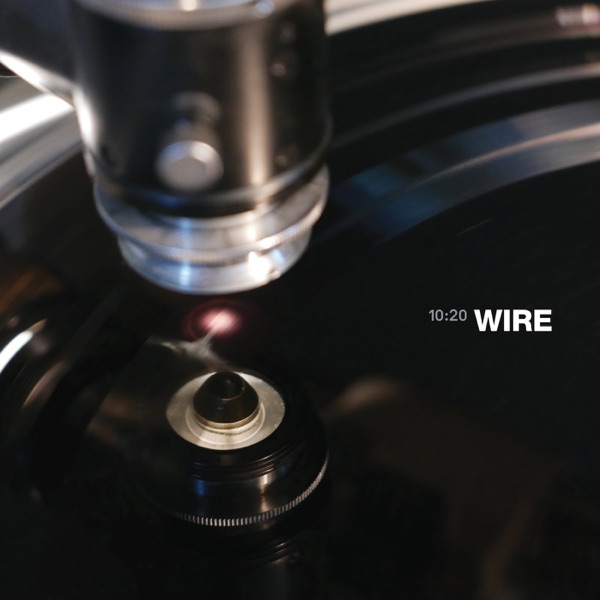
10:20
2020 · 8 tracks
-
 Pink FlagWire197721 tracks
 -
 Chairs MissingWire197815 tracks
 -
 154Wire197913 tracks
 -
 The Ideal CopyWire198716 tracks
 -
 A Bell Is a Cup Until It Is StruckWire198814 tracks
 -
 It’s Beginning to and Back AgainWire198911 tracks
 -
 ManscapeWire199013 tracks
 -
 The DrillWire19919 tracks
 -
 SendWire200311 tracks
 -
 Object 47Wire20089 tracks
 -
 Red Barked TreeWire201011 tracks
 -
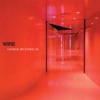 Change Becomes UsWire201313 tracks
 -
 WireWire201511 tracks
 -
 Nocturnal KoreansWire20168 tracks
 -
 Silver/LeadWire201710 tracks
 -
 Mind HiveWire20209 tracks
 -
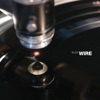 10:20Wire20208 tracks
Deep Dive
Overview
Wire emerged from London in 1976 as one of the most uncompromising acts of the post-punk era. Operating at the intersection of punk’s raw energy and art rock’s structural adventurousness, the band built a body of work defined by severe economy of expression, intellectual rigor, and a refusal to settle into commercial formulas. Their influence on indie rock, experimental music, and alternative aesthetics has proven far more durable than their chart presence, establishing them as a touchstone for musicians and critics who value constraint as a creative principle.
Formation Story
Wire coalesced in London during the punk explosion of the mid-1970s, a moment when the three-chord assault was beginning to fracture into a thousand different directions. Rather than simply adhering to punk’s rebellion, the founding members—Colin Newman on vocals and guitar, Graham Lewis on bass, and Bruce Gilbert on guitar—sought to deconstruct rock structure itself. The addition of drummer Robert Grey completed the classic lineup. Unlike their contemporaries who extended punk into hard rock or reggae fusion, Wire’s vision was one of minimalism and textural precision: they would strip songs down to essential components and then rebuild them with surgical care.
Breakthrough Moment
Wire’s impact crystallized almost immediately with their debut, Pink Flag (1977). Released within months of their formation, the album presented 21 tracks of startling brevity and inventiveness, many lasting under two minutes. Songs like “Lowdown” and “Three Girl Rhumba” demonstrated that punk’s energy could coexist with oblique lyrics, unconventional song structures, and production clarity that highlighted rather than obscured detail. The album did not chart significantly, yet it became a landmark in post-punk history, admired by musicians and underground communities far beyond the band’s initial visibility. Its DNA was traceable through decades of subsequent art-punk and indie experimentation.
Peak Era
The period from 1977 to 1979 represented Wire’s most creatively intensive and influential phase. Chairs Missing (1978) expanded on Pink Flag’s template, moving toward longer song forms while maintaining the band’s commitment to asymmetrical structures and lyrical abstraction. By 154 (1979), Wire had evolved into a studio-focused collective exploring production textures and compositional depth; the album marked a deliberate shift away from the brevity of their debut into more expansive, layered arrangements. These three records established Wire’s reputation as uncompromising architects of post-punk form. The band then disbanded in 1980, having exhausted their initial creative cycle.
Musical Style
Wire’s sound was built on the principle of reduction. Where punk bands typically relied on distortion and volume, Wire used clean, articulate guitar tones, restrained drumming, and mixed vocals—sometimes sung, sometimes spoken, often processed—to create an impression of controlled intensity rather than raw power. Graham Lewis’s bass lines were melodic and syncopated rather than merely rhythmic support. Bruce Gilbert’s guitar work emphasized texture and tone color over conventional lead playing. Lyrically, the band favored obliquity, wordplay, and philosophical or linguistic abstraction over straightforward narrative or emotional confession. This approach placed them closer to the art-school ethos of punk’s origins than to the genre’s populist developments. Over time, their work absorbed electronic elements and production sophistication without abandoning the core commitment to precision and economy.
Major Albums
Pink Flag (1977)
Wire’s debut introduced their signature approach: 21 songs of punk-derived energy channeled through art-rock intelligence, with structures that refused conventional verse-chorus patterns and lyrics that prized enigma over clarity.
Chairs Missing (1978)
The follow-up extended Pink Flag’s vocabulary, introducing longer compositions and more sophisticated studio production while retaining the band’s commitment to oblique songwriting and textural detail.
154 (1979)
Wire’s final album of their initial run, named after its recording studio, represented their most expansive work: layered production, intricate arrangements, and a shift toward introspection that marked a natural endpoint to their first cycle.
The Ideal Copy (1987)
Following a seven-year separation, Wire reunited to produce The Ideal Copy, demonstrating that their fundamental aesthetic had not diminished; the album proved their vision remained vital across the 1980s gap.
Object 47 (2008)
Released nearly three decades into the band’s intermittent reunions, Object 47 showed Wire still capable of sharp, focused songwriting and studio craft in the contemporary digital era.
Signature Songs
- “Lowdown” — A Pink Flag standout that compressed rock structure into compressed form while maintaining melodic appeal and lyrical ambiguity.
- “Three Girl Rhumba” — Brief but structurally distinctive, exemplifying Wire’s ability to make unconventional arrangements feel inevitable.
- “I Am the Fly” — One of the band’s most recognizable tracks, balancing accessibility with their trademark formal precision.
- “Outdoor Mist” — A Chairs Missing track showcasing the band’s skill at building tension through arrangement and tone color.
Influence on Rock
Wire’s influence accumulated not through commercial dominance but through the depth of their ideas. Post-punk bands across the late 1970s and 1980s absorbed their lesson that constraint could generate complexity; acts like Gang of Four, Killing Joke, and The Melvins traced lineage through Wire’s example. The band’s commitment to intellectual rigor over emotional catharsis opened space for the art-rock and experimental wings of indie rock in the 1990s and beyond. Bands prioritizing songwriting economy, production detail, and formal innovation—from Fugazi to Radiohead’s more abstract phases—operated in territory Wire had mapped. Their influence extended beyond direct imitators into a broader ethos: the notion that popular music need not sacrifice difficulty or ambition for relevance.
Legacy
Wire’s long career since 1976 has been characterized by periodic dissolution and reunion, a pattern reflecting their commitment to creative freshness over institutional stability. Rather than becoming a nostalgia act, successive reunions saw the band engage contemporary production techniques and sensibilities while maintaining their core aesthetic. Albums from the 2000s onward—Send, Object 47, Red Barked Tree, Change Becomes Us, and subsequent releases through Mind Hive (2020) and 10:20 (2020)—demonstrated sustained artistic purpose. The band has remained a touchstone in academic and critical discussions of post-punk, with their early albums regularly reissued and their catalog comprehensively documented. Wire stands as proof that artistic integrity and longevity need not be in opposition, and that underground credibility can outlast mainstream fashion cycles.
Fun Facts
- Wire released two albums in 2020: Mind Hive and 10:20, demonstrating continued productivity nearly 45 years after their formation.
- The band’s third album was titled 154 after the studio where it was recorded, reflecting their fascination with the sonic and conceptual properties of their recording environment.
- Wire disbanded in 1980 at the peak of their initial creative power rather than attempting to sustain a commercial trajectory, a decision that reinforced their reputation for artistic principle over market calculation.