
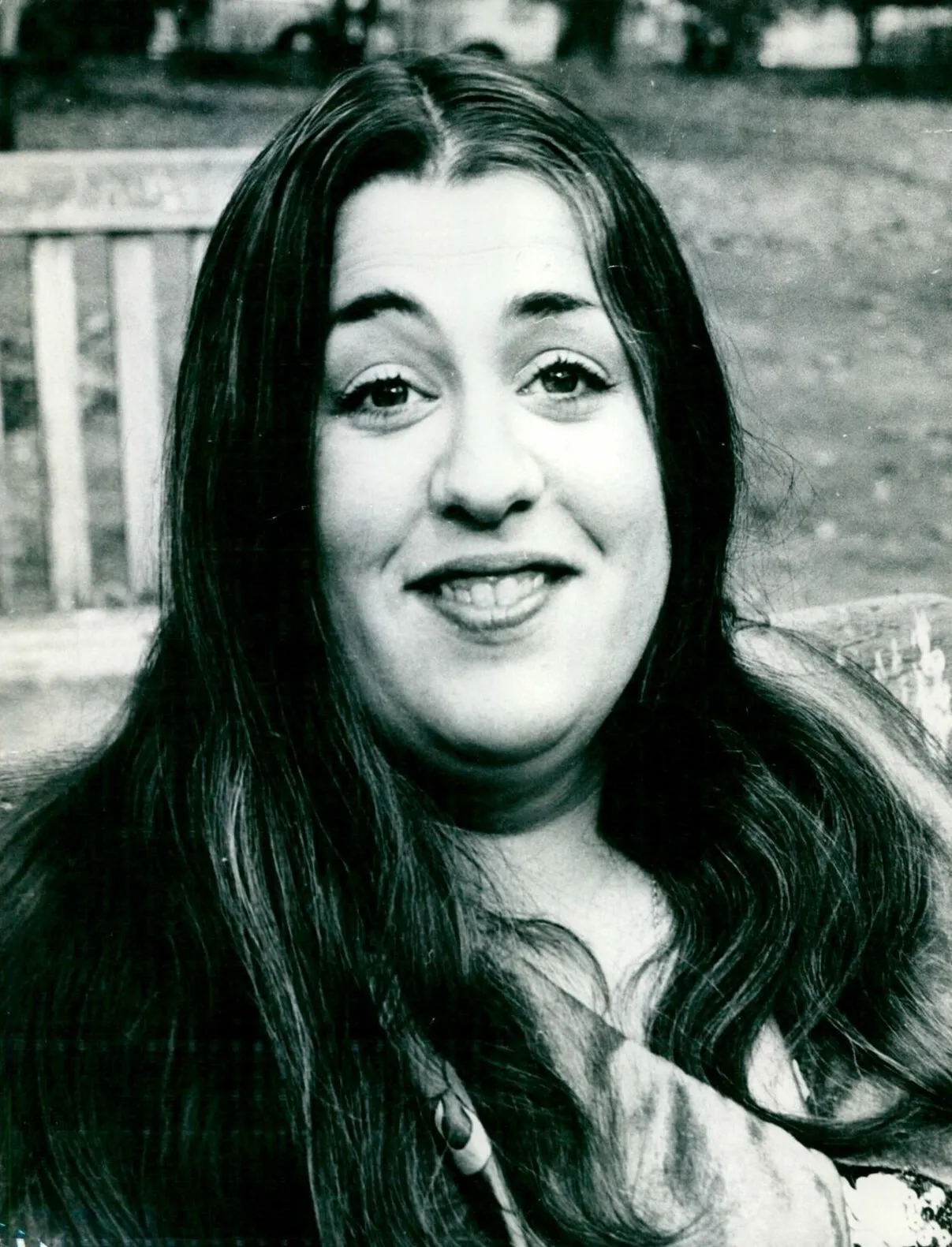
Photo by Unknown author Unknown author , licensed under Public domain · Wikimedia Commons
Rank #383
Cass Elliot
From Wikipedia
Ellen Naomi Cohen, known professionally by the stage name Cass Elliot, was an American singer-songwriter, actress, comedian, and television personality. A member of the singing group The Mamas & the Papas (1965–68), she was also known as "Mama Cass", a name she stated she disliked. After the group broke up, Elliot released five solo albums. She received the Grammy Award for Best Contemporary (R&R) Performance for "Monday, Monday" (1967). In 1998, she was posthumously inducted into the Rock and Roll Hall of Fame for her work with The Mamas & the Papas.
Discography & Previews
Browse through and click an album to open and play 30-second previews streamed from Apple Music.
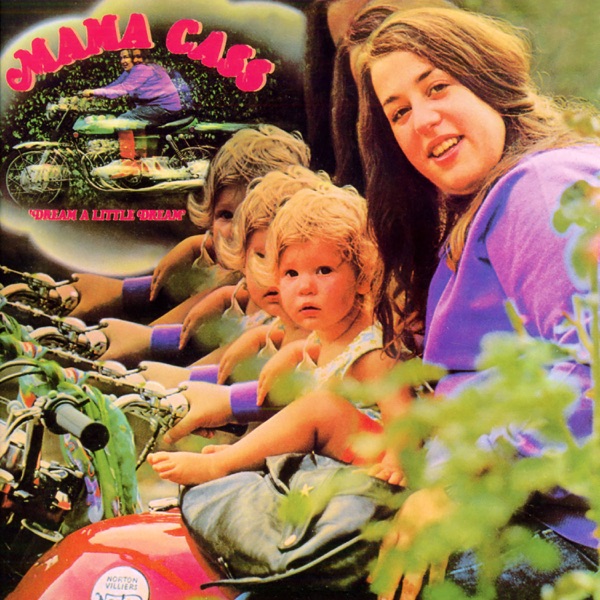
Dream a Little Dream
1968 · 12 tracks
- 1 Dream a Little Dream of Me ↗ 3:41
- 2 California Earthquake ↗ 2:41
- 3 The Room Nobody Lives In ↗ 3:10
- 4 Talkin' To Your Toothbrush ↗ 2:23
- 5 Blues For Breakfast ↗ 2:57
- 6 You Know Who I Am ↗ 4:04
- 7 Rubber Band ↗ 3:29
- 8 Long Time Loving You ↗ 1:58
- 9 Jane, The Insane Dog Lady ↗ 2:02
- 10 What Was I Thinking Of ↗ 4:03
- 11 Burn Your Hatred ↗ 2:03
- 12 Sweet Believer ↗ 4:57

Dave Mason & Cass Elliot
1971 · 10 tracks
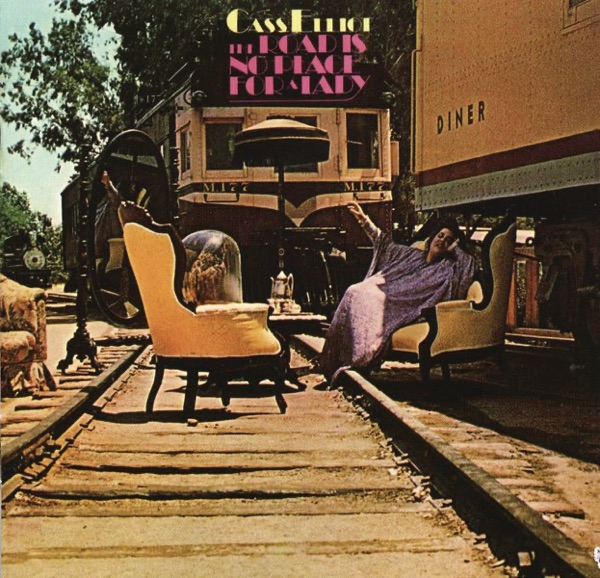
The Road Is No Place for a Lady
1972 · 10 tracks
- 1 (If You're Gonna) Break Another Heart ↗ 2:28
- 2 Saturday Suit ↗ 2:58
- 3 Does Anybody Love You ↗ 2:55
- 4 Walk Beside Me ↗ 2:54
- 5 All My Life ↗ 2:44
- 6 Say Hello ↗ 3:09
- 7 Who In the World ↗ 2:45
- 8 When Love Was Not a Word ↗ 3:00
- 9 Oh Babe, What Would You Say ↗ 3:21
- 10 The Road Is No Place for a Lady ↗ 3:10

Don't Call Me Mama Anymore
1973 · 17 tracks
- 1 Introduction: (Live) ↗ 2:43
- 2 I Think Alot About You (Live) ↗ 2:14
- 3 Audience Rap, Pt. 1 (Live) ↗ 2:00
- 4 Don't Call Me Mama Anymore (Live) ↗ 3:18
- 5 My Love (Live) ↗ 3:35
- 6 I'm Coming to the Best Part of My Life (Live) ↗ 3:32
- 7 The Torch Song Medley: (Live) ↗ 6:12
- 8 Audience Rap, Pt. 2 (Live) ↗ 1:22
- 9 The Night Before (Live) ↗ 3:14
- 10 I Like What I Like (Live) ↗ 4:03
- 11 I'll Be Seeing You (Live) ↗ 2:04
- 12 Closing: Don't Call Me Mama Anymore (Reprise) [Live] ↗ 1:03
- 13 Theme (From "L'Amour") ↗ 2:41
- 14 Listen to the World ↗ 2:47
- 15 I Think Alot About You (Studio Version) [Single Version] ↗ 2:29
- 16 Make Your Own Kind of Music / New World Coming / Dream a Little Dream of Me / Make Your Own Kind of Music (Reprise) / Audience Rap, Pt. 3 (Live) ↗ 5:54
- 17 Don't Make Me a Memory (Live) ↗ 3:17
-
 Dream a Little DreamCass Elliot196812 tracks
 -
 Dave Mason & Cass ElliotCass Elliot197110 tracks
 -
 The Road Is No Place for a LadyCass Elliot197210 tracks
 - Cass ElliotCass Elliot197210 tracks
-
 Don't Call Me Mama AnymoreCass Elliot197317 tracks
Deep Dive
Overview
Cass Elliot, born Ellen Naomi Cohen, emerged as one of the defining voices of 1960s pop rock through her membership in The Mamas & the Papas, the harmony-driven vocal group that epitomized the sun-soaked California sound of the mid-1960s. Her rich, distinctive contralto—warm and commanding—became inseparable from the group’s lush arrangements and intricate vocal interplay. After the group’s dissolution in 1968, Elliot embarked on a solo career that would span five studio albums across five years, establishing her as a formidable artist in her own right rather than merely a supporting voice.
Formation Story
Elliot’s path to rock music began in the American entertainment landscape of the 1950s. She grew up steeped in performance, eventually landing work as a singer-songwriter, actress, and comedian. By the mid-1960s, she had joined The Mamas & the Papas alongside John Phillips, Michelle Phillips, and Denny Doherty—a union that would define the decade’s pop sensibility and her own place in rock history. When the group disbanded in 1968, Elliot possessed both the vocal chops and the commercial profile to chart a solo path.
Breakthrough Moment
Elliot’s signature achievement came not as a solo artist but as part of The Mamas & the Papas. The group’s 1967 single “Monday, Monday” became a defining hit of the era, earning Elliot a Grammy Award for Best Contemporary (R&R) Performance. That recognition underscored her essential role in the group’s sound—her voice was not an ornament but a cornerstone of the arrangements. When The Mamas & the Papas dissolved in 1968, she immediately pivoted to solo work, releasing Dream a Little Dream that same year and stepping into the spotlight as a leader rather than a member.
Peak Era
Elliot’s solo career flourished most intensely from 1968 through 1972. Her first solo album, Dream a Little Dream (1968), demonstrated that her appeal extended beyond the group format. She followed with Bubble Gum, Lemonade & … Something for Mama (1969), establishing a steady commercial presence. A notable collaboration with guitarist and singer-songwriter Dave Mason produced an eponymous album in 1971, Dave Mason & Cass Elliot, showing her willingness to experiment beyond her established sound. She continued recording with The Road Is No Place for a Lady (1972) and the self-titled Cass Elliot (1972), consolidating her position as a solo artist. Her final studio album, Don’t Call Me Mama Anymore (1973), reflected her evolution while maintaining the vocal sophistication her audiences expected.
Musical Style
Elliot’s artistry sat at the intersection of pop rock, sunshine pop, and folk-influenced harmony singing. Her voice—deep, soulful, and capable of both delicate phrasing and soaring power—became her signature. In The Mamas & the Papas, her contralto anchored the vocal arrangements, providing harmonic depth beneath the brighter soprano of Michelle Phillips and the tenor lead of John Phillips. As a solo artist, she drew on the same lineage of sophisticated pop songwriting and lush instrumentation that had defined the group, but with greater emphasis on her own interpretive instincts. Her recordings reflected the broader 1960s and early-1970s sensibility for polished production, orchestral arrangements, and intricate layering—a style rooted in the folk-pop fusion that had dominated the decade.
Major Albums
Dream a Little Dream (1968)
Elliot’s debut solo album announced her capability to carry a record independently, drawing on the pop-rock sensibility she had perfected with The Mamas & the Papas while establishing her individual voice.
Bubble Gum, Lemonade & … Something for Mama (1969)
Her second album reinforced her commercial viability as a solo act, maintaining the pop-oriented sound that had made her famous while exploring new material.
Dave Mason & Cass Elliot (1971)
A notable collaboration with the English singer-songwriter and Fleetwood Mac member, this album showcased Elliot’s ability to adapt her voice to different musical contexts and producers.
The Road Is No Place for a Lady (1972)
Released during her most prolific period, this album continued her exploration of pop and rock stylings, maintaining the sophisticated production standards of her earlier work.
Cass Elliot (1972)
Elliot’s self-titled album represented a moment of artistic consolidation, blending her established strengths in vocal performance with contemporary songwriting approaches.
Signature Songs
- “Monday, Monday” (1967) — The Mamas & the Papas’ signature hit, with Elliot’s voice prominent in the arrangement and her Grammy-winning performance.
- “California Dreamin’” (1965) — The group’s iconic ballad, featuring Elliot’s harmonies essential to the track’s emotional resonance.
- “Make Your Own Kind of Music” (1969) — A solo hit that showcased Elliot’s ability to carry a pop song with warmth and personality.
- “Dream a Little Dream of Me” (1968) — Her solo album opener, demonstrating her interpretive gifts and vocal sophistication.
Influence on Rock
Elliot’s legacy rests primarily on her work with The Mamas & the Papas, whose influence on 1960s pop and rock was substantial. The group’s intricate vocal harmonies, sophisticated production, and appeal across pop and rock audiences helped establish harmony-driven pop as a credible and commercially viable force in the rock era. Elliot’s contralto—distinctively lower and rounder than typical pop vocalists of her time—expanded the palette of what a female rock vocalist could be, moving beyond the pure soprano or soprano-alto standard. Her solo work, while less commercially dominant, demonstrated that artists could successfully navigate the transition from group to solo work and that women in rock could command their own records. The Mamas & the Papas, as a unit, influenced countless harmony-based pop and rock acts that followed, establishing a template for vocal sophistication within accessible pop music.
Legacy
Cass Elliot died in 1974, at age thirty-two, cutting short a career that was still evolving. Her greatest legacy derives from her decade of work with The Mamas & the Papas, which resulted in multiple hit records and a 1998 posthumous induction into the Rock and Roll Hall of Fame. Her distinctive voice remains instantly recognizable on recordings that have never left circulation; her contributions to the group’s harmony arrangements have become textbook examples of sophisticated pop vocal production. While her solo albums have been less celebrated than the group’s catalog, they remain available and serve as a reminder of her versatility and ambition as a performer. Elliot remains an enduring figure in 1960s pop rock history, remembered not only as “Mama Cass” but as a formidable vocalist who helped define the sound of an era.
Fun Facts
- Elliot disliked the stage name “Mama Cass,” despite its ubiquity during her lifetime and enduring association with her legacy.
- She worked as an actress and comedian in addition to her music career, embodying the multimedia entertainer ideal of 1960s popular culture.
- After The Mamas & the Papas dissolved, she released five solo albums across five years, maintaining a steady recording presence despite the challenge of stepping out of one of the decade’s most famous groups.
- Her official website, casselliot.com, remains active and maintains her legacy for contemporary audiences.