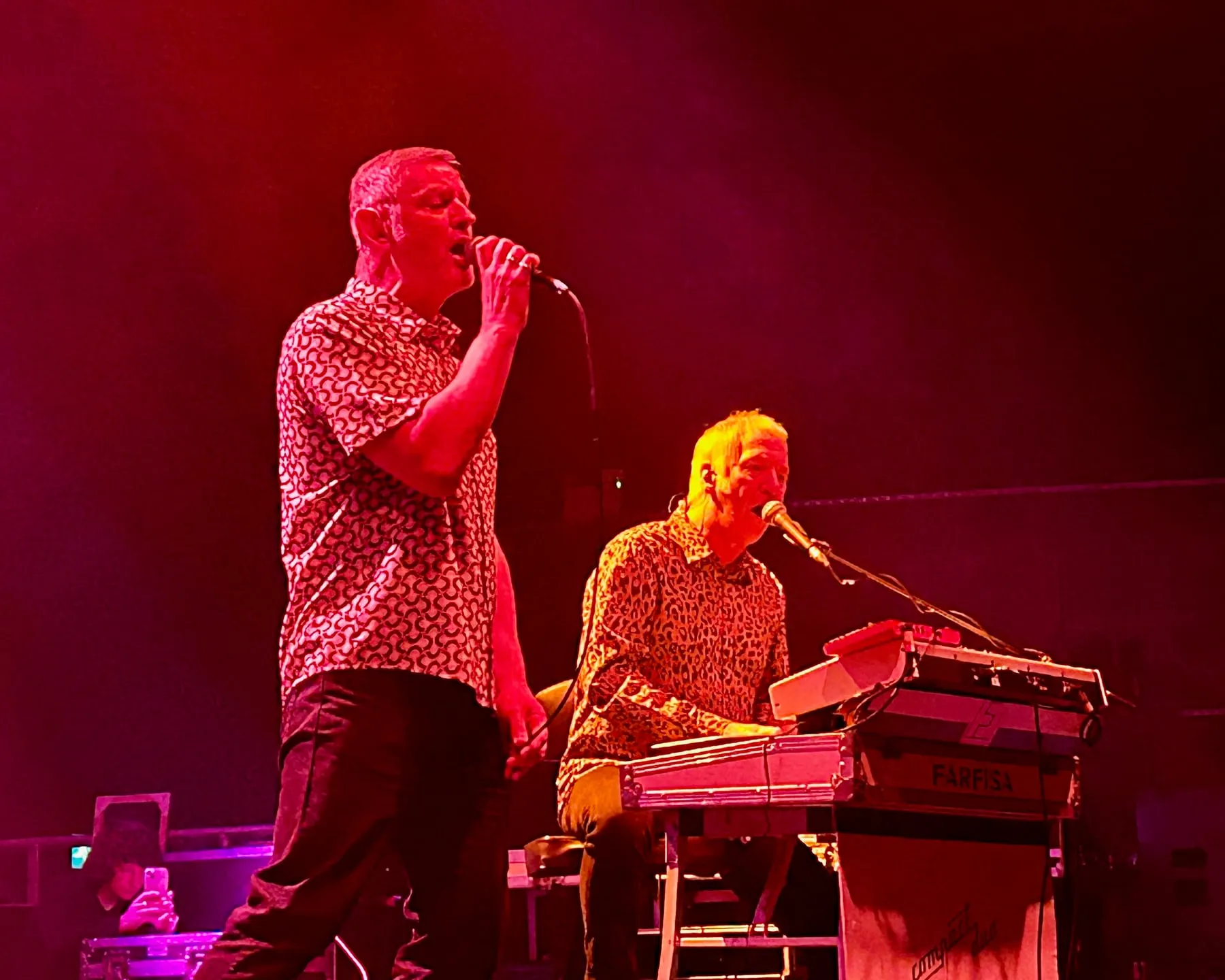
Photo by Joe Vitale 5 , licensed under CC0 · Wikimedia Commons
Rank #466
Inspiral Carpets
Oldham Madchester organ-rock band, an early 90s indie crossover.
From Wikipedia
Inspiral Carpets are an English rock band, part of the late-1980s/early-1990s Madchester movement and known for using organs and distorted guitars with influences from psychedelic rock. The band was formed in Oldham in 1983; its band's most successful lineup featured frontman Tom Hingley, drummer Craig Gill, guitarist Graham Lambert, bassist Martyn Walsh, and keyboardist Clint Boon.
Members
- Clint Boon
Studio Albums
- 1990 Life
- 1991 The Beast Inside
- 1992 Revenge of the Goldfish
- 1994 Devil Hopping
- 2014 Inspiral Carpets
Source: MusicBrainz
Deep Dive
Overview
Inspiral Carpets are an English rock band whose emergence from Oldham in the late 1980s and early 1990s placed them at the nexus of Madchester, the acid house and rock fusion that defined Greater Manchester’s youth culture. Known for fusing organ-driven psychedelic textures with distorted guitars and a raw indie sensibility, they occupied a distinctive niche between dance-floor hedonism and guitar-band tradition. They became one of the few acts to achieve crossover appeal from both the underground rave scene and the alternative rock radio formats during the height of Britpop’s cultural dominance.
Formation Story
Inspiral Carpets formed in Oldham in 1983, emerging from the same Northwest industrial belt that had produced Joy Division and Oasis a few years prior. The band’s most celebrated lineup crystallized around frontman Tom Hingley, drummer Craig Gill, guitarist Graham Lambert, bassist Martyn Walsh, and keyboardist Clint Boon. This formation became the vehicle for the band’s most recognizable work and played a central role in the Madchester movement—a phenomenon that unified the post-industrial working-class city’s rave culture with residual guitar-rock credibility. The early formation was rooted in Oldham’s specific geography and community, an industrial town on Manchester’s eastern edge that produced a harder, more aggressive take on the psychedelic influences that bubbled through the scene.
Breakthrough Moment
Inspiral Carpets’ first studio album, Life, arrived in 1990 and immediately signaled their intent to bridge electronic and guitar-driven rock. The record’s relative commercial success within the emerging indie and alternative markets established them as a credible voice in a scene dominated by baggy T-shirts, drug-fueled euphoria, and reborn psychedelic ideals. Following the momentum of Life, they released The Beast Inside in 1991, which solidified their standing and brought them wider recognition beyond the Manchester bubble. By this point, the band’s combination of Clint Boon’s prominent organ work and the distorted guitar textures of Graham Lambert had become their signature sound, distinct enough to register on college radio and alternative-rock playlists across the United Kingdom and beyond.
Peak Era
The period spanning 1990 to 1994 represented Inspiral Carpets’ most prolific and commercially visible window. Revenge of the Goldfish in 1992 continued their trajectory, demonstrating that the band’s formula—organ-led psychedelia with indie-rock urgency—retained commercial and artistic viability as Britpop gathered cultural momentum. Devil Hopping followed in 1994, arriving as the initial wave of Britpop dominance was consolidating around Oasis and Blur, and alternative rock was becoming a genuine mainstream commercial category in the UK. During these four years, Inspiral Carpets navigated the shift from underground credibility to wider radio play without fundamentally abandoning the psychedelic-organ-rock template that had defined them from the outset. They remained a touring and recording concern even as the cultural center of gravity began shifting away from the Madchester sound toward guitar-driven Britpop in its more traditionally song-oriented forms.
Musical Style
Inspiral Carpets’ sound was defined by the interplay between Clint Boon’s organ work—often prominent, distorted, and keyboard-driven in a way that recalled 1960s psychedelia—and the band’s overdriven guitars and direct, punk-influenced rhythm section. Tom Hingley’s vocals maintained a rough, conversational quality typical of post-punk and indie rock, never attempting operatic flourish or technical virtuosity. The production favored clarity and punch rather than the ethereal textures that characterized some of their Manchester contemporaries; their psychedelia was urban and industrial rather than pastoral or transcendent. This tonal palette owed debts to British psychedelic rock of the late 1960s—organ-led acts and the experimental textures of that era—while remaining grounded in contemporary indie rock’s DIY ethos and the raw energy of rave culture’s collision with guitar music. The band’s songwriting, particularly across their early releases, tended toward the anthemic and hook-driven, with a sensibility that aligned them more closely with accessible alternative rock than with experimental or avant-garde traditions.
Major Albums
Life (1990)
Their debut established the core template: organ-forward, psychedelic in intent, executed with indie-rock directness and energy. Life announced a band capable of bridging underground credibility and broader alternative-rock appeal.
The Beast Inside (1991)
The follow-up consolidated their position within the Madchester moment and demonstrated that their sound could sustain album-length attention. Critical and commercial reception confirmed their status as more than a one-album novelty.
Revenge of the Goldfish (1992)
Released at the height of their cultural presence, this album maintained the band’s focus on organ-led arrangements while the broader alternative-rock landscape was shifting. It stands as a confident statement of their artistic identity.
Devil Hopping (1994)
Their final studio album of the 1990s period arrived as the Madchester movement’s commercial peak had passed. The record captured the band adapting their style to a changing industry while maintaining core sonic identity.
Signature Songs
- “Two Hands Touch” — A representative example of the band’s ability to craft hooks that functioned across both alternative-radio and indie-club contexts.
- “Dragging You Down” — Demonstrated the band’s skill at merging Clint Boon’s prominent organ work with direct, propulsive songwriting.
- “Caravan” — Showcased their psychedelic influences and commitment to extended, hypnotic instrumental passages.
- “This Is How It Feels” — One of the band’s more widely recognized recordings, exemplifying their organ-rock approach.
Influence on Rock
Inspiral Carpets’ significance lies in their role as intermediaries between electronic dance culture and guitar-based rock during a moment when those worlds were colliding rather than coexisting. By refusing to abandon the organ and psychedelic textures associated with 1960s rock, they proved that guitar bands could participate in rave culture and club music without diluting themselves into purely electronic acts. This positioning influenced the subsequent wave of bands who would blend electronic elements with guitar rock throughout the 1990s and into the 2000s. Their Madchester association—even as they remained slightly apart from the movement’s most dance-oriented expressions—helped establish the template for festival-oriented, youth-culture-aligned rock bands in the UK. The band’s use of organ as a primary textural element rather than a secondary flourish also resonated with musicians seeking alternatives to the power-chord orthodoxy that defined much late-1980s alternative rock.
Legacy
Inspiral Carpets remained an active touring concern well into the 2000s and beyond, though their peak period of studio innovation and commercial visibility concluded by the mid-1990s. A new studio album, Inspiral Carpets, arrived in 2014, signaling their continuing capacity to record and perform. The band’s influence on the alternative and indie rock of the 1990s, though sometimes overshadowed by the larger Britpop narrative dominated by Oasis and Blur, remains historically significant as a marker of how electronic and guitar-based traditions could inform one another during a pivotal moment in rock music’s evolution. Their specific sound—organ-led, psychedelic, indie in spirit—has proven durable in retrospective critical reassessments of the Madchester era, where they are recognized as serious contributors rather than novelties or scene-specific footnotes.
Fun Facts
- Oldham’s industrial geography and economic circumstances played a direct role in shaping the town’s youth culture and the band’s artistic identity, with the area producing a distinctly harder, more aggressive interpretation of psychedelic and electronic influences than some of their Manchester contemporaries.
- Clint Boon’s prominent organ work became the band’s most recognizable sonic signature, with the keyboard treated as a lead instrument rather than a textural accompaniment—a choice that distinguished them from contemporaries who integrated electronic elements more subtly.
- The band’s longevity and willingness to continue recording and touring decades after their commercial peak (evidenced by the 2014 album) positioned them as enduring representatives of the Madchester movement rather than time-capsule acts.
Discography & Previews
Click any album to expand its track list. Each track plays a 30-second preview streamed from Apple Music. Tap the link icon next to a track to open it in Apple Music for full playback.

- 1 Real Thing ↗ 3:09
- 2 Song for a Family ↗ 3:04
- 3 This Is How It Feels ↗ 3:05
- 4 Directing Traffik ↗ 3:55
- 5 Besides Me ↗ 2:24
- 6 Many Happy Returns ↗ 3:08
- 7 Memories of You ↗ 2:15
- 8 She Comes in the Fall ↗ 4:41
- 9 Monkey On My Back ↗ 2:00
- 10 Sun Don't Shine ↗ 3:35
- 11 Inside My Head ↗ 2:01
- 12 Move ↗ 3:27
- 13 Sackville ↗ 6:43


- 1 I Want You ↗ 3:10
- 2 Party in the Sky ↗ 3:52
- 3 Plutoman ↗ 4:14
- 4 Uniform ↗ 3:54
- 5 Lovegrove ↗ 3:18
- 6 Just Wednesday ↗ 3:43
- 7 Saturn 5 ↗ 3:59
- 8 All of This and More ↗ 3:32
- 9 The Way the Light Falls (feat. Basil Clarke) ↗ 4:55
- 10 Half Way There ↗ 3:50
- 11 Cobra ↗ 2:13
- 12 I Don't Want to Go Blind ↗ 4:05
