
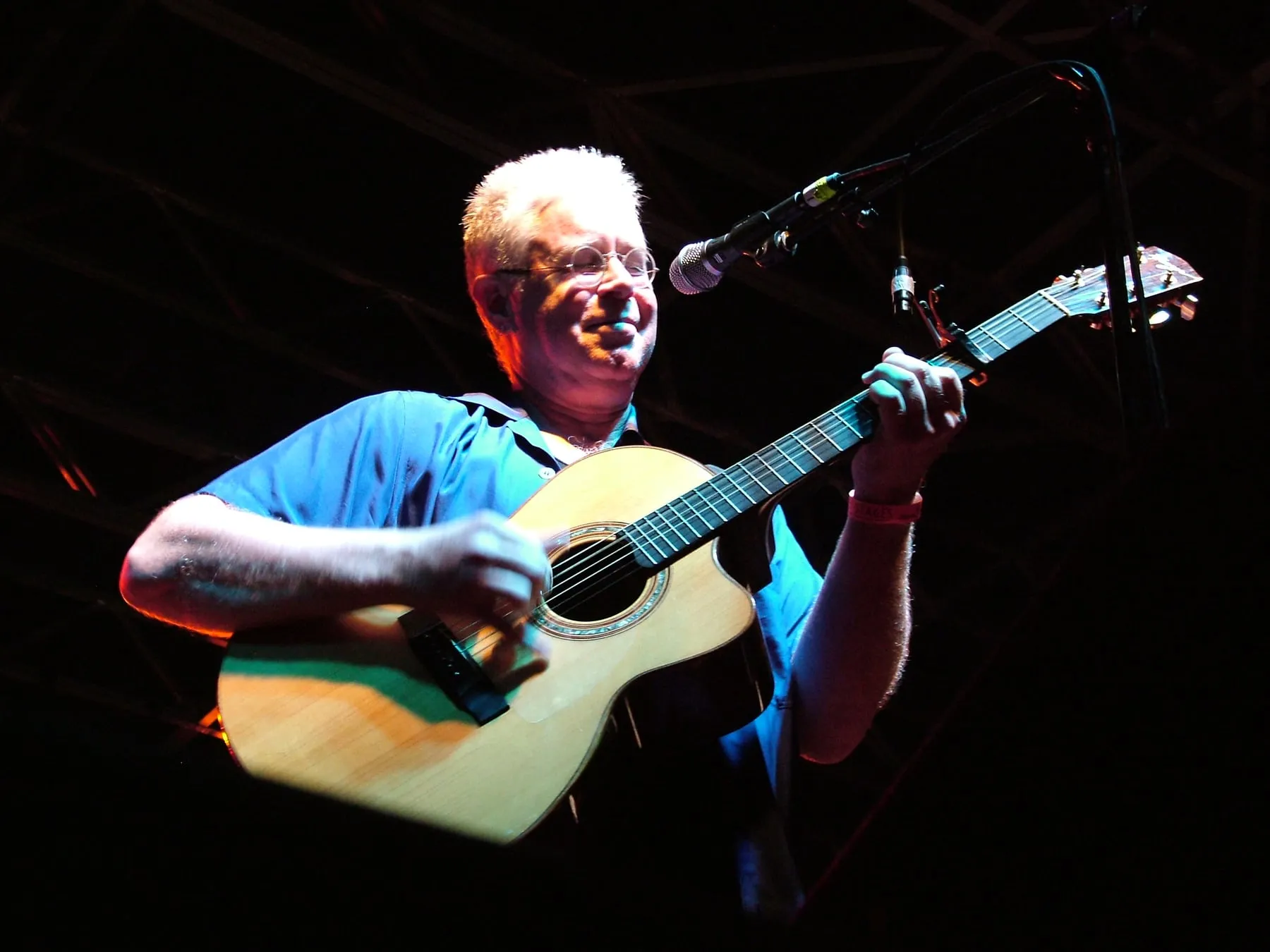
Photo by Janet Spinas Dancer , licensed under CC BY 2.0 · Wikimedia Commons
Rank #482
Bruce Cockburn
From Wikipedia
Bruce Douglas Cockburn is a Canadian singer-songwriter and guitarist. His song styles range from folk to folk- and jazz-influenced rock to soundscapes accompanying spoken stories. His lyrics reflect interests in spirituality, human rights, environmental issues, and relationships, and describe his experiences in Central America and Africa.
Discography & Previews
Browse through and click an album to open and play 30-second previews streamed from Apple Music.


High Winds White Sky
1971 · 12 tracks
- 1 Happy Good Morning Blues ↗ 2:43
- 2 Let Us Go Laughing ↗ 5:23
- 3 Love Song ↗ 2:30
- 4 One Day I Walk ↗ 3:10
- 5 Golden Serpent Blues ↗ 3:38
- 6 High Winds White Sky ↗ 3:05
- 7 You Point To The Sky ↗ 2:59
- 8 Life's Mistress ↗ 3:29
- 9 Ting/The Cauldron ↗ 6:32
- 10 Shining Mountain ↗ 5:25
- 11 Totem Pole ↗ 3:26
- 12 It's An Elephant World ↗ 2:39

Sunwheel Dance
1971 · 13 tracks
- 1 My Lady And My Lord ↗ 2:17
- 2 Feet Fall On The Road ↗ 2:44
- 3 Fall ↗ 3:02
- 4 Sunwheel Dance ↗ 1:46
- 5 Up On The Hillside ↗ 2:53
- 6 Life Will Open ↗ 4:10
- 7 It's Going Down Slow ↗ 3:33
- 8 When The Sun Falls ↗ 2:29
- 9 He Came From The Mountain ↗ 3:15
- 10 Dialog With The Devil (Or 'Why Don't We Celebrate') ↗ 6:21
- 11 For The Birds ↗ 2:24
- 12 Morning Hymn ↗ 2:39
- 13 My Lady And My Lord (solo) ↗ 2:20

Night Vision
1973 · 10 tracks
- 1 Foxglove ↗ 1:29
- 2 You Don't Have To Play The Horses ↗ 3:49
- 3 The Blues Got The World... ↗ 1:52
- 4 Mama Just Wants To Barrelhouse All Night Long ↗ 4:14
- 5 Islands In A Black Sky ↗ 7:40
- 6 Clocks Don't Bring Tomorrow - Knives Don't Bring Good News ↗ 6:49
- 7 When The Sun Goes Nova ↗ 2:43
- 8 Deja Vu ↗ 5:36
- 9 Lightstorm ↗ 2:33
- 10 God Bless The Children ↗ 4:18


Joy Will Find a Way
1975 · 10 tracks

In the Falling Dark
1976 · 14 tracks
- 1 Lord Of The Starfields ↗ 3:30
- 2 Vagabondage ↗ 4:19
- 3 In The Falling Dark ↗ 4:54
- 4 Little Seahorse ↗ 4:33
- 5 Water Into Wine ↗ 5:34
- 6 Silver Wheels ↗ 4:45
- 7 Giftbearer ↗ 4:41
- 8 Gavin's Woodpile ↗ 8:09
- 9 I'm Gonna Fly Someday ↗ 4:04
- 10 Festival Of Friends ↗ 4:44
- 11 Red Brother Red Sister ↗ 4:17
- 12 Untitled Guitar ↗ 8:47
- 13 Shepherds ↗ 7:16
- 14 Dweller By A Dark Stream ↗ 4:19

Further Adventures Of
1978 · 11 tracks
- 1 Rainfall ↗ 3:50
- 2 A Montreal Song ↗ 4:07
- 3 Outside A Broken Phone Booth With Money In My Hand ↗ 4:54
- 4 Prenons La Mer ↗ 2:38
- 5 Red Ships Take Off In The Distance ↗ 5:18
- 6 Laughter ↗ 3:39
- 7 Bright Sky ↗ 4:03
- 8 Feast Of Fools ↗ 6:47
- 9 Can I Go With You ↗ 2:51
- 10 Nanzen Ji ↗ 4:49
- 11 Mountain Call ↗ 5:34


Humans
1980 · 11 tracks
- 1 Grim Travellers ↗ 4:50
- 2 Rumours Of Glory ↗ 3:43
- 3 More Not More ↗ 3:50
- 4 You Get Bigger As You Go ↗ 4:38
- 5 What About The Bond ↗ 4:57
- 6 How I Spent My Fall Vacation ↗ 5:08
- 7 Guerrilla Betrayed ↗ 3:59
- 8 Tokyo ↗ 3:30
- 9 Fascist Architecture ↗ 2:39
- 10 The Rose Above The Sky ↗ 6:26
- 11 Grim Travellers (Live) ↗ 5:59

Inner City Front
1981 · 11 tracks
- 1 You Pay Your Money And You Take Your Chance ↗ 4:21
- 2 The Strong One ↗ 6:07
- 3 All's Quiet On The Inner City Front ↗ 5:33
- 4 Radio Shoes ↗ 4:18
- 5 Wanna Go Walking ↗ 2:56
- 6 And We Dance ↗ 4:48
- 7 Justice ↗ 4:51
- 8 Broken Wheel ↗ 4:41
- 9 Loner ↗ 7:43
- 10 The Coldest Night Of The Year ↗ 4:05
- 11 The Light Goes On Forever ↗ 6:51

The Trouble With Normal
1983 · 11 tracks
- 1 The Trouble With Normal ↗ 3:36
- 2 Candy Man's Gone ↗ 4:02
- 3 Hoop Dancer ↗ 7:52
- 4 Waiting For The Moon ↗ 4:22
- 5 Tropic Moon ↗ 4:11
- 6 Going Up Against Chaos ↗ 5:32
- 7 Put Our Hearts Together ↗ 4:27
- 8 Civilization And Its Discontents ↗ 4:18
- 9 Planet Of The Clowns ↗ 3:52
- 10 Cala Luna ↗ 5:06
- 11 I Wanna Dance With You ↗ 4:36
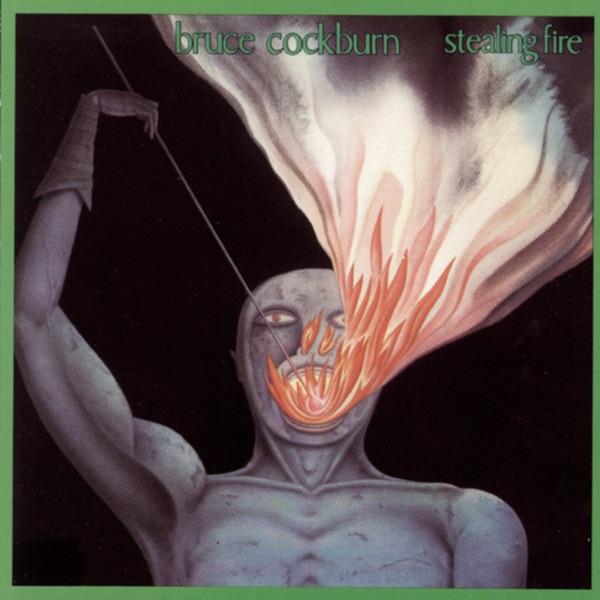


Big Circumstance
1988 · 12 tracks
- 1 If A Tree Falls ↗ 5:45
- 2 Shipwrecked At The Stable Door ↗ 3:40
- 3 Gospel Of Bondage ↗ 5:48
- 4 Don't Feel Your Touch ↗ 4:50
- 5 Tibetan Side Of Town ↗ 7:02
- 6 Understanding Nothing ↗ 4:30
- 7 Where The Death Squad Lives ↗ 4:25
- 8 Radium Rain ↗ 9:24
- 9 Pangs Of Love ↗ 5:17
- 10 The Gift ↗ 6:08
- 11 Anything Can Happen ↗ 4:37
- 12 If A Tree Falls (Acoustic) ↗ 5:32

Nothing but a Burning Light
1991 · 12 tracks
- 1 A Dream Like Mine ↗ 3:53
- 2 Kit Carson ↗ 4:12
- 3 Mighty Trucks Of Midnight ↗ 5:55
- 4 Soul Of A Man ↗ 3:53
- 5 Great Big Love ↗ 5:11
- 6 One Of The Best Ones ↗ 6:58
- 7 Somebody Touch Me ↗ 4:15
- 8 Cry Of A Tiny Baby ↗ 7:30
- 9 Actions Speaks Louder ↗ 2:59
- 10 Indian Wars ↗ 6:59
- 11 When It's Gone, It's Gone ↗ 4:14
- 12 Child Of The Wind ↗ 4:10
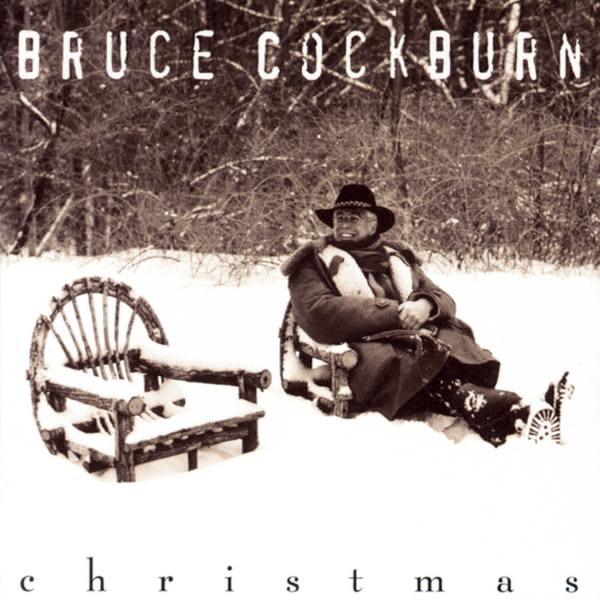
Christmas
1993 · 15 tracks
- 1 Adeste Fidelis ↗ 0:53
- 2 Early On One Christmas Morn ↗ 3:02
- 3 O Little Town Of Bethlehem ↗ 3:38
- 4 Riu Rui Chiu ↗ 6:27
- 5 I Saw Three Ships ↗ 4:18
- 6 Down In Yon Forest ↗ 4:08
- 7 Les Anges Dans Nos Campagnes ↗ 3:08
- 8 Go Tell It On The Mountain ↗ 3:10
- 9 Shepards ↗ 2:50
- 10 Silent Night ↗ 4:09
- 11 Jesus Ahatonnia (The Huron Carol ↗ 6:32
- 12 God Rest Ye Merry, Gentlemen ↗ 2:52
- 13 It Came Upon A Midnight Clear ↗ 6:41
- 14 Mary Had A Baby ↗ 4:42
- 15 Joy To The World ↗ 0:45
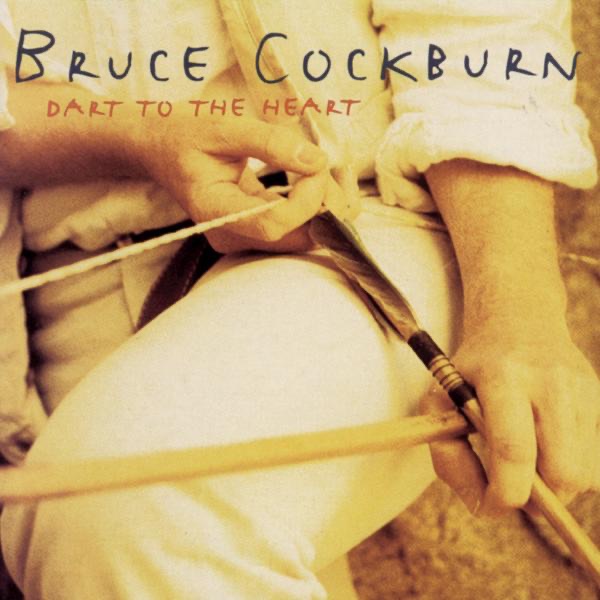
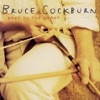
Dart to the Heart
1994 · 12 tracks
- 1 Listen for the Laugh ↗ 4:07
- 2 All the Ways I Want You ↗ 4:19
- 3 Bone In My Ear ↗ 3:46
- 4 Burden of the Angel / Beast ↗ 6:31
- 5 Scanning These Crowds ↗ 3:49
- 6 Southland of the Heart ↗ 4:50
- 7 Train In the Rain ↗ 3:43
- 8 Someone I Used to Love ↗ 3:35
- 9 Love Loves You Too ↗ 4:14
- 10 Sunrise On the Mississippi ↗ 3:01
- 11 Closer to the Light ↗ 4:10
- 12 Tie Me At the Crossroads ↗ 2:50

The Charity of Night
1996 · 11 tracks

Breakfast in New Orleans, Dinner in Timbuktu
1999 · 11 tracks
- 1 When You Give It Away ↗ 4:54
- 2 Mango ↗ 5:00
- 3 Last Night Of The World ↗ 4:51
- 4 Isn't That What Friends Are For? ↗ 5:23
- 5 Down To The Delta ↗ 6:17
- 6 The Embers Of Eden ↗ 5:41
- 7 Blueberry Hill ↗ 5:06
- 8 Let The Bad Air Out ↗ 5:50
- 9 Look How Far ↗ 5:35
- 10 Deep Lake ↗ 6:50
- 11 Use Me While You Can ↗ 7:12

You’ve Never Seen Everything
2003 · 12 tracks
- 1 Tried And Tested ↗ 5:03
- 2 Open ↗ 4:03
- 3 All Our Dark Tomorrows ↗ 6:18
- 4 Trickle Down ↗ 6:16
- 5 Everywhere Dance ↗ 4:20
- 6 Put It In Your Heart ↗ 5:27
- 7 Postcards From Cambodia ↗ 6:57
- 8 Wait No More ↗ 4:09
- 9 Celestial Horses ↗ 6:00
- 10 You've Never Seen Everything ↗ 9:16
- 11 Don't Forget About Delight ↗ 5:49
- 12 Messenger Wind ↗ 3:29

Speechless
2005 · 15 tracks
- 1 Foxglove ↗ 1:27
- 2 Train In The Rain ↗ 3:44
- 3 Water Into Wine ↗ 5:32
- 4 Elegy ↗ 4:06
- 5 Mistress Of Storms ↗ 6:10
- 6 Rouler Sa Bosse ↗ 3:48
- 7 Salt Sun And Time ↗ 3:10
- 8 Islands In A Black Sky ↗ 7:40
- 9 Rise And Fall ↗ 8:17
- 10 Sunrise On The Mississippi ↗ 3:01
- 11 King Kong Goes To Tallahassee ↗ 3:05
- 12 When It's Gone It's Gone ↗ 4:19
- 13 Deep Lake ↗ 6:48
- 14 The End of All Rivers ↗ 5:55
- 15 Sunwheel Dance ↗ 1:46

Life Short Call Now
2006 · 12 tracks
- 1 Life Short Call Now ↗ 5:33
- 2 See You Tomorrow ↗ 4:21
- 3 Mystery ↗ 5:52
- 4 Beautiful Creatures ↗ 5:11
- 5 Peace March ↗ 3:33
- 6 Slow Down Fast ↗ 3:41
- 7 Tell The Universe ↗ 5:16
- 8 This Is Baghdad ↗ 6:21
- 9 Jerusalem Poker ↗ 5:34
- 10 Different When It Comes To You ↗ 2:57
- 11 To Fit In My Heart ↗ 6:06
- 12 Nude Descending A Staircase ↗ 4:24

Small Source of Comfort
2011 · 14 tracks
- 1 The Iris Of The World ↗ 3:23
- 2 Call Me Rose ↗ 3:17
- 3 Bohemian 3-Step ↗ 4:08
- 4 Radiance ↗ 4:14
- 5 Five Fifty-One ↗ 3:34
- 6 Driving Away ↗ 4:34
- 7 Lois On The Autobahn ↗ 4:46
- 8 Boundless ↗ 4:46
- 9 Called Me Back ↗ 2:41
- 10 Comets Of Kandahar ↗ 4:50
- 11 Each One Lost ↗ 3:59
- 12 Parnassus And Fog ↗ 3:29
- 13 Ancestors ↗ 3:59
- 14 Gifts ↗ 1:58

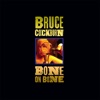
Bone on Bone
2017 · 11 tracks

Crowing Ignites
2019 · 11 tracks

O Sun O Moon
2023 · 12 tracks
- 1 On a Roll ↗ 3:31
- 2 Orders ↗ 4:44
- 3 Push Comes to Shove ↗ 4:12
- 4 Colin Went Down to the Water ↗ 4:42
- 5 Into the Now ↗ 4:16
- 6 Us All ↗ 4:41
- 7 To Keep the World We Know ↗ 3:31
- 8 King of the Bolero ↗ 5:24
- 9 When the Spirit Walks in the Room ↗ 4:16
- 10 Haiku (Instrumental) ↗ 4:02
- 11 O Sun by Day O Moon by Night ↗ 3:51
- 12 When You Arrive ↗ 4:33
Humans
— · 11 tracks
- 1 Grim Travellers ↗ 4:50
- 2 Rumours Of Glory ↗ 3:43
- 3 More Not More ↗ 3:50
- 4 You Get Bigger As You Go ↗ 4:38
- 5 What About The Bond ↗ 4:57
- 6 How I Spent My Fall Vacation ↗ 5:08
- 7 Guerrilla Betrayed ↗ 3:59
- 8 Tokyo ↗ 3:30
- 9 Fascist Architecture ↗ 2:39
- 10 The Rose Above The Sky ↗ 6:26
- 11 Grim Travellers (Live) ↗ 5:59
-
 Bruce CockburnBruce Cockburn197010 tracks
 -
 High Winds White SkyBruce Cockburn197112 tracks
 -
 Sunwheel DanceBruce Cockburn197113 tracks
 -
 Night VisionBruce Cockburn197310 tracks
 -
 Salt, Sun and TimeBruce Cockburn19749 tracks
 -
 Joy Will Find a WayBruce Cockburn197510 tracks
 -
 In the Falling DarkBruce Cockburn197614 tracks
 -
 Further Adventures OfBruce Cockburn197811 tracks
 -
 Dancing in the Dragon’s JawsBruce Cockburn19798 tracks
 -
 HumansBruce Cockburn198011 tracks
 -
 Inner City FrontBruce Cockburn198111 tracks
 -
 The Trouble With NormalBruce Cockburn198311 tracks
 -
 Stealing FireBruce Cockburn19849 tracks
 -
 World of WondersBruce Cockburn19869 tracks
 -
 Big CircumstanceBruce Cockburn198812 tracks
 -
 Nothing but a Burning LightBruce Cockburn199112 tracks
 -
 ChristmasBruce Cockburn199315 tracks
 -
 Dart to the HeartBruce Cockburn199412 tracks
 -
 The Charity of NightBruce Cockburn199611 tracks
 -
 Breakfast in New Orleans, Dinner in TimbuktuBruce Cockburn199911 tracks
 -
 You’ve Never Seen EverythingBruce Cockburn200312 tracks
 -
 SpeechlessBruce Cockburn200515 tracks
 -
 Life Short Call NowBruce Cockburn200612 tracks
 -
 Small Source of ComfortBruce Cockburn201114 tracks
 -
 Bone on BoneBruce Cockburn201711 tracks
 -
 Crowing IgnitesBruce Cockburn201911 tracks
 -
 O Sun O MoonBruce Cockburn202312 tracks
 - HumansBruce Cockburn—11 tracks
- Joy Will Find A WayBruce Cockburn—10 tracks
Deep Dive
Overview
Bruce Douglas Cockburn is a Canadian singer-songwriter and guitarist whose career spans more than five decades, beginning in 1970 and continuing into the 2020s. Working across folk, folk-rock, jazz-influenced rock, and spoken-word soundscapes, Cockburn has cultivated a reputation for lyrics that weave spirituality, human rights advocacy, environmental concerns, and personal reflection into narratives often shaped by direct experience in Central America and Africa. His artistic scope extends beyond conventional rock categories—he is equally at home with fingerpicked acoustic songs, electric ensemble arrangements, and experimental instrumental work.
Formation Story
Bruce Cockburn emerged from the Canadian folk and singer-songwriter milieu of the late 1960s and early 1970s. Growing up in Canada during a period of expanding musical and political consciousness, he developed a commitment to both musical craft and social engagement that would define his entire arc. His initial turn toward rock came not from disaffection with folk tradition, but as an expansion of it—a way to bring greater sonic urgency and rhythmic complexity to the concerns already animating the folk idiom. By 1970, when his debut self-titled album appeared, Cockburn had already synthesized his core approach: intricate guitar work, spiritually-inflected songwriting, and a willingness to document both inner experience and outward-facing social commentary.
Breakthrough Moment
Cockburn’s early albums—High Winds White Sky and Sunwheel Dance (both 1971)—established his instrumental and compositional voice within folk-rock circles, but his transition to broader recognition came through sustained touring and the gradual deepening of his thematic concerns. The mid-to-late 1970s marked a crucial period: albums such as In the Falling Dark (1976) and Dancing in the Dragon’s Jaws (1979) demonstrated his growing confidence in blending folk-acoustic foundation with jazz-influenced harmonic sophistication and, increasingly, electric instrumentation. By the early 1980s, with releases like Inner City Front (1981) and The Trouble With Normal (1983), Cockburn had secured a dedicated following that appreciated his refusal to simplify either his musical or lyrical ambitions.
Peak Era
Cockburn’s most creatively productive and commercially successful stretch extended from the mid-1980s through the early 1990s. Stealing Fire (1984), World of Wonders (1986), and Nothing but a Burning Light (1991) represent the apex of his integration of electric rock textures, complex band arrangements, and uncompromising subject matter. These albums combined the spiritual questioning that had always motivated his work with increasingly detailed engagement with global politics—particularly the conflicts in Central America and Africa that he witnessed firsthand. The production and arrangement work on these records allowed Cockburn to move beyond the troubadour model without abandoning his core identity as a lyricist and melodist.
Musical Style
Cockburn’s sound is fundamentally grounded in fingerstyle acoustic guitar technique, often tuned to open and alternate tunings that allow for complex harmonic movement and percussive texture. Over this foundation, he builds layers: subtle electric guitars, jazz-influenced keyboard work, occasional horns, and a rhythm section that often emphasizes rhythmic precision and forward momentum rather than heavy rock dramatics. His vocal delivery is direct and unadorned, favoring clarity of language over emotional excess. The evolution from his early acoustic-dominant work toward the fuller arrangements of the 1980s and 1990s reflects not a abandonment of folk fundamentals but their expansion—adding orchestral color and rock energy while preserving the singer-songwriter emphasis on lyrical substance. Jazz harmonies and modal thinking increasingly shaped his compositional approach, allowing songs to move through unexpected chord changes and asymmetrical structures that resisted easy categorization.
Major Albums
In the Falling Dark (1976)
Cockburn’s 1976 album represents a decisive step toward his mature sound, balancing acoustic intimacy with production sophistication and introducing the thematic breadth—spiritual, political, personal—that would occupy him thereafter.
Dancing in the Dragon’s Jaws (1979)
This record exemplifies Cockburn’s willingness to experiment with ensemble arrangements and demonstrates his growing command of rhythmic and harmonic complexity within the folk-rock frame.
Stealing Fire (1984)
A landmark moment in which Cockburn’s electric arrangements and band-focused production reach full flowering while his lyrical engagement with Central American politics becomes explicit and urgent.
World of Wonders (1986)
Reflecting his travels and observations, this album expands the sonic palette further while maintaining the contemplative and questioning tone that characterizes Cockburn’s approach to both personal and social themes.
Nothing but a Burning Light (1991)
Cockburn’s most commercially successful album, combining all elements of his musical vocabulary—acoustic and electric, intimate and expansive—while addressing spirituality and global conflict with particular clarity.
Signature Songs
- “All the Diamonds” — A lyrical centerpiece of Cockburn’s early work, demonstrating his gift for imagery and his capacity to embed philosophical reflection in accessible melody.
- “Wondering Where the Lions Are” — A widely recognized song that captures Cockburn’s contemplative sensibility and his interest in spiritual seeking and natural wonder.
- “If I Had a Rocket Launcher” — Released during the mid-1980s, this song exemplifies Cockburn’s direct engagement with global injustice, particularly in Central America, and remains one of his most discussed works.
Influence on Rock
Cockburn occupies an important but often underestimated position in the lineage of socially-conscious rock music. Unlike many singer-songwriters who treat politics as one lyrical option among many, Cockburn has consistently prioritized substantive engagement with human rights, environmental, and spiritual questions—not as a phase or a pose, but as central to his artistic mission. His influence ripples through subsequent generations of Canadian and international folk-rock artists who refused the compartmentalization of “personal” and “political” songwriting. His technical achievement on the acoustic and electric guitar, combined with his harmonic adventurousness, also established a template for how folk-rock could accommodate jazz and experimental influences without losing its essential song-centered character.
Legacy
Bruce Cockburn remains active as a recording and touring artist into the 2020s, with albums including Small Source of Comfort (2011), Bone on Bone (2017), Crowing Ignites (2019), and O Sun O Moon (2023) demonstrating continued creative engagement. His body of work—spanning more than thirty studio albums—constitutes a comprehensive documentary of folk-rock’s evolution over five decades, as well as a personal archive of spiritual seeking and political conscience. Cockburn’s sustained career, his refusal to court commercial formula, and his consistent artistic integrity have secured his position as a foundational figure in Canadian popular music and a model for singer-songwriters worldwide who prioritize substance over trend.
Fun Facts
- Cockburn has drawn songwriting inspiration from his extensive travels in Central America and Africa, regions he has visited repeatedly and documented in both music and spoken narrative.
- His artistic interests extend beyond rock music; he has explored instrumental soundscapes and spoken-word accompaniment, reflecting his versatility and experimental inclinations.
- A Christmas album appears in his discography, demonstrating his willingness to engage with traditional material and seasonal themes while maintaining his distinctive voice.
- Cockburn’s long career has seen him navigate multiple record labels and independent releasing strategies, allowing him to maintain artistic autonomy across generations of industry change.