

Photo by Dwight McCann/Chumash Casino Resort/www.DwightMcCann.com , licensed under CC BY-SA 2.5 · Wikimedia Commons
Rank #446
Marco Antonio Solís
From Wikipedia
Marco Antonio Solís Sosa is a Mexican musician, singer, songwriter, and record producer. Born and raised in Ario de Rosales, Michoacán, Solís began his musical career at the age of six, performing with his cousin Joel Solís as Los Hermanitos Solís. In 1975, he co-founded Los Bukis, of which he was the lead vocalist, songwriter and guitarist. The band split up after nearly two decades of success, with Solís pursuing a solo career. Solís released his debut solo album, En Pleno Vuelo, in 1996 by Fonovisa Records.
Discography & Previews
Browse through and click an album to open and play 30-second previews streamed from Apple Music.


Marco Antonio Solís
1997 · 12 tracks

Trozos de mi alma
1999 · 10 tracks

Más de mi alma
2001 · 10 tracks
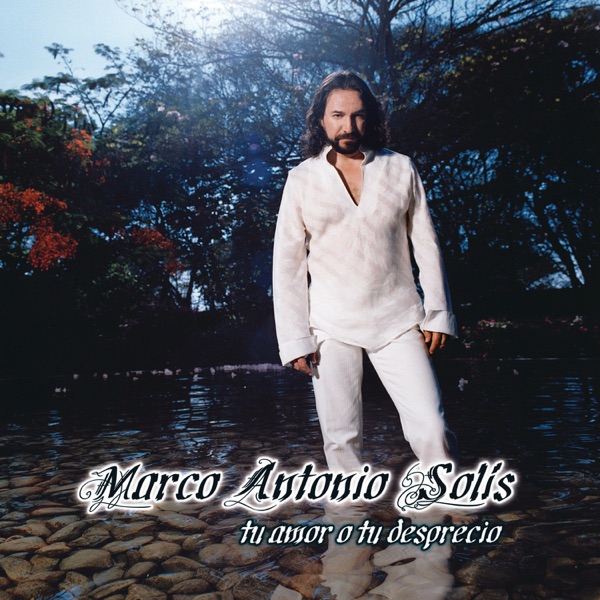
Tu amor o tu desprecio
2003 · 10 tracks

Razón de sobra
2004 · 10 tracks


En total plenitud
2010 · 11 tracks
- 1 Hay de Amores a Amores ↗ 3:52
- 2 De Regreso a Casa ↗ 3:42
- 3 Deséame Suerte ↗ 3:10
- 4 Cuantos Días Sin Ti ↗ 3:07
- 5 A Dónde Vamos a Parar? ↗ 3:49
- 6 Ya Nada Es Igual ↗ 3:10
- 7 Te Me Olvídaste ↗ 3:56
- 8 Tú Me Vuelves Loco ↗ 3:22
- 9 Para Vívír Sin Ti ↗ 3:50
- 10 Él Nunca Te Olvída ↗ 3:52
- 11 Tú Me Vuelves Loco (Batucada) ↗ 3:23

Gracias por estar aquí
2013 · 12 tracks
- 1 Gracias por Estar Aquí ↗ 3:44
- 2 Tres Semanas ↗ 3:40
- 3 Lo Mejor para los Dos ↗ 3:10
- 4 Lo Que Me Queda por Vivir Sin Ti ↗ 3:27
- 5 De Mil Amores ↗ 3:05
- 6 Linda Noche Buena ↗ 3:25
- 7 Renuncio a Estar Contigo ↗ 3:55
- 8 En Tu Propio Vuelo ↗ 3:54
- 9 Tu Mirada en la Mía ↗ 3:07
- 10 Todo Vuelve a Su Ritmo ↗ 3:28
- 11 De Mil Amores (Pop Version) ↗ 3:05
- 12 Renuncio a Estar Contigo (Ranchera Version) ↗ 3:58


Yo soy más
2018 · 17 tracks
- 1 Más Que Tu Amigo ↗ 3:31
- 2 Viva el Amor ↗ 3:47
- 3 Tu Cárcel ↗ 3:32
- 4 Si No Te Hubieras Ido ↗ 4:49
- 5 Cómo Fui a Enamorarme de Ti ↗ 4:32
- 6 Mi Eterno Amor Secreto ↗ 3:46
- 7 ¿A Dónde Vamos a Parar? ↗ 3:50
- 8 El Celoso ↗ 3:27
- 9 Amor En Silencio ↗ 3:57
- 10 Recuerdos, Tristeza y Soledad ↗ 4:30
- 11 Invéntame ↗ 3:33
- 12 Y Ahora Te Vas ↗ 3:57
- 13 Yo Te Necesito ↗ 2:59
- 14 Extrañándote ↗ 4:09
- 15 Nada Que Me Recuerde a Ti ↗ 3:27
- 16 Mi Fantasía ↗ 3:26
- 17 La Venia Bendita ↗ 3:13
-
 En pleno vueloMarco Antonio Solís199610 tracks
 -
 Marco Antonio SolísMarco Antonio Solís199712 tracks
 -
 Trozos de mi almaMarco Antonio Solís199910 tracks
 -
 Más de mi almaMarco Antonio Solís200110 tracks
 -
 Tu amor o tu desprecioMarco Antonio Solís200310 tracks
 -
 Razón de sobraMarco Antonio Solís200410 tracks
 -
 Trozos de mi alma, vol. 2Marco Antonio Solís200610 tracks
 -
 No molestarMarco Antonio Solís200810 tracks
 -
 En total plenitudMarco Antonio Solís201011 tracks
 -
 Gracias por estar aquíMarco Antonio Solís201312 tracks
 -
 Más de mis recuerdosMarco Antonio Solís201810 tracks
 -
 Yo soy másMarco Antonio Solís201817 tracks
Deep Dive
Overview
Marco Antonio Solís Sosa stands as a foundational figure in Mexican pop rock, bridging nearly four decades of continuous artistic work that began in childhood and evolved from his role as lead vocalist and primary songwriter of Los Bukis into a sustained solo career. Born in 1959 in Ario de Rosales, Michoacán, Solís entered the music industry at age six and became instrumental in establishing Los Bukis as one of Mexico’s most commercially successful bands before pivoting to solo work in the 1990s. His body of work encompasses pop-rock songwriting rooted in romantic and introspective themes, delivered with a vocal presence that remained consistent across both his group and solo phases.
Formation Story
Solís grew up in Michoacán in an environment that nurtured early musical expression. At six years old, he began performing alongside his cousin Joel Solís, forming Los Hermanitos Solís—an early collaboration that introduced him to the mechanics of ensemble musicianship and public performance. This childhood foundation proved formative; by 1975, at sixteen years old, Solís co-founded Los Bukis, assuming the roles of lead vocalist, primary songwriter, and guitarist. The band’s emergence during the mid-1970s positioned them within a growing landscape of Mexican rock and pop acts, and Solís quickly became the creative fulcrum around which the group’s sound and identity centered. After nearly two decades of sustained commercial and artistic success, Los Bukis disbanded, leaving Solís at a career inflection point where his reputation as a songwriter and vocalist provided a foundation for independent work.
Breakthrough Moment
Solís’s transition to solo work occurred in the early-to-mid 1990s, with the release of Inalcanzable in 1993 establishing his first recorded statement as a solo artist. This release, followed by En pleno vuelo in 1996 through Fonovisa Records, marked his formal debut as a solo recording artist and signaled a continuation of the pop-rock approach he had refined during Los Bukis’ tenure. The 1996 album carried particular significance as it arrived amid heightened attention to his post-Los Bukis trajectory and proved that audiences were willing to follow him into solo material. These releases demonstrated that Solís’s songwriting sensibility and vocal presence retained commercial currency independent of the band structure that had previously framed his work.
Peak Era
The period spanning the late 1990s through the early 2000s represented Solís’s most prolific solo phase, yielding albums including Marco Antonio Solís (1997), Trozos de mi alma (1999), Más de mi alma (2001), Tu amor o tu desprecio (2003), and Razón de sobra (2004). This concentrated output reflected a sustained commitment to recording and releasing material at regular intervals, establishing a rhythm that kept his name and new compositions in circulation among his core and emerging audiences. The titles—often foregrounding emotional and relational themes—reflected Solís’s continued emphasis on introspective pop-rock songwriting. The commercial viability of these releases, distributed through major labels including Universal Records and Fonovisa Records, indicated that his solo career had achieved a stable footing within the Mexican music market, enabling him to sustain a touring and recording presence without the institutional machinery of Los Bukis.
Musical Style
Solís’s approach to pop rock centers on accessible melody, polished production, and songwriting focused on romantic sentiment and personal reflection. His vocal delivery—a melodic, relatively smooth tenor capable of both forthright statement and emotional nuance—proved equally effective whether fronting a band or performing solo material. The instrumentation and arrangement choices across his solo albums reflect a pop-rock idiom that emphasizes clarity and mainstream appeal rather than raw rock intensity; keyboards, electric guitar, and standard rhythm section work in service of hooky, radio-friendly structures. Lyrically, Solís gravitated toward themes of love, loss, desire, and self-examination, framing these as direct emotional expressions rather than abstracted poetic conceits. This orientation aligned with broader trends in Latin American pop music of the 1990s and 2000s, where the singer-songwriter tradition merged with contemporary production aesthetics and pop-rock instrumentation, creating a repertoire designed for both radio play and concert settings where personal connection with the audience was paramount.
Major Albums
Inalcanzable (1993)
Solís’s earliest solo recording, establishing his voice and songwriting priorities as an independent artist outside the Los Bukis framework and indicating continuity with the emotional, romantic themes that had defined his earlier work.
En pleno vuelo (1996)
His formal debut for Fonovisa Records, marking a significant moment in his transition to solo prominence and demonstrating that audiences remained engaged with his material when presented under his own name.
Trozos de mi alma (1999)
A commercially successful mid-career release that consolidated his solo standing and became a foundational album within his post-Los Bukis discography, spawning sustained touring interest.
Tu amor o tu desprecio (2003)
Representative of his early-2000s period, when Solís remained actively engaged in contemporary pop-rock production values while maintaining the thematic focus on romantic introspection.
No molestar (2008)
An album released during his fourth consecutive decade of professional recording, reinforcing the longevity and sustained market relevance of his solo career trajectory.
Signature Songs
- “En Pleno Vuelo” — The title track from his 1996 debut album, serving as his primary solo calling card and establishing the thematic and musical blueprint for subsequent releases.
- “Trozos de mi alma” — The signature composition of his 1999 album, exemplifying his introspective songwriting approach and emotional directness.
- “Más de mi alma” — A continuation of his thematic preoccupations, reinforcing the emotional continuity across his solo catalog.
Influence on Rock
Solís’s long career as both member and architect of Los Bukis and his subsequent solo work positioned him as a significant figure in establishing Mexican pop rock as a commercially viable and artistically legitimate idiom. His songwriting—focused on accessibility, emotional clarity, and romantic themes rendered through contemporary pop-rock instrumentation—influenced subsequent generations of Latin American singer-songwriters working within similar commercial and artistic parameters. The dual trajectory of his career—from group-oriented work to individual artistic autonomy—reflected broader patterns within 1990s and 2000s Latin music, where established artists transitioned from ensemble contexts to solo careers without completely abandoning the stylistic and thematic foundations established during their earlier work. His sustained output over multiple decades demonstrated the viability of a career built on consistent artistic productivity rather than singular breakthrough moments or industry-driven commercial peaks.
Legacy
Solís remains active as a recording and touring artist, maintaining presence through album releases and concert performances that indicate continuous engagement with his fan base across Mexico and Latin American markets. His career spanning from 1959 to the present represents one of the longest continuous recording tenures in Mexican popular music, with output across both group and solo formats. The consistency of his approach—favoring melodic, emotionally direct pop rock rooted in romantic and introspective themes—has provided a stable identity that audiences have been willing to support across changing commercial and technological contexts. His work helped establish the viability of the solo transition for established band frontmen within Latin markets, creating a model that subsequent artists have drawn upon. Streaming platforms and digital distribution have enabled ongoing access to his substantial back catalog, extending his cultural presence beyond the commercial peak periods of his career.
Fun Facts
- Solís began his professional musical career at age six performing with his cousin Joel Solís, making him one of the youngest recorded performers to achieve sustained visibility in Mexican popular music.
- He spent nearly two decades as the creative core of Los Bukis before launching his solo career, demonstrating a commitment to group identity that extended well beyond the typical lifespan of most rock and pop ensembles.
- His album Trozos de mi alma generated sufficient commercial interest to warrant a sequel, Trozos de mi alma, vol. 2, released in 2006, indicating the commercial staying power of his thematic and musical approach.