

Photo by Drpeterstockdale , licensed under CC BY-SA 4.0 · Wikimedia Commons
Rank #370
Buffy Sainte-Marie
From Wikipedia
Buffy Sainte-Marie is an American singer-songwriter, musician, and social activist.
Discography & Previews
Browse through and click an album to open and play 30-second previews streamed from Apple Music.

It’s My Way!
1964 · 13 tracks
- 1 Now That the Buffalo's Gone ↗ 2:51
- 2 The Old Man's Lament ↗ 4:02
- 3 Ananias ↗ 2:40
- 4 Mayoo Sto Hoon ↗ 1:25
- 5 Cod'ine ↗ 5:07
- 6 Cripple Creek ↗ 1:50
- 7 Universal Soldier ↗ 2:20
- 8 Babe In Arms ↗ 2:35
- 9 He Lived Alone In Town ↗ 4:42
- 10 You're Gonna Need Somebody On Your Bond ↗ 2:50
- 11 The Incest Song ↗ 4:19
- 12 Eyes of Amber ↗ 2:21
- 13 It's My Way ↗ 3:33

Little Wheel Spin and Spin
1966 · 12 tracks
- 1 Little Wheel Spin and Spin ↗ 2:29
- 2 House Carpenter ↗ 3:46
- 3 Waly, Waly ↗ 3:50
- 4 Rolling Log Blues ↗ 3:32
- 5 My Country 'Tis of Thy People You're Dying ↗ 6:48
- 6 Men of the Fields ↗ 2:02
- 7 Timeless Love ↗ 2:46
- 8 Sir Patrick Spens ↗ 5:14
- 9 Poor Man's Daughter ↗ 2:57
- 10 Lady Margaret ↗ 1:43
- 11 Sometimes When I Get to Thinkin' ↗ 3:37
- 12 Winter Boy ↗ 2:12

Fire & Fleet & Candlelight
1967 · 14 tracks
- 1 The Seeds of Brotherhood ↗ 1:28
- 2 Summer Boy ↗ 2:41
- 3 The Circle Game ↗ 3:02
- 4 Lyke Wake Dirge ↗ 3:47
- 5 Song to a Seagull ↗ 3:22
- 6 Doggett's Gap ↗ 1:39
- 7 The Wedding Song ↗ 2:18
- 8 97 Men In This Here Town ↗ 3:07
- 9 Lord Randall ↗ 3:30
- 10 The Carousel ↗ 2:34
- 11 T'es Pas Un Autre ↗ 2:56
- 12 Little Boy Dark Eyes ↗ 1:38
- 13 Reynardine-A Vampire Legend ↗ 2:58
- 14 Hey, Little Bird ↗ 2:13

I’m Gonna Be a Country Girl Again
1968 · 13 tracks
- 1 I'm Gonna Be a Country Girl Again ↗ 2:59
- 2 He's a Preety Good Man ↗ 2:29
- 3 Uncle Joe ↗ 2:10
- 4 A Soulful Shade of Blue ↗ 2:18
- 5 From the Bottom of My Hea ↗ 2:34
- 6 Sometimes When I Get to T ↗ 3:01
- 7 The Piney Wood Hills ↗ 3:08
- 8 Now That the Buffalo's Gone ↗ 2:56
- 9 They Gotta Quit Kickin' ↗ 1:39
- 10 Tall Trees In Georgia ↗ 3:33
- 11 The Love of a Good Man ↗ 2:54
- 12 Take My Hand for a While ↗ 2:34
- 13 Gonna Feel Much Better ↗ 1:46

Illuminations
1969 · 12 tracks
- 1 God Is Alive Magic Is Afoot ↗ 4:52
- 2 Mary ↗ 1:31
- 3 Better to Find Out for Yourself ↗ 2:13
- 4 The Vampire ↗ 2:05
- 5 Adam ↗ 5:06
- 6 The Dream Tree ↗ 2:35
- 7 Suffer the Little Children ↗ 2:54
- 8 The Angel ↗ 3:42
- 9 With You, Honey ↗ 1:49
- 10 Guess Who I Saw In Paris ↗ 2:26
- 11 He's a Keeper of the Fire ↗ 3:21
- 12 Poppies ↗ 3:27

She Used to Wanna Be a Ballerina
1971 · 11 tracks

Moonshot
1972 · 11 tracks
- 1 Not the Lovin' Kind ↗ 3:54
- 2 You Know How to Turn On Those Lights ↗ 2:05
- 3 I Wanna Hold Your Hand Forever ↗ 2:59
- 4 He's an Indian Cowboy In the Rodeo ↗ 2:09
- 5 Lay It Down ↗ 2:47
- 6 Moonshot ↗ 3:49
- 7 Native North American Chl ↗ 2:14
- 8 My Baby Left Me ↗ 3:01
- 9 Sweet Memories ↗ 3:19
- 10 Jeremiah ↗ 3:08
- 11 Mister Can't You See ↗ 3:18

Quiet Places
1973 · 12 tracks
- 1 Why You Been Gone So Long ↗ 3:00
- 2 No One Told Me ↗ 3:08
- 3 For Free ↗ 4:11
- 4 She'll Be Comin' Round the Mountain When She Comes ↗ 2:33
- 5 Clair Vol's Young Son ↗ 2:26
- 6 Just That Kind of Man ↗ 2:51
- 7 Quiet Places ↗ 2:35
- 8 Have You Seen My Baby ↗ 3:16
- 9 There's No One In the World Like Caleb ↗ 3:01
- 10 Civilization ↗ 2:23
- 11 Eventually ↗ 3:41
- 12 The Jewels of Hanalei ↗ 3:14

Buffy
1974 · 24 tracks
- 1 It's My Way ↗ 3:34
- 2 He's a Pretty Good Man If You Ask Me ↗ 2:28
- 3 Hey, Little Bird ↗ 2:13
- 4 Song to a Seagull ↗ 3:23
- 5 Adam ↗ 5:05
- 6 Mary ↗ 1:32
- 7 He Lived Alone In Town ↗ 4:41
- 8 Johnny Be Fair ↗ 1:49
- 9 Reynardine—A Vampire Legend ↗ 2:59
- 10 Gonna Feel Much Better When You're Gone ↗ 1:50
- 11 Tall Trees In Georgia ↗ 3:33
- 12 The Carousel ↗ 2:34
- 13 Poppies ↗ 2:51
- 14 From the Bottom of My Heart ↗ 2:34
- 15 Lyke Wake Dirge ↗ 3:48
- 16 Welcome, Welcome Emigrante ↗ 2:16
- 17 Eyes of Amber ↗ 2:20
- 18 Babe In Arms ↗ 2:33
- 19 Ananias ↗ 2:40
- 20 97 Men In This Here Town / Don't Call Me Honey ↗ 3:06
- 21 Uncle Joe ↗ 2:11
- 22 T'es Pas un Autre ↗ 2:57
- 23 The Seeds of Brotherhood ↗ 1:29
- 24 The Angel ↗ 3:25

Coincidence and Likely Stories
1992 · 11 tracks
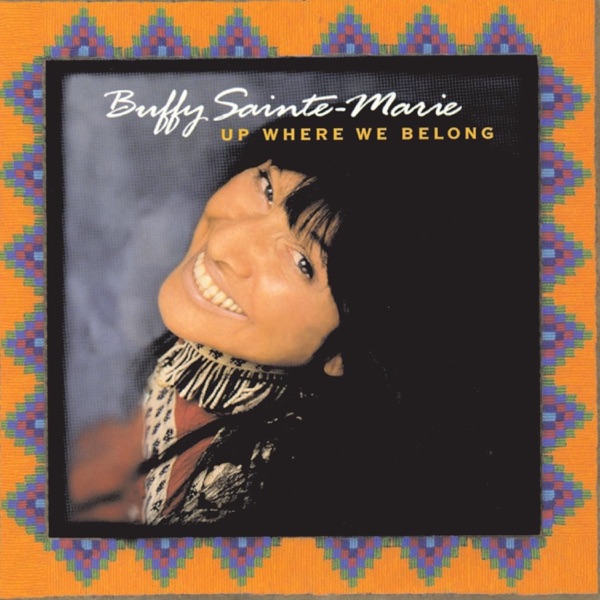
Up Where We Belong
1996 · 15 tracks
- 1 Darling Don't Cry ↗ 3:17
- 2 Up Where We Belong ↗ 4:32
- 3 Piney Wood Hills ↗ 3:34
- 4 Cripple Creek ↗ 2:38
- 5 God Is Alive / Magic Is Afoot ↗ 4:33
- 6 Until It's Time For You To Go ↗ 3:05
- 7 Universal Soldier ↗ 2:30
- 8 Goodnight ↗ 3:48
- 9 Dance Me Around ↗ 3:47
- 10 He's An Indian Cowboy In The Rodeo ↗ 2:21
- 11 Now That The Buffalo's Gone ↗ 2:46
- 12 Soldier Blue ↗ 3:45
- 13 Eagle Man / Changing Woman ↗ 3:17
- 14 Bury My Heart At Wounded Knee ↗ 5:12
- 15 Starwalker ↗ 3:06

Running for the Drum
2008 · 12 tracks
- 1 No No Keshagesh ↗ 4:44
- 2 Cho Cho Fire ↗ 3:06
- 3 Working For The Government ↗ 3:34
- 4 Little Wheel Spin and Spin ↗ 3:06
- 5 Too Much Is Never Enough ↗ 3:59
- 6 To The Ends Of The World ↗ 3:45
- 7 When I Had You ↗ 4:12
- 8 I Bet My Heart On You ↗ 3:26
- 9 Blue Sunday ↗ 2:55
- 10 Easy Like The Snow Falls Down ↗ 3:52
- 11 America The Beautiful ↗ 3:01
- 12 Still This Loves Goes On ↗ 3:55

Power in the Blood
2015 · 12 tracks
- 1 It's My Way ↗ 3:55
- 2 Power In The Blood ↗ 4:03
- 3 We Are Circling ↗ 3:05
- 4 Not The Lovin Kind ↗ 4:12
- 5 Love Charms (Mojo Bijoux) ↗ 4:07
- 6 Ke Sakihitin Awasis (I Love You Baby) ↗ 4:09
- 7 Farm In The Middle Of Nowhere ↗ 2:43
- 8 Generation ↗ 3:55
- 9 Sing Our Own Song ↗ 4:52
- 10 Orion ↗ 3:00
- 11 The Uranium War ↗ 3:34
- 12 Carry It On ↗ 3:01

Medicine Songs
2017 · 20 tracks
- 1 You Got To Run (Spirit of the Wind) ↗ 3:42
- 2 The War Racket ↗ 4:01
- 3 Starwalker ↗ 3:06
- 4 My Country 'Tis of Thy People You're Dying ↗ 5:36
- 5 America The Beautiful ↗ 2:55
- 6 Carry it On ↗ 3:00
- 7 Little Wheel Spin and Spin ↗ 3:01
- 8 No No Keshagesh ↗ 4:46
- 9 Soldier Blue ↗ 3:42
- 10 The Priests of the Golden Bull ↗ 4:07
- 11 Bury My Heart At Wounded Knee ↗ 4:34
- 12 Universal Soldier ↗ 2:41
- 13 Power In The Blood ↗ 4:06
- 14 Disinformation ↗ 3:46
- 15 Fallen Angels ↗ 3:45
- 16 Now That The Buffalo's Gone ↗ 2:48
- 17 Generation ↗ 4:03
- 18 Working For The Government ↗ 3:37
- 19 The Big Ones Get Away ↗ 4:07
- 20 The War Racket (Unplugged) ↗ 3:57
-
 It’s My Way!Buffy Sainte-Marie196413 tracks
 -
 Little Wheel Spin and SpinBuffy Sainte-Marie196612 tracks
 -
 Fire & Fleet & CandlelightBuffy Sainte-Marie196714 tracks
 -
 I’m Gonna Be a Country Girl AgainBuffy Sainte-Marie196813 tracks
 -
 IlluminationsBuffy Sainte-Marie196912 tracks
 -
 She Used to Wanna Be a BallerinaBuffy Sainte-Marie197111 tracks
 -
 MoonshotBuffy Sainte-Marie197211 tracks
 -
 Quiet PlacesBuffy Sainte-Marie197312 tracks
 -
 BuffyBuffy Sainte-Marie197424 tracks
 -
 Coincidence and Likely StoriesBuffy Sainte-Marie199211 tracks
 -
 Up Where We BelongBuffy Sainte-Marie199615 tracks
 -
 Running for the DrumBuffy Sainte-Marie200812 tracks
 -
 Power in the BloodBuffy Sainte-Marie201512 tracks
 -
 Medicine SongsBuffy Sainte-Marie201720 tracks
Deep Dive
Overview
Buffy Sainte-Marie is an American singer-songwriter and social activist whose career spanning from the early 1960s to the present has positioned her as a distinctive voice in folk, country, and rock music. Her artistic output ranges across multiple genres—folk, country, rock, and electronic—and her work has consistently bridged musical innovation with unflinching social commentary. As both a recording artist and an advocate for indigenous issues and social justice, Sainte-Marie represents a model of the musician-activist that proved influential across generations of performers.
Formation Story
Buffy Sainte-Marie was born in 1941, emerging as an artist during a period when American folk music was experiencing a cultural renaissance. She came of age in a musical landscape shaped by the folk revival of the late 1950s and early 1960s, a movement that valued acoustic authenticity, lyrical directness, and social engagement. Her development as a singer-songwriter coincided with the broader shift in folk and rock toward addressing contemporary political and social issues—a trajectory that would define much of her career. From her earliest professional recordings, Sainte-Marie established herself not merely as a performer but as a songwriter with a distinctive perspective and willingness to address controversial subjects through her music.
Breakthrough Moment
Sainte-Marie’s recording career began in earnest with her debut album It’s My Way! in 1964, which introduced her signature songwriting approach and vocal style to a widening audience. The early-to-mid 1960s saw the release of successive albums—Many a Mile (1965), Little Wheel Spin and Spin (1966), and Fire & Fleet & Candlelight (1967)—each contributing to her growing reputation as a serious songwriter-musician. These records established her presence during the crucial period when folk music was intersecting with rock and when acoustic-driven songwriting was gaining mainstream traction. By the late 1960s, Sainte-Marie had secured her position as a consequential voice in North American music, one willing to tackle themes of injustice and personal transformation with lyrical specificity and musical sophistication.
Peak Era
The late 1960s and early 1970s represented Sainte-Marie’s most fertile creative period. Albums including I’m Gonna Be a Country Girl Again (1968), Illuminations (1969), and She Used to Wanna Be a Ballerina (1971) showcased her range both sonically and thematically. During these years, she continued to evolve her musical approach, moving beyond straightforward acoustic folk toward more expansive arrangements and, eventually, electronic instrumentation. The mid-1970s brought further experimentation: Moonshot (1972), Quiet Places (1973), Buffy (1974), Changing Woman (1975), and Sweet America (1976) demonstrated her restless artistic sensibility and refusal to remain confined to any single genre or approach. This period cemented her reputation as an artist comfortable with both introspection and provocation.
Musical Style
Buffy Sainte-Marie’s musical identity draws from folk, country, and rock traditions but resists easy categorization. Her vocal approach combines folk authenticity with emotional directness, delivering lyrics that often grapple with political, social, and personal subject matter. Early in her career, her work centered on acoustic guitar-driven arrangements typical of the folk-singer-songwriter idiom; however, from the late 1960s onward, she increasingly incorporated electronic instrumentation and studio production techniques into her music. This willingness to embrace new technologies and sonic possibilities was unusual for artists in the folk tradition, positioning her as a forward-thinking musician unafraid to synthesize acoustic and electronic sounds. Her songwriting emphasizes specificity and narrative clarity, addressing concrete social issues alongside intimate psychological terrain. The genre range evident across her discography—from country-inflected folk to electronic experimentation—reflects an artist committed to following artistic curiosity rather than commercial formula.
Major Albums
It’s My Way! (1964)
Sainte-Marie’s debut introduced her distinctive voice and songwriting sensibility to the world, establishing the foundation for her career as a serious composer-performer working in the folk tradition.
Fire & Fleet & Candlelight (1967)
This album represented a period of artistic consolidation and demonstrated her growing command of both performance and production, solidifying her reputation as the 1960s progressed.
Illuminations (1969)
Released at the height of the late-1960s cultural upheaval, Illuminations showcased Sainte-Marie’s evolving sound and her willingness to explore both musical and conceptual innovation alongside social engagement.
She Used to Wanna Be a Ballerina (1971)
This record marked the beginning of her more expansive production approach and suggested the electronic and studio-driven directions her music would pursue throughout the 1970s.
Running for the Drum (2008)
Released after a significant recording hiatus, this album demonstrated Sainte-Marie’s continued relevance and artistic vitality, proving her ability to create contemporary work that honored her foundational principles.
Signature Songs
- “Universal Soldier” — A biting anti-war composition that became a folk standard and was covered by multiple artists, establishing Sainte-Marie as a songwriter of political substance.
- “My Country ‘Tis of Thy People You’re Dying” — A powerful critique of American treatment of indigenous peoples, showcasing her unflinching engagement with historical injustice.
- “Now That the Buffalo’s Gone” — A protest song addressing indigenous land dispossession, demonstrating her commitment to addressing Native American rights through her music.
- “Until It’s Time for You to Go” — A romantic composition that revealed Sainte-Marie’s ability to craft emotionally resonant personal songs alongside her political work.
Influence on Rock
Buffy Sainte-Marie’s impact on rock and folk music extends across multiple dimensions. Her integration of electronic instrumentation into folk and country frameworks helped pioneer approaches that would become increasingly common in popular music. Her songwriting—characterized by lyrical specificity, political engagement, and emotional depth—influenced successive generations of singer-songwriters who saw her work as a model for combining artistic ambition with social responsibility. Moreover, her visibility as an indigenous artist addressing indigenous issues in mainstream music provided representation that was largely absent in rock and folk traditions. She demonstrated that commercial viability and uncompromising artistic vision were not mutually exclusive, a lesson absorbed by countless performers across multiple genres.
Legacy
Buffy Sainte-Marie’s career trajectory—marked by early success, sustained artistic evolution across five decades, and a return to recording in the 2000s—positions her as a significant figure in the broader landscape of North American popular music. Her willingness to address social and political issues through her songwriting established a template for artist-activism that continues to resonate. The breadth of her discography, spanning folk, country, rock, and electronic music, attests to an artist uninterested in stasis or repetition. Her influence extends beyond those who directly record her compositions; her approach to songwriting and her model of the socially engaged musician have shaped the expectations and practices of artists working across multiple genres. The release of Power in the Blood (2015) and Medicine Songs (2017) in her later years confirmed her status as an artist whose creative voice remained vital, offering no apologies for her longstanding commitment to both musical innovation and social truth-telling.
Fun Facts
- Sainte-Marie’s recording career spans from 1964 to the present, encompassing one of the longest active periods of any artist who began during the 1960s folk revival.
- Her diverse record label history—including Vanguard Records, Chrysalis, MCA, Island, and Capitol—reflects the various phases of her career and her movement across different sectors of the music industry.
- A substantial gap between her 1976 album Sweet America and her 1992 return to recording with Coincidence and Likely Stories marks a period of artistic hiatus, after which she resumed her commitment to creating and performing new work.
- Her official website, maintained at buffysainte-marie.com, preserves her direct connection to her audience and serves as a primary source for her ongoing activity and historical documentation.