
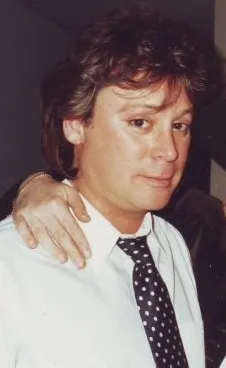
Photo by Louise Palanker , licensed under CC BY-SA 2.0 · Wikimedia Commons
Rank #383
Eric Carmen
From Wikipedia
Eric Howard Carmen was an American singer-songwriter and multi-instrumentalist. He was the lead vocalist of the Raspberries, with whom he recorded the hit "Go All the Way" and four albums. He embarked on a solo career in 1975 and had global success with "All by Myself", "Never Gonna Fall in Love Again", "She Did It", "Hungry Eyes", and "Make Me Lose Control". In later years, he toured with Ringo Starr & His All-Starr Band before reforming the Raspberries in 2004.
Discography & Previews
Browse through and click an album to open and play 30-second previews streamed from Apple Music.


-
 Eric CarmenEric Carmen197510 tracks
 -
 Boats Against the CurrentEric Carmen19778 tracks
 -
 Change of HeartEric Carmen19789 tracks
 -
 Tonight You’re MineEric Carmen19808 tracks
 - Eric CarmenEric Carmen198410 tracks
Deep Dive
Overview
Eric Carmen was an American singer-songwriter and multi-instrumentalist whose career spanned nearly five decades, from the early 1970s through the 2010s. Born in 1949, he rose to prominence as the lead vocalist of the Raspberries, a power pop quartet that emerged from Cleveland in the early 1970s, before establishing himself as a solo artist from 1975 onward. His solo work achieved global commercial success, anchored by a series of ballad-driven hits that showcased his gift for melody and emotional vocal delivery. Carmen’s trajectory—from power pop purist to mainstream balladeer—represents a broader shift in 1970s rock music toward stylistic accessibility without sacrificing musical substance.
Formation Story
Eric Howard Carmen was born in 1949 and came of age during the height of the British Invasion and the early stirrings of the power pop movement, a genre that synthesized the energy of 1960s rock with pop sensibilities and intricate vocal harmonies. Based in Cleveland, Ohio, Carmen became a founding member of the Raspberries in the early 1970s, a band that would define much of his early identity. The Raspberries operated within the power pop idiom, drawing on Beatles-influenced melodies and three-chord rock fundamentals while maintaining a contemporary edge. This foundation in melody-driven rock would become the bedrock of his entire artistic identity, whether working with the group or as a solo artist. By the mid-1970s, as the Raspberries’ commercial peak began to recede, Carmen stepped into a solo career that would eventually eclipse the band’s commercial reach.
Breakthrough Moment
Eric Carmen’s breakthrough as a solo artist came swiftly after his 1975 debut album, which established him as a credible artist independent of the Raspberries. However, it was his 1977 album Boats Against the Current that delivered the watershed moment: the ballad “All by Myself,” which became a massive international hit. The song’s combination of a simple piano-driven arrangement, Carmen’s aching vocal performance, and universally resonant lyrics about loneliness catapulted him into global recognition. The track’s success on both radio and in discotheques demonstrated Carmen’s ability to transcend the power pop gatekeeping that had defined his earlier work, reaching audiences far beyond rock radio. This ballad template—intimate, emotionally direct, and production-conscious—would define his commercial strategy for the rest of the decade.
Peak Era
Carmen’s commercial peak extended from the mid-1970s through the mid-1980s, a period that encompassed five studio albums and a string of international hits. Following the breakthrough of “All by Myself,” he sustained momentum with Change of Heart (1978) and Tonight You’re Mine (1980), both of which yielded further hit singles including “Never Gonna Fall in Love Again” and “She Did It.” His 1984 self-titled album Eric Carmen introduced “Make Me Lose Control,” another ballad that achieved widespread chart success. Throughout this era, Carmen refined a pop-rock formula centered on lush arrangements, prominent strings, and vocal production that emphasized emotional vulnerability over technical display. His ability to craft and deliver songs with immediate melodic hooks and universal emotional resonance—whether uptempo pop-rockers or slow ballads—made him a fixture on both radio formats and MTV as the 1980s progressed.
Musical Style
Eric Carmen’s musical vocabulary combined the harmonic sophistication of power pop with the production values and emotional directness of 1970s and 1980s pop-rock. His early work with the Raspberries had established him as a guitarist and vocalist comfortable with distorted riffs, layered vocals, and the band dynamics of ensemble rock; his solo work, by contrast, often foregrounded piano, synthesizers, and orchestral arrangements. His vocal approach—a smooth, emotionally expressive tenor capable of both vulnerability and confidence—became his trademark, deployed across both rockers and ballads with equal facility. Lyrically, Carmen favored themes of romantic yearning, loss, and romantic entanglement, writing from a perspective of sincere emotional exposure rather than cynicism or irony. His work with Arista Records positioned him within the mainstream pop-rock market, where production polish and radio-friendly song structures took priority over experimental or avant-garde concerns. This positioning proved commercially shrewd, if artistically limiting for some listeners; Carmen never claimed to be innovative at the formal level, but rather a perfecter of existing forms.
Major Albums
Eric Carmen (1975)
His debut solo album announced Carmen’s independence from the Raspberries and established the template for his commercial success: hook-driven pop-rock and ballads with strong production values.
Boats Against the Current (1977)
This album contains “All by Myself,” the ballad that became Carmen’s signature global hit and redefined his artistic direction toward emotionally direct, piano-based pop songs.
Change of Heart (1978)
Following his breakthrough, Carmen deepened the ballad-centric approach with Change of Heart, which includes the hit single “Never Gonna Fall in Love Again” and demonstrated his ability to sustain commercial momentum.
Tonight You’re Mine (1980)
This album solidified Carmen’s status as a mainstream pop-rock artist, featuring polished production and additional hit singles that maintained his radio presence throughout the early 1980s.
Eric Carmen (1984)
His second self-titled album introduced “Make Me Lose Control,” a late-career hit that proved Carmen’s ability to remain relevant in the MTV era while remaining true to his ballad-driven strengths.
Signature Songs
- “All by Myself” (1977) — A piano-led ballad of loneliness that became Carmen’s most enduring hit and redefined his commercial identity as a mainstream pop artist.
- “Never Gonna Fall in Love Again” (1978) — A declaration of romantic resignation delivered with Carmen’s characteristic vocal earnestness over a production-heavy arrangement.
- “She Did It” (1978) — An uptempo pop-rocker that showcased Carmen’s ability to deliver hook-laden rockers alongside his ballad work.
- “Make Me Lose Control” (1984) — A late-career hit that proved Carmen’s longevity in the MTV era, blending synthesizers with his signature vocal style.
- “Hungry Eyes” (1987) — From the Dirty Dancing soundtrack, this ballad demonstrated Carmen’s continued relevance in mainstream pop and film music.
Influence on Rock
Eric Carmen’s influence on rock and pop music operated at multiple registers. Within power pop circles, his early work with the Raspberries helped define the aesthetic and commercial parameters of the genre, establishing that melodic sophistication and radio-friendly hooks were compatible with rock credibility. However, his more lasting influence came through his solo ballad work, which helped legitimize the emotionally direct, production-conscious pop-rock ballad as a serious commercial form in the 1970s and 1980s. His willingness to subordinate rock instrumentation to string arrangements and synthesizers, and to center emotional vulnerability over technical display or avant-garde experimentation, opened pathways for subsequent generations of mainstream pop-rock artists. While critics sometimes dismissed this approach as soft or commercially pandering, the durability of his catalog and the continued radio play of his hits suggests that Carmen tapped into something genuine about contemporary emotional experience, bridging the gap between rock’s technical traditions and pop’s accessibility.
Legacy
Eric Carmen remained active as a touring and recording artist well into the 2010s, maintaining a significant presence on the nostalgia and classic rock touring circuit. His decision to reform the Raspberries in 2004 signaled his comfort with his full artistic history, refusing the separation between “serious” early work and “commercial” solo period that some artists enforce. He toured with Ringo Starr & His All-Starr Band, a testament to his standing within classic rock circles and his appeal to audiences who valued melodic pop-rock across the decades. His catalog has benefited from streaming-era rediscovery, with “All by Myself” and “Hungry Eyes” remaining staples of contemporary playlists, introducing his work to audiences born decades after the original releases. Carmen’s trajectory from power pop purist to mainstream balladeer, and his later comfort with both identities simultaneously, offers a model of artistic longevity and consistency. He passed away in 2024, leaving behind a legacy as a significant figure in 1970s and 1980s pop-rock, and as proof that commercial success and emotional sincerity need not be opposed.
Fun Facts
- Carmen’s “Hungry Eyes” was featured on the Dirty Dancing soundtrack (1987), introducing his music to a massive film audience and proving the durability of his balladry well into the MTV era.
- His career with the Raspberries and as a solo artist spanned from the early 1970s through 2024, making him one of the longest-active recording artists in rock history.
- The Raspberries’ reformation in 2004, more than thirty years after their initial dissolution, demonstrated Carmen’s commitment to honoring his full artistic legacy without hierarchy between his band and solo work.