

Photo by Avda , licensed under CC BY-SA 3.0 · Wikimedia Commons
Rank #153
Jimmy Page
From Wikipedia
James Patrick Page is an English musician and producer who achieved international success as the guitarist and founder of the rock band Led Zeppelin.
Discography & Previews
Browse through and click an album to open and play 30-second previews streamed from Apple Music.
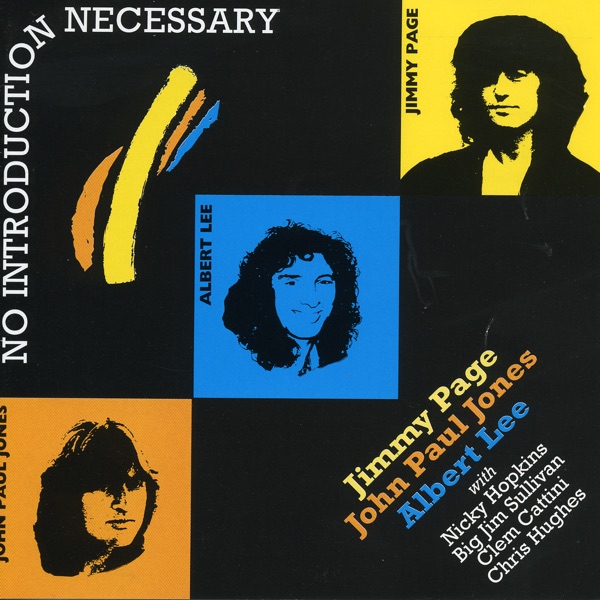
No Introduction Necessary
1968 · 14 tracks
- 1 Lovin' Up a Storm (feat. Albert Lee, John Paul Jones & Nicky Hopkins) ↗ 2:11
- 2 Everything I Do Is Wrong (feat. Jimmy Page, John Paul Jones & Nicky Hopkins) ↗ 2:53
- 3 Think It Over (feat. Jimmy Page, John Paul Jones & Nicky Hopkins) ↗ 2:32
- 4 Boll Weevil Song (feat. Albert Lee, John Paul Jones & Nicky Hopkins) ↗ 2:07
- 5 Livin' Lovin' Wreck (feat. Albert Lee, John Paul Jones & Nicky Hopkins) ↗ 2:11
- 6 One Long Kiss (feat. Albert Lee, John Paul Jones & Nicky Hopkins) ↗ 9:46
- 7 Dixie Fried (feat. Jimmy Page, John Paul Jones & Nicky Hopkins) ↗ 2:23
- 8 Down the Line (feat. Albert Lee, John Paul Jones & Nicky Hopkins) ↗ 2:19
- 9 Fabulous (feat. Jimmy Page, John Paul Jones & Nicky Hopkins) ↗ 2:23
- 10 Breathless (feat. Albert Lee, John Paul Jones & Nicky Hopkins) ↗ 2:39
- 11 Rave On (feat. Albert Lee, John Paul Jones & Nicky Hopkins) ↗ 2:07
- 12 Lonely Weekend (feat. Jimmy Page, John Paul Jones & Nicky Hopkins) ↗ 2:23
- 13 Burn Up (feat. Jimmy Page, John Paul Jones & Nicky Hopkins) ↗ 5:48
- 14 Everyday (feat. Albert Lee, John Paul Jones & Nicky Hopkins) ↗ 2:30


-
 No Introduction NecessaryJimmy Page196814 tracks
 -
 Whatever Happened to Jugula?Jimmy Page19858 tracks
 -
 OutriderJimmy Page19889 tracks
Deep Dive
Overview
Jimmy Page is an English guitarist and producer born in 1944 who achieved international prominence as the founder and primary architect of Led Zeppelin, one of rock’s most consequential bands. His distinctive approach to electric guitar—rooted in American blues but amplified through layered production, unconventional tunings, and willingness to incorporate folk, mysticism, and world music textures—established a template for hard rock and progressive rock that persists across decades. Beyond his work with Led Zeppelin, Page’s production career and later solo endeavors reveal a musician equally committed to sonic innovation and archival work.
Formation Story
Page emerged from the English rock and blues scene of the early 1960s, a period when American blues records were being discovered and reinterpreted by British musicians. He developed his craft through session work and studio production, honing an ear for arrangement and sonic texture before stepping into the spotlight as a performer. This background in the studio as much as on stage would define his approach: Page was never merely a lead guitarist but a composer, arranger, and producer who controlled every element of his sound. His transition from behind-the-scenes figure to bandleader came at a moment when rock music was expanding beyond three-chord simplicity into longer forms and layered arrangements.
Breakthrough Moment
Page’s global recognition arrived with the formation of Led Zeppelin in 1968. The band—comprising Page, vocalist Robert Plant, bassist and keyboardist John Paul Jones, and drummer John Bonham—released their eponymous debut and a string of landmark albums that redefined what rock music could encompass. Led Zeppelin IV, released in 1971, became a watershed moment not just for the band but for rock itself, introducing “Stairway to Heaven” to the world and demonstrating that a single extended composition could achieve both artistic depth and mass cultural penetration. During this era, Page’s reputation crystallized as one of rock’s most formidable technical and creative forces.
Peak Era
Led Zeppelin’s commercial and artistic zenith spanned the early-to-mid 1970s, a period during which the band released some of rock’s most influential albums: Led Zeppelin III (1970), Led Zeppelin IV (1971), Houses of the Holy (1973), and Physical Graffiti (1975). Page’s work across these records demonstrated an expanding sonic palette—from the acoustic folk-blues of “Black Dog” to the Eastern-influenced instrumentation of “Black Dog” and “The Ocean,” to the orchestral arrangements woven throughout. The band’s live performances during these years, while not officially released in their time, established legendary status; Page’s improvisational guitar solos became the centerpiece of extended concert renditions. By the mid-1970s, Led Zeppelin had become the dominant force in rock, and Page’s production and arrangement choices had become the gold standard for how to construct a rock album.
Musical Style
Page’s musical signature evolved from his deep knowledge of American blues—artists like Muddy Waters and Howlin’ Wolf—but he rapidly moved beyond pure blues idiom into a hybrid language that incorporated elements of folk music, Eastern instruments, and orchestral textures. His guitar tone ranged from warm and vocal-like on acoustic instruments to heavily processed and distorted on electric, often within the same song. He favored unconventional tunings and often employed open G tuning, which became emblematic of his approach to riff-based composition. His use of the theremin and other electronic devices, along with his collaboration with producer and engineer Andy Johns, created production that felt spacious and mysterious, allowing silence and dynamics to play as much of a role as volume and distortion. Page’s songwriting, particularly in collaboration with Robert Plant, balanced immediate melodic hooks with structural complexity and thematic sophistication, establishing a model for progressive rock even as the music remained rooted in blues feeling.
Major Albums
Outrider (1988)
Page’s return to solo recording after an extended period away from the spotlight, featuring a range of styles from hard rock to acoustic explorations and marking his first substantial solo statement in decades.
Coverdale · Page (1993)
A collaboration with David Coverdale that reasserted Page’s presence in rock music during the 1990s, blending heavy rock with blues and demonstrating his continued appetite for reimagining familiar material.
Lucifer Rising (1992)
A work that showcased Page’s ongoing interest in production and composition outside the Led Zeppelin framework, representing his solo artistic directions.
Signature Songs
- “Black Dog” — A riff-based masterpiece with an infectious groove that became synonymous with Page’s ability to craft blues-derived yet entirely distinctive rock compositions.
- “Stairway to Heaven” — The archetypal extended rock composition, built from acoustic beginnings through electric crescendo, establishing a structural template for decades of rock music to follow.
- “Whole Lotta Love” — An aggressive, riff-driven blues reinterpretation that showcased Page’s command of distortion, feedback, and raw electric power.
- “The Lemon Song” — A showcase for Page’s ability to extract maximum sonic variation from a blues structure.
Influence on Rock
Page’s influence on rock music extends far beyond his performances. His approach to guitar tone—specifically his use of layering, distortion, and unconventional processing—became the blueprint for hard rock and heavy metal producers. The Led Zeppelin model of the band as a unified artistic entity, with production choices integral to songwriting, influenced everyone from progressive rock acts to subsequent hard rock and metal bands. His demonstration that a rock album could sustain long-form pieces, incorporate non-Western instruments, and balance raw power with textural subtlety opened possibilities for rock’s continued evolution. Guitarists across multiple genres studied his technique, his tone, and his fearlessness in departing from traditional rock instrumentation. The mysticism and musical eclecticism that Page introduced into rock’s mainstream conversation—the willingness to draw from folk, blues, Eastern music, and avant-garde production techniques—became foundational to how subsequent generations approached rock music as a vehicle for cultural and artistic synthesis.
Legacy
Jimmy Page remains one of rock music’s most celebrated and influential figures. Led Zeppelin’s influence persists across contemporary rock, metal, and even mainstream popular music, with the band regularly cited as a primary inspiration by musicians across genres. The role of guitarist-as-producer that Page exemplified has continued as a model; his insistence on controlling the sound, not merely playing it, redefined professional ambition in rock. His later solo work and periodic collaborations have kept him visible in rock culture, while the ongoing catalog of Led Zeppelin—through reissues, documentaries, and streaming platforms—ensures that new generations encounter his work. Page’s status in rock history remains secure, his contributions to the instrument’s technical and sonic vocabulary indelible.
Fun Facts
- Page was deeply invested in the occult and mysticism throughout his career, collecting occult artifacts and incorporating esoteric symbolism into Led Zeppelin’s album artwork and concert design.
- Before forming Led Zeppelin, Page worked extensively as a session guitarist and producer in London studios, contributing to recordings across multiple genres and establishing the technical precision that would define his solo work.
- The Telecaster and Les Paul guitars became synonymous with Page’s playing style, and his modifications to these instruments—including custom tunings and unconventional techniques—influenced how subsequent generations approached electric guitar design and modification.